Registration
REGISTER FOR THE CONFERENCE
Registration
REGISTER FOR THE CONFERENCE
 Apply to Exhibit
APPLICATION FOR EXHIBITION
Apply to Exhibit
APPLICATION FOR EXHIBITION
 Sponsorship
SPONSORSHIP APPLICATION
Sponsorship
SPONSORSHIP APPLICATION

US-based Valar Atomics Plans to Deploy 456 Gas-Cooled Nuclear Reactors in Utah: Building a Dedicated 9.6 GW Power Supply System for a Supercomputing Data Center
US energy startup Valar Atomics has officially submitted a proposal for the construction of an ultra-large-scale industrial park named Project Beehive. The project is planned to be sited on federal and state land near Price, Utah, covering an area of approximately 9,000 acres. The entire project plans to deploy 456 small gas-cooled nuclear reactors in a clustered configuration, with an expected total installed generating capacity reaching an astonishing 9.6 gigawatts (GW). This scale is more than twice Utah's current average grid-wide generation load of 4 GW and approaches its summer peak demand of nearly 10 GW. This ultra-dense...
2026-10-03
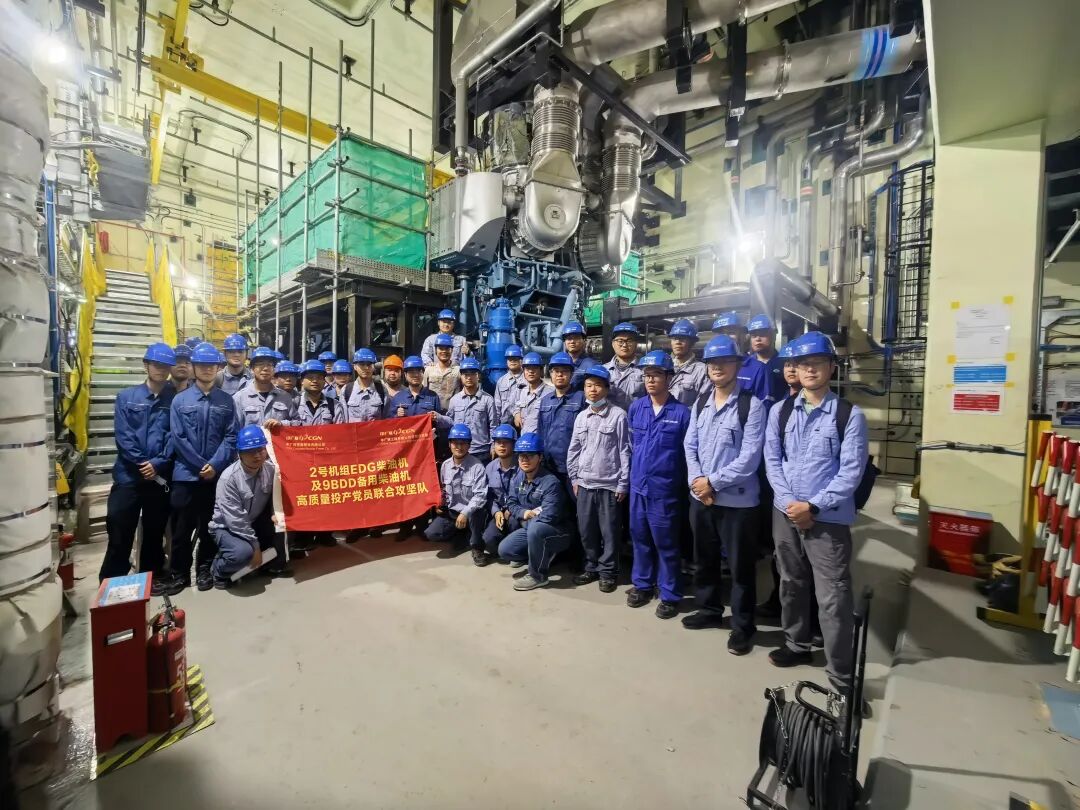
First Backup Emergency Diesel Generator of Hualong One Officially Available at Sanao Nuclear Power Unit 2
2026-10-03
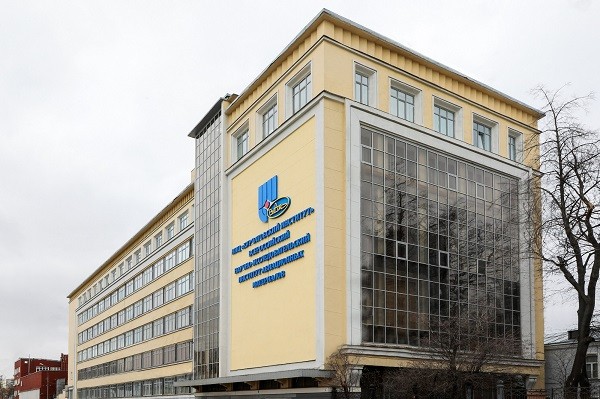
Russia's Kurchatov Institute to Receive 5.7 Billion Rubles in Fiscal Budget Support: Focusing on Controlled Thermonuclear Fusion and Advanced Plasma Technology R&D
2026-10-03

Experts from 18 Countries Discuss Research Planning for Russia's MBIR Fast Reactor International Research Center: Focusing on Closed Fuel Cycle and Mega-Science Engineering Synergy
2026-10-03

Poskom Angular Pinch Magnet Pulsed Power Supply Delivered, X-ray High-Voltage Power Supply Manufacturer Officially Enters Fusion Equipment Sector
2026-10-03

Rosatom Proposes New VVER-1000 Nuclear Power Unit to Armenia
2026-10-03

Department of Nuclear Medicine at Peking University First Hospital Receives EARL Theranostics Advanced-L2 Certification, Bringing Theranostics in Line with International Standards
2026-10-03

CGN Cangnan No. 3 Nuclear Power Co., Ltd. Established
2026-10-03

Amazon Signs Long-Term Power Purchase Agreement to Support $3 Billion Investment: Calvert Cliffs Nuclear Power Plant Plans 190 MW Power Uprate and License Renewal Application
2026-10-03
The Department of Nuclear Medicine at Peking University First Hospital has recently officially received the Theranostics Advanced-L2 certification issued by EARL (EANM Research Ltd.), an affiliate of the European Association of Nuclear Medicine, becoming one of the few nuclear medicine theranostics centers in China to obtain this high-level certification. The certification audit standards are rigorous, covering comprehensive dimensions including PET/CT quantitative accuracy, therapy center operations, patient safety management, and clinical competency. Passing the certification means that the department's quantitative imaging and targeted therapy data meet internationally mutually recognized standards and can achieve high-level alignment with advanced nuclear medicine centers in Europe and the United States. During the certification review, EANM President-Elect Professor Felix M. Mottaghy and Ms. Iva...
2026-10-03
A latest phase 3 randomized controlled clinical study announced at the American Society for Radiation Oncology (ASTRO) annual meeting shows that for patients with localized prostate cancer (PCa), stereotactic body radiotherapy (SBRT) demonstrates excellent clinical application potential. Follow-up data show that SBRT is comparable to traditional radical prostatectomy in 8-year biochemical or clinical failure-free rates, and the incidence of urinary incontinence at 5 years after treatment is significantly reduced by nearly 40%. This phase 3 multicenter clinical trial...
2026-09-30
Chest computed tomography (CT), routinely used to screen for lung lesions, may hold important clues for assessing brain health. A research team from Johns Hopkins University in the United States explored approaches to using existing chest imaging to assess bone health and link it to brain aging, with the related findings published in September 2026 in the authoritative journal Radiology. The study showed that subjects with lower thoracic vertebral bone density experienced faster cognitive decline during subsequent follow-up, and specific white matter microstructural changes also showed associated degeneration. Chest CT is widely used in lung cancer screening and pulmonary nodule follow-up...
2026-09-30
At the early hours of September 16, with the smooth takeoff of the first departing flight MF8487, Terminal 2 of the Fuzhou Changle International Airport Phase II Expansion Project was officially put into commercial operation, marking that Fuzhou Airport has officially entered the era of dual-terminal and dual-runway operations. Relying on the nuclear technology commercialization platform of Tsinghua University, the smart civil aviation security inspection system and nearly 300 sets of full-category security inspection hardware equipment customized and developed by Nuctech for the terminal were simultaneously put into operation, fully supporting the efficient and secure flow of 36 million passenger trips per year at Terminal 2. This deployment covers all aviation security inspection nodes, including passenger carry-on baggage, checked baggage and personal inspection. Nuctech has built...
2026-09-30
On September 29, the Chinese Academy of Sciences held a press conference in Beijing, announcing the official launch of the Scientific Frontier Extreme Breakthrough Program and unveiling the first batch of launched projects. The program is based on the advantages of national major science and technology infrastructure clusters and a comprehensive disciplinary institutional framework, launching a systematic scientific expedition in the directions of the extremely macroscopic, extremely microscopic, extreme conditions, and extreme comprehensive interdisciplinarity (the "four extremes"). Zhou Qi, Vice President of the Chinese Academy of Sciences, stated that the program aims to break the traditional single-point breakthrough model through the open and combined use of major science and technology infrastructure and the deep empowerment of artificial intelligence (AI for Science), building a systematic research paradigm for tackling key problems in the context of great power competition. In the released layout of the "four extremes" breakthrough tasks, the first...
2026-09-30
Recently, the research team at the Multidisciplinary Research Center of the Institute of High Energy Physics (IHEP), Chinese Academy of Sciences, has made important progress in the study of the microscopic mechanisms of perovskite solar cell materials. The research team innovatively introduced Prussian Blue (PB) nanoframes with a high degree of lattice matching to perovskite, and leveraged a national major scientific and technological infrastructure——the Beijing Synchrotron Radiation Facility (BSRF)——to conduct multi-dimensional in-situ synchrotron radiation characterization. From the two perspectives of transient crystallization kinetics evolution and microscopic local coordination structure, they systematically elucidated for the first time the physicochemical mechanism by which Prussian Blue regulates perovskite nucleation and crystallization and suppresses ion migration. Large-area perovskite photovoltaic modules fabricated via wet...
2026-09-30
Recently, the National Key Laboratory of Thorium-based Nuclear Fission Energy at the Shanghai Institute of Applied Physics, Chinese Academy of Sciences, has made important progress in the fields of membrane-divided electrolyzer design and electrocatalytic materials. Researchers combined electrolyzer reactor design with electrocatalytic material innovation to develop an anion exchange membrane-divided H-type electrolysis system based on nonporous metal-organic framework (MOFs) materials, achieving efficient electrochemical recovery of uranium resources and complete degradation of organic ether solvents in uranium-containing organic ether wastewater. The related results, titled "Nonporous Metal-Organic Framework Enables Record-High Uranium Extraction and Complete Diglyme Degra...
2026-09-30