

Jefferson Lab Signs CRADA to Advance Commercialization of Subsurface Tritium Continuous Monitor: Overcoming the Challenge of Online Monitoring of Low-Energy Beta Particles in Groundwater at Nuclear Power and Fusion Facilities
The U.S. Department of Energy (DOE) Thomas Jefferson National Accelerator Facility (Jefferson Lab) announced that it has formally signed a Cooperative Research and Development Agreement (CRADA) with startup company Canary Instruments to jointly advance the commercialization of its independently developed Subsurface Continuous Radioisotope Environmental Monitor (SCREM). This technology is specifically designed for nuclear power plants, nuclear fuel facilities, and future...
2026-10-07
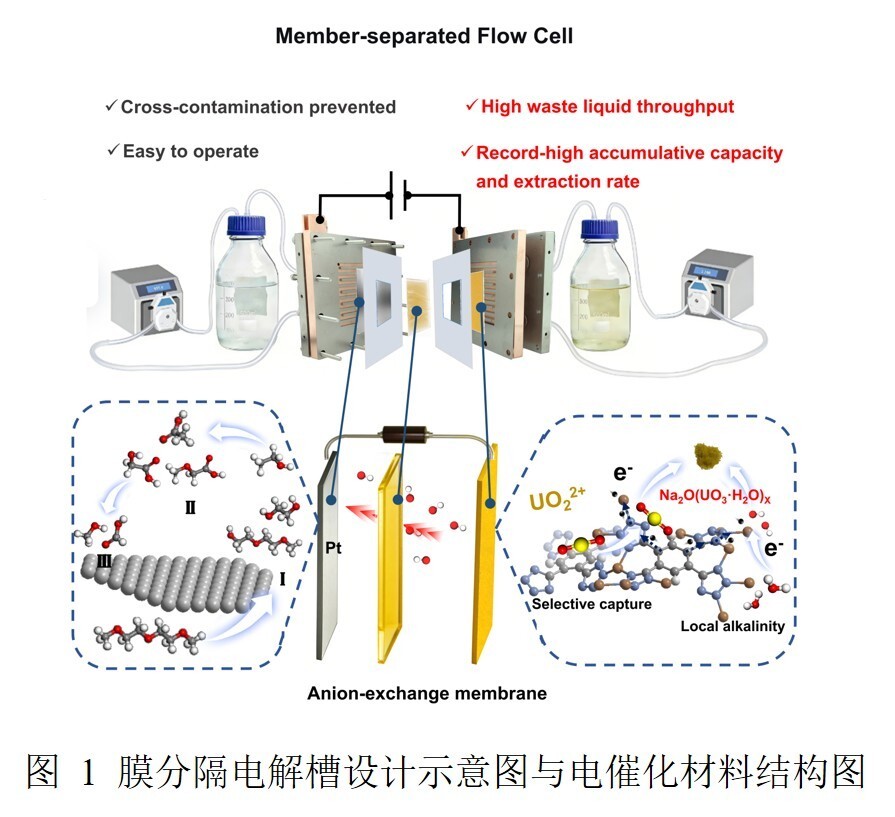
Shanghai Institute of Applied Physics Makes Important Progress in Electrolyzer Design and Electrocatalytic Materials Research
Recently, the National Key Laboratory of Thorium-based Nuclear Fission Energy at the Shanghai Institute of Applied Physics, Chinese Academy of Sciences, has made important progress in the fields of membrane-divided electrolyzer design and electrocatalytic materials. Researchers combined electrolyzer reactor design with electrocatalytic material innovation to develop an anion exchange membrane-divided H-type electrolysis system based on nonporous metal-organic framework (MOFs) materials, achieving efficient electrochemical recovery of uranium resources and complete degradation of organic ether solvents in uranium-containing organic ether wastewater. The related results, titled "Nonporous Metal-Organic Framework Enables Record-High Uranium Extraction and Complete Diglyme Degra...
2026-09-30
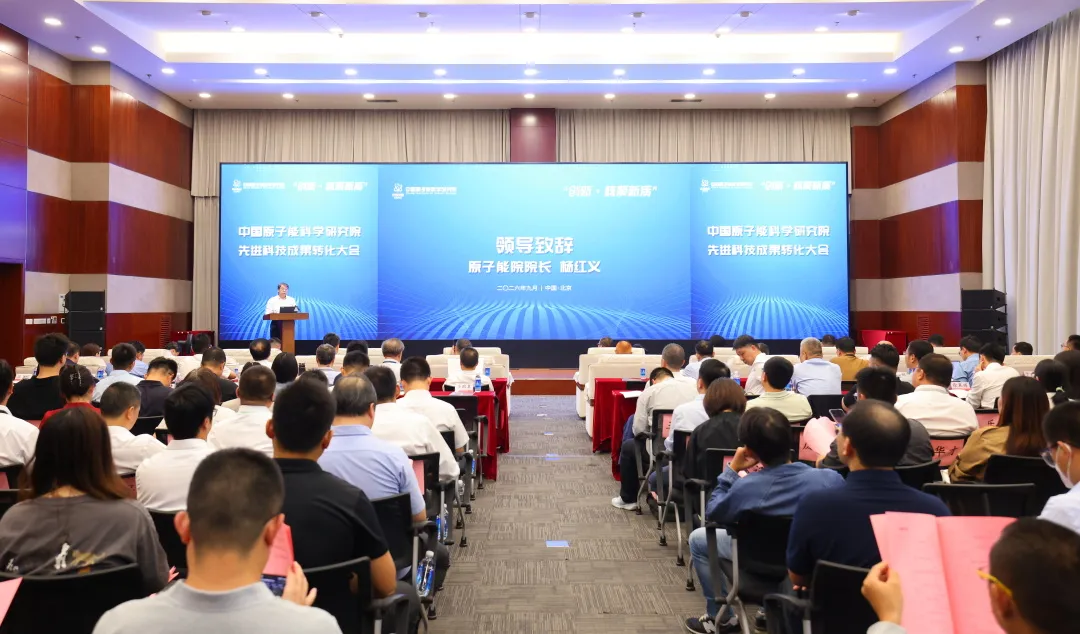
China Institute of Atomic Energy Holds Advanced Scientific and Technological Achievements Transformation Conference: Releases Small Reactor 9-Type Product Matrix, Signs Agreements on Curie-Level Terbium-161 Preparation and SMR Overall Scheme Design
On September 29, the China Institute of Atomic Energy (abbreviated as CIAE) held in Beijing an Advanced Scientific and Technological Achievements Transformation Conference themed "Innovation · Nuclear Fusion of New Quality." The conference showcased CIAE's practical breakthroughs in deepening scientific and technological system reform, advancing the pilot program for empowering scientific and technological achievements from job-related inventions, and integrated institute-enterprise operations, and officially released multiple major scientific research achievements covering advanced reactors, nuclear medical equipment, and isotope preparation, vigorously promoting the acceleration of nuclear technology from the laboratory to the production line. In the report on reform experience and benchmark incubation platforms, the conference systematically summarized three landmark reform achievements: SASAC Pilot Reform for Empowering Scientific and Technological Achievements from Job-Related Inventions: CIAE used...
2026-09-30

National Standard "Test Methods for Plasma Parameters (GB/T 48094—2026)" Led by the University of Science and Technology of China Officially Released, Solidifying the Standardization Foundation for Controlled Nuclear Fusion and High-Tech Industries
Recently, led by the University of Science and Technology of China (USTC), in collaboration with research institutions including the Aerospace Information Research Institute of the Chinese Academy of Sciences, the Hefei Institutes of Physical Science of the Chinese Academy of Sciences, the Southwestern Institute of Physics (SWIP), and the Beijing Institute of Environmental Characteristics, universities including Yunnan University, Nanchang University, China Jiliang University, and Chizhou University, as well as key industry-chain enterprises including Anhui USTC Yuke Technology Co., Ltd., Anhui Zhongke Fusion Terahertz Technology Co., Ltd., and Fermion Technology (Shanghai) Co., Ltd., jointly drafted, and the national standard "Test Methods for Plasma Parameters" (Standard No.: GB/T 48094—2026), under the centralized management of the National Technical Committee 487 on Optoelectronic Measurement of Standardization Administration of China (SAC/TC487), was officially approved for release and will be formally implemented from March 2027. This standard establishes unified specifications for test methods of key plasma physical parameters, fills the gap in national-level technical standard basis, and marks a milestone breakthrough for China in the standardization of advanced plasma diagnostic technology.
2026-09-28

China Institute of Atomic Energy Holds 2026 Science and Technology Innovation Conference, Releases Three Independently Developed Scientific and Technological Achievements: Industrial Software, Radiation-Resistant Robot, and Monitoring Watch
On September 23, China Institute of Atomic Energy (CIAE) of China National Nuclear Corporation (CNNC) officially convened the 2026 Science and Technology Innovation Conference, systematically planning and coordinating key tasks for nuclear basic research and original innovation. The conference brought together Sun Changpu, Ye Guoan, Liu Weiping, and Li Jun, academicians of the Chinese Academy of Sciences; Hu Shilin, Wang Hualin, and Su Guanghui, academicians of the Chinese Academy of Engineering; as well as representatives from research and industrial units including CNNC and Aerospace Software. Three independently developed innovative scientific and technological achievements were released on site: the Yundian Product Data Management System N-PDM, the Anluan-R Radiation-Resistant Inspection Robot, and the Antai-W1 Smart Radiation Monitoring Watch...
2026-09-24

China Formally Commits to Complying with the IAEA's "Management of Disused Radioactive Sources Guidelines"
Following its political commitments to the "Code of Conduct on the Safety and Security of Radioactive Sources" and the "Guidance on the Import and Export of Radioactive Sources," China has made a commitment to the International Atomic Energy Agency (IAEA) to comply with the "Management of Disused Radioactive Sources Guidelines" (hereinafter referred to as the "Disused Sources Guidelines"), marking a further improvement of China's international benchmarking system for the full chain and entire process of radioactive source management. The relevant information was officially published on the IAEA website on September 9. The "Disused Sources Guidelines" is one of the two important supporting guidance documents of the IAEA's "Code of Conduct on the Safety and Security of Radioactive Sources," approved and issued by the Board of Governors in 2017. As an internationally applicable non-binding normative framework, the Guidelines provide a unified reference standard for the standardized management of disused radioactive sources by member states, covering key areas such as policy planning, legislative development, regulatory responsibilities, storage and transport, full-process control, and international cooperation, and identifying multiple management pathways including return to supplier, recycling and reuse, long-term storage, and safe disposal, adapting to the nuclear technology utilization development levels and regulatory systems of different countries.
2026-09-20

Oman Reaffirms Cooperation Commitment at IAEA General Conference, Promotes Peaceful Uses of Nuclear Technology
The Sultanate of Oman delivered a statement at the 70th Regular Session of the International Atomic Energy Agency (IAEA) General Conference held in Vienna, Austria, expressing appreciation for the work of the IAEA Secretariat and reaffirming its continued close cooperation with the Agency and its Member States to achieve strategic objectives and further enhance the key role of nuclear technology in peace and modern development. The statement was delivered on behalf of the Sultanate of Oman by Faiza Saif Al Siyabi, Chargé d'Affaires of Oman's Permanent Mission to the IAEA. In its statement, Oman welcomed the Democratic Republic of Timor-Leste as a new member of the IAEA. Oman emphasized in its statement its active participation...
2026-09-17

CNNC 404 Overcomes Krypton Isotope Technical Challenges, Multiple Krypton Isotope Thickness Sources Achieve "Fully Domestic Production"
It was learned from China National Nuclear Corporation (CNNC) that CNNC 404 Co., Ltd., a subsidiary of CNNC, has achieved a breakthrough in the field of radioisotope technology, marking China's leap from reliance on imports to fully domestic production of krypton isotope thickness sources. It is understood that krypton isotopes, as important radioisotopes, are widely used in industrial thickness measurement, instrument and meter calibration, tracer monitoring, and other fields, and are particularly indispensable in quality control for high-end manufacturing such as new energy batteries, specialty papermaking, and thin films. In this instance, CNNC 404 successfully developed multiple specifications of krypton isotope thickness source products with independent intellectual property rights, capable of matching the needs of different industrial thickness measurement application scenarios, which has provided solid support for the sustainable and high-quality development of China's high-end...
2026-09-17

Korea Radioactive Waste Agency Hosts Nuclear Nuclide Analysis Industry and Technology Nexus Symposium (RANEX 2026)
The agency and the Korea Radioactive Analysis Association jointly hosted the Nuclide Analysis Industry and Technology Nexus Symposium (RANEX 2026) from September 15 to 16 at the Lahan Select Hotel in Gyeongju, attracting more than 200 experts, scholars, and industry representatives from home and abroad. The core purpose of this symposium was to share the importance of nuclide analysis—a key area in the national radioactive waste management undertaking—and to jointly explore strategies for technological innovation and the cultivation of an industrial ecosystem through in-depth cooperation between the public sector and private enterprises. During the symposium, experts discussed the development strategy for the radioactive waste nuclide analysis industrial ecosystem, the latest analytical technologies and instrumentation...
2026-09-17

Rosatom Launches Nuclear Instrumentation Technology Cluster to Produce Radiation Monitoring and Dosimetry Detectors
Rosatom has recently launched a nuclear instrumentation technology cluster at its subsidiary Instrument Engineering Specialized Research Institute JSC. The cluster will be used for the development and mass production of detectors for applications including radiation monitoring, personal dosimetry, medical and scientific research. According to reports, the science and technology complex will concentrate the synthesis of new materials, the manufacture of detectors and electronic components, the application of special coatings, and post-processing operations such as painting and polymerization in a single location. With the key process chain from R&D and testing to production centralized in one place, the development cycle for related products is expected to be shortened, and production costs will be reduced accordingly. Rosatom...
2026-09-11

Rosatom and Petrovietnam to Build Additive Manufacturing Center Together
The Fuel Division of Rosatom and Petrovietnam signed an agreement to jointly advance a project to build an additive manufacturing center in Vietnam. The document exchange ceremony was held on September 9, 2026. Under the agreement, the two sides defined the scope of equipment and the delivery schedule required to establish a fully functional 3D printing center in Vietnam. The project is intended to introduce 3D printing equipment produced by the Fuel Division of Rosatom, using selective laser melting and direct laser deposition technologies for the manufacture of metal parts. At the same time, the agreement also includes arrangements for the delivery of related Russian equipment for heat treatment, turning, laboratory analysis, and other purposes. The Vietnamese side stated...
2026-09-10

Rosatom Launches Full-Cycle Production of High-Purity Germanium Detectors
Rosatom announced on September 9 that its subsidiary enterprises have begun producing detectors made of high-purity germanium and have established a complete domestic technology chain in Russia, from deep purification of germanium raw materials and detector manufacturing to the assembly of spectrometers and measurement instruments. The final stage of this production chain is located at a new production facility of a plant under Rosatom's Automated Control Systems and Electrical Engineering Division. To meet the requirements for processing ultrapure materials, the facility has specially built a cleanroom compliant with ISO Class 8 standards to reduce contamination of germanium materials, improve product stability and extend equipment service life. High-purity germanium detectors are a key...
2026-09-10

US Oak Ridge National Laboratory Advances 3D-Printed Nuclear Components Manufacturing and Certification
The US Oak Ridge National Laboratory (ORNL) is working with industry partners to advance the application of advanced manufacturing technologies, with a focus on heavy-duty 3D printing, AI-driven automated manufacturing, and digital qualification methods, to address issues such as unstable US industrial supply chains, shortages of skilled workers, and long lead times for large custom components. At an advanced manufacturing facility in Tennessee, ORNL demonstrated two large-scale 3D printing manufacturing cases for the nuclear energy sector. Among them, a three-arm robotic system called MedUSA printed a steel nuclear pressure vessel approximately 3 feet by 5 feet with complex dome geometry by guiding molten steel. Researchers said...
2026-09-10
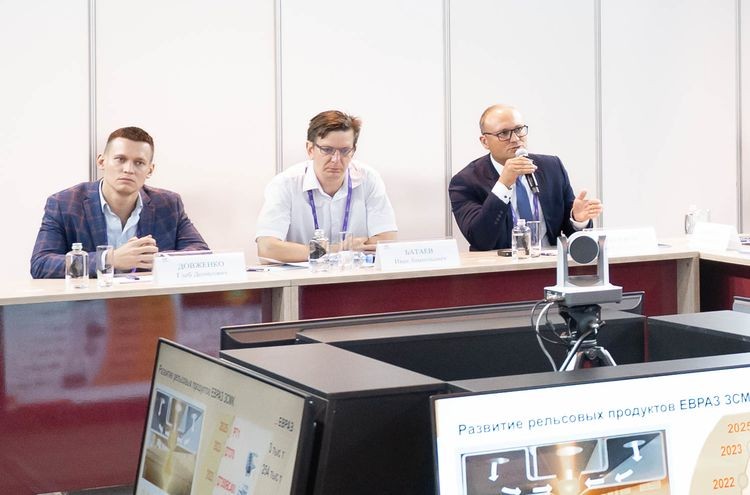
Russia's EVRAZ Plans to Develop High-Performance Railway Rails Using SKIF Synchrotron Radiation Platform
Russian railway infrastructure component manufacturer EVRAZ PJSC plans to cooperate with the SKIF Collective Use Center to develop new alloys and high-performance rails using synchrotron radiation experimental capabilities, aiming to improve the mechanical properties and operational reliability of rails. At a roundtable discussion on "Development of New Structural and Tool Materials and Mechanical Engineering Technologies Using Synchrotron Radiation" held during the Technoprom 2026 forum, participating experts discussed the application prospects of the SKIF Collective Use Center in the development of high-quality rolled metal products. EVRAZ stated that Russia's railway operating environment is complex, with long line distances, numerous mountain routes, prominent low-temperature conditions, coupled with growing freight volumes, placing higher demands on steel materials...
2026-09-07

Rosatom Fuel Division Completes Assembly of 30th Industrial Metal 3D Printer
On September 3, 2026, the Moscow Additive Manufacturing Technology Center of Rosatom's Fuel Division completed the assembly of its 30th industrial metal 3D printer. The equipment is the medium-sized RusMelt 300M, a flagship model in Rosatom's metal 3D printer product line. The rollout of the 30th unit coincides with the 30th anniversary of TVEL JSC, the management company of Rosatom's Fuel Division. According to reports, the additive manufacturing technology business unit of Rosatom's Fuel Division currently produces industrial-grade 3D printers capable of meeting manufacturing needs for components of various sizes, utilizing mainstream metal additive manufacturing technologies such as selective laser melting (SLM), direct metal deposition (DMD), and electron beam additive manufacturing (EBAM)...
2026-09-04

Russia launches remediation of legacy uranium sites at Taboshar facility in Tajikistan
Rosatom has recently launched remediation work at the legacy uranium production site of Workshop No. 3 at the Taboshar facility in Tajikistan, through its fuel division subsidiary, the Central Design and Technology Institute (JSC CPTI). The site is located in the village of Istiklol, Sughd Region, Republic of Tajikistan. The remediation is carried out under the intergovernmental agreement between the Russian Federation and the Republic of Tajikistan on cooperation in remediating areas affected by uranium mining and ore production, with the goal of improving the local environmental conditions and creating conditions for the future safe use of the area. Prior to the commencement of the work, JSC CPTI had completed remediation design and estimate documentation for two facilities in the Sughd Region,...
2026-09-02

U.S. Proposes Clearer Groundwater Protection Standards for In-Situ Uranium Recovery Sites
The U.S. Nuclear Regulatory Commission (NRC) on September 1 proposed a rule aimed at establishing clearer groundwater protection standards for communities surrounding in-situ uranium recovery sites, while streamlining the process for extending decommissioning deadlines for radioactive materials facilities and nuclear reactors, reducing redundant administrative steps without compromising safety. The rule addresses two aspects under NRC oversight. First, it proposes risk-informed regulatory standards for protecting drinking water near in-situ uranium recovery facilities, designed to guard against both radiological and non-radiological contamination. In-situ uranium recovery is a method of uranium extraction that involves injecting solution into uranium-bearing ore bodies to dissolve underground uranium resources and pump them to the surface for recovery. Second, it proposes to simplify the process for facility owners to apply for extensions of decommissioning deadlines. The NRC stated that current time requirements are relatively rigid and may lead to premature license termination; the proposed changes aim to reduce applicant costs, improve regulatory efficiency, and provide clearer expectations for communities and facility operators.
2026-09-02

Major Breakthrough in Residual Stress Research on Key Aviation Materials in China
Nickel-based single-crystal superalloys are key materials for manufacturing turbine blades in aviation engines. Recently, the neutron scattering team from the Department of Nuclear Physics at the China Institute of Atomic Energy (CIAE) under CNNC, leveraging the Engineering Science Stress Spectrometer at the China Advanced Research Reactor (CARR), overcame technical challenges in residual stress measurement of single-crystal superalloys and established a precise three-dimensional residual stress testing method based on neutron diffraction. This provides an effective solution for residual stress assessment of critical aviation materials and lays a solid methodological foundation for the in-depth application of the CARR Engineering Science Stress Spectrometer in high-end manufacturing. During high-temperature heat treatment or service of nickel-based single-crystal superalloys...
2026-09-02

Northeast Regional Office of the Ministry of Ecology and Environment Conducts Research on Radiation Risk Prevention and Control in the Scrap Metal Recycling and Smelting Industry
To strengthen radiation risk prevention and control across the entire chain of the scrap metal recycling and smelting industry and guide young cadres to conduct research and tackle challenges at the grassroots level, the Northeast Regional Office of Nuclear and Radiation Safety Supervision of the Ministry of Ecology and Environment (hereinafter referred to as the Northeast Regional Office) recently conducted special research at scrap metal resource recycling and steel smelting enterprises as well as customs ports. This research comprehensively mapped out the sources of scrap metal recycling, supply destinations, and the current status of radioactive monitoring management in the processing and sorting stages; focused on verifying the effectiveness of radiation monitoring requirements implementation at steel smelting enterprises, and meticulously examined the monitoring point deployment and control measures at key stages such as raw material entry, production process connection, and product shipment; further clarified the import and export radioactive monitoring management procedures, coordination and linkage working mechanisms, and the response and handling of abnormal events; and conducted in-depth exchanges and discussions with relevant units on some issues identified during the research.
2026-09-01

First experiments at Russia's SKIF microfocus station to target "invisible" gold deposits and extraterrestrial particle research
On August 19, 2026, the microfocus station, one of the first-stage experimental stations of the Russian SKIF Collective Use Center, announced its initial experimental directions. The station will utilize synchrotron radiation-based analytical techniques to study the elemental composition and structural characteristics of objects, serving fields such as geology, geophysics, microelectronics, and materials science. At the SKIF opening ceremony, Russian President Vladimir Putin inspected the microfocus station. According to the presentation, the station's first experiments will focus on the exploration and extraction of hard-to-recover gold, platinum, rare earth elements, and oil reserves. Ore sample research is a critical step in the development of new mineral deposits. By determining the elemental composition of rocks, researchers can...
2026-08-31

China's First Enterprise-Level Synchrotron Radiation Technology Application Research Platform Inaugurated in Shanghai
The Sinopec Shanghai Synchrotron Radiation Facility Energy and Chemical Science Laboratory, invested by Sinopec and jointly built with the Shanghai Advanced Research Institute of the Chinese Academy of Sciences, and based on the Shanghai Synchrotron Radiation Facility (SSRF) major scientific infrastructure, was recently inaugurated in Shanghai Zhangjiang Science City. This laboratory is the first enterprise-level synchrotron radiation technology application research platform in China. According to reports, the laboratory consists of three beamline stations and auxiliary laboratories, and will provide technical support and services for basic scientific research conducted by Sinopec and public users, with a focus on oil and gas exploration and development, petroleum refining and chemical engineering, and new energy and new materials. Once the platform is completed, it will help enhance the enterprise's capabilities in forward-looking and fundamental research, and provide scientific research support for cultivating new quality productive forces in China's energy and chemical industry.
2026-08-29
Reading Ranking
- 1 Jefferson Lab Signs CRADA to Advance Commercialization of Subsurface Tritium Continuous Monitor: Overcoming the Challenge of Online Monitoring of Low-Energy Beta Particles in Groundwater at Nuclear Power and Fusion Facilities
- 2 3D Systems Collaborates with Savannah River National Laboratory to Advance 3D Printing in Nuclear Energy Systems
- 3 Construction Advances at Denison's Phoenix Uranium Project in Canada
- 4 U.S. and European Nuclear Fuel Markets Accelerate Adjustment, with Canada and Kazakhstan Remaining Leading Uranium Supply Sources
- 5 U.S. Proposes Clearer Groundwater Protection Standards for In-Situ Uranium Recovery Sites
- 6 Rosatom and Petrovietnam to Build Additive Manufacturing Center Together
- 7 Kazakhstan's Uranium Output Up 9% Year-on-Year in First Half of 2026
- 8 Rosatom Fuel Division Completes Assembly of 30th Industrial Metal 3D Printer
- 9 Shanghai Institute of Applied Physics Makes Important Progress in Electrolyzer Design and Electrocatalytic Materials Research
- 10 China Isotope & Radiation's National Headquarters for Irradiation Application Industry Settles in Guangzhou
- 11 World's first laser plasma accelerator-driven high-resolution muon imaging experiment to launch in Romania
- 12 Russia launches remediation of legacy uranium sites at Taboshar facility in Tajikistan
- 13 US Oak Ridge National Laboratory Advances New Process to Boost Californium-252 Production
- 14 Russian regulator inspects nuclear fuel cycle safety compliance at Ural Electrochemical Plant
- 15 Philippine Steel Plant in Davao Raided: Radioactive Isotopes Detected in Finished Rebar and Multiple Materials at the Facility