
New Monitoring Well Characterizes Hexavalent Chromium Plume at Los Alamos National Laboratory
 Scan to share
LOS ALAMOS, New Mexico — The U.S. Department of Energy Environmental Management Los Alamos Field Office continues to advance characterization efforts for the hexavalent chromium plume at Los Alamos National Laboratory to inform future remediation alternative selection.
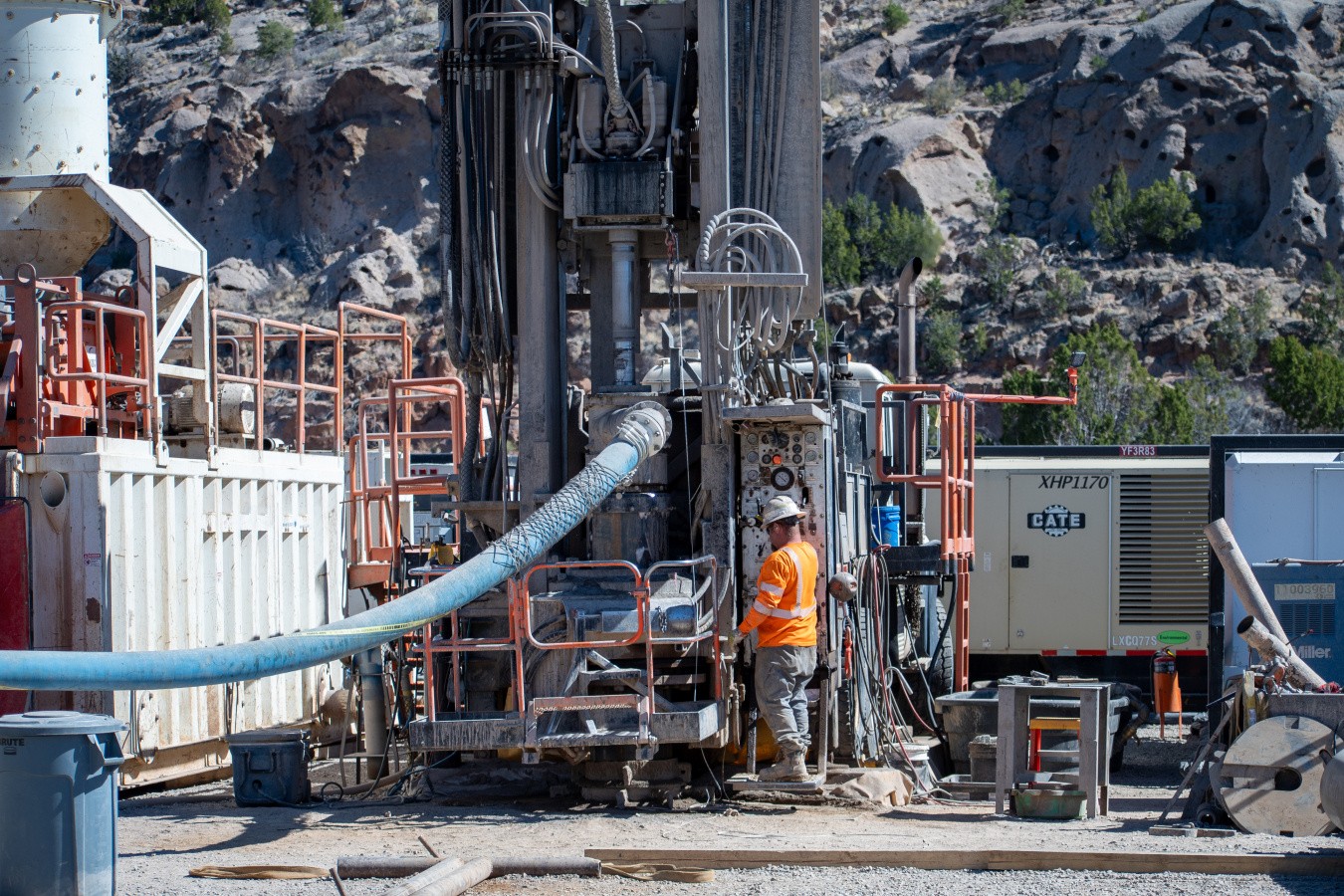
According to reports, its legacy cleanup contractor, Newport News Nuclear BWXT-Los Alamos LLC, has completed drilling of a new groundwater monitoring well. Designated R-80, the well reaches approximately 1,030 feet below ground surface and will be used to further characterize the northeastern extent of the hexavalent chromium plume and evaluate different remediation alternatives. Completion of this monitoring well also marks the achievement of a Fiscal Year 2026 consent order milestone for the hexavalent chromium remediation project.
Current estimates indicate that the hexavalent chromium plume lies approximately 1,000 feet beneath Mortandad Canyon and Sandia Canyon at Los Alamos National Laboratory, extending roughly 1 mile in length and 0.5 miles in width. The goal of the associated monitoring program is to continuously track plume behavior and minimize risks to human health and the environment.
Since 2018, the contractor has employed pump-and-treat methods to control the plume, extracting contaminated groundwater from four extraction wells and delivering it to a treatment facility in Mortandad Canyon, where chromium is removed through ion exchange technology. In November 2025, the New Mexico Environment Department required the cessation of the injection component of the hexavalent chromium plume pump-and-treat operations. Due to the temporary measure's system design and limited alternative discharge options, related temporary measure operations ceased following the halt of injection.
Groundwater well sampling data indicate that prior injection operations had created a hydraulic barrier in the injection zone, helping to contain and reduce the plume. In the initial months following shutdown of the injection system, hexavalent chromium concentrations rose in most monitoring wells. The U.S. Department of Energy Environmental Management Los Alamos Field Office and the New Mexico Environment Department believe that public and private drinking water wells are not currently under direct threat.
Stakeholders continue to coordinate next steps with the New Mexico Environment Department, the Office of the State Engineer, Los Alamos County, and the Pueblo of San Ildefonso.
Historical records show that between 1956 and 1972, a non-nuclear power plant at Los Alamos National Laboratory periodically discharged chromium-containing cooling tower effluent into Sandia Canyon. At that time, sodium dichromate containing hexavalent chromium was widely used as a corrosion inhibitor. As surface water infiltrated, these chromium-laden waters eventually reached the regional aquifer beneath Sandia Canyon and Mortandad Canyon. Los Alamos National Laboratory ceased use of sodium dichromate in the 1970s.
Disclaimer: Information republished from partner media, institutions or other websites is provided for reference and communication purposes only. It does not imply endorsement of its views or verification of its accuracy. Please contact us if any content infringes rights or requires correction.