
Institute of Radiation Medicine, Chinese Academy of Medical Sciences Promotes the Translation and Application of Medical X-ray Skin Protective Agent
 Scan to share
On September 10, Zhang Jianhong, Party Secretary of the Institute of Radiation Medicine, Chinese Academy of Medical Sciences, led a delegation to Nanjing to conduct research with the Institute of Dermatology, Chinese Academy of Medical Sciences and Jiangsu Haizhi Biomedical Co., Ltd., exchanging views on the translation and application of the "medical X-ray skin protective agent" project. Representatives from the hospital, research institute, and enterprise held discussions on industry-university-research collaboration, clinical demand alignment, and industrialization pathways.

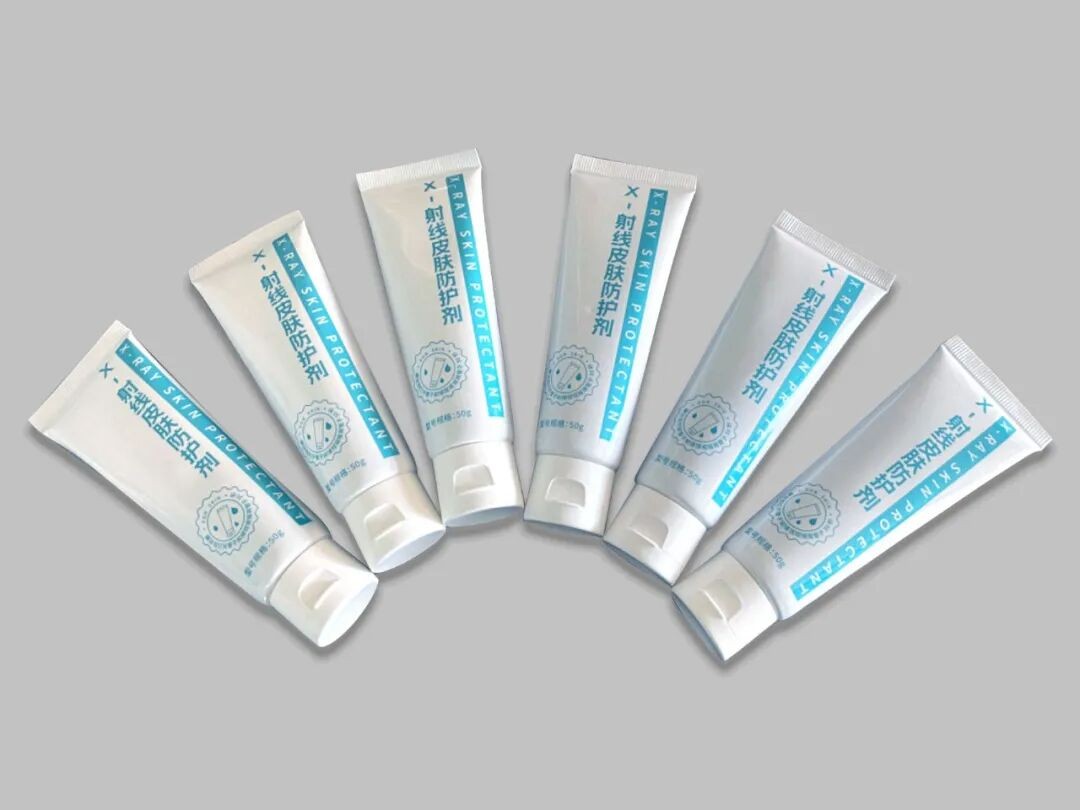
It is understood that the medical X-ray skin protective agent is one of the core products in the "radiation protection" series independently developed by the Institute of Radiation Medicine. After being put into production, the product is expected to become China's first medical X-ray skin protective agent for scar radiotherapy.
At the symposium, Zhang Jianhong stated that the Institute of Dermatology possesses abundant clinical resources in the field of skin diagnosis and treatment, the Institute of Radiation Medicine has long been deeply engaged in radiation protection research, and Haizhi Company has industrialization implementation capabilities. This research visit will further clarify the division of labor and collaboration mechanisms among the three parties in project implementation, and promote precise alignment between the product and clinical needs.
Gu Heng, Chief Physician of the Institute of Dermatology, proposed that the research and development of new products should be based on actual clinical needs, further optimizing the dosage form and expanding the range of indications. In response to issues such as the difficulty of protecting irregular wounds during scar radiotherapy and the hygiene hazards of traditional lead rubber protective materials, the translation and application of relevant protective products should be accelerated to fill the gap in clinical scar radiotherapy protection.
At the meeting, Chen Xu, Deputy Director (presiding over work) of the Research and Education Office of the Institute of Dermatology, combined clinical cases of scars to introduce protection issues and clinical needs during superficial radiotherapy; Zhou Xiaojing, Researcher at the Institute of Radiation Medicine and Project Leader, introduced the project's research and development status and application scenarios; Chen Xue, Head of the Industry Office of the Institute of Radiation Medicine, introduced subsequent cooperation ideas and goals; Yang Zheng, Deputy General Manager of Haizhi Company, introduced the Jiangsu Province medical device clinical innovation achievement translation "Spring Rain Action" special program and registration application procedures.
After the symposium, Zhang Jianhong and the delegation also conducted an on-site inspection of the pharmacy platform of the Institute of Dermatology to learn about the platform's construction and advantages, and conducted further communication on project cooperation implementation.
This research visit promoted the three parties to rely on the Jiangsu Province "Spring Rain Action" special policy and form a cooperation approach around the chain of "clinical demand—scientific research—industrial translation." Next, the Institute of Radiation Medicine, the Institute of Dermatology, and the medical device enterprise will use the medical X-ray skin protective agent project as an entry point to explore a collaborative innovation model of "clinical demand raising, institutes providing technology, enterprises making products," and advance industry-university-research cooperation in the field of radiation protection.
Disclaimer: Information republished from partner media, institutions or other websites is provided for reference and communication purposes only. It does not imply endorsement of its views or verification of its accuracy. Please contact us if any content infringes rights or requires correction.