
South Korea Conducts First Joint Radiation Emergency Exercise Involving Two Nuclear Power Plants Simultaneously
 Scan to share
The Nuclear Safety and Security Commission (NSSC) of South Korea announced on September 10 that South Korea held the "2026 National Joint Radiation Disaster Prevention Exercise," simulating a radioactive material release accident at the Wolsong Nuclear Power Plant in Gyeongju, North Gyeongsang Province, and the simultaneous entry into a radiation emergency state at the Hanul Nuclear Power Plant in Uljin County, North Gyeongsang Province.
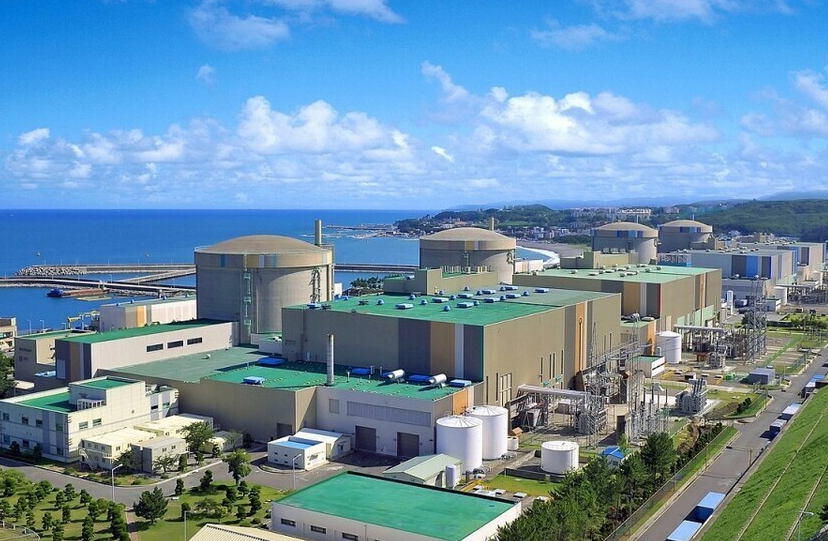
Approximately 2,000 people participated in the exercise, including relevant South Korean central government departments, local governments, specialized agencies, relevant operating organizations, local organizations, and nearby residents.
This exercise set up a compound disaster scenario of simultaneous radiation emergencies at multiple nuclear power plants for the first time. The exercise assumed that an earthquake caused a radiation disaster at Shin-Wolsong Unit 2, while multiple nuclear power plants including the Wolsong Nuclear Power Plant and the Hanul Nuclear Power Plant simultaneously entered radiation emergency states.
The NSSC stated that in order to respond to simultaneous accidents at multiple locations, the exercise reorganized and tested the on-site emergency response system, including clarifying and expanding the personnel dispatched by relevant central government departments to the on-site radiation disaster command center, as well as on-site emergency forces responsible for environmental radiation monitoring and emergency medical rescue tasks.
The exercise also set up a scenario in which the Wolsong Disaster Prevention Center was flooded due to aftershocks and could no longer perform its on-site command functions, and simulated the relocation of the on-site radiation disaster command center from Wolsong to the Ulsan-Ju Integrated Emergency Site.
Two broad-area local governments, North Gyeongsang Province and Ulsan City, as well as seven local governments including Gyeongju City, Pohang City, and Ulsan Jung-gu, established regional radiation disaster emergency command centers to inspect the implementation of resident protection measures. North Gyeongsang Province also set up temporary shelters at two locations including the Gyeongju Indoor Gymnasium and organized resident evacuation drills.
According to the exercise arrangements, relevant parties also conducted traffic control drills, expanding the scope of access control points to 21 locations, including 18 in Gyeongju and 3 in Pohang. This was the first time such measures were reflected in a national joint exercise since South Korea established radiation emergency traffic control guidelines last year.
NSSC Chairman Choi Won-ho stated that the experience from this exercise will be incorporated to continuously improve the radiation disaster prevention system, ensuring that relevant organizations can respond collaboratively when emergencies occur simultaneously at multiple nuclear power plants, and safeguarding public safety on site.
Disclaimer: Information republished from partner media, institutions or other websites is provided for reference and communication purposes only. It does not imply endorsement of its views or verification of its accuracy. Please contact us if any content infringes rights or requires correction.