

Gyeongju City Council in South Korea Conducts In-Depth Inspection of Wolsong Nuclear Power Plant and Radioactive Waste Treatment Facilities
Recently, the Gyeongju City Council of South Korea organized an in-depth on-site inspection, with the focus on the Wolsong Nuclear Power Plant and the Korea Atomic Energy Environment Corporation. The inspection team aimed to gain a comprehensive understanding of the operational safety of the nuclear power plant and the operation of radioactive waste treatment facilities, and to listen to feedback from relevant personnel. The purpose of this action was to conduct an in-depth investigation of core issues closely related to public safety, including the safety management status of the nuclear power plant and the operational model of radioactive waste treatment facilities. The council members hoped that through this inspection, they could gain a more intuitive understanding of the actual situation and provide reference for formulating more comprehensive policies. At the beginning of the inspection, the council members went to Wolsong...
2026-09-14
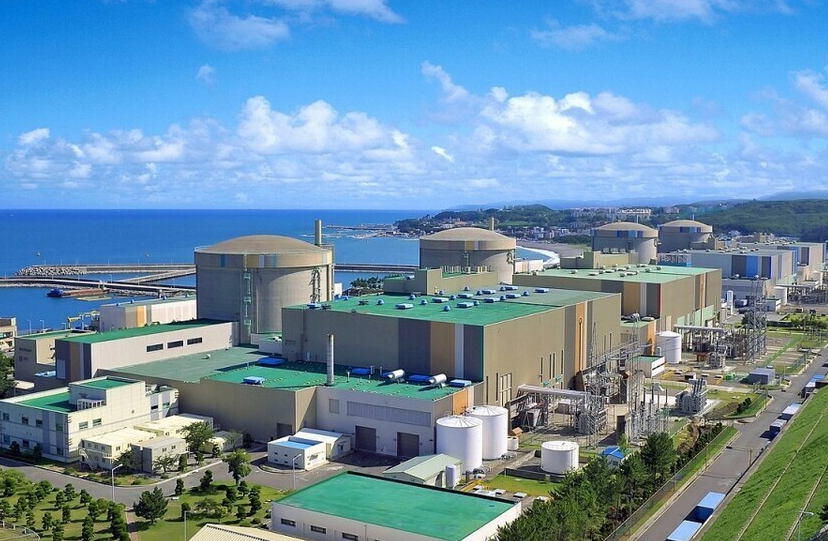
South Korea Conducts First Joint Radiation Emergency Exercise Involving Two Nuclear Power Plants Simultaneously
The Nuclear Safety and Security Commission (NSSC) of South Korea announced on September 10 that South Korea held the 2026 National Joint Radiation Disaster Prevention Exercise, simulating a radioactive material release accident at the Wolsong Nuclear Power Plant in Gyeongju, North Gyeongsang Province, and the simultaneous entry into a radiation emergency state at the Hanul Nuclear Power Plant in Uljin County, North Gyeongsang Province. Approximately 2,000 people participated in the exercise, including relevant South Korean central government departments, local governments, specialized agencies, relevant operating organizations, local organizations, and nearby residents. This exercise set up a compound disaster scenario of simultaneous radiation emergencies at multiple nuclear power plants for the first time. The exercise assumed that...
2026-09-12
Gyeongju City in South Korea Submits Key Requests to Government for Extension of Wolseong Nuclear Power Plant
Gyeongju City, North Gyeongsang Province, South Korea, stated on September 7 that it has submitted five key pending matters to the Ministry of Climate, Energy and Environment, covering nuclear power plants, support facilities for low- and intermediate-level radioactive waste disposal, and water supply guarantees for the Hyeongsan River basin. On the same day, Gyeongju Mayor Joo Nak-young and National Assembly member Kim Seok-ki met with Minister Kim Sung-hwan of the Ministry of Climate, Energy and Environment to explain the importance of the relevant projects to regional development and public welfare, and requested review and support at the central government level. Regarding support facilities for radioactive waste disposal...
2026-09-08
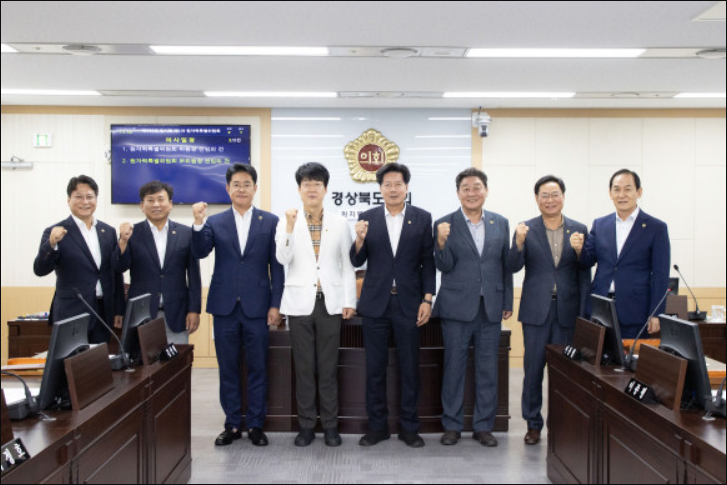
North Gyeongsang Provincial Council Establishes Special Committee on Nuclear Power
On August 25, the North Gyeongsang Provincial Council in South Korea established a Special Committee on Nuclear Power on the first day of its 365th special session, electing provincial council member Kim Jae-jun as committee chairman and Lee Dong-hyeop as vice chairman. According to reports, the committee will focus on addressing major nuclear power-related issues in the region, while also working to enhance the competitiveness of the nuclear power industry in North Gyeongsang Province and safeguard the safety and rights of provincial residents. North Gyeongsang Province is one of the regions in South Korea with a relatively high concentration of nuclear power facilities, having already developed a certain base of nuclear institutions and industrial infrastructure. With the recent confirmation of two new nuclear reactor projects in Yeongdeok County, the committee plans to strengthen on-site investigations and legislative activities to promote the nuclear power industry as a new growth driver for the region's underdeveloped areas.
2026-08-25

South Korea's Wolsong Nuclear Power Plant Units 2, 3, and 4 Pressure Tube Procurement Pushed for Preliminary Feasibility Study Exemption, Sparking Controversy
The lifetime extension issue for South Korea's Wolsong Nuclear Power Plant Units 2, 3, and 4 has not yet been finalized, yet the procurement of pressure tubes—the core equipment—is being pushed to be excluded from the preliminary feasibility study, triggering a direct confrontation between industry circles and environmental groups. The Korea Hydro & Nuclear Power labor union recently submitted a proposal to Democratic Party lawmaker Song Young-gil, requesting that the government grant a preliminary feasibility study exemption for the relevant procurement and initiate ordering at the earliest opportunity. Song subsequently forwarded the opinion to the Office for Government Policy Coordination. It is understood that the government is internally considering submitting the matter as an exemption case for deliberation at the September State Council meeting. Supporters argue that Wolsong Units 2, 3, and 4 are pressurized heavy water reactors, and pressure tubes are critical equipment determining unit operation, from order placement...
2026-08-13

Sea Temperature Approaching Shutdown Threshold, Nuclear Power Belt on South Korea's East Coast Faces Load Reduction Pressure
Climate change is pushing nuclear power plants on South Korea's east coast toward new operational boundaries. South Korean nuclear plants generally rely on seawater as cooling water; after the heat generated by the reactor drives the turbine, seawater is needed to condense the steam back into water. Once the intake water temperature approaches or exceeds the design seawater temperature set by the equipment, heat exchange efficiency declines, affecting the heat dissipation capacity of key safety systems, and the plant must reduce load or even shut down in accordance with safety regulations. The area currently at greatest risk is around Uljin in North Gyeongsang Province. Data from the National Institute of Fisheries Science shows that nearshore surface seawater temperatures along parts of the east coast have approached 30°C, with multiple observation points near Uljin recording approximately 29.6°C to 30.2°C on the afternoon of August 7.
2026-08-10

South Korea Accelerates Safety Reviews of Long-Term Operating Nuclear Reactors and Advances Licensing of First Spent Fuel Dry Storage Facility
The Nuclear Safety and Security Commission (NSSC) of South Korea stated at its second-half work report meeting on August 4 that it will accelerate safety reviews of long-term operating nuclear reactors while simultaneously advancing regulatory efforts such as licensing systems for spent fuel dry storage facilities and small modular reactors. Under the plan, the NSSC will conduct safety inspections on nine reactors applying for continued operation, with review standards referencing newly built nuclear power plants and confirming safety margins in consideration of the characteristics of long-term unit operation. Among these, whether Kori Nuclear Power Plant Units 3 and 4 will be approved for continued operation in the second half of this year, and whether Hanbit Nuclear Power Plant Units 1 and 2 will be approved for continued operation in the first half of next year, are the near-term review priorities...
2026-08-05
Heavy water leak at Wolseong Nuclear Power Plant Unit 2 in South Korea found to be far larger than initially reported
The actual scale of the heavy water leak that occurred at Wolseong Nuclear Power Plant Unit 2 in Gyeongju, North Gyeongsang Province, South Korea, in September last year, is reported to be far larger than the initially disclosed figure. The Gyeongju Environmental Movement Alliance disclosed on the 30th that a detailed internal report obtained from Korea Hydro & Nuclear Power (KHNP) shows the total amount of heavy water leaked was 1,311.15 kg, approximately five times the initially reported 256 kg, of which 5.14 kg was recorded as having leaked outdoors. After the incident, Korea Electric Power Corporation (KEPCO) had reported a heavy water leak of 256 kg and stated that no external leakage occurred. The detailed report now made public reveals...
2026-07-30
Reading Ranking
- 1 South Korea Conducts First Joint Radiation Emergency Exercise Involving Two Nuclear Power Plants Simultaneously
- 2 Sea Temperature Approaching Shutdown Threshold, Nuclear Power Belt on South Korea's East Coast Faces Load Reduction Pressure
- 3 Gyeongju City in South Korea Submits Key Requests to Government for Extension of Wolseong Nuclear Power Plant
- 4 Heavy water leak at Wolseong Nuclear Power Plant Unit 2 in South Korea found to be far larger than initially reported
- 5 South Korea Accelerates Safety Reviews of Long-Term Operating Nuclear Reactors and Advances Licensing of First Spent Fuel Dry Storage Facility
- 6 South Korea's Wolsong Nuclear Power Plant Units 2, 3, and 4 Pressure Tube Procurement Pushed for Preliminary Feasibility Study Exemption, Sparking Controversy
- 7 North Gyeongsang Provincial Council Establishes Special Committee on Nuclear Power
- 8 Gyeongju City Council in South Korea Conducts In-Depth Inspection of Wolsong Nuclear Power Plant and Radioactive Waste Treatment Facilities