
Search Results
Keyword:CANDU

Romania and Argentina Nuclear Power Companies Sign Memorandum of Understanding to Deepen CANDU 6 Heavy Water Reactor Technology Cooperation
Romania's National Nuclear Power Company (SNN) and Argentina's Nuclear Power Company (NASA) signed a non-binding memorandum of understanding on Thursday. According to a press release issued by the Romanian company, the two parties will engage in in-depth cooperation in the operation and development of CANDU 6 heavy water reactor technology. Both companies possess strong technical strength and rich practical experience in the engineering design, daily operation, equipment maintenance, large-scale project management, life extension, nuclear safety analysis, and reactor operation of CANDU 6 technology nuclear reactors. Argentina's Nuclear Power Company had previously successfully completed the refurbishment and upgrade of the Embalse Nuclear Power Plant, which uses CANDU technology...
2026-09-18
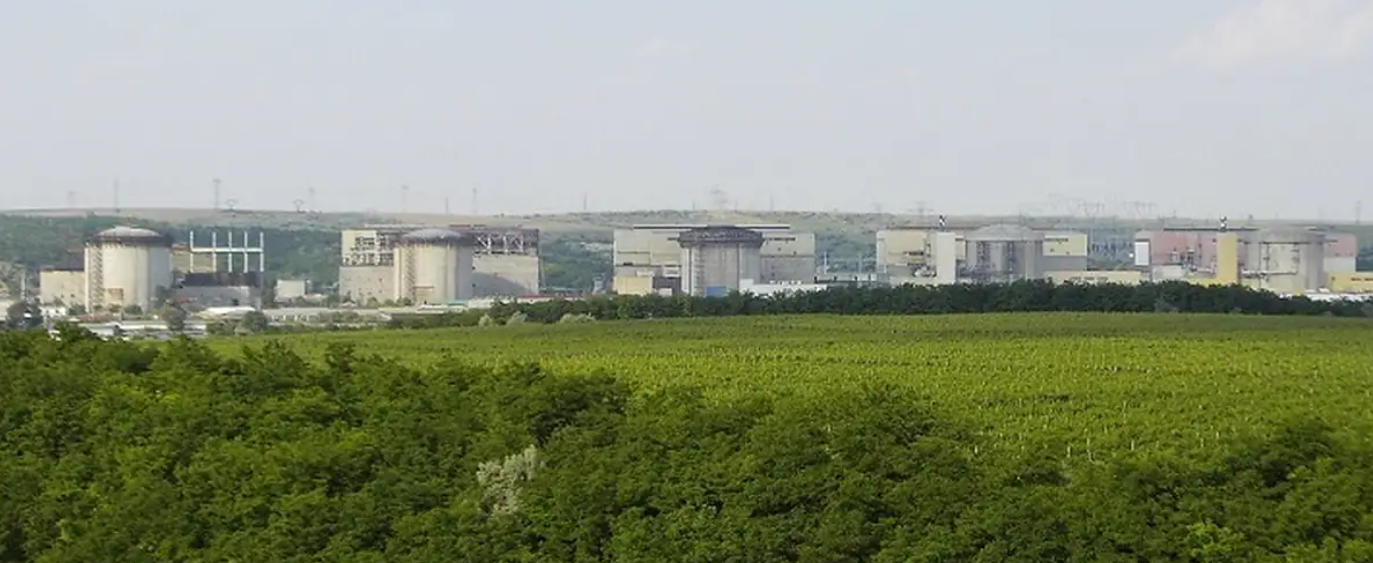
Romania's Cernavoda Nuclear Power Plant to Remain Offline Until at Least September 18 Due to Low Danube River Levels
On September 8, Romania's Cernavoda Nuclear Power Plant was expected to remain offline until at least September 18 due to low water levels in the Danube River. Emil Macovei, Technical Director of Nuclearelectrica, the operator of the Cernavoda plant, stated that over the next 10 days, the Danube's water volume would still be insufficient to support the restart of either of the plant's two units. Romania's Antena 3 television channel quoted him as saying that current hydrological conditions do not yet meet the requirements for unit operation. Cristian Busoi, Secretary of State at Romania's Ministry of Energy, said that predictions regarding the plant's restart timeline were "rather optimistic," and the ministry is currently unable to provide a definitive date for resuming operations. He confirmed that...
2026-09-09

Argentina's Nucleoeléctrica Argentina adjusts organizational structure to boost nuclear service exports
The Board of Directors of Nucleoeléctrica Argentina SA held a meeting on August 12, 2026, and approved Resolution No. 1018, authorizing adjustments to the company's organizational structure with a focus on supporting the development of new business units, particularly the export of specialized nuclear services to international markets. This adjustment provides organizational support for the company's earlier formal incorporation of "provision of services to foreign nuclear facilities" into its corporate purpose. In recent years, the company has participated in projects and services related to nuclear facilities in Canada, Brazil, China, South Korea, and Spain, and has developed proprietary technological solutions applicable to CANDU reactors. Under the new structure, the company's management...
2026-08-22
Embalse Nuclear Power Plant Life Extension Experience Boosts Argentina's Nuclear Power Service Exports
Argentina's Embalse Nuclear Power Plant life extension project has become an important technical foundation for the country's nuclear power service exports. Between 2015 and 2019, the Embalse Nuclear Power Plant underwent a large-scale refurbishment, with core work including reactor tube replacement, fuel channel replacement, steam generator renewal, and upgrade of the plant's computer control system, enabling the unit to operate for another 30 years. Nuclear power plant life extension is one of the most technically challenging projects in the energy sector, requiring the dismantling, inspection, assessment, and refurbishment of key equipment that has been in operation for decades, with stringent requirements for engineering precision, quality control, and project management capability. Through the Embalse Nuclear Power Plant project, Argentina has for the first time fully implemented this complex process.
2026-08-19

CCTE Commissions Kinectrics for Independent Review of ANEEL Fuel Qualification Program
Clean Core Thorium Energy (CCTE) has commissioned Kinectrics Inc. (Kinectrics) to conduct an independent technical review of its ANEEL fuel qualification program, advancing the fuel's technical and regulatory qualification preparations ahead of demonstration in commercial reactors. Kinectrics is a subsidiary of BWX Technologies Inc. (BWXT). Photo: Front row, left to right: John D'Angelo, President of Kinectrics, and Milan Shah, Chief Operating Officer of CCTE; Back row, left to right: Sean Donnelly, Vice President of New Nuclear Construction, Paul...
2026-08-19
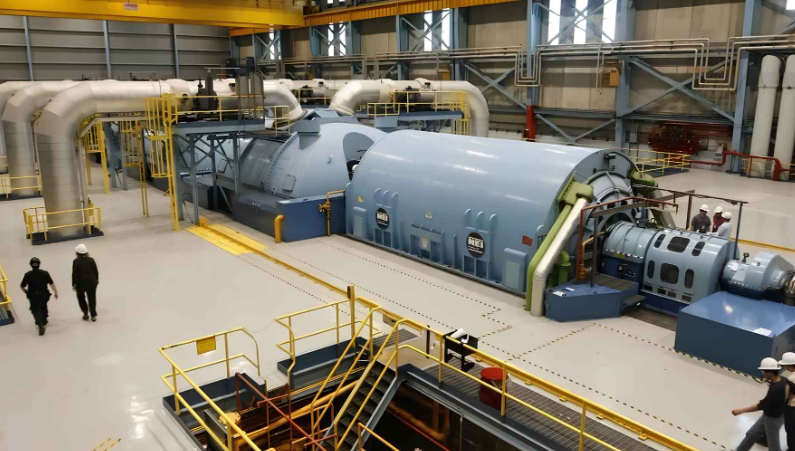
Canadian laboratory validates molten salt separation process with real spent fuel, extracting nearly 90% of plutonium in 24 hours
A chemical experiment in Canada involving real commercial reactor spent fuel has achieved noteworthy progress. Canadian Nuclear Laboratories, in shielded hot cells at Chalk River, used irradiated spent fuel from CANDU reactors to validate the first phase of Moltex Energy's waste-to-stable-salt process. The experiment showed that within 24 hours, 89.4% of the plutonium was transferred into the molten salt; by 60 hours, this proportion rose to 94.3%. Meanwhile, the vast majority of uranium remained outside the salt phase, indicating that the process exhibits strong selectivity in separating target elements. This process, named WATSS, is not a plutonium purification route but rather a group separation technology. In addition to large quantities of uranium, spent fuel contains fission products as well as transuranic elements such as plutonium and americium, the latter being a significant source of long-term radiological risk. WATSS uses high-temperature chloride molten salt and specific reducing metals to convert transuranic oxides into salt-soluble forms, while most uranium oxides remain solid. In this experiment, researchers used niobium as the reducing metal; after 24 hours, only 0.05% of uranium entered the salt, dropping to 0.02% after 60 hours, demonstrating that it does not carry large amounts of uranium into the molten salt system.
2026-08-09

Vietnam's Ministry of Science and Technology and Canada's Saskatchewan Province Strengthen Cooperation on Peaceful Use of Nuclear Technology
Vietnam and Canada's Saskatchewan Province are cooperating on the peaceful use of nuclear technology. Officials from both sides met in Hanoi on August 5, 2026, to discuss directions for cooperation in science, technology, and innovation, particularly in advanced nuclear technology. The Vietnamese side stated that as Vietnam's energy demand grows, ensuring a stable, green, and clean energy supply is of paramount importance, expressing strong interest in research on small modular reactors (SMRs) as well as CANDU reactor technology. During the meeting, both sides discussed strengthening cooperation among regulatory agencies, legal departments, and research organizations in the nuclear technology field, covering legal framework development, technical standards, nuclear safety and safeguards assessment licensing, accident response, and...
2026-08-06

University of Toronto joins Canadian Nuclear Laboratories academic partnership program
The University of Toronto (U of T) has joined Canadian Nuclear Laboratories' (CNL) academic partnership program, becoming the tenth participating institution in the initiative. This effort aims to strengthen Canada's nuclear talent pipeline and support related research. A signing ceremony was held at the Schwartz Reisman Innovation Campus, marking the formal establishment of the partnership between the University of Toronto, Canadian Nuclear Laboratories, and Atomic Energy of Canada Limited (AECL). The academic partnership program will provide participating institutions with access to national laboratory infrastructure, technology, and expertise, with collaboration areas spanning clean energy, health care, environmental remediation, and national security, among others. This...
2026-08-06
Danube Water Levels Continue to Drop, Putting Pressure on Romania's Cernavodă Nuclear Power Plant Operations
Romanian official Sorin Lindasu said on August 1 that if the Danube River water level continues to decline, the Cernavodă Nuclear Power Plant in Constanța County, southeastern Romania, may only be able to continue operating for 4 to 5 days. To ensure the water level required for continuous plant operation, relevant parties have begun implementing hydraulic engineering works on the Danube. Lindasu stated that the Danube water level is currently dropping at a rate of about 2 to 3 centimeters per day. A flow rate of 1,590 cubic meters per second has been recorded at the Baziaș inlet where the Danube enters Romanian territory, and this figure is expected to continue declining, potentially falling to about 1,450 cubic meters per second by August 7. Under these conditions, Cernavodă...
2026-08-03
Unit 2 of Romania's Cernavoda Nuclear Power Plant not to shut down temporarily due to low Danube water level
Romania's National Nuclear Power Company (Nuclearelectrica) stated on July 30 that Unit 2 of the Cernavoda Nuclear Power Plant will continue to operate connected to the grid. Previously, the company had warned that the unit, located in Constanța County in southeastern Romania, might need to shut down due to the low water level of the Danube River. The company said that based on an operational analysis completed the previous night, experts believe the currently obtained relevant parameters allow Unit 2 to continue operating under safe conditions. Therefore, the unit will remain connected to Romania's national power system. Nuclearelectrica also stated that technical personnel will continuously monitor and analyze the plant's operating parameters. Given the subsequent hydrological forecasts for the Danube water level...
2026-07-31