
Search Results
Keyword:Department of Energy

US Antares Selected for DOE Nuclear Energy Launch Pad Program
Antares has been selected for the U.S. Department of Energy (DOE) Nuclear Energy Launch Pad program. Led by the DOE Office of Nuclear Energy and the National Reactor Innovation Center (NRIC), the program aims to advance nuclear technologies from concept to commercial deployment. This selection further expands Antares' business footprint in Texas. Previously, the company was selected to deliver a microreactor to Joint Base San Antonio under the U.S. Air Force's Advanced Nuclear Power Facilities program. Antares CEO and co-founder Jordan Bramble stated that the reactor pilot program has accelerated the company's growth and...
2026-08-31
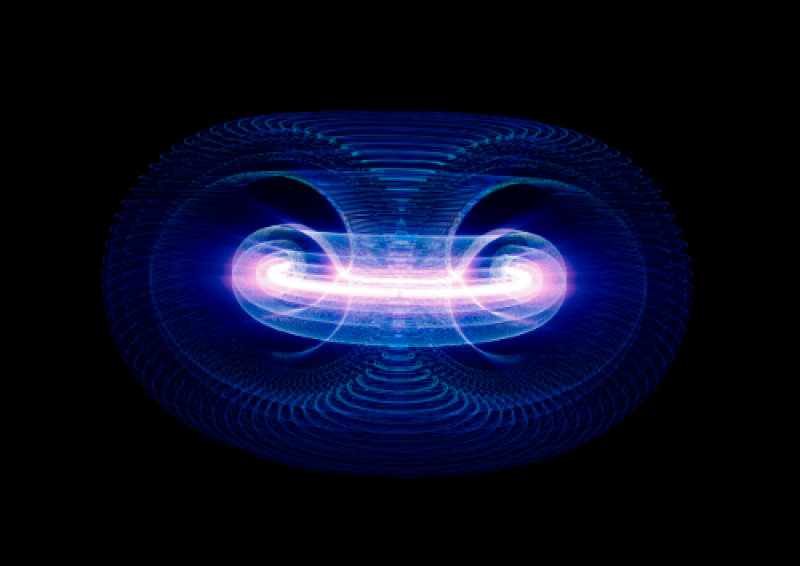
U.S. Fusion Roadmap Targets Early Power Plant Deployment by Mid-2030s
The U.S. Department of Energy (DOE) recently released the "Fusion Science and Technology Roadmap," proposing to accelerate the deployment of early fusion power plants by the mid-2030s. The roadmap represents a key federal-level arrangement to advance fusion technology from experimental research toward engineering and commercialization, coordinated by the Office of Fusion established in November 2025. Unlike existing nuclear power plants that release energy through fission reactions, fusion devices attempt to fuse light atomic nuclei together, with an energy source principle identical to that of the Sun. Fusion power is regarded as a potential low-carbon energy direction, but the industry remains in the experimental and demonstration stage, with private developers yet to achieve commercial-scale net energy gain, i.e...
2026-08-26

U.S. Department of Energy Extends Princeton University Contract to Operate PPPL
The U.S. Department of Energy (DOE) and Princeton University have extended the contract under which Princeton University manages and operates the Princeton Plasma Physics Laboratory (PPPL). The laboratory is located on Princeton University's Forrestal Campus in Plainsboro, New Jersey. Under the new extension, the contract will be renewed for five years starting April 1, 2027. Princeton University expects to strengthen collaboration with faculty and research teams on campus during the contract period, explore next-generation fusion energy research facilities, and enhance laboratory infrastructure and safety to support ongoing operational needs. Princeton University's office for research affairs...
2026-08-25

U.S. Department of Energy Selects Fermilab to Lead AI Project to Enhance Superconducting Radio-Frequency Cavity Control in Particle Accelerators
The U.S. Department of Energy's Genesis Program recently selected an artificial intelligence project led by Fermi National Accelerator Laboratory, supporting its collaboration with national laboratories, universities, and industry to use AI and machine learning technologies to improve resonance control in particle accelerators. The project aims to enhance accelerator operational performance and beam stability while reducing energy consumption and operating costs. Superconducting radio-frequency cavities are being assembled and tested, ready for installation on the Proton Improvement Plan-II at the Fermilab Accelerator Complex. By finely tuning the resonant frequency of the cavities, scientists can optimize acc...
2026-08-21

U.S. Department of Energy Awards $271 Million to Support Extended Operation of Diablo Canyon Nuclear Power Plant
The U.S. Department of Energy (DOE) recently awarded $271 million to Pacific Gas and Electric Company (PG&E) to support the continued operation of the Diablo Canyon Nuclear Power Plant. The funding will be used to ensure the plant maintains safe and reliable power generation during the license extension period and to support workforce stability. In April of this year, the U.S. Nuclear Regulatory Commission (NRC) approved a 20-year extension of the operating licenses for both units at Diablo Canyon. Under the previous schedule, the plant's two units were originally slated to cease commercial operation in 2025. Assistant Secretary for Nuclear Energy Ted Garrish stated that keeping Diablo Canyon operational is of great significance in meeting California's growing demand for affordable, reliable, and safe electricity. The Civil Nuclear Credit Program is helping protect this critical baseload power source and prevent premature retirement of reliable generation facilities from the grid.
2026-08-15

X-energy says U.S. Department of Energy plans to add up to $1 billion in funding for Texas advanced nuclear reactor project
X-energy CEO Clay Sell said during an earnings call on August 13 that the U.S. Department of Energy (DOE) has informed the company it will add up to $1 billion in public funding for the advanced nuclear energy project it is advancing with Dow Inc. in Texas. Sell stated that total available public funding for the Dow project in Seadrift, Texas, will reach up to $2.15 billion since 2021. The additional funding will carry the same 50-50 cost-sharing requirement as the initial award. The project is supported by the DOE's Advanced Reactor Demonstration Program (ARDP)...
2026-08-14
GAO: DOE Nuclear Cleanup "End-State Contract Model" Exceeds Budget by $500 Million in Six Years and Misses Goals
A report released by the U.S. Government Accountability Office (GAO) on July 29 shows that the Office of Environmental Management (EM) at the U.S. Department of Energy has accumulated over $500 million in cost growth on nuclear waste cleanup contracts since 2020, yet the agency cannot fully explain the reasons for these increases. EM is responsible for cleaning up 15 sites in the United States contaminated by nuclear weapons production and energy research. To address long-standing contract management problems, EM adopted the End-State Contract Model (ESCM) starting in fiscal year 2020, breaking cleanup work into smaller task orders under larger master contracts, with the goal of improving cost predictability, accelerating cleanup progress, and enhancing performance outcomes...
2026-08-12

U.S. Department of Energy Selects SHINE Technologies for Genesis Initiative, AI to Optimize Reprocessing of 95,000 Tons of Spent Nuclear Fuel
The U.S. Department of Energy has selected SHINE Technologies to participate in the Genesis mission, advancing the application of artificial intelligence in the nuclear industry. The core objective of the project is to develop an AI-assisted design system for engineers to plan more efficient spent fuel reprocessing facilities. The United States currently has approximately 95,000 tons of accumulated spent nuclear fuel, which has historically posed long-term storage and disposal challenges. The new approach seeks to recover still-valuable components from this material, reducing waste volume and improving resource utilization. The key to this project lies in transforming traditional engineering design methods. In the past, metrics such as throughput, final product quality, and waste volume in nuclear fuel reprocessing processes were typically evaluated separately...
2026-08-09

SHINE Selected for Two U.S. Department of Energy AI Nuclear Fuel Recycling Projects
SHINE Technologies, a U.S. fusion energy company, has recently been selected for projects under the U.S. Department of Energy's Genesis Mission, participating in two artificial intelligence applications for the nuclear energy sector. Among these, SHINE will lead a nuclear fuel cycle facility optimization project and join the Prometheus project, a collaborative effort between national laboratories and industry. The project led by SHINE, named AI-Guided Fuel Cycle Facility Optimization, is a Phase 1 project with Argonne National Laboratory as the technical partner. The project plans to develop an AI-assisted workflow to help engineers...
2026-08-07

Two Advanced Materials Research Projects by 1st American Nuclear Co. Supported by U.S. Department of Energy Nuclear Science User Facilities Program
1st American Nuclear Co. (FANCO) announced on August 3 that two research proposals submitted by its scientists have been selected for support under the Nuclear Science User Facilities (NSUF) program of the U.S. Department of Energy Office of Nuclear Energy. Both selected projects come from the NSUF Fiscal Year 2026 Rapid Turnaround Experiment (RTE) review cycle, with research focused on next-generation reactor materials and fuel-related issues. The NSUF Rapid Turnaround Experiment program is open to nuclear energy researchers and primarily provides irradiation testing, post-irradiation examination capabilities, and related technical support...
2026-08-06

Philippine DOE launches nuclear power plant site screening with IAEA support
The Philippine Department of Energy (DOE) recently stated that it has begun preparing nuclear power plant site screening work in accordance with internationally recognized safety standards. Collaborating with experts from the International Atomic Energy Agency (IAEA), the DOE is wrapping up an intensive workshop on site and external event design this week to strengthen the country's nuclear power plant site screening process. Energy Secretary Sharon Garin stated that selecting the right site is one of the most critical decisions in developing a nuclear power program, and that close collaboration with the IAEA ensures every step is guided by the highest international standards of science, rigorous technical assessment, and resilient public safety protection. The workshop brought together technical experts from the DOE and partner agencies alongside specialists from the IAEA's External Events Safety Section to share recognized methodologies for assessing potential sites against earthquakes, floods, volcanic activity, extreme weather, and other natural and human-induced risks.
2026-08-03

U.S. Department of Energy Highlights Progress in Legacy Waste Cleanup and Medical Isotope R&D
Recently, senior officials from the U.S. Department of Energy attended an event hosted by the U.S. House Nuclear Cleanup Caucus, presenting the application progress of legacy nuclear waste cleanup efforts in medical isotope R&D and future energy technologies. The event, themed "DOE's Isotope Mission: Legacy Cleanup Saves Lives, Empowers America's Future," focused on how nuclear cleanup missions align with isotope production and medical research. DOE's Under Secretary for Science Dario Gil, along with Oak Ridge National Laboratory Environmental Management Office Manager Eric Olds and Savannah River Operations Office Manager Edwin DeShon, jointly attended the event. DeShon...
2026-08-03

U.S. Department of Energy Selects Five States to Explore Building Nuclear Lifecycle Innovation Hubs
The U.S. Department of Energy (DOE) announced on July 28 that it has selected Utah, Tennessee, Oklahoma, Louisiana, and Idaho as potential host states for Nuclear Lifecycle Innovation Hubs. The DOE has signed memorandums of understanding with these five states and will continue to evaluate the conditions and plans for hosting the hubs in each state. On January 28 of this year, the DOE issued a Request for Information, inviting states to express interest in building Nuclear Lifecycle Innovation Hubs. The proposed hubs are intended to support full lifecycle activities for nuclear fuel, including fuel fabrication, uranium enrichment, spent nuclear fuel reprocessing, and waste disposal. Depending on state priorities and regional capabilities, the hubs may also accommodate...
2026-07-30

The U.S. Department of Energy conditionally allocates HALEU fuel to NASA and Radiant.
On July 23, the U.S. Department of Energy (DOE) announced a conditional commitment to provide High-Assay Low-Enriched Uranium (HALEU) to NASA and Radiant Industries to meet near-term fuel needs. This marks the third round of HALEU allocations; the materia
2026-07-27