
Search Results
Keyword:France

France Approves Preliminary Works for EPR2 Project at Gravelines Nuclear Power Plant
The French government issued a decree on August 22, local time, approving French utility EDF to launch preliminary preparation works for two EPR2 pressurized water reactors at the Gravelines nuclear power plant, and granting it related environmental permits for site development. The plant currently operates six 900 MW units and is the largest nuclear power station in Western Europe by installed capacity. According to the decree, the approved works include construction of construction platforms and site facilities, relocation of the existing rail terminal, earthworks, foundation reinforcement, construction of waterproof containment structures, and construction access roads. The work also involves relocation of protected flora and fauna, construction of a public information center, and construction of some ancillary parking facilities. EDF said...
2026-08-25

France Authorizes CEA to Dismantle the Pégase Research Reactor Facility at Cadarache
The French Official Journal published a decree on August 23 authorizing the French Alternative Energies and Atomic Energy Commission (CEA) to carry out dismantling operations on the Pégase (Pégase) nuclear facility located at the Cadarache site in Saint-Paul-lès-Durance, Bouches-du-Rhône department. The facility is classified as Basic Nuclear Installation No. 22 (INB 22). The decree specifies the implementation phases for the partial dismantling of the Pégase research reactor and authorizes the CEA to build the equipment required for the dismantling operations. Under the decree, the boundaries of the Pégase facility will be adjusted to provide the necessary space for the layout of dismantling equipment and the temporary storage of waste generated during the dismantling process. The dismantling scope covers the Pégase facility itself, including the main building housing the storage and treatment...
2026-08-25

CERN Large Hadron Collider Data Challenge Models of Oxygen and Neon Nucleus Structure
Physicists at the European Organization for Nuclear Research (CERN), analyzing a new batch of collision data from the CMS detector at the Large Hadron Collider, have found that oxygen and neon nuclei do not behave entirely as predicted by existing models in high-energy collisions. This result indicates that the scientific community's understanding of the shapes and internal structures of certain light nuclei still requires further refinement. In high-energy nuclear collisions, a quark-gluon plasma is briefly formed in the collision region. This state of matter decays rapidly, but the collective flow characteristics of its particles can be used to infer the collision geometry and indirectly provide information about nuclear structure. Researchers believe that symmetric collisions of light ions help better control the initial collision conditions, making them suitable for studying collective responses in small systems.
2026-08-24

Brive in France Tests Sterile Insect Technique Using X-Ray Irradiation to Control Tiger Mosquitoes, Preliminary Results Show Nearly 60% Sterility Rate in Mosquito Eggs
The city of Brive-la-Gaillarde in the Nouvelle-Aquitaine region of France is using the Sterile Insect Technique (SIT) to control tiger mosquitoes. Since May 2025, the city has been working with the Montpellier-based company Terratis, releasing male mosquitoes that have been treated with X-ray irradiation and rendered incapable of reproduction, in order to reduce the tiger mosquito population. The core of this method is to allow sterile males to mate with wild females, causing the females to lay eggs that cannot hatch. Although it may appear that mosquitoes are still being released in active mosquito areas, the released individuals are males, which do not bite humans. As of October 31, 2025, Brive has deployed nearly 11 million sterile male mosquitoes across 58 release points covering more than 100 hectares, with a weekly release volume of approximately 400,000...
2026-08-23

ITER vacuum vessel assembly in France progresses steadily, with five European sectors at different critical stages
The vacuum vessel assembly work for the International Thermonuclear Experimental Reactor (ITER) project in southern France is progressing steadily. As the core component of the ITER tokamak device, the vacuum vessel will contain the plasma confined by superconducting magnets, serving as the critical space where fusion reactions occur. This stainless steel ring-shaped structure weighs approximately 5,200 tonnes in total, measures 19.4 meters in diameter, and consists of nine sectors, five of which are manufactured by Europe. The European Fusion for Energy organization (F4E), together with the AMW consortium comprising Ansaldo Nucleare, Westinghouse Electric Italy, and Walter Tosto Company, is responsible for the related manufacturing work.
2026-08-21

CERN Injector Complex Enters Final Beam Run Phase Before LS3
The CERN accelerator complex is entering its final operational phase before the third Long Shutdown (LS3). With the Large Hadron Collider (LHC) having already entered LS3, the injector complex and associated facilities will continue high-intensity beam operations until 6:00 a.m. on Monday, August 31, after which the operations team will hand over control to the LS3 coordination team, marking the formal transition of the entire accelerator complex into the shutdown maintenance phase. August 19, 2026, page one of the SPS. The third run of the injector complex is drawing to a close. (Image: CERN) During the final week-plus of operations, CERN will continue delivering proton and ion beams to physics experiments.
2026-08-21

CERN measures niobium-94 neutron capture for the first time, shedding new light on the mystery of molybdenum abundance in ancient stardust
The n_TOF collaboration at CERN recently reported that researchers have for the first time measured the probability of neutron capture by niobium-94. The results, published in Physical Review Letters, provide new experimental evidence for explaining the anomalous abundance of molybdenum-94 in presolar grains. The EAR2 facility in the n_TOF experiment at CERN produces intense neutron beams, opening new possibilities for nuclear research. Credit: CERN Niobium-94 is a niobium isotope containing 41 protons and 53 neutrons, occupying a critical juncture in the nuclear reaction chain that produces heavy elements in dying stars. Researchers are interested in it because niobium-94 is very close to molybdenum-94, differing by just one fewer proton and one more neutron. Under the high-temperature, high-pressure conditions inside stars, niobium-94 may either transform into molybdenum-94 through beta decay or form niobium-95 through neutron capture. The competition between these two reaction pathways directly affects scientists' understanding of the origin of molybdenum-94.
2026-08-20
Unit 3 of France's Gravelines Nuclear Power Plant Reconnected to Grid, Unit 4 Remains Shut Down
According to EDF on August 18, Unit 3 of the Gravelines Nuclear Power Plant in northern France was reconnected to the national grid at 3:55 a.m. local time on August 18. The unit had been automatically shut down at 7:43 p.m. on August 10 in accordance with established safety protection procedures due to a large influx of jellyfish into the seawater pump station filtration system. The Gravelines Nuclear Power Plant has a total of six units. On August 10, a large number of jellyfish entered the pump station used to draw seawater for cooling nuclear facilities, affecting equipment such as pre-filters and filter drums. In accordance with operating procedures, Units 3 and 4 were automatically shut down; the operating team also shut down Unit 2 and reduced Unit 1's power to 50% to adapt to changing site conditions. Unit 5 was...
2026-08-20

CMS Experiment Advances Higgs Boson Pair Search with New Data
The CMS Collaboration has recently announced new progress in the study of Higgs boson pair production. The study is based on proton collision data at a center-of-mass energy of 13.6 TeV recorded by the CMS detector from 2022 to 2024, focusing on the search for processes where one Higgs boson decays to a bottom quark–antiquark pair and the other decays to a τ lepton–antitau pair, namely the HH→bbττ channel. Since the discovery of the Higgs boson in 2012, the CMS and ATLAS Collaborations have continuously measured the interactions of the Higgs boson with other Standard Model particles, and the results so far remain generally consistent with Standard Model predictions. In contrast, the “self-coupling” among multiple Higgs bosons...
2026-08-17

ITER Tokamak Advances Assembly in France, Fusion Experiment Targets 150 Million Degree Celsius Plasma
The ITER tokamak being assembled in southern France is one of the most closely watched large-scale experimental devices in global nuclear fusion research. The machine weighs approximately 23,000 tonnes in total and adopts a donut-shaped toroidal structure, using strong magnetic fields to confine high-temperature plasma, with the goal of replicating on Earth the conditions for fusion reactions that occur inside stars. Its plasma volume is approximately 830 cubic meters, far exceeding previous tokamak devices, and it is therefore expected to validate the key physics and engineering technologies required for future commercial fusion reactors. ITER adopts the toroidal tokamak structure because charged particles can move along toroidal paths under strong magnetic fields, thereby minimizing direct contact with the device's inner walls...
2026-08-14
French city of Illkirch plans to test sterile insect technique to combat tiger mosquitoes
Thibaud Philipps, Mayor of Illkirch-Graffenstaden in France's Bas-Rhin department, hopes to pilot the Sterile Insect Technique (SIT/TIS) locally, sterilizing male tiger mosquitoes through radiation and releasing them regularly to curb population growth. According to local authorities, tiger mosquitoes have been officially established in Illkirch-Graffenstaden since 2019. In recent years, the local tiger mosquito population has continued to increase, significantly impacting residents' daily lives. The municipal government has previously implemented multiple control measures, including launching the "Tiger Team" project in 2024 to educate the public on mosquito prevention and control methods, as well as providing subsidies of up to 50 euros per household for purchasing mosquito traps. To date, approximately 400 households have received relevant traps...
2026-08-12

Three units at France's Gravelines nuclear power plant automatically shut down due to jellyfish intrusion
French utility EDF recently stated on its website that three units at the Gravelines nuclear power plant in northern France automatically shut down after a large influx of jellyfish clogged the filtration system, triggering safety measures. The statement indicated that the incident occurred on August 10, 2026. Due to the jellyfish intrusion, three units at the Gravelines plant automatically shut down, while a fourth unit reduced its power output. The plant has a total of six reactors, of which the fifth reactor had already been shut down for planned maintenance, and the sixth reactor remained in operation. The Gravelines plant experienced a similar situation a year earlier, when a large number of jellyfish entered the relevant water intake and filtration systems, causing four reactors to automatically shut down...
2026-08-12

After only 4 days of restart, Unit 2 of France's Golfech Nuclear Power Plant shut down again due to Garonne River water temperature approaching limit
On the evening of August 8, French utility EDF (Électricité de France) once again shut down Unit 2 of the Golfech Nuclear Power Plant, just four days after the unit had been restarted. The direct cause of this shutdown was that the water temperature of the Garonne River was expected to reach 28°C on August 9, hitting the local operational limit. Since Unit 1 had already been taken offline for maintenance and fuel replacement, the closure of Unit 2 left both reactors at the Golfech plant simultaneously out of service, with the station temporarily ceasing power generation. Located in the Tarn-et-Garonne department of France, the Golfech Nuclear Power Plant was commissioned between 1991 and 1994, and features two 1,300 MW pressurized water reactor units. It draws cooling water from the Garonne River and dissipates heat through natural-draft cooling towers. According to EDF dat...
2026-08-10

France's Golfech Nuclear Power Plant Reconnected to Grid After Shutdown Due to High Temperatures
French utility EDF (Électricité de France) announced that the Golfech nuclear power plant, located in the Tarn-et-Garonne department, has been reconnected to the grid. Unit 2 of the plant was restarted around noon on August 7, following a forced shutdown on July 29 due to high-temperature weather. At the time of the shutdown, Unit 1 was in the maintenance and refueling phase, making the interruption of Unit 2 more impactful on plant operations. The direct cause of the shutdown at Golfech was that the water temperature of the Garonne River reached regulatory limits. According to relevant regulations, when the daily average water temperature of the Garonne River exceeds 28 degrees Celsius, the plant must reduce reactor power or temporarily cease operations. Since the nuclear plant needs to draw water from the river for...
2026-08-08
France's drought lowers river water levels, EDF shuts down three nuclear reactors
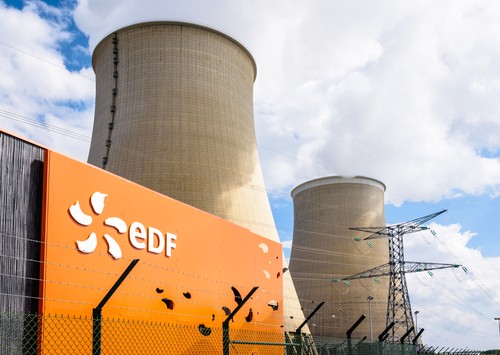
Affected by drought weather, water flows in France's Meuse and Moselle rivers have declined, and Électricité de France (EDF) has shut down three nuclear reactors in northeastern France. As of the afternoon of August 3, Units 1 and 2 at the Chooz Nuclear Power Plant in the Ardennes department, as well as one unit at the Cattenom Nuclear Power Plant in the Moselle department, remained offline. EDF shut down Unit 1 at the Chooz plant on Saturday evening to comply with the Meuse River management agreement signed between France and Belgium in 1998. Under the same agreement, Unit 2 at the Chooz plant has been offline since July 11. EDF stated that the agreement allows for adjustments to power generation arrangements based on hydrological conditions to safeguard water usage for users along the Meuse River in both France and Belgium.
2026-08-05