
Search Results
Keyword:Plasma

ITER Tokamak Plasma Instability Simulation Tool JOREK Released as Open Source
JOREK, a key simulation software used for simulating large-scale plasma instabilities in nuclear fusion devices, was officially released as open source on October 8, 2026, and its code has been hosted under the official GitHub account of the International Thermonuclear Experimental Reactor (ITER) Organization. This move aims to promote global nuclear fusion research toward a more open and innovative ecosystem, greatly lowering the threshold for researchers in various countries to obtain, use, and further develop this core algorithm code. Nina Schwarz, a researcher at the French Alternative Energies and Atomic Energy Commission (CEA), pointed out that this open license allows researchers worldwide to contribute code to JOREK and publicly improve the algorithm. A clear open-source license...
2026-10-10

The neutral beam injection system prototype independently developed by Shuyan Juchuang has been officially completed and completed its first plasma discharge.
Recently, the neutral beam injection (NBI) system prototype independently developed by Shuyan Juchuang, a domestic upstream commercialization company in controlled nuclear fusion, was officially completed, and on September 30, 2026, it successfully completed the first neutral beam plasma discharge verification. This marks the landing of China's first neutral beam engineering verification prototype fully independently developed along the entire chain by an upstream fusion commercialization company, achieving a technical closed loop from system design to productization verification. It is expected that the relevant capabilities of the system will reach an engineering state ready for direct commercial procurement in December this year. With the smooth completion and successful discharge of this prototype, the company's 2026 annual strategic goals set at the beginning of the year have all...
2026-10-08

Joint Institute for High Temperatures of the Russian Academy of Sciences Discovers a New Phase Transition in Cesium Plasma: Abrupt Conductivity Jump and a Rare Double Critical Point
A research team from the Joint Institute for High Temperatures of the Russian Academy of Sciences (JIHT RAS / ОИВТ РАН) has achieved an important physics advance in the study of extreme high-temperature and high-pressure states: researchers have discovered a previously undescribed phase transition in cesium (Cesium) under dense plasma conditions, accompanied by a dramatic jump-like change in electrical conductivity. The study focuses on the microscopic physical behavior of matter at temperatures from 500 to 20,000 Kelvin (K) and pressures ranging from about 1 hectopascal (hPa) to several terapascals (TPa). Under such severe extreme conditions, interatomic distances are greatly compressed, matter undergoes multiple deep ionizations, and the traditional criteria for distinguishing solid, liquid, and gas states can no longer...
2026-10-08

Princeton Plasma Physics Laboratory Opens a New Path to Controlled Fusion Ignition: Implementing a "Heat First, Fuel Later" Strategy to Substantially Lower the Energy Threshold
A research team at the Princeton Plasma Physics Laboratory (PPPL), under the U.S. Department of Energy (DOE), has recently proposed an innovative fusion ignition control framework, charting an optimized path toward a self-sustaining burning plasma that requires the lowest external input energy. The study, jointly led by physicists Luis Delgado-Aparicio, Masayuki Ono, and Jonathan Menard, has been formally published in the top-tier physics academic journal Physical Review Letters (Phys...
2026-10-08

Princeton Plasma Physics Laboratory Hosts International Workshop: Deepening Cross-Disciplinary Applications of Plasma in Semiconductor Manufacturing and Controlled Nuclear Fusion
On the occasion of its 75th anniversary, the Princeton Plasma Physics Laboratory (PPPL), under the U.S. Department of Energy (DOE), hosted the second Adopting Sustainable Partnerships for Innovative Research Ecosystem (ASPIRE) international workshop in the fall of 2026. The workshop was organized by the laboratory's Applied Materials and Sustainability Sciences Directorate and brought together scholars from the University of Osaka in Japan and the Ulsan National Institute of Science and Technology (UNIST) in South Korea, as well as researchers from PPPL, to focus on...
2026-10-08
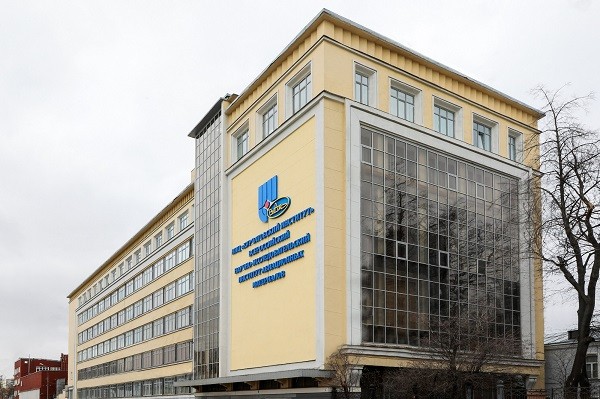
Russia's Kurchatov Institute to Receive 5.7 Billion Rubles in Fiscal Budget Support: Focusing on Controlled Thermonuclear Fusion and Advanced Plasma Technology R&D
The National Research Centre "Kurchatov Institute" will receive approximately 5.7 billion Rubles in dedicated funding support from the Russian federal budget during the period from 2027 to 2029. This fiscal allocation will be specifically used to advance key technology breakthroughs in Controlled Thermonuclear Fusion, as well as the R&D and experimental validation of innovative Plasma Technologies. The above funding plan is explicitly stated in the draft explanatory document of the 2027–2029 federal budget bill published in the electronic database of the Russian State Duma...
2026-10-03

National Standard "Test Methods for Plasma Parameters (GB/T 48094—2026)" Led by the University of Science and Technology of China Officially Released, Solidifying the Standardization Foundation for Controlled Nuclear Fusion and High-Tech Industries
Recently, led by the University of Science and Technology of China (USTC), in collaboration with research institutions including the Aerospace Information Research Institute of the Chinese Academy of Sciences, the Hefei Institutes of Physical Science of the Chinese Academy of Sciences, the Southwestern Institute of Physics (SWIP), and the Beijing Institute of Environmental Characteristics, universities including Yunnan University, Nanchang University, China Jiliang University, and Chizhou University, as well as key industry-chain enterprises including Anhui USTC Yuke Technology Co., Ltd., Anhui Zhongke Fusion Terahertz Technology Co., Ltd., and Fermion Technology (Shanghai) Co., Ltd., jointly drafted, and the national standard "Test Methods for Plasma Parameters" (Standard No.: GB/T 48094—2026), under the centralized management of the National Technical Committee 487 on Optoelectronic Measurement of Standardization Administration of China (SAC/TC487), was officially approved for release and will be formally implemented from March 2027. This standard establishes unified specifications for test methods of key plasma physical parameters, fills the gap in national-level technical standard basis, and marks a milestone breakthrough for China in the standardization of advanced plasma diagnostic technology.
2026-09-28

India's Private Fusion Tokamak PRAGYA Achieves Plasma Operation
Bengaluru-based deep-tech energy startup Pranos Fusion has produced plasma in its experimental device PRAGYA. The company states that PRAGYA is India's first compact tokamak developed by a private enterprise, marking a transition in India's private fusion research and development from the design and manufacturing phase to experimental operation. PRAGYA adopts a compact, low-aspect-ratio tokamak design, primarily used to generate, confine, and control plasma. Tokamaks use strong magnetic fields to confine high-temperature plasma within a toroidal vacuum vessel, creating conditions for future fusion of light atomic nuclei. The fundamental process of fusion reactions is the same mechanism by which the Sun releases energy, but engineering implementation still faces multiple challenges in plasma confinement, magnets, materials, and control systems.
2026-09-04

U.S. PACMAN AI Framework Achieves Millisecond-Level Control of Fusion Plasma
The PACMAN AI framework, developed by researchers at the U.S. Department of Energy's Princeton Plasma Physics Laboratory (PPPL) and Princeton University, has completed five experimental validations in real fusion experimental systems. The framework can complete data processing, state prediction, and control command output in approximately 20 milliseconds, addressing rapidly developing instabilities in fusion plasma. This is an artist's rendition of the PACMAN AI framework for fusion systems. (Illustration credit: Kyle Palmer / PPPL Communications Department) PACMAN stands for Prediction and Control via Machine Learning. Related design and preliminary experimental results have been published in...
2026-09-03

U.S. Marathon Fusion Demonstrates Hydrogen and Lithium Isotope Enrichment Technology
U.S.-based Marathon Fusion announced on August 27 that it has successfully demonstrated hydrogen and lithium isotope enrichment technology using its proprietary plasma centrifuge. The company stated that this advancement addresses the fuel cycle needs of fusion energy and related isotope supply requirements. In the deuterium-tritium fusion pathway, hydrogen isotope processing is critical to the continuous operation of fusion devices, while lithium isotope enrichment is closely tied to tritium production. The U.S. Department of Energy (DOE) released its "Fusion Science and Technology Roadmap" in June of this year, which identifies tritium processing as one of the core challenges, noting that related progress is essential for achieving sustained deuterium-tritium fusion operation and validating fusion as a large-scale energy form...
2026-08-28
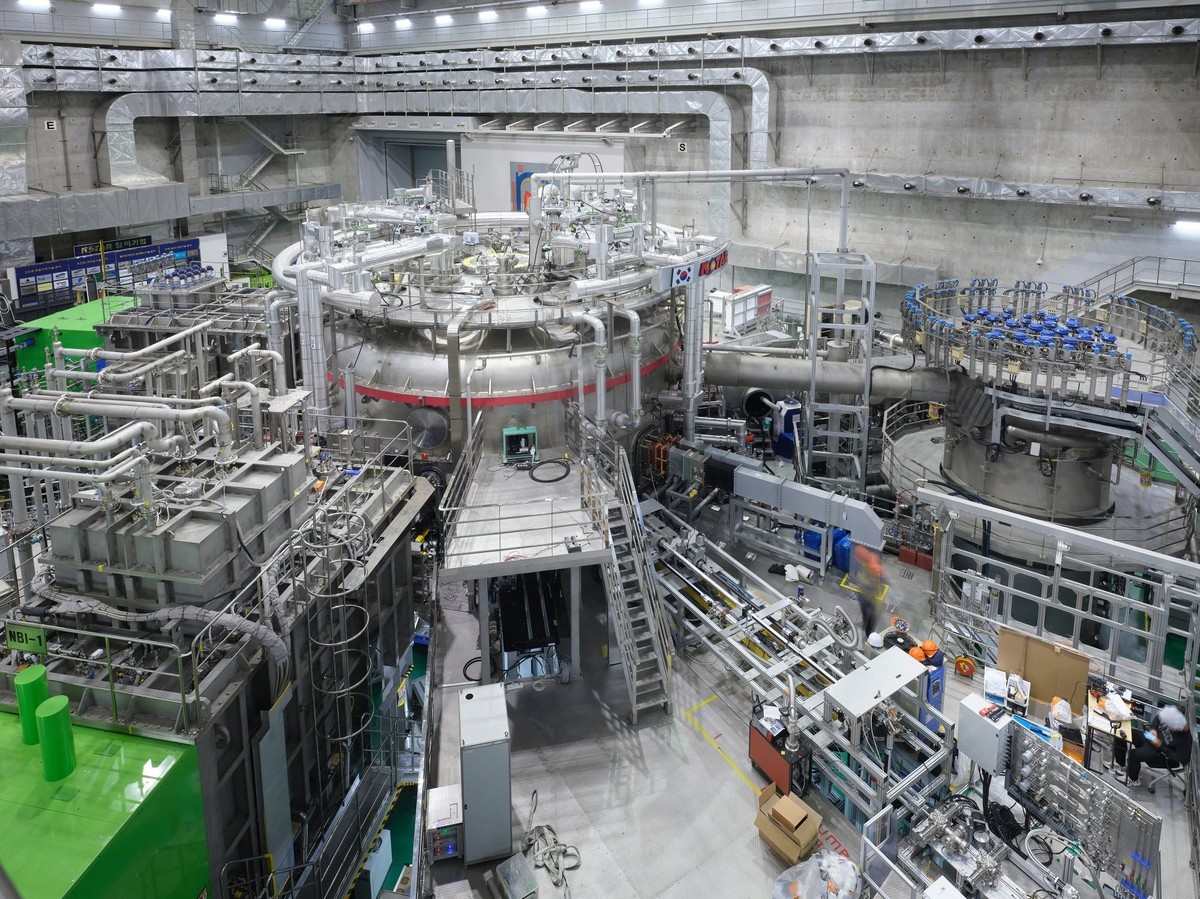
South Korea's KSTAR to Conduct Long-Pulse Fusion Research in Tungsten Environment with European Institutions
The Korea Institute of Fusion Energy (KFE) announced on August 27 that it has signed implementation agreements with multiple fusion research institutions in France, Italy, Germany, and Finland to conduct joint research on long-duration plasma operation in a tungsten environment using the Korea Superconducting Tokamak Advanced Research (KSTAR) device. Partner institutions include the French Alternative Energies and Atomic Energy Commission (CEA), the Italian National Agency for New Technologies, Energy and Sustainable Economic Development (ENEA), the Max Planck Institute for Plasma Physics (IPP) in Germany, and the VTT Technical Research Centre of Finland (VTT). The institutions will focus on key technologies required for long-pulse operation of future fusion reactors...
2026-08-27

U.S. Interlune injects helium-4 into lunar soil simulant, simulating 15,000 years of solar wind exposure on the Moon in 4 hours
U.S. space infrastructure and resources company Interlune announced on August 26, 2026, that it has successfully injected helium-4 into and released it from simulated lunar soil material, with experimental results consistent with the behavior of real lunar samples collected by the Apollo program. The company stated that this capability can simulate nearly 15,000 years of solar wind exposure on the lunar surface in approximately 4 hours, providing a material basis closer to real conditions for testing lunar resource development equipment on Earth. The experiment focused primarily on ilmenite. According to studies of Apollo mission samples, ilmenite is the main helium-bearing mineral in lunar soil. Interlune formed a plasma by ionizing helium gas in a vacuum environment, then...
2026-08-27

U.S. Department of Energy Extends Princeton University Contract to Operate PPPL
The U.S. Department of Energy (DOE) and Princeton University have extended the contract under which Princeton University manages and operates the Princeton Plasma Physics Laboratory (PPPL). The laboratory is located on Princeton University's Forrestal Campus in Plainsboro, New Jersey. Under the new extension, the contract will be renewed for five years starting April 1, 2027. Princeton University expects to strengthen collaboration with faculty and research teams on campus during the contract period, explore next-generation fusion energy research facilities, and enhance laboratory infrastructure and safety to support ongoing operational needs. Princeton University's office for research affairs...
2026-08-25

Iran Says Its Atomic Energy Organization's Medical Products Serve Over 1.5 Million Patients Annually
Mohammad Eslami, head of the Atomic Energy Organization of Iran, recently stated that more than 1.5 million patients in Iran use diagnostic and therapeutic products developed by the organization each year, and related medical products have also been exported to multiple countries. Eslami made these remarks at a ceremony held by Iran's nuclear industry to celebrate Physicians' Day. He said that promoting the application of advanced treatment methods is one of the key directions of Iran's scientific and technological development. The progress made by Iranian researchers in cold plasma technology has opened up a "brand-new and promising path" for medical applications. He stated that plasma technology has not only achieved notable results in the research field but has also played a role in healthcare settings.
2026-08-24

CERN Large Hadron Collider Data Challenge Models of Oxygen and Neon Nucleus Structure
Physicists at the European Organization for Nuclear Research (CERN), analyzing a new batch of collision data from the CMS detector at the Large Hadron Collider, have found that oxygen and neon nuclei do not behave entirely as predicted by existing models in high-energy collisions. This result indicates that the scientific community's understanding of the shapes and internal structures of certain light nuclei still requires further refinement. In high-energy nuclear collisions, a quark-gluon plasma is briefly formed in the collision region. This state of matter decays rapidly, but the collective flow characteristics of its particles can be used to infer the collision geometry and indirectly provide information about nuclear structure. Researchers believe that symmetric collisions of light ions help better control the initial collision conditions, making them suitable for studying collective responses in small systems.
2026-08-24