
Search Results
Keyword:médical

Dong Nai Province, Vietnam: Nuclear Medicine Applications Drive Modern Medical Development, Focusing on Early Cancer Diagnosis and Precision Treatment
In the development of modern medicine, atomic energy technology is moving from the laboratory to the clinical frontline, becoming an important pillar for early disease screening, precise diagnosis, and effective treatment. In recent years, Dong Nai Province has continuously applied nuclear medicine technology to medical examinations and treatments, particularly in areas such as cancer, stroke, traumatic brain injury, cardiovascular diseases, and bone and joint injuries. Through equipment such as X-ray, gamma rays, CT, and MRI, doctors can observe deep structures and lesions of the human body within a relatively short time, giving patients the opportunity for earlier detection and faster intervention. At Dong Nai General Hospital, approximately 500 patients undergo X-ray or related imaging examinations each day, with digital X-ray systems and multi-slice spiral C...
2026-08-12
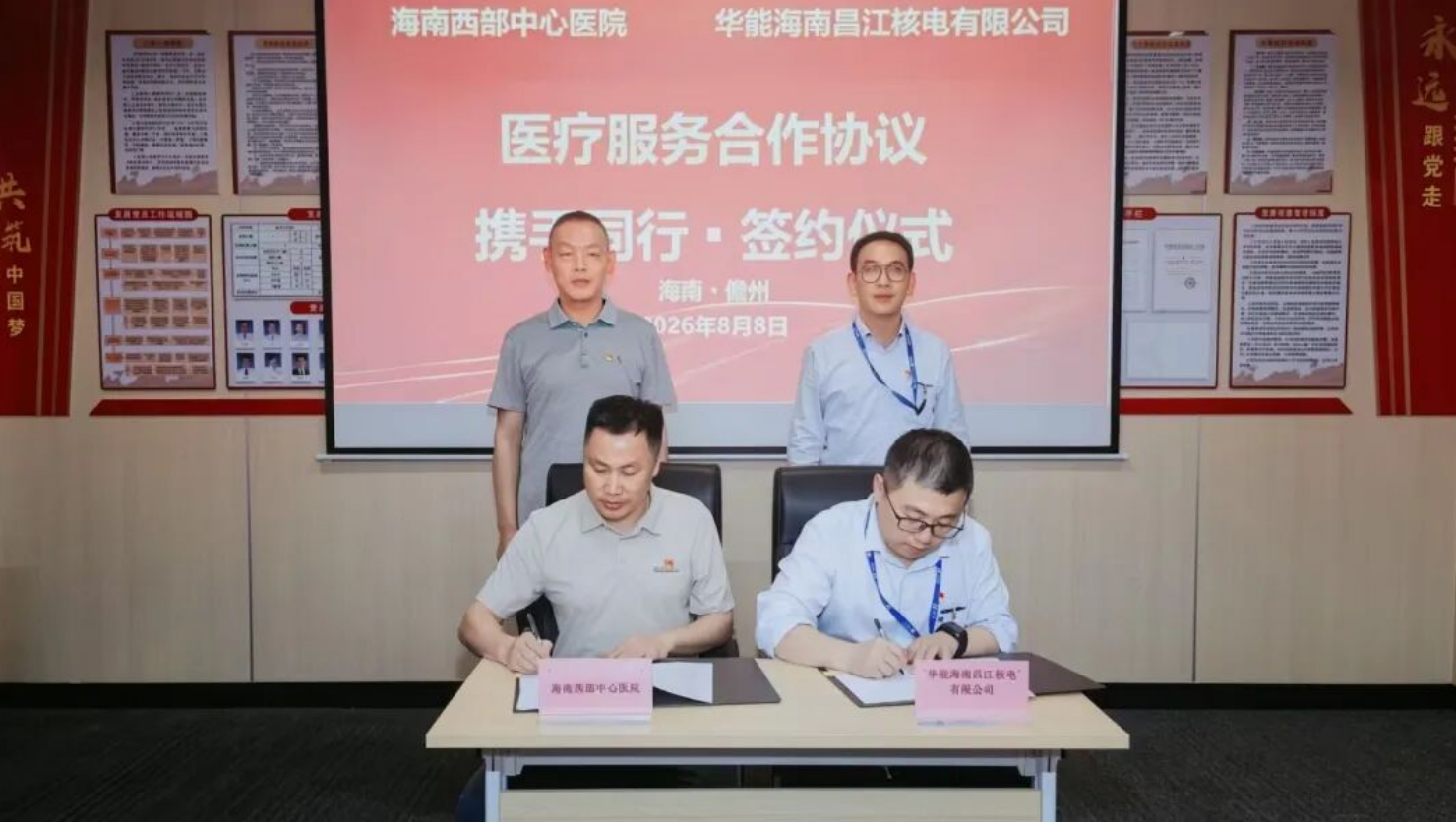
Huaneng Changjiang Nuclear Power Company Signs Medical Cooperation Agreement with Hainan Western Central Hospital
Recently, Huaneng Hainan Changjiang Nuclear Power Co., Ltd. signed a medical cooperation agreement with Hainan Western Central Hospital, comprehensively strengthening the health and safety defense line for enterprise employees and safeguarding nuclear power production safety. The two parties agreed to leverage the hospital's high-quality medical resources to open a green channel for employees' emergency medical treatment, carry out routine occupational health examinations and health science education, establish a rapid transport and treatment linkage mechanism for sudden injuries or illnesses at the plant site, and efficiently handle various on-site emergency medical situations. After the signing ceremony, relevant personnel from Huaneng Changjiang Nuclear Power Company visited the Emergency Department and Outpatient Building at the Baimajing Binhai Campus, gaining detailed insights into emergency treatment procedures, rescue equipment configuration, and emergency rescue operation models, and engaging in discussions with medical staff on topics such as on-site industrial injury handling and emergency medical response to sudden health events.
2026-08-11

Argentine CNEA Expert Appointed Vice Chair of European Working Group on Nuclear Medicine Isotope Supply Security
The Argentine National Atomic Energy Commission (CNEA) recently announced that Daniel Sestao, an engineer and the institution's radioisotope production manager, has been appointed Vice Chair of the Supply Security Working Group of the European Association of Nuclear Medicine. CNEA, which operates under the Nuclear Affairs Secretariat of Argentina's Ministry of Economy, views this appointment as recognition of its technical capabilities in nuclear medicine and its role in international collaboration. The Supply Security Working Group is composed of international experts and focuses on the continuity and sustainability of the medical radioisotope supply chain, covering strategic isotopes such as molybdenum-99, technetium-99m, and lutetium-177. These radioisotopes are widely used in the diagnosis and treatment of tumors and complex diseases, forming a critical component of the nuclear medicine system...
2026-08-11

South Korea to Launch Real-Time Query System for CT and MRI Records in December to Reduce Duplicate Tests for Patients Transferring Hospitals
The Health Insurance Review and Assessment Service (HIRA) of South Korea announced on August 10 that it has established the "Appropriate Medical Utilization Review Committee" and, at its first meeting, included computed tomography (CT) and magnetic resonance imaging (MRI) examinations in the review scope of the real-time medical utilization management program. According to the plan, the program will be managed through the "Medical Care Benefit Details Confirmation System" following approval by the Minister of Health and Welfare. The system, built pursuant to Article 41-6 of the revised National Health Insurance Act, is expected to officially operate starting December 24. Once the system is in place, medical personnel will be able to query in real time the timing and relevant records of patients' CT and MRI examinations at other medical institutions before the patients undergo examinations, thereby reducing...
2026-08-11

Rosatom launches project to bring medical students to closed nuclear cities
Rosatom and the Russian Student Teams (RSO) will launch a new medical project in Russia's closed nuclear cities starting in 2027, attracting medical students to work there. Mikhail Kiselev, Chairman of the RSO Supervisory Board and State Duma deputy, announced this to reporters at an event at the Siberian Chemical Combine. Kiselev stated: Starting next year, we plan to launch a large-scale medical project in nuclear cities together with Rosatom, the Russian Student Teams, the Federal Medical-Biological Agency, the Russian Youth Affairs Agency, and the Russian Ministry of Health. This will help systematically attract medical students...
2026-08-11

Fractionated radiotherapy did not significantly alter surface properties of two types of dental restorative composites
On August 5, a recently published in vitro study showed that under a simulated clinical head and neck cancer radiotherapy regimen, the surface microhardness and roughness of two modern dental restorative composites did not change significantly. The study focused on the effects of therapeutic ionizing radiation on the durability of dental restorative materials. After head and neck cancer patients receive radiotherapy, the oral environment may change, including reduced saliva secretion, mucositis, radiation caries, and other issues, which may affect the surface condition and long-term performance of restorations. To this end, the research team selected Giomer resin composite based on glass ionomer technology and Or...
2026-08-10

Consolidating Foundations·Sichuan: Accelerated Localization of Nuclear Medical Equipment Benefits the Public
On August 9, 2026, CCTV's "Morning News" program aired a feature titled "Consolidating Foundations·Sichuan: Accelerated Localization of Nuclear Medical Equipment Benefits the Public," reporting on Jiuyiyuan Company. Founded in February 2017, Sichuan Jiuyiyuan Particle Technology Co., Ltd. is a national high-tech enterprise integrating R&D, production, and services of high-end nuclear medical equipment, committed to providing overall solutions for radiopharmaceuticals. A cyclotron is a device that uses magnetic and electric fields to drive charged particles in a circular motion, repeatedly accelerating them via high-frequency electric fields during their movement. Low- and medium-energy cyclotrons applied in the medical field are devices that produce positron-emitting radionuclides, generating a variety of radionuclides that not only meet clinical PET/CT examination needs but also support the clinical positron drug and new drug development demands of the molecular imaging and precision medicine era. The report noted that core nuclear medicine equipment has long relied on imports, which is a key bottleneck constraining the development of nuclear medicine in China. In 2021, Jiuyiyuan successfully developed the first domestically produced medical cyclotron, breaking foreign technological monopoly. In June this year, the company launched the first domestically produced 30MeV multi-particle medium-to-high-energy cyclotron with fully independent intellectual property rights, with mass production planned for September, achieving internationally advanced product performance.
2026-08-10

Jiangsu's First uLinac HalosTx Integrated Ring-Gantry CT Linac Enters Clinical Use
On August 7, the first uLinac HalosTx integrated ring-gantry CT linear accelerator in Jiangsu Province was officially put into clinical use at the Third Affiliated Hospital of Nanjing Medical University (Changzhou Second People's Hospital). The system integrates a diagnostic-grade CT scanner and a ring-gantry accelerator on a single platform, shifting regional tumor radiotherapy from the traditional step-by-step positioning approach to a same-platform real-time model. Radiotherapy is one of the important modalities for cancer treatment. In the conventional split-system radiotherapy workflow, patients typically need to be transported between the CT room and the treatment room, and treatment plans are mostly formulated based on static images acquired beforehand. In cases such as tumor regression or changes in patient weight, previous images may not fully reflect the actual condition on the day of treatment...
2026-08-08

DXA Screening Among U.S. Medicare Population Declines 35% Over Nearly Two Decades
A new study shows that between 2005 and 2023, the rate of dual-energy X-ray absorptiometry (DXA) examinations among U.S. Medicare beneficiaries declined significantly, by 35%. DXA is commonly used for bone density testing and osteoporosis-related screening, and the findings suggest that disparities in screening access across different populations are widening. Researchers analyzed claims data from more than 5 million Medicare beneficiaries. The results showed that DXA utilization fell from 7,255 exams per 100,000 beneficiaries in 2005 to 4,690 per 100,000 beneficiaries in 2023. The study was published in Osteoporosis International. The decline was not uniform across populations...
2026-08-08

228 Research Reactors Worldwide in Operation, Supporting Medical Isotope Production and Neutron Science Innovation
According to the International Atomic Energy Agency on August 7, research reactors continue to drive innovation in science, medicine, and industry worldwide. Currently, 228 research reactors are in operation across 54 countries, with another 23 under construction or in the planning stage. Unlike nuclear reactors used for power generation, these reactors primarily produce neutrons to support medical, industrial, agricultural, geological, forensic, and nuclear science research. A research reactor pool photographed from above. (Photo: IAEA) In the medical field, research reactors are a vital source of medical radioisotopes. Among them, technetium-99m is widely used for diagnosing cancer and diseases of the heart, brain, and bones; a large number of medical diagnostic and therapeutic procedures worldwide rely on this isotope. Other radioisotopes such as iodine-131 are also used in the treatment of cancer and thyroid diseases. The IAEA states that radioisotopes produced by research reactors serve millions of patients globally and are an essential component of modern nuclear medicine systems.
2026-08-09

China's First Homegrown Radiopharmaceutical Receives Dual FDA Breakthrough Therapy and Fast Track Designations
On August 6, Nuoyu Medical announced that the U.S. Food and Drug Administration (FDA) has officially granted Breakthrough Therapy Designation (BTD) and Fast Track Designation (FTD) to the company's independently developed 68Ga-NYM096. This marks the first product in China's original radiopharmaceutical field to receive FDA Breakthrough Therapy Designation, and the first to receive both FDA Breakthrough Therapy and Fast Track designations simultaneously, creating a milestone breakthrough in the radiopharmaceutical field. 68Ga-NYM096 is a small-molecule diagnostic radiopharmaceutical for renal cancer that specifically binds to CAIX, suitable for positron emission tomography (PET) imaging of suspected or confirmed metastatic clear cell renal cell carcinoma (c...
2026-08-08

Professor Lin Guoxian from the BC Cancer Agency Delivers Academic Exchange at the Institute of Radiation Medicine, Chinese Academy of Medical Sciences
Lin Guoxian: Professor at the BC Cancer Agency, whose research focuses on the development of targeted radiopharmaceuticals for the diagnosis and treatment of various tumors. To date, he has led/participated in the publication of over 135 peer-reviewed journal articles, filed more than 30 patent applications related to radiopharmaceuticals, and completed the clinical translation of 7 self-developed radiopharmaceuticals for the diagnosis and treatment of multiple tumor types. During the seminar, Professor Lin Guoxian, based on his team's years of frontier exploration, systematically reviewed the research progress of nuclear drugs targeting PSMA for prostate cancer: first, the molecular design and clinical advantages of F-18 labeled PSMA-targeted PET imaging agents; second, the substantial improvement of tumor targeting of Lu-177 labeled therapeutic radiopharmaceuticals through rational optimization of molecular structures,...
2026-08-07

Institute of Radiation Medicine, Chinese Academy of Medical Sciences Hosts Academic Seminar on PSMA-Targeted Radiopharmaceuticals
On August 3, the Institute of Radiation Medicine, Chinese Academy of Medical Sciences held an academic seminar, inviting Professor Lin Guoxian from the BC Cancer Agency in Vancouver, Canada, to deliver a lecture titled "Development of Prostate-Specific Membrane Antigen-Targeted Radiopharmaceuticals for the Diagnosis and Treatment of Prostate Cancer." The seminar was held in a hybrid format, with some researchers and graduate students from the institute attending in person. Professor Lin Guoxian has long been engaged in the development of targeted radiopharmaceuticals for cancer diagnosis and therapy, having led or contributed to the publication of over 135 peer-reviewed journal articles, filed more than 30 patent applications related to radiopharmaceuticals, and completed clinical translation of 7 self-developed radiopharmaceuticals applied in...
2026-08-07

Thor Medical Commences Commercial Supply with First Delivery of High-Purity Thorium-228 from AlphaOne
Thor Medical ASA announced on August 5 that it has completed the first customer delivery of high-purity thorium-228 (Th-228) from its AlphaOne production facility at the Herøya industrial park. This marks the first customer shipment following the facility's production start announced last week, and signifies AlphaOne's entry into the commercial supply phase. Thor Medical CEO Jasper Kurth stated that commercial production represents the beginning of the company's industrial-scale manufacturing, and the first customer delivery demonstrates the company's transition from capacity building to serving customers through its first industrial-scale facility. The company stated that as production capacity gradually ramps up, it will continue to meet the growing demand for high-purity isotopes in the targeted alpha therapy field...
2026-08-06
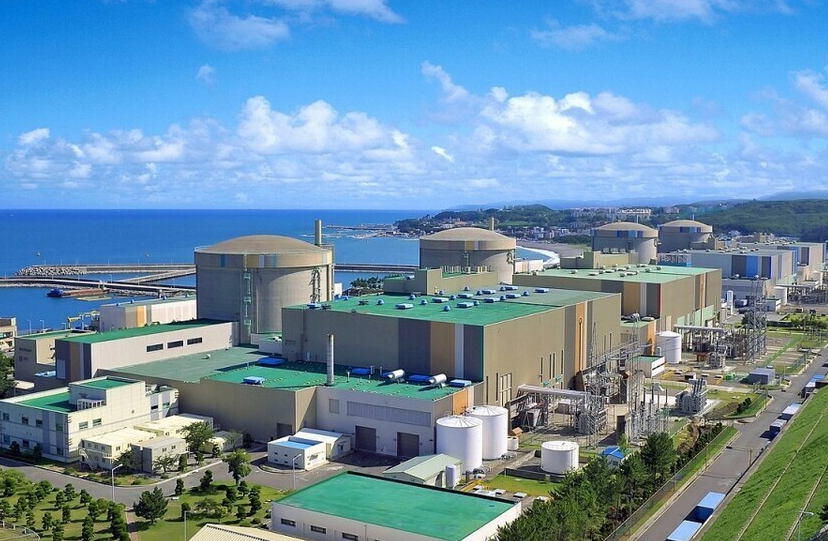
South Korea advances plan to produce medical isotopes using nuclear power plants, with lutetium-177 targeted for commercial production in 2031
South Korea is advancing plans to industrialize the production of radioisotopes using nuclear power plants, with the medical isotope lutetium-177 (Lu-177) designated as the first commercial target product. Korea Hydro & Nuclear Power stated that it plans to prioritize the commercialization of Lu-177 production, with the potential to later expand the product range to include isotopes such as cobalt-60, tritium-3, and helium-3. Lu-177 is a therapeutic radioisotope widely used in the global radiopharmaceutical market, applicable in radiopharmaceuticals for diseases such as prostate cancer and neuroendocrine tumors. Previously, South Korea relied entirely on imports for its Lu-177 supply. Due to its half-life of approximately 6.6 days, the entire process from production and transportation to drug preparation and patient administration...
2026-08-06