
Search Results
Keyword:reactor

Japan aims to rebuild up to 5 retired nuclear power plants by the 2040s
The Japanese government held a ministerial meeting on nuclear power on July 31 and decided to rebuild up to 5 retired nuclear power plants by the 2040s. This is the first time since the Fukushima Daiichi nuclear accident that the Japanese government has set a specific numerical target for nuclear plant reconstruction. Kansai Electric Power Company's Mihama Nuclear Power Plant Japanese Prime Minister Takaichi Sanae stated at the meeting that to steadily advance nuclear power investment, the Takaichi cabinet will continue to promote nuclear energy policy. According to the direction set at the meeting, Japan plans to rebuild 2 to 5 nuclear power plants by the 2040s, with a total installed capacity of approximately 2.2 million to 5.5 million kilowatts; by the 2050s, the reconstruction scale will expand to 11 to 14 plants, with a total installed capacity of approximately 12.7 million to 16 million kilowatts. The Japanese government plans to...
2026-08-01

QST completes first gyrotron 170 GHz microwave output test at ITER site
The National Institutes for Quantum Science and Technology (QST) of Japan announced on July 31 that it has completed the integration and operational testing of the first gyrotron system at the International Thermonuclear Experimental Reactor (ITER) site in southern France, successfully producing 170 GHz microwave output. This system is used for ITER plasma generation and heating, and is one of the key devices for ITER's plan to commence operations in 2034. The core equipment of this test is the gyrotron, a high-power microwave source. Gyrotron operation requires the coordinated work of peripheral equipment such as power supplies, superconducting coils, and cooling systems. QST previously completed performance testing of eight ITER gyrotron systems at the gyrotron test facility of the Naka Fusion Institute in Japan, and transported components including gyrotrons, superconducting coils, and quasi-optical matching units to the ITER site. Over the past three years, QST has advanced system installation, commissioning, and operational preparation at the site.
2026-07-31

South Korean University Team Files Patent for Fusion Reactor Optimization Design Method
Professor Hong Bong-geun of the Department of Quantum System Engineering at the College of Engineering, Jeonbuk National University, South Korea, has recently filed a patent for a fusion reactor optimization design method. This method can determine device dimensions and key component structures while enabling customized performance design for fusion reactors based on different applications such as power generation, thermal energy utilization, and transmutation neutron sources. According to reports, this design technology targets the early-stage R&D phase of fusion devices and can be used to rapidly assess the technical and economic feasibility of proposals, thereby reducing trial-and-error, shortening development cycles, and lowering development costs, providing design support for fusion energy commercialization...
2026-07-31
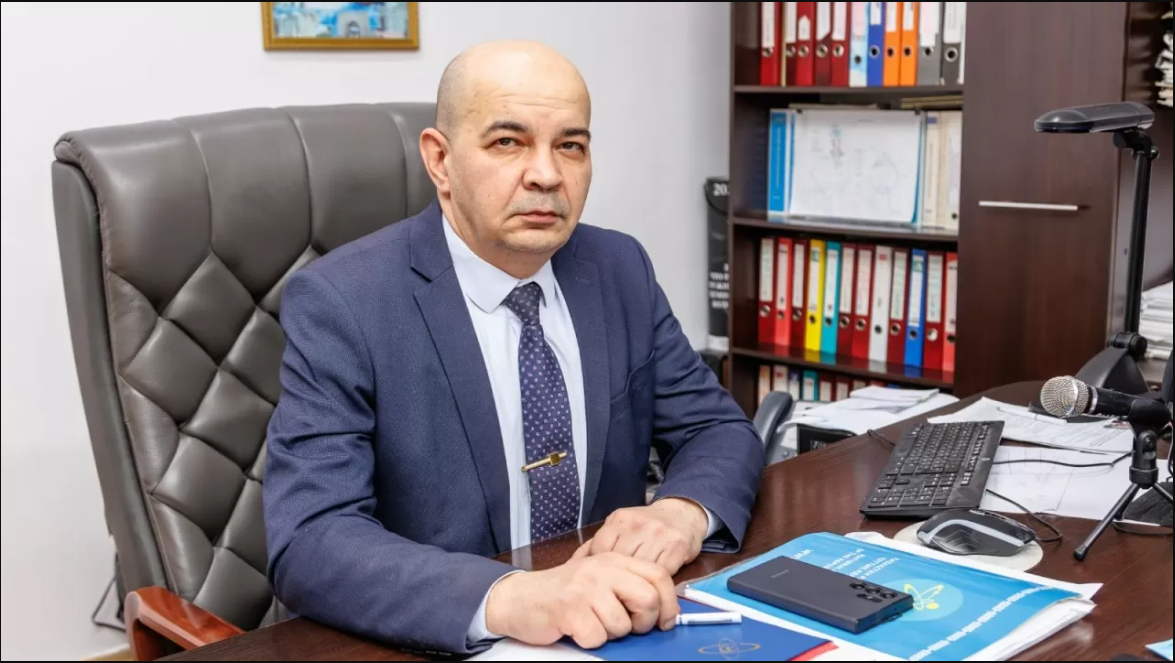
Kazakhstan's National Nuclear Center Experimental Base Supports Nuclear Power Safety and Advanced Energy Research
On July 30, Vyacheslav Gnyrya, Deputy Director of the Institute of Atomic Energy at the National Nuclear Center of the Republic of Kazakhstan (NNC RK), presented the development of the center's experimental research base. He stated that Kazakhstan is leveraging existing research facilities to establish a scientific foundation for next-generation reactor technologies and controlled thermonuclear fusion energy research. According to the presentation, the NNC RK experimental base is a strategic scientific research infrastructure developed over decades in Kazakhstan, featuring research reactors, specialized test facilities, and materials science equipment capable of simulating conditions difficult to replicate in operating nuclear reactors, including the behavior of nuclear fuel, structural materials, and safety system components under high temperatures, intense irradiation, and transient conditions.
2026-07-31

Vietnam and Russia Join Forces to Accelerate Nuclear Science and Technology Research Center Project
On the afternoon of July 30, Vietnamese Minister of Science and Technology Vu Hai Quan received a delegation led by Ilja Vergizajev, General Director of Rosatom Construction Technology Co., Ltd., a subsidiary of Russia's State Atomic Energy Corporation (Rosatom), in Hanoi. During the meeting, the Vietnamese side put forward three specific requests: accelerating the construction of the Vietnam Nuclear Science and Technology Research Center (CNST); supporting Vietnam in gradually mastering small modular reactor (SMR) technologies; and training human resources for Vietnam in the fields of atomic energy, radiation, and nuclear safety. Both sides confirmed that nuclear cooperation holds strategic significance and has long been a focus of high-level attention between the two countries. The CNST has been defined by the Vietnamese side as a...
2026-07-31

Crusoe and Aalo Atomics Forge Strategic Partnership: First Nuclear-Powered AI Facility Planned
U.S.-based Crusoe and Aalo Atomics have reached a strategic partnership aimed at deploying the first nuclear-powered artificial intelligence facility. This commercial collaboration builds on Aalo's recent criticality achievement, underscoring U.S. leadership in AI and energy. Crusoe's Spark modular AI data centers will be co-located with Aalo Atomics' nuclear reactor buildings at Idaho National Laboratory. The project aims to validate the effectiveness of nuclear energy for AI workloads. Cully Cavness, co-founder, president, and chief strategy officer of Crusoe, stated that next-generation AI infrastructure requires reliable, abundant, clean, and scalable power, and Aalo's reactors are designed precisely for that purpose. Crusoe's core value is "bending the energy arc toward sustainability," guided by the principle of leveraging its market position to support and accelerate energy innovation...
2026-07-31

NuAlaska Initiative Launched: Long-Life Nuclear Microreactors Target Remote Alaskan Regions
An initiative in Alaska called NuAlaska is working to bring long-life nuclear microreactors to remote areas. This collaboration, co-launched by NuCube Energy Inc. and the Alaska Fund, aims to develop, finance, own, and operate advanced nuclear energy projects in Alaska. The plan combines NuCube's NuSun-1 micro-modular reactor technology with the Alaska Fund's mission to support projects that meet Alaska's unique energy and infrastructure needs. The initiative targets remote communities, mines, military installations, and other isolated locations where harsh weather, long transportation routes, and reliance on imported diesel fuel...
2026-07-31

UK Interim Report on Fission Materials Roadmap Highlights New-Generation Nuclear R&D Priorities
The UK National Nuclear Laboratory (UKNNL) and the Henry Royce Institute recently released the "UK Fission Materials Roadmap Interim Report." The report states that the UK needs to clarify as soon as possible the priority technology routes and operating environments for next-generation nuclear reactors, so as to concentrate materials research resources on key directions and support future nuclear power development. The report argues that the UK should decide within the next one to two years whether to build a domestic materials test reactor; within the next five years, the government should also establish a national materials archive to preserve irreplaceable irradiated material samples. The report also recommends making long-term funding commitments of at least five years for relevant research projects...
2026-07-31

Rosatom Says Small Nuclear Power Development Requires Regulatory Reform
Rosatom Director General Alexey Likhachev said on July 5 that if Russia hopes to maintain its global leadership in the small nuclear power market, nuclear regulations and standards also need to keep pace with technological changes, particularly by revisiting the licensing and approval process for small nuclear power plants. In an article published in the Rosatom Corporate Newspaper, Likhachev stated that small nuclear power plants are expected to become a significant new form of energy in the coming decades, but their deployment still faces considerable regulatory challenges. Due to the relative novelty of such facilities to regulators, approval approaches tend to be cautious. He believes that accelerating the licensing and construction process while ensuring safety has become a task of national importance.
2026-07-06

Mangoceuticals to Merge with Nuclea to Advance Morpheus Microreactor to Market
Mangoceuticals announced on July 30 that it has signed a definitive business combination agreement with advanced nuclear technology company Nuclea Energy Inc., aiming to bring the latter's Morpheus microreactor to the public capital markets. Nuclea was founded in August 2023 and is headquartered in Mississauga, Ontario, Canada, focusing on the development of lead-cooled, factory-fabricated micro-modular reactors. Under the agreement, a newly formed subsidiary of Mangoceuticals will merge with Nuclea, and the combined company will operate as an indirect wholly owned subsidiary of Mangoceuticals. Upon completion of the transaction, holders of Nuclea common shares will receive...
2026-07-31
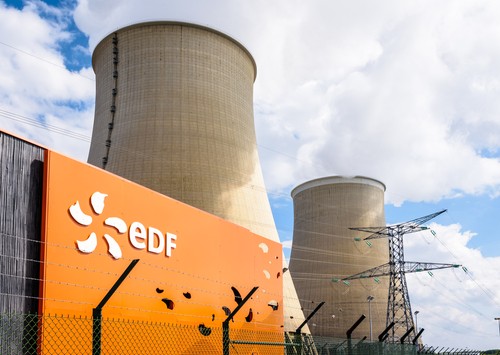
EDF plans to bring in investors for Nuward small modular reactor project by end of 2026
French utility EDF said on July 30 that it plans to bring in investors for its Nuward small modular reactor project by the end of 2026. The company stated that the related financing arrangements will be centered around European customers and industrial partners to support the development of a batch of initial reactors better aligned with user needs. Small modular reactors have not yet entered large-scale commercial production, but multiple companies worldwide are advancing the deployment of related technologies. Supporters believe that compared with traditional large nuclear power units, small modular reactors offer greater flexibility in deployment methods, application scenarios, and low-carbon energy supply. EDF is a state-owned French power company operating 57...
2026-07-31

ZiaCore Microreactor Achieves Criticality in High-Temperature Zero-Power Experiment
Los Alamos National Laboratory announced on July 30 that its ZiaCore microreactor design has completed a high-temperature zero-power criticality proof-of-principle experiment at the National Criticality Experiments Research Center (NCERC) in Nevada, successfully achieving initial criticality. ZiaCore is an advanced nuclear energy microreactor design that uses low-enriched uranium dioxide fuel. The experiment lasted approximately four weeks from April to May this year, advancing the ZiaCore system to zero-power criticality under high-temperature conditions. According to the reactor design and verification process, zero-power criticality experiments can be used to validate the effectiveness of reactor physics designs, providing key benchmark data for subsequent engineering development.
2026-07-31

Xinhua Exclusive Interview | China Makes Significant Contributions to the "Artificial Sun" Project — Interview with Alain Bécoulet, Deputy Director-General and Chief Scientist of the International Thermonuclear Experimental Reactor Organization
On July 26, 2027, Xinhua News Agency published an exclusive interview with Alain Bécoulet, Deputy Director-General and Chief Scientist of the International Thermonuclear Experimental Reactor (ITER) Organization, on China's significant contributions to the "Artificial Sun" project and its role in accelerating global fusion research. Bécoulet noted that China plays a fundamental role in supplying ITER components (superconducting technology, cables, magnet manufacturing, cryostats, etc.), and that the tokamak installation work undertaken by the Chinese consortium "exceeded expectations in terms of time and cost." He also stated that facilities such as EAST, HL-3, and BEST provide ITER with experimental predictions, component testing, and technical twin validation. He believes that through sustained investment and international cooperation, China has begun to play a leading role in the global fusion field.
2026-07-27

Nuclear power companies in Gyeongsangnam-do, South Korea, selected for SMR advanced manufacturing technology project
Gyeongsangnam-do, South Korea, announced on the 30th that local nuclear power companies and research institutions have all been selected in a government project solicitation, and will participate in developing three key technologies to shorten the manufacturing cycle of Small Modular Reactors (SMRs). This project is organized and solicited by the Ministry of Climate, Energy and Environment of South Korea and the Korea Institute of Energy Technology Evaluation and Planning (KETEP), with a focus on innovative SMR manufacturing technologies. These technologies are considered helpful in improving the manufacturing efficiency of key reactor components and compressing production cycles. According to the arrangement, Doosan Enerbility...
2026-07-31

Germany to Establish Fusion Technology Research Center at Karlsruhe Institute of Technology
The German federal government is advancing the layout for the country's first fusion reactor. According to a decision announced on July 29, 2026, by the German Federal Ministry of Research, Technology and Space (BMFTR), one of three newly established fusion research centers will be located at the Karlsruhe Institute of Technology (KIT), focusing on fuel cycles, new materials, and engineering technology research for fusion power plants. In line with Germany's Fusion Action Plan, the new research centers will integrate the efforts of scientific institutions and industry to concentrate on solving key technical challenges before the application of fusion energy. The center at KIT will leverage the institute's expertise in fusion fuel cycles, high-performance materials, and core reactor components to advance related achievements...
2026-07-30