

Aomori Prefecture in Japan to Apply as Candidate Site for Nuclear Fusion Power Generation Demonstration Facility
On August 19, Soichiro Miyashita, Governor of Aomori Prefecture, stated that the prefecture will apply as a candidate site for a nuclear fusion power generation demonstration facility once relevant preparatory work is completed. Starlight Engine, a Japanese nuclear fusion startup, is currently soliciting candidate sites from prefectures and government-designated cities, with plans to conduct field surveys of promising candidates as early as this autumn. Starlight Engine plans to finalize the construction site by 2028, launch the FAST nuclear fusion power generation demonstration project in 2035, and conduct power generation demonstrations in 2038. The application deadline for site selection is October. Aomori Prefecture stated that it will consult with Rokkasho Village and, after preparing the application documents, formally submit the application.
2026-08-20

Princeton Plasma Physics Laboratory to Validate Spherical Tokamak Fusion Path with NSTX-U
The Princeton Plasma Physics Laboratory (PPPL) is advancing research on the National Spherical Torus Experiment-Upgrade (NSTX-U), planning to use this largest spherical tokamak in the United States to assess the potential of compact tokamak configurations for future fusion power plants. The device is designed to become one of the most powerful spherical tokamaks in the world and will be used to study key issues such as high-temperature plasma confinement, heat transport, material performance, and real-time control. The image above shows the vacuum vessel and center column of the NSTX-U at the Princeton Plasma Physics Laboratory (PPPL). This device will help scientists determine the optimal shape for future fusion power plants...
2026-08-20

Single-Channel Pulse Source of Electromagnetic-Driven Fusion Large Scientific Facility Passes Acceptance
On August 16, the test and acceptance meeting for the single-channel pulse source of the comprehensive assessment experimental system of the electromagnetic-driven fusion large scientific facility, along with the inauguration ceremony of the Institute of Nuclear Fusion Science and Technology at Xi'an Jiaotong University, was held at the China Western Science and Technology Innovation Harbor. During the meeting, the single-channel pulse source of the comprehensive assessment experimental system passed testing and acceptance, and the Institute of Nuclear Fusion Science and Technology at Xi'an Jiaotong University was officially inaugurated. Before the meeting, attending experts and guests inspected the single-channel pulse source experimental system. During the acceptance session, the project team presented the overall status of the electromagnetic-driven fusion large scientific facility, the development progress of the single-channel pulse source, and the test verification results. The expert panel discussed the...
2026-08-18

Russia to Develop General Safety Rules for Controlled Thermonuclear Fusion Facilities
The Federal Environmental, Industrial and Nuclear Supervision Service of Russia (Rostekhnadzor) has completed the development of the draft federal norms and rules in the field of atomic energy use, "General Provisions for Ensuring the Safety of Controlled Thermonuclear Fusion Facilities," and has been soliciting comments and suggestions on the results of the draft review since August 17, 2026, with a feedback deadline of September 17, 2026. According to the draft, the document applies to controlled thermonuclear fusion facilities equipped with thermonuclear reactors or thermonuclear devices. The scope of application includes thermonuclear devices with a neutron production intensity exceeding 10²⁰ neutrons per second, or, in pulsed operation with a single pulse of less than 1 second, exceeding 10²⁰ neutrons per pulse, as well as...
2026-08-17

Chinese Team Achieves Full Technical Chain Integration in Wall Treatment for the World's Largest "Artificial Sun"
Recently, the team from the Southwestern Institute of Physics under the China National Nuclear Corporation (CNNC) has made significant progress in the wall treatment technology of the International Thermonuclear Experimental Reactor (ITER): not only successfully passing the Delta Final Design Review (Delta FDR) for the supplementary design of the Glow Discharge Cleaning (GDC) system permanent electrode project, but also, leading and jointly with CNI23, winning the bid and signing contracts in France for the design and manufacture of the boronization system and the X-ray Crystal Spectrometer (XRCS) gas supply system. This marks a new expansion of the Chinese team's core technology in ITER wall treatment, extending the scope from the original glow discharge cleaning to boronization wall treatment, achieving a full technical chain from impurity removal to surface pre-treatment...
2026-08-15

The Energy Research Institute of Hefei Comprehensive National Science Center Achieves a Series of New Progress in Safety Assessment of Activated Corrosion Products under Magnetic Field Environments in Fusion Reactors
Recently, the Radiation Protection and Safety Research Center of the Energy Research Institute of Hefei Comprehensive National Science Center has made a series of significant progress in the field of safety assessment of activated corrosion products under magnetic field environments in fusion reactors. The research team conducted systematic studies on the corrosion behavior of China's low-activation ferritic/martensitic steel CLF-1 in magnetic field environments, from three dimensions: water corrosion characteristics, migration patterns of corrosion products, and the influence of surface roughness. The relevant results have been published as three papers in the journal *Nuclear Materials and Energy*, which is ranked in Zone 1 of the emerging journal classification table. This series of research outcomes provides key scientific evidence for the radiological safety assessment of cooling water systems in fusion reactors...
2026-08-15

ITER Tokamak Advances Assembly in France, Fusion Experiment Targets 150 Million Degree Celsius Plasma
The ITER tokamak being assembled in southern France is one of the most closely watched large-scale experimental devices in global nuclear fusion research. The machine weighs approximately 23,000 tonnes in total and adopts a donut-shaped toroidal structure, using strong magnetic fields to confine high-temperature plasma, with the goal of replicating on Earth the conditions for fusion reactions that occur inside stars. Its plasma volume is approximately 830 cubic meters, far exceeding previous tokamak devices, and it is therefore expected to validate the key physics and engineering technologies required for future commercial fusion reactors. ITER adopts the toroidal tokamak structure because charged particles can move along toroidal paths under strong magnetic fields, thereby minimizing direct contact with the device's inner walls...
2026-08-14

Dong Baotong, Director of the National Nuclear Safety Administration: China's nuclear safety level remains among the top internationally, and during the "15th Five-Year Plan" period, the number of operating nuclear power units in China will rank first in the world
The State Council Information Office held a series of press conferences on August 13 themed "Starting the '15th Five-Year Plan' with a Strong Beginning," introducing the progress of comprehensively advancing the construction of a Beautiful China. Dong Baotong, Vice Minister of Ecology and Environment and Director of the National Nuclear Safety Administration, stated at the conference that ecological environment safety encompasses several key aspects, including ecological security, nuclear safety, and environmental risk prevention and control. The Ministry of Ecology and Environment serves as the lead coordinating body for both the national ecological security work coordination mechanism and the nuclear safety work coordination mechanism. Over the years, together with relevant departments, we have actively responded to various risks and challenges, effectively safeguarding the bottom line of ecological environment safety. Among these, in the area of nuclear safety, we have consolidated the primary responsibility of nuclear facility operators...
2026-08-13

Kyoto Fusioneering and Oak Ridge to Build World's First Fusion Blanket Verification Facility UNITY-3
Kyoto Fusioneering (KF), a Japanese fusion energy engineering company, announced that it will jointly build a facility named UNITY-3 with the U.S. Oak Ridge National Laboratory (ORNL) to verify the breeding blanket technology required for commercial fusion power plants. The project is described as the world's first facility dedicated to breeding blanket demonstration, and KF will also relocate its U.S. business base to Oak Ridge, Tennessee. The project has received support from the U.S. Department of Energy's relevant roadmap, Tennessee's nuclear energy supply chain investment fund, and the DOE, indicating that the fusion industry is shifting from purely plasma physics breakthroughs toward engineering, system integration, and supply chain development. The breeding blanket is a critical component for deuterium-tritium fusion power...
2026-08-12

UK's Materials Detritiation Facility at Culham Resumes Operations to Support JET Fusion Decommissioning Materials Research
The UK Atomic Energy Authority recently announced that the Materials Detritiation Facility (MDF) at Culham has resumed operations following a 12-month engineering shutdown and upgrade. Experimental data produced by the facility has already been used to support research related to the removal of materials from the Joint European Torus (JET) device, providing a basis for waste management strategies under the JET Decommissioning and Repurposing (JDR) project. Over three years of plasma operations, deuterium-tritium (DT) experiments conducted at JET have left residual amounts of tritium in the tokamak's walls and internal components. This phenomenon is associated with tritium's tendency to enter materials under high-power fusion operating conditions. For JET decommissioning work, accurately determining the tritium...
2026-08-11

Korea's Naju Artificial Sun Research Facility Expected to Receive Preliminary Feasibility Study Results in September
The project to build the Naju Artificial Sun research facility in Korea is expected to receive the results of the national preliminary feasibility study in September. With a total investment of approximately 1.2 trillion KRW, the project plans to construct large-scale nuclear fusion research and demonstration infrastructure in Wangok-myeon, Naju City, South Jeolla Province, and is regarded by local governments as a key pillar in the future industrial layout of the South Jeolla–Gwangju Integrated Special Zone. The Ministry of Science and ICT (MSIT) designated the "Nuclear Fusion Core Technology Development and Strategic Infrastructure Construction Project" as a national R&D project and included it in the preliminary feasibility study on January 30. According to the previous schedule, the evaluation period was approximately seven months. The results were originally expected to be announced in August, but...
2026-08-11

Russian Scientists Propose Fast Calculation Method to Simulate Plasma Ion Parameters in Seconds
Researchers from the HSE University and the Moscow Institute of Physics and Technology (MIPT) have developed an analytical method for calculating the behavior of heavy ions in helium under strong electric fields, which can accelerate the computation of ion mobility and ion–molecule reaction rates by thousands of times. The findings have been published in Physica Scripta. Plasma, composed of charged particles such as electrons, negative ions, and positive ions, is typically quasi-neutral and highly conductive. It exists not only in fluorescent lamps and welding arcs but is also used in controlled nuclear fusion devices such as tokamaks. Atmospheric plasma jets can also be applied to wound disinfection, work surface cleaning...
2026-08-11

Two IPP studies reveal edge turbulence mechanisms in fusion plasmas from first principles
On August 10, 2026, two research teams at the Max Planck Institute for Plasma Physics (IPP) independently published findings that, for the first time, explain key phenomena in the extremely thin edge layer of fusion plasmas starting from fundamental physics equations. Both papers were published in Physical Review Letters, with one highlighted as an editor's suggestion. For stable operation of a fusion power plant, two requirements must be met simultaneously: on the one hand, the plasma at temperatures of around 100 million degrees Celsius must be effectively confined to achieve fusion ignition conditions; on the other hand, the generated heat must be distributed over a sufficiently large area to prevent damage to the device walls from excessive local heat loads. Whether this conflict can be resolved depends largely on a region only a few centimeters thick at the plasma edge.
2026-08-10

StarRing Fusion Completes RMB 880 Million Series A++ Financing to Advance Fusion Device and Key Technology Engineering
StarRing Fusion recently announced the completion of a new Series A++ financing round, raising RMB 880 million. This round was jointly invested by Shenzhen Capital Group, Shendan Venture Capital, ABC Capital, BOCOM Investment, GGV Capital, Yongxin Ark, Keke Capital, Advantage Capital, and other institutions, with existing shareholder Shanghai Science and Technology Innovation Group's intellectual property fund and other institutions continuing to follow on. The company stated that the proceeds from this round, together with the previous Series A and A+ financing, will be used for the construction of the Shanghai Jiading experimental base, the construction and operation of the NTST negative-triangularity spherical tokamak, the design and construction of the CTRFR-1 "StarRing One," and the continued engineering advancement of key technologies including fusion-grade high-temperature superconducting magnets and AI-based plasma control...
2026-08-08

Hong Kong deputies to the National People's Congress visit Hefei to inspect fusion device and innovation industry development
On August 4, a delegation of Hong Kong deputies to the National People's Congress conducted an inspection and research visit in Hefei, Anhui Province. The itinerary included visits to the Hefei Innovation Museum, the Memorial Hall of the Crossing-the-Yangtze Campaign, and the Hefei Institutes of Physical Science of the Chinese Academy of Sciences, to learn about the local layout of scientific and technological innovation, the construction of major scientific facilities, and the development of the nuclear fusion industry. At the Hefei Institutes of Physical Science of the Chinese Academy of Sciences, the delegation visited the Experimental Advanced Superconducting Tokamak (EAST) nuclear fusion device. Often referred to as the "artificial sun," this device serves as an important scientific research platform for Hefei in advancing the cluster development of major scientific facilities and the growth of the nuclear fusion-related industry. The delegation also received briefings on the construction of the Hefei Future Science City and the layout of related industries. Hong Kong deputies to the National People's Congress...
2026-08-05
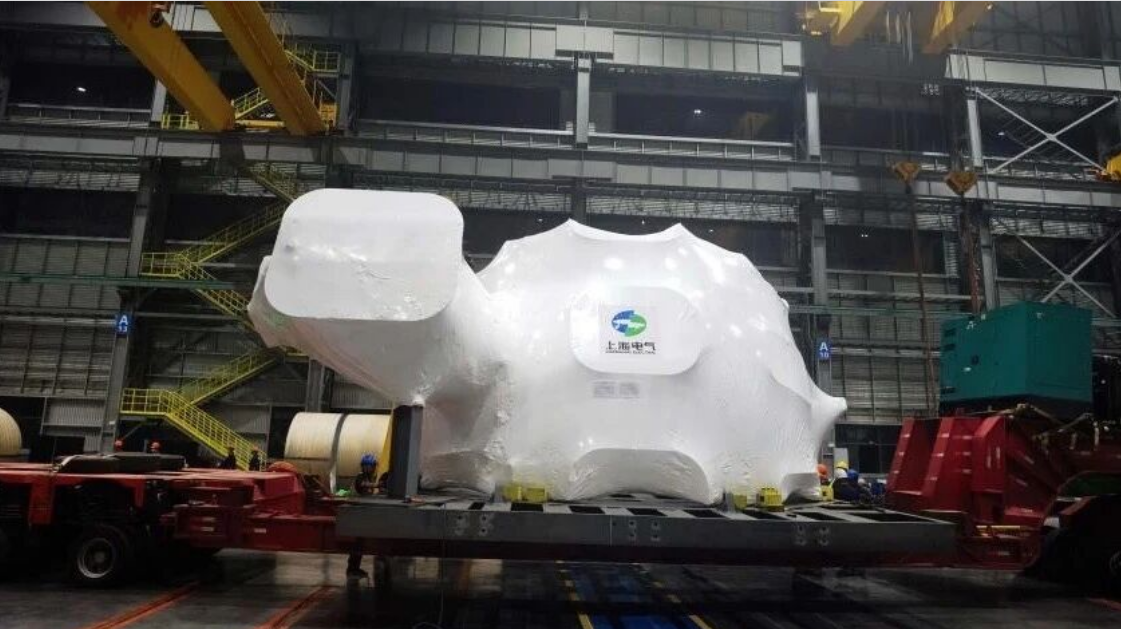
Key Breakthroughs Achieved in Development of Core Equipment for BEST Compact Fusion Energy Test Facility
Recently, at a critical juncture in the all-out sprint toward the "double-half" goals, the development of two core components of the compact fusion energy test facility (BEST) main machine equipment—the vacuum vessel and the mid-plane thermal shield—undertaken by Shanghai Electric Nuclear Power Group and manufactured by No.1 Machine Tool Plant, has achieved successive milestone results. Multiple key manufacturing tasks have been successfully completed and delivered upon acceptance, marking that the development of BEST main machine core equipment has fully entered the critical stage of tackling difficulties and accelerating the sprint, laying a solid foundation for high-quality project delivery. As the core key equipment of the compact fusion energy test facility, the BEST vacuum vessel and mid-plane thermal shield feature complex structures, extremely high precision requirements, and difficult manufacturing processes...
2026-08-03

Tokamak Energy's ST40 device new gyrotron completes site acceptance test
Tokamak Energy disclosed on July 29 that the new gyrotron planned for its high-field spherical tokamak device ST40 has completed site acceptance testing. The equipment, which will serve as the core component of the radio frequency heating system, has undergone key performance verification before installation on ST40. During this test, the gyrotron achieved stable 1 MW power operation at both 104 GHz and 137 GHz frequencies, with pulse lengths up to 2 seconds. The test content included repeatability, modulation capability, power control, and mode purity, and the results demonstrated that the equipment can meet the requirements for sustained performance output in relevant fusion experiments. The gyrotron was built by Kyoto Fusioneering...
2026-07-30

IAEA Launches New Project to Advance Research Network on Small and Medium-Sized Fusion Devices
The International Atomic Energy Agency recently launched a new Coordinated Research Project, aiming to further strengthen the global network of small and medium-sized fusion devices, supporting multinational coordinated experiments, diagnostic technology development, and personnel training, providing a platform for cultivating the next generation of fusion researchers. The Tokamak TT-1 device at the Thailand Institute of Nuclear Technology (TINT) has long participated in the IAEA Coordinated Research Project on the network of small and medium-sized fusion devices, contributing to international cooperation, research, and capacity building. (Photo: JP Cayol/IAEA) This project builds upon a previous five-year collaborative research program. The previous project was named Small and Medium-Sized Magnetic Confinement...
2026-07-30

Hoisting in Place! Global Largest "Artificial Sun" Core Module Installation Progress Exceeds Two-Thirds
On July 28, local time in France, the sixth vacuum vessel module of the International Thermonuclear Experimental Reactor (ITER) tokamak device—Sector Module 1—successfully completed its overall hoisting and precise positioning. Thus, the assembly progress of ITER vacuum vessel modules has exceeded two-thirds. As the general assembly enters a new phase of multi-disciplinary cross-construction, the China Nuclear Engineering Consortium led the coordination of the international team to successfully complete this critical hoisting, laying a solid foundation for subsequent assembly tasks, while fully demonstrating the cross-cultural project management and overall coordination capabilities of the Chinese team in international mega-science projects. The vacuum vessel is a core component of the tokamak device, consisting of nine large sector modules installed and connected sequentially,...
2026-07-30

A delegation led by Dai Minmin of Shanghai State-owned Capital Investment Co., Ltd. visited the fusion research facility for a fact-finding and exchange visit.
July 22, 2026, marked the first anniversary of the official establishment of China Fusion. A delegation led by Dai Minmin, Deputy Party Secretary and President of Shanghai State-owned Capital Investment Co., Ltd. (hereinafter referred to as Shanghai State
2026-07-27

Hefei establishes a new joint laboratory for fusion reactor material irradiation and evaluation, driving the coordinated development of the nuclear fusion industry.
Recently, the Joint Laboratory for Fusion Reactor Material Irradiation and Evaluation—co-established by the Institute of Plasma Physics (Hefei Institutes of Physical Science, Chinese Academy of Sciences) and the Institute of High Energy Physics (Chinese A
2026-07-27
Reading Ranking
- 1 Startorus Fusion Completes 20 K Cryogenic Rapid Discharge Test of Central Solenoid Model Magnet (CSMC) for Spherical Tokamak Device
- 2 ITER Tokamak Plasma Instability Simulation Tool JOREK Released as Open Source
- 3 ITER Tokamak Advances Assembly in France, Fusion Experiment Targets 150 Million Degree Celsius Plasma
- 4 Russia to Develop General Safety Rules for Controlled Thermonuclear Fusion Facilities
- 5 China's Huanliu-4 High-Temperature Superconducting Magnet Development Roadmap Clarified
- 6 Beijing's First Second-Generation High-Temperature Superconducting Tape Mass Production Line Project Approved
- 7 Chinese Team Achieves Full Technical Chain Integration in Wall Treatment for the World's Largest "Artificial Sun"
- 8 Naju City, Korea Proposes Construction of National Fusion Energy Center
- 9 Expansion Project Advances at Centrus Energy's Uranium Enrichment Facility in Piketon, Ohio
- 10 Strengthen Regulation of Fusion Devices, Empower the Development of New Technologies
- 11 UK Tokamak Energy completes testing of Demo4 fusion high-temperature superconducting magnet system
- 12 China's "Artificial Sun" BEST Campus Delivered and Commissioned, Controlled Nuclear Fusion Accelerates Toward Engineering Demonstration
- 13 India's Private Fusion Tokamak PRAGYA Achieves Plasma Operation
- 14 Princeton Plasma Physics Laboratory to Validate Spherical Tokamak Fusion Path with NSTX-U
- 15 A delegation led by Dai Minmin of Shanghai State-owned Capital Investment Co., Ltd. visited the fusion research facility for a fact-finding and exchange visit.