
Search Results
Keyword:-

SuperCritical Obtains Exclusive License for Uranium Extraction from Seawater Technology, Plans Industrial Deployment in the United States
SuperCritical Materials Corp., a U.S. developer of nuclear fuel and critical materials infrastructure, announced on July 24 that it has obtained an exclusive license from Battelle Memorial Institute for a patented uranium adsorbent technology used to extract uranium from seawater. The technology was originally developed by Pacific Northwest National Laboratory (PNNL) and its research partners. Battelle Memorial Institute currently manages eight national laboratories for the U.S. federal government. SuperCritical stated that the technology has been verified to extract uranium from seawater...
2026-07-30

Superyacht Industry Explores Nuclear Power Transition, Calls for Early Safety and Regulatory Preparation
During the 2026 Monaco Energy Boat Challenge, the application prospects of nuclear propulsion technology in the superyacht sector became a focal point of industry discussion. Experts attending the event believe that although nuclear-powered superyachts still have a long way to go before commercial application, the relevant discussions are no longer confined to the conceptual stage. The industry needs to start preparing early on issues such as design, safety, operation, and regulation. Engel-Jan de Boer, Global Yacht Business Manager at the UK-based maritime professional services organization Lloyd's Register, stated during the conference that with the rapid development of maritime nuclear technology...
2026-07-30

McDermott Signs Agreement with ULC-Energy to Support Rolls-Royce SMR Development in the Netherlands
McDermott and ULC-Energy announced on July 29 that they have signed a cooperation agreement to jointly support the development of the Rolls-Royce Small Modular Reactor (Rolls-Royce SMR) project, with a primary focus on the Dutch market. Under the agreement, the collaboration will center on the coupling of small modular reactors with energy-intensive industrial processes, exploring the application of nuclear energy in industrial energy systems. McDermott will leverage its engineering experience in energy transition and industrial decarbonization, covering areas such as low-carbon hydrogen and ammonia, sustainable aviation fuel (SAF), and carbon capture and utilization (CCU); ULC-Energy will provide capabilities in nuclear project development.
2026-07-30

Northwest Nuclear and Radiation Safety Supervision Station of the Ministry of Ecology and Environment Completes Routine Supervision and Emergency Assessment of Thorium-based Molten Salt Reactor
Recently, the Northwest Nuclear and Radiation Safety Supervision Station of the Ministry of Ecology and Environment (hereinafter referred to as the Northwest Supervision Station) organized a supervision team to conduct routine nuclear and radiation safety supervision and comprehensive emergency drill assessment for the 2 MW Liquid Fuel Thorium-based Molten Salt Experimental Reactor (hereinafter referred to as the Thorium-based Molten Salt Reactor) of the Shanghai Institute of Applied Physics, Chinese Academy of Sciences (hereinafter referred to as Shanghai Institute of Applied Physics). This supervision focused on the operational safety of the Thorium-based Molten Salt Reactor, effluent and environmental monitoring, radiation safety of nuclear technology utilization projects, and comprehensive emergency drills. The supervision team, through document review, on-site verification, and record tracing, primarily examined the effectiveness of the quality assurance program, personnel training and authorization, effluent and environmental monitoring records, emergency system documents, and the rectification records from previous inspections. At the same time, the supervision team observed the comprehensive emergency drill on-site and provided guidance based on actual conditions, conducting a full-process assessment of accident response procedures, cross-departmental coordination, and emergency response measures. In response to the issues and deficiencies identified during the supervision, the supervision team held a special communication meeting with the Shanghai Institute of Applied Physics and proposed rectification requirements.
2026-07-30
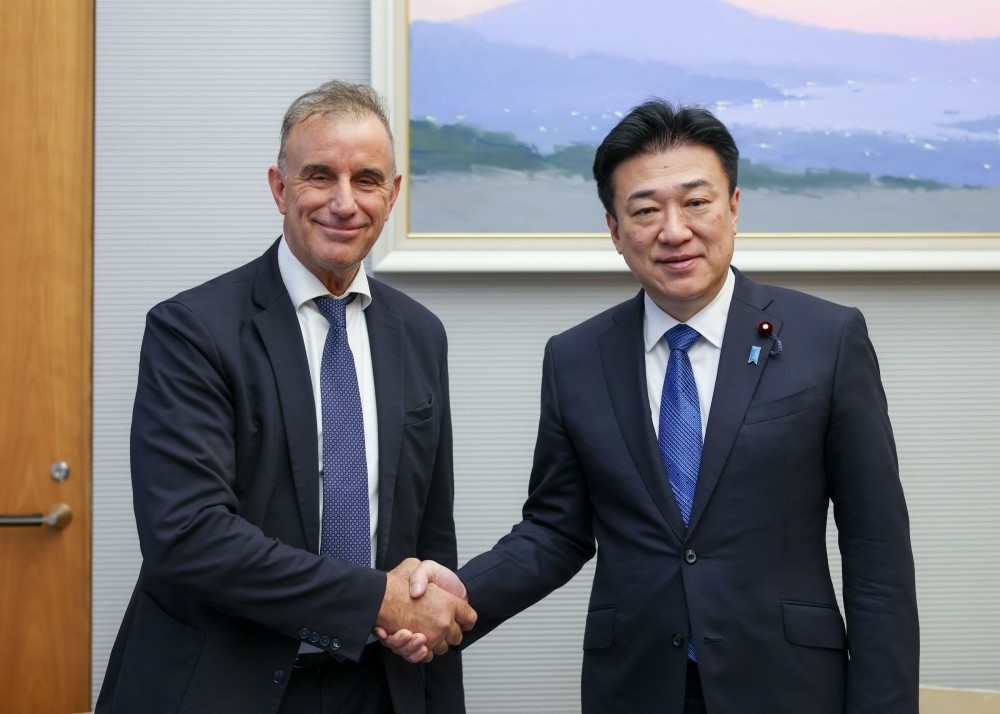
Japan's Chief Cabinet Secretary Meets ITER Organization Director-General
Starting at 4:50 p.m. on July 29, Japan's Chief Cabinet Secretary Yoshimasa Hayashi met with Pietro Barabaschi, Director-General of the International Thermonuclear Experimental Reactor (ITER) Organization, who was visiting Japan. The meeting lasted approximately 15 minutes. (Photo source: Japan Cabinet Public Affairs Office) Hayashi welcomed Barabaschi's visit to Japan. He stated that fusion energy has been listed as one of the 17 strategic areas in Japan's growth strategy. Japan looks forward to progress in the ITER project and believes it will play a significant role in advancing the realization of fusion energy and enhancing energy security. Hayashi...
2026-07-30

IAEA Launches New Project to Advance Research Network on Small and Medium-Sized Fusion Devices
The International Atomic Energy Agency recently launched a new Coordinated Research Project, aiming to further strengthen the global network of small and medium-sized fusion devices, supporting multinational coordinated experiments, diagnostic technology development, and personnel training, providing a platform for cultivating the next generation of fusion researchers. The Tokamak TT-1 device at the Thailand Institute of Nuclear Technology (TINT) has long participated in the IAEA Coordinated Research Project on the network of small and medium-sized fusion devices, contributing to international cooperation, research, and capacity building. (Photo: JP Cayol/IAEA) This project builds upon a previous five-year collaborative research program. The previous project was named Small and Medium-Sized Magnetic Confinement...
2026-07-30

South Korea launches design of 250 MWe sodium-cooled fast reactor Helios
The Korea Atomic Energy Research Institute (KAERI), in collaboration with Hyundai Engineering & Construction and KEPCO E&C, has initiated the design of the next-generation sodium-cooled fast reactor Helios. The reactor is planned to have an electrical output of 250 MWe, based on the existing 100 MWe-class sodium-cooled fast reactor Salus-100 design, targeting large-scale power consumption applications such as AI data centers and industrial parks. Lee Je-hwan, head of the Fourth Generation Reactor Technology Development Department at KAERI, stated that future demand for large-scale carbon-free electricity around AI data centers and industrial parks...
2026-07-30

Ontario Invests Additional $4.6 Million in McMaster Nuclear Reactor to Expand Medical Isotope Production Capacity
The Government of Ontario, Canada, recently announced an additional investment of $4.6 million in the McMaster Nuclear Reactor to expand the production capacity of life-saving medical isotopes, supporting more cancer patients in accessing the critical radioisotopes needed for diagnosis and treatment. From left to right: Josip Zikic, Chief Nuclear Officer at McMaster University; Nolan Quinn, Minister of Colleges and Universities, Research Excellence and Security; Stephen Lecce, Minister of Energy and Mining; Susan Tighe, President and Vice-Chancellor of McMaster University; and Victor Fedeli, Minister of Economic Development, Job Creation and Trade. (Georgia Kirkos/McMaster University) This investment builds on a previous $18 million...
2026-07-30
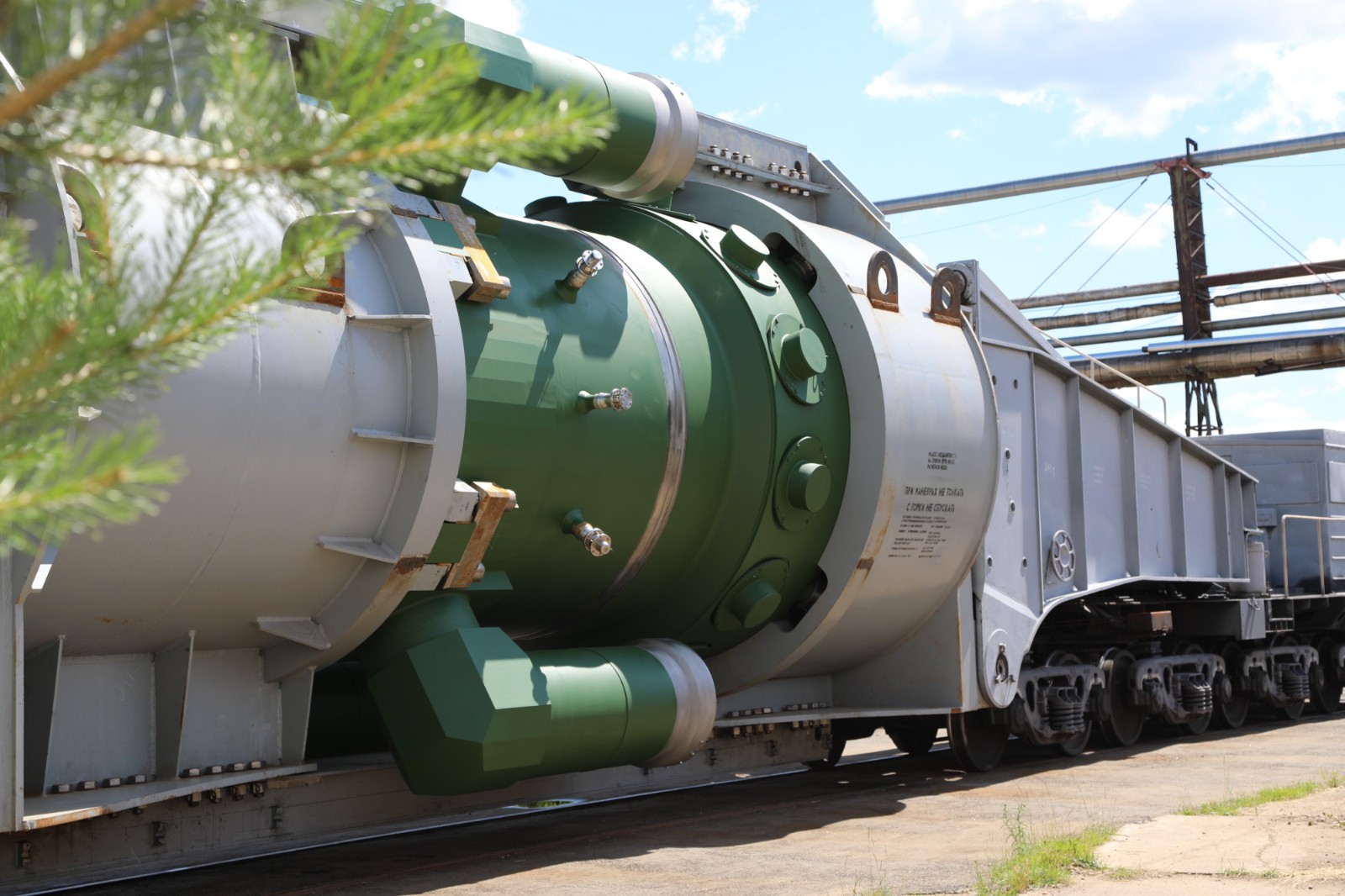
Russia Completes Manufacturing of Second RITM-200 Reactor Unit for Leningrad Nuclear-Powered Icebreaker
On July 29, Rosatom's ZiO-Podolsk Mechanical Plant in the Moscow Region completed the manufacturing of the second RITM-200 reactor unit for the Leningrad nuclear-powered icebreaker. With this, the manufacturing of all major equipment for the reactor compartment of this under-construction 22220-type universal nuclear-powered icebreaker has been fully completed. The Leningrad nuclear-powered icebreaker began construction in January 2024. The naming of the vessel is linked to the 80th anniversary of the lifting of the Siege of Leningrad, with veterans and survivors of the siege proposing that this new-generation nuclear-powered icebreaker be named Leningrad. Following Rosatom's tradition of naming reactor units, the two completed reactor units of the Leningrad have been named "Iskra" and "Grom," commemorating the operations that broke and ultimately lifted the Siege of Leningrad between 1943 and 1944.
2026-07-30

World Nuclear Association expects global large-scale nuclear power construction spending to peak between 2041 and 2045
The World Nuclear Association (WNA) expects global nuclear power industry spending to reach a phased peak between 2041 and 2045. At 2025 prices, approximately $1 trillion will be directed toward the construction of large nuclear power plants during this period. Sama Bilbao y León, Director General of the World Nuclear Association, stated that investment interest in the nuclear energy sector has significantly increased, with 50 countries having formulated relatively specific nuclear energy development plans. She believes that implementing these plans will require substantial financial support, with the required investment scale far exceeding current levels. According to the Association's estimates, in addition to large nuclear power plant construction, approximately $450 billion will be allocated globally to small modular reactor projects between 2041 and 2045, along with $84 billion for extending the operational lifetimes of existing reactors.
2026-07-30

Japan Nuclear Fuel Company Says It Will Propose New Schedule for Rokkasho Reprocessing Plant as Soon as Possible
Naohiro Masuda, President of Japan Nuclear Fuel Company (JNFL), stated at a regular press conference on July 29 that the spent nuclear fuel reprocessing plant in Rokkasho Village, Aomori Prefecture, may be difficult to complete within the current fiscal year. The company will propose a new overall schedule as soon as possible after continuing consultations with regulatory authorities on the treatment of liquid waste within the facility. Masuda said that earlier this month, when an official from the Agency for Natural Resources and Energy of the Ministry of Economy, Trade and Industry met with Aomori Governor Soichiro Miyashita, Miyashita had informed the official that completing construction of the reprocessing plant within the current fiscal year would be challenging. Masuda stated that the company needs to make every effort to avoid the risk of schedule delays becoming a reality, and will manage the project construction progress from multiple aspects...
2026-07-30

Yeongdeok-gun, South Korea, Signs Cooperation Agreement with Korea Hydro & Nuclear Power for New Nuclear Power Plant Construction
On July 29, Yeongdeok-gun, North Gyeongsang Province, South Korea, signed the "Mutual Cooperation Agreement for New Nuclear Power Plant Construction and Regional Development" with Korea Hydro & Nuclear Power (KHNP) at the KHNP headquarters in Gyeongju. Under the agreement, both parties will strengthen collaboration in the process of advancing the new nuclear power plant, including expanding local enterprise participation, creating job opportunities, cultivating local talent, improving education and welfare infrastructure, and cooperating in administrative support and licensing procedures. At the same time, both sides will establish a mechanism for continuous communication with the local community to align project construction with regional development. In June 2025, Yeongdeok-gun was selected as the site for two new large-scale nuclear power plants promoted by the South Korean government and KHNP...
2026-07-30

Hoisting in Place! Global Largest "Artificial Sun" Core Module Installation Progress Exceeds Two-Thirds
On July 28, local time in France, the sixth vacuum vessel module of the International Thermonuclear Experimental Reactor (ITER) tokamak device—Sector Module 1—successfully completed its overall hoisting and precise positioning. Thus, the assembly progress of ITER vacuum vessel modules has exceeded two-thirds. As the general assembly enters a new phase of multi-disciplinary cross-construction, the China Nuclear Engineering Consortium led the coordination of the international team to successfully complete this critical hoisting, laying a solid foundation for subsequent assembly tasks, while fully demonstrating the cross-cultural project management and overall coordination capabilities of the Chinese team in international mega-science projects. The vacuum vessel is a core component of the tokamak device, consisting of nine large sector modules installed and connected sequentially,...
2026-07-30
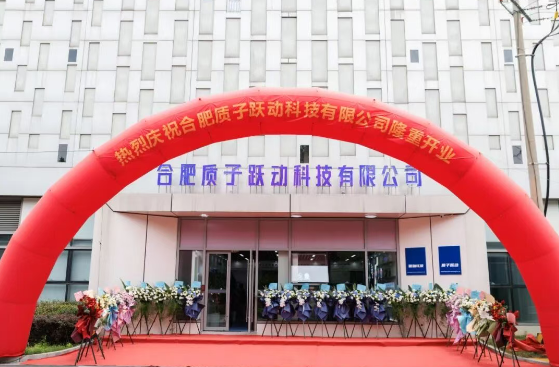
Hefei Proton Leap Commences Operations in Chaohu, Xirong Zhaobo Advances Fusion Equipment Industrialization
On July 26, Hefei Proton Leap Technology Co., Ltd., a wholly-owned subsidiary of Anhui Xirong Zhaobo Technology Co., Ltd., held its opening ceremony in Chaohu, Anhui. The official commencement of operations marks a new step for Xirong Zhaobo in the field of controlled nuclear fusion auxiliary heating equipment, transitioning from R&D customization to small-scale trial production, high-end equipment integration and commissioning, and batch delivery. According to reports, Xirong Zhaobo signed an investment agreement with Chaohu City in October 2025; in December of the same year, Proton Leap relocated to Zhongke Zhicheng in Chaohu; and in June 2026, Proton Leap initiated trial production. Following this opening, the company will undertake Xirong Zhaobo's fusion high-end equipment manufacturing, integrated installation, high-power commissioning, and batch production...
2026-07-30

"AI Empowers Anti-Counterfeiting in Safety, Quality, and Environment Fields" — Huang Chuangtao, Engineer, CGN Intelligent Technology (Shenzhen) Co., Ltd.
On November 14, 2025, Huang Chuangtao, an engineer from CGN Intelligent Technology (Shenzhen) Co., Ltd., delivered a keynote report titled "AI Empowers Anti-Counterfeiting in Safety, Quality, and Environment Fields" at the AI + Nuclear Energy Innovation Application Industry-Economy Roadshow of the Shenzhen Nuclear Industry Expo. The report introduced the application achievements of using AI to enhance anti-counterfeiting for certificates, qualifications, and quality certification documents in the nuclear power industry. The system employs a layered architecture, multimodal recognition, collaboration between large and small models, and dual verification via QR code links to identify deep counterfeiting, such as simultaneous forgery of certificate content and websites. This solution has completed the verification of over 7,000 certificates, intercepted 17 cases of counterfeiting, and plans to build a traceable quality trust system combined with blockchain. Key points: 1. ...
2026-07-29