
Search Results
Keyword:ESS

Carbon Nanotubes Can "Remember" Their Initial Structure, Isotope Labeling Reveals Dynamic Growth Process
A study released on September 1 shows that carbon nanotubes can maintain their initial atomic structure in dynamically changing growth environments. The research team used digital isotope labeling technology to encode the elongation process of individual carbon nanotubes as sequences of different carbon isotope compositions, and read their growth history through Raman spectroscopy, thereby tracking the structural stability of nanotubes under conditions of temperature variation and catalyst evolution. The properties of carbon nanotubes are highly dependent on their atomic arrangement. The same material may exhibit metallic or semiconducting characteristics due to structural differences, so structural uniformity has always been a key issue for the large-scale application of carbon nanotubes. In floating catalyst chemical vapor deposition and other industrial production routes, catalyst particles experience constantly changing temperatures and gas compositions within the reactor and may undergo irreversible enlargement. Previously, direct evidence was lacking on whether individual carbon nanotubes could maintain their initial structure under such complex conditions.
2026-09-02

Japanese Team Develops High-Temperature, High-Pressure Isotope Ratio Analysis Method for Tracing Halogenated Pollutants
Researchers from Shibaura Institute of Technology (SIT) and the National Institute of Advanced Industrial Science and Technology (AIST) in Japan have collaboratively developed a customized high-temperature, high-pressure combustion interface for liquid chromatography-isotope ratio mass spectrometry (LC-IRMS), enabling carbon stable isotope ratio (δ¹³C) analysis of various halogenated organic compounds. The research findings were published online on August 2, 2026, and will appear in Volume 1421 of Analytica Chimica Acta, scheduled for release on November 1, 2026. Source of the new high-temperature, high-pressure LC-IRMS system: Professor Hiroto Kawashima, SIT, Japan. Halogenated organic compounds are widely present in disinfection byproducts, pesticides, refrigerants, and industrial chemicals, some of which exhibit persistence, bioaccumulation, and toxicity. Traditional environmental monitoring primarily relies on concentration measurements, which makes it difficult to directly provide information on pollutant sources and environmental transformation processes. δ¹³C analysis can offer clues for studying chemical sources, production processes, and environmental fate, but organic pollutants containing strong carbon—chlorine or carbon—fluorine bonds are difficult to fully oxidize under conventional LC-IRMS combustion conditions, limiting the application of this technique.
2026-09-02

Iran Still Denies IAEA Inspectors Access to Some Nuclear Facilities
A recent report shows that Iran has still not allowed International Atomic Energy Agency (IAEA) inspectors to access some of its nuclear facilities, including sites in Isfahan, Natanz, and Fordow that were previously damaged in airstrikes. The report states that the IAEA had previously detected over 440 kilograms of highly enriched uranium and nearly 8,600 kilograms of low-enriched uranium at these locations. Due to the current lack of sufficient information on the status and whereabouts of the relevant nuclear materials, IAEA Director General Rafael Grossi has expressed concerns over nuclear non-proliferation risks and called on Tehran to allow inspectors to access the facilities for verification as soon as possible. The report also mentions that inspectors...
2026-09-02

Japan's Tomari Nuclear Power Plant Plans New Low-Level Radioactive Waste Processing Facility
Hokkaido Electric Power Company (HEPCO) recently announced plans to construct a new low-level radioactive waste processing facility within the premises of the Tomari Nuclear Power Plant in Hokkaido, Japan, to handle approximately 12,000 drums of low-level radioactive waste currently stored on site. According to HEPCO, the new facility will sort waste such as paper and metal, reduce its volume through fine shredding or compression, and then solidify it by pouring mortar into the waste drums. After processing, the waste will undergo radioactivity level testing before being transported to the disposal center in Rokkasho Village, Aomori Prefecture. Previously, the Tomari plant had stored this type of waste in 200-liter drums without further processing. The proposed facility will have an annual processing capacity of over 1,000 drums, feature a three-story structure, and cover a total floor area of approximately 4,600 square meters.
2026-09-02

Major Breakthrough in Residual Stress Research on Key Aviation Materials in China
Nickel-based single-crystal superalloys are key materials for manufacturing turbine blades in aviation engines. Recently, the neutron scattering team from the Department of Nuclear Physics at the China Institute of Atomic Energy (CIAE) under CNNC, leveraging the Engineering Science Stress Spectrometer at the China Advanced Research Reactor (CARR), overcame technical challenges in residual stress measurement of single-crystal superalloys and established a precise three-dimensional residual stress testing method based on neutron diffraction. This provides an effective solution for residual stress assessment of critical aviation materials and lays a solid methodological foundation for the in-depth application of the CARR Engineering Science Stress Spectrometer in high-end manufacturing. During high-temperature heat treatment or service of nickel-based single-crystal superalloys...
2026-09-02

Zhejiang Jinqimen Nuclear Power Unit 1 Pressurizer Relief Tank Successfully Hoisted into Place
On August 30, the pressurizer relief tank, a major nuclear island equipment item of Unit 1 at Zhejiang Jinqimen Nuclear Power Plant, contracted by China Nuclear Industry Fifth Construction Co., Ltd. (CNF), was successfully hoisted into place. The entire hoisting process was smooth and orderly, with overall safety and quality under control. This hoisting has laid a solid foundation for the subsequent installation of main nuclear island equipment and the construction of the primary loop system. The pressurizer relief tank is an important auxiliary equipment of the reactor coolant system in a nuclear power plant. Its main function is to collect and condense the high-temperature and high-pressure steam discharged from the pressurizer safety valves, ensuring the safe and stable operation of the reactor system. The relief tank hoisted this time is pre-installed equipment in the nuclear island. The main body of the equipment is heavy in weight and large in size, with limited hoisting workspace. After being hoisted into place, it needs to be placed in the nuclear island building for a long period, and subsequent construction will be constrained by space, making it necessary to introduce the equipment precisely within the civil construction window period.
2026-09-02

Hokuriku Electric Power Submits Revised Nuclear Disaster Prevention Business Plan for Shika Nuclear Power Station
Hokuriku Electric Power Company announced on August 31 that it has submitted revisions to the "Nuclear Operator Disaster Prevention Business Plan" for the Shika Nuclear Power Station to the Prime Minister of Japan and the Nuclear Regulation Authority for filing. The plan is formulated under Japan's Act on Special Measures Concerning Nuclear Emergency Preparedness, and primarily stipulates the operations required of nuclear power stations in nuclear disaster prevention, emergency response, post-nuclear-disaster response, as well as preventing the occurrence and escalation of nuclear disasters and promoting recovery efforts. Hokuriku Electric Power stated that consultations with Ishikawa Prefecture, Shika Town, and Toyama Prefecture have been completed for this revision. Under relevant Japanese laws and regulations, nuclear power...
2026-09-01

Japan's Mihama Nuclear Power Station Unit 3 Plans Grid Connection on September 15
Kansai Electric Power announced on September 1, 2026, that work related to the periodic inspection of Unit 3 at Japan's Mihama Nuclear Power Station is progressing as planned. Based on the progress of the inspection and the status of corrective measures for the steam leakage issue in the high-pressure turbine, the unit is scheduled to be connected to the grid on September 15. Unit 3 of Mihama Nuclear Power Station is a pressurized water reactor unit with a rated electrical output of 826 MW and a rated thermal output of 2,440 MW. On May 8 this year, the unit underwent a manual reactor shutdown after steam leakage was confirmed in the high-pressure turbine. From June 16, the unit entered its 29th periodic inspection. Kansai Electric Power stated that, in response to the steam leakage in the high-pressure turbine, the upper cylinder sealing cover has been replaced based on the results of the cause investigation, and multiple measures such as the development of relevant guidelines are being advanced.
2026-09-01

Tennessee Issues First-Ever Commercial Fusion-Specific Permit in the U.S. to Type One Energy
The Tennessee Department of Environment and Conservation (TDEC) has issued Type One Energy the state's first permit specifically for a fusion energy facility, allowing the company to advance fusion-related projects at the Tennessee Valley Authority's (TVA) Bull Run Energy Complex in Clinton. Tennessee officials stated this is the first permit of its kind in the United States issued under a new state-level fusion regulatory framework. Tennessee Governor Bill Lee, alongside fusion energy partners, presented the first U.S. permit specifically for a commercial fusion facility on Monday at the Organization of American States (OAS) annual meeting in Nashville. (LR) TVA Interim...
2026-09-01

Harbin Engineering University Establishes Research Institute for Spent Fuel Reprocessing and Advanced Materials
On August 31, the inauguration ceremony of the Research Institute for Spent Fuel Reprocessing and Advanced Materials at Harbin Engineering University was held at the university's Qihang Activity Center. More than 150 participants attended the meeting, including academicians and experts in the field of nuclear science and technology, representatives from industry and enterprises, peer institutions, and alumni. The newly established institute will address the needs of nuclear energy safety assurance and sustainable development by integrating the university's advantageous disciplinary resources in nuclear science, materials, and chemical engineering, focusing on breakthroughs in spent fuel reprocessing processes, advanced materials development, and related key core technologies, while promoting the coordinated development of basic research, technological breakthroughs, and commercialization of research outcomes. At the meeting, several attending experts noted that spent fuel reprocessing is a critical part of the nuclear f...
2026-09-01
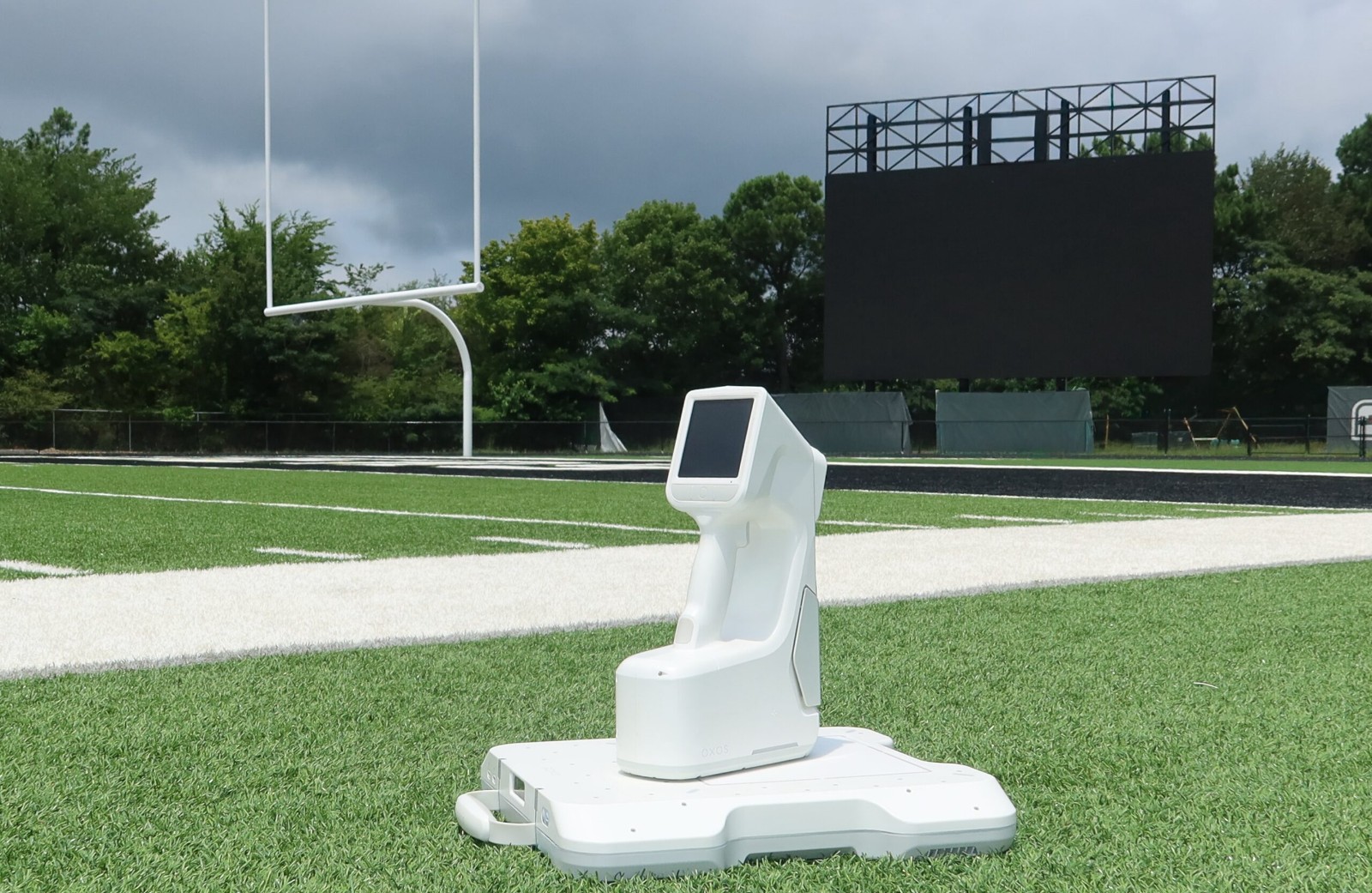
Portable X-ray Equipment in the U.S. Used for On-Site Assessment of American Football Injuries
As the 2026–2027 American football season approaches, team training camps, player evaluations, and medical support preparations are getting underway. Given the risk of acute sports injuries from the high-intensity physical contact in American football, portable X-ray equipment is being used to improve the efficiency of injury assessment on the sidelines and at training facilities. According to reports, American football players are prone to fractures, sprains, joint dislocations, and contusions. Relevant data indicates that the incidence of severe injuries such as fractures, dislocations, and contusions in this sport is higher than in other sports, with fractures accounting for approximately 10% of all football injuries. Such injuries typically require X-ray radiography to aid diagnosis, but traditional X-ray machines are bulky and fixed in place, usually requiring use in facilities with appropriate shielding. Injured players often need to be transported to the radiology department for examinations, which may delay diagnosis and treatment decisions.
2026-08-31

Korea's Eugene MS Wins KRW 11.4 Billion Order for ITER Core Components
Korea's Eugene MS announced on August 31 that it has signed a contract with the Korea Institute of Fusion Energy (KFE) to produce and supply the second batch of vacuum vessel port sealing flanges for the International Thermonuclear Experimental Reactor (ITER). The contract is valued at approximately KRW 11.4 billion, equivalent to about 44% of Eugene MS's 2025 revenue of KRW 25.9 billion. The contract period runs through December 2030. Under the arrangement, the sealing flanges will be delivered to the ITER Organization in three batches, with final inspection and related procedures scheduled for completion by June 30, 2031. The ITER vacuum vessel port sealing flanges consist of large fasteners and other components...
2026-08-31

South Korea's KNR Systems Completes Development of Robotic System for PHWR Decommissioning
KNR Systems announced on August 31 that it has completed the development of a platform system for remote cutting and dismantling of radioactive structures in Pressurized Heavy Water Reactors (PHWR), with final delivery scheduled to commence in September this year. The system originates from a government-commissioned PHWR decommissioning demonstration project. The project, valued at approximately 2.8 billion KRW, was awarded in January last year, with a development period of about seven months. Upon delivery, the equipment will be installed at the Heavy Water Reactor Decommissioning Technology Center of the Korea Research Institute of Decommissioning (KRID) in Gyeongju, for use in PHWR decommissioning demonstrations. Compared with light water reactors, PHWRs have more complex internal structures and typically higher levels of radioactive contamination, making dismantling operations more challenging.
2026-08-31

CA01 Module of Unit 1 at Guangxi Bailong Nuclear Power Plant Successfully Hoisted into Position in the Nuclear Island
On August 29, the CA01 module of Unit 1 at the Bailong Nuclear Power Plant of SPIC Guangxi Nuclear Power was precisely positioned, marking a new phase of parallel civil construction and installation in the nuclear island. ▲On August 29, the hoisting operation of the CA01 module of Unit 1 at the Guangxi Bailong Nuclear Power Plant of SPIC was proceeding in an orderly manner. The CA01 module is located in the reactor building of the nuclear island and serves as the installation room for main equipment such as the reactor pressure vessel, steam generators, and pressurizer. The module is T-shaped in overall form, with external dimensions of 28 meters in length, 29 meters in width, and 24 meters in height. It consists of 47 sub-modules, with a total lifting weight of approximately 1,167 tons, making it the largest and heaviest structural module in the nuclear island. The hoisting operation commenced at 8:07 a.m. and, after a series of maneuvers including lifting, hovering, slewing, lowering, and adjustment, was successfully positioned at 12:58 p.m., with the entire process being safe, controllable, stable, and orderly.
2026-08-31
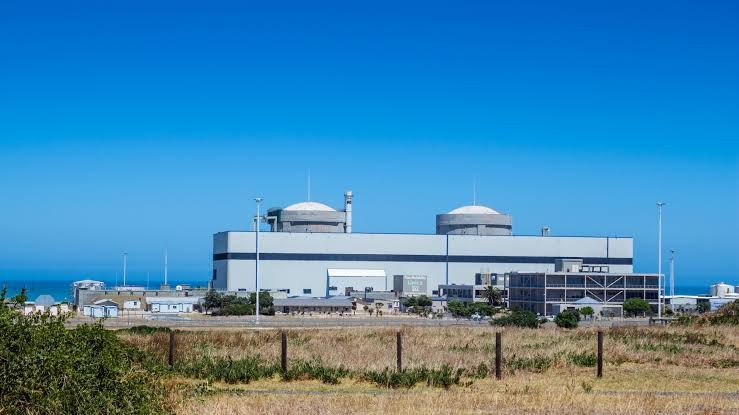
Unit 1 at South Africa's Koeberg Nuclear Power Station Automatically Shuts Down
South Africa's state-owned power utility Eskom has stated that Unit 1 at the Koeberg Nuclear Power Station automatically shut down after the reactor safety system was triggered. The cause of the incident is currently under investigation. According to Eskom, the unit's turbine has been taken offline, and there is no nuclear safety risk at the site. The company noted that prior to the earlier fish kill and their entry into the water intake area, the generating unit had been operating reliably. Koeberg Nuclear Power Station is located on South Africa's Atlantic coast, near Cape Town. Several days ago, large numbers of dead fish entered the station's water intake area, clogging the cooling pumps and triggering the safety system, after which the cooling pumps automatically shut down and Unit 1's power output was reduced. Unit 2 is currently in a planned maintenance outage.
2026-08-29