
Search Results
Keyword:Energy

Tennessee's Top Officials Push Hard to Bind Nuclear Energy with Data Centers: Tennessee's Computing Blueprint and the Clash with Reality
Against the backdrop of an increasingly white-hot global artificial intelligence arms race, competition in computing infrastructure has substantively evolved into competition in energy supply capacity. Recently, at the ImagineIF tech futurism conference held in Nashville, multiple Tennessee political figures collectively spoke out, outlining a strategic blueprint centered on Oak Ridge and relying on nuclear energy and small modular reactors (SMRs) to power hyperscale data centers across the United States. However, beneath the grand framework of a multi-trillion-dollar investment vision and the historical narrative of the Manhattan Project, this industrial concept is facing regulatory approval bottlenecks, lagging power grid interconnection, rising community resistance, and environmental equity...
2026-10-07

Jefferson Lab Signs CRADA to Advance Commercialization of Subsurface Tritium Continuous Monitor: Overcoming the Challenge of Online Monitoring of Low-Energy Beta Particles in Groundwater at Nuclear Power and Fusion Facilities
The U.S. Department of Energy (DOE) Thomas Jefferson National Accelerator Facility (Jefferson Lab) announced that it has formally signed a Cooperative Research and Development Agreement (CRADA) with startup company Canary Instruments to jointly advance the commercialization of its independently developed Subsurface Continuous Radioisotope Environmental Monitor (SCREM). This technology is specifically designed for nuclear power plants, nuclear fuel facilities, and future...
2026-10-07

Blue Energy becomes the first small nuclear power developer to apply for grid connection in Texas, aiming to provide baseload power for AI data centers
According to local U.S. media reports, nuclear energy startup Blue Energy Global Inc. has formally submitted a grid connection application to the Texas grid operator, becoming the first developer in the United States to apply to connect next-generation small modular reactor (SMR) power to the Texas main grid (ERCOT). The move is aimed at addressing the explosive growth in baseload electricity demand in Texas driven by the construction of artificial intelligence (AI) and supercomputing data centers. According to the relevant project plans submitted by Blue Energy, the company is advancing the development of a large energy complex in partnership with data center operator Crusoe Inc. The hybrid energy base is initially planned to first rely on natural gas units for rapid commissioning and power generation to address the urgent short-term power shortage of computing clusters; subsequently, small nuclear reactors will be gradually added and deployed to comprehensively build a long-term stable energy supply architecture featuring "gas-nuclear synergy and carbon-free transition."
2026-10-07

Missouri Releases New Energy Plan, Pushing Nuclear Power as Priority
According to local U.S. media reports, the Missouri Department of Natural Resources, in its latest statewide comprehensive energy plan, has formally placed the development of new nuclear power plants, enhancement of grid resilience, and advancement of energy autonomy at the strategic priority level. Official data show that Missouri currently consumes energy at a scale 8 times its in-state production, relying heavily on cross-regional transmission from external grids, and the plan aims to fundamentally reverse this trend of dependence on out-of-state power. Missouri Governor Mike Kehoe noted in the report that in recent years Missouri's exposure risk to interstate imported electricity has increased significantly, and the new energy plan...
2026-10-07

Indiana Launches "Nuclear Ready Communities Program" Applications: Promoting Clean Nuclear Energy Investment to Empower High-Tech Industry Development
Indiana Governor Mike Braun officially announced on Tuesday local time the opening of the application channel for the state's Nuclear Ready Communities Program. The policy aims to guide and assist local municipalities across the Hoosier State in establishing readiness mechanisms to accept advanced clean energy investment, attracting large nuclear power developers to locate there through upfront assessment and certification. Indiana officials position civilian nuclear energy as a core engine for driving future high-tech industry investment, building a resilient power grid, and providing local communities with low-cost, highly reliable electricity. As data centers...
2026-10-07

U.S. Department of Energy Commits $4.2 Billion Loan to Support Vistra Nuclear Plant Expansion and Upgrade
On October 5, 2026, the Office of Energy Dominance Financing of the U.S. Department of Energy (DOE) announced a commitment to provide a conditional loan of up to $4.2 billion to fund the expansion and modernization of nuclear power plants owned by Vistra Corp. in Pennsylvania and Ohio. It is understood that this investment aims to implement U.S. President Donald Trump's executive order on revitalizing the nuclear industrial base. U.S. Secretary of Energy Chris Wright stated that by increasing the power generation of existing nuclear power plants, affordable...
2026-10-06

Google Plans to Sign Over $1 Billion Long-Term Power Purchase Agreement with Constellation Energy: Locking in Existing Nuclear Baseload to Support AI Computing Expansion
Recently, Google's parent company Alphabet (Alphabet Inc., Nasdaq: GOOGL) is nearing a multi-year nuclear power purchase agreement with Constellation Energy. Google will pay $1 billion or more, and the agreement could be announced as early as this week. It is understood that this potential agreement comes as the massive electricity demand driven by the artificial intelligence boom is reigniting interest in nuclear energy, which can provide emissions-free power around the clock. Recently reached agreements have mainly focused on existing nuclear facilities, because permitting and construction of new reactors can take more than a decade, while next-generation fission technology still requires years before large-scale deployment. This news follows Amazon...
2026-10-06

California Signs Two Bills to Reshape Advanced Nuclear Fission and Fusion Energy Strategy
California Governor Gavin Newsom recently signed two bills aimed at comprehensively advancing the state's nuclear energy development by reassessing advanced nuclear fission technology and establishing a strategic plan for nuclear fusion. In the field of nuclear fission, Assembly Bill 2647 (A.B. 2647) requires the California Energy Resources Conservation and Development Commission (CEC) to conduct a formal assessment of advanced nuclear energy technologies by January 1, 2028. The bill, introduced by Assemblymember Lisa Calderon, directs the CEC to comprehensively consider factors such as cost, grid reliability, fuel cycle, and public health in determining whether new nuclear power plants can help California achieve its 2045 zero-carbon electricity goal. Calderon stated that given current grid demands, California needs to reassess the role of nuclear energy in ensuring a stable and clean electricity supply based on modern technology.
2026-10-04
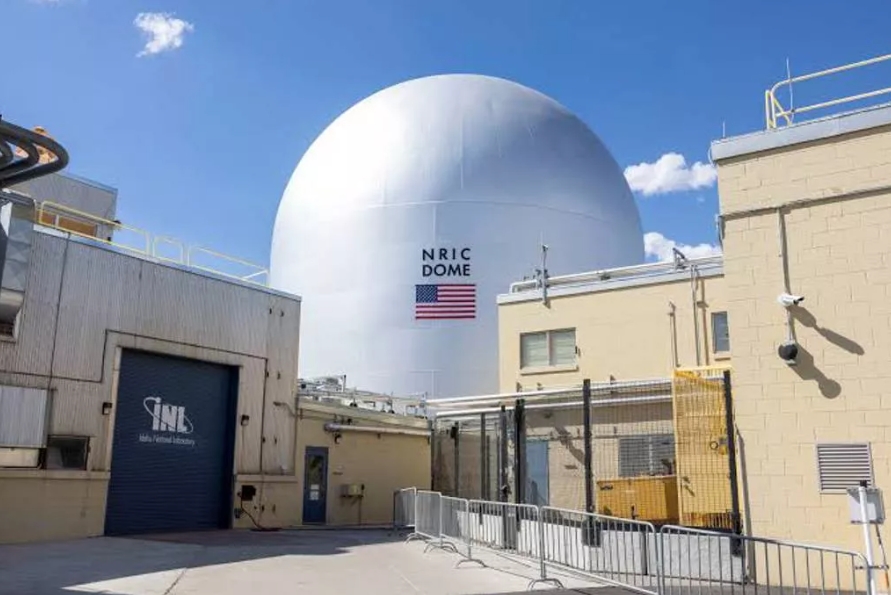
Deployable Energy 1MW Microreactor UNB Achieves Initial Criticality: Scheduled to Enter INL DOME Test Bed in 2027 for Full-Power Testing
Houston-based nuclear energy startup Deployable Energy recently announced that its independently developed Microreactor, the Unity Nuclear Battery (UNB), has successfully completed its Initial Criticality Test. According to the established deployment plan, the system will officially arrive at the Demonstration and Operation of Microreactor Experiments (DOME), the dedicated microreactor test bed at Idaho National Laboratory (INL), in 2027 to conduct full-power comprehensive performance testing. Although branded as a Nuclear...
2026-10-02

The Fifth China-France Energy Dialogue Held in Beijing
On September 29, He Yang, Deputy Administrator of China National Energy Administration, and Cedric Brier, Director General of the Directorate General for Energy and Climate of France, co-chaired the Fifth China-France Energy Dialogue in Beijing. The two sides conducted in-depth exchanges on policies concerning energy transition, energy security, and electrification, and fully exchanged views on practical cooperation in renewable energy, energy storage and hydrogen energy, civil nuclear energy, and other fields. Both sides emphasized that China-France energy cooperation started from civil nuclear energy and gradually expanded to multiple fields including oil and gas, renewable energy, energy technology innovation, and green and low-carbon transition, forming a cooperation pattern featuring complementary advantages, mutual benefit and win-win results, and long-term stability. Both sides are willing to uphold high-level consensus, leverage their respective advantages, tap into cooperation potential, innovate cooperation models, and push China-France energy cooperation to continue to deepen and upgrade, injecting new momentum into the sustained and healthy development of the China-France comprehensive strategic partnership, and contributing China-France wisdom and strength to promoting global energy security and green development.
2026-09-30

MOST Sets the Pathway for Hard-Core Science and Technology Breakthroughs in the "15th Five-Year Plan": Comprehensive and Systematic Deployment of Major Basic Research on Controlled Nuclear Fusion to Solidify the Foundation of Future Strategic Energy
At the series-themed press conference on "Getting Off to a Good Start in the '15th Five-Year Plan'" held by the State Council Information Office, the Ministry of Science and Technology officially released the top-level design and core breakthrough roadmap for building a science and technology powerhouse over the next five years. When outlining the layout for major science and technology breakthroughs and original innovation, Minister of Science and Technology Yin Hejun explicitly emphasized that, in strengthening the strategic depth of basic research, China will closely anchor itself to the frontiers of the global energy revolution and, centering on underlying scientific bottlenecks in key fields such as energy and materials, comprehensively and systematically deploy major basic research tasks including controlled nuclear fusion (Controlled Nuclear Fusion), so as to seize the future...
2026-09-30

Major Scientific Facility Enables Breakthrough in New Energy Materials: IHEP Leverages Beijing Synchrotron Radiation Facility to Reveal High-Efficiency Crystallization Mechanism of Perovskite, Sub-module Photoelectric Conversion Efficiency Reaches 22.9%
Recently, the research team at the Multidisciplinary Research Center of the Institute of High Energy Physics (IHEP), Chinese Academy of Sciences, has made important progress in the study of the microscopic mechanisms of perovskite solar cell materials. The research team innovatively introduced Prussian Blue (PB) nanoframes with a high degree of lattice matching to perovskite, and leveraged a national major scientific and technological infrastructure——the Beijing Synchrotron Radiation Facility (BSRF)——to conduct multi-dimensional in-situ synchrotron radiation characterization. From the two perspectives of transient crystallization kinetics evolution and microscopic local coordination structure, they systematically elucidated for the first time the physicochemical mechanism by which Prussian Blue regulates perovskite nucleation and crystallization and suppresses ion migration. Large-area perovskite photovoltaic modules fabricated via wet...
2026-09-30
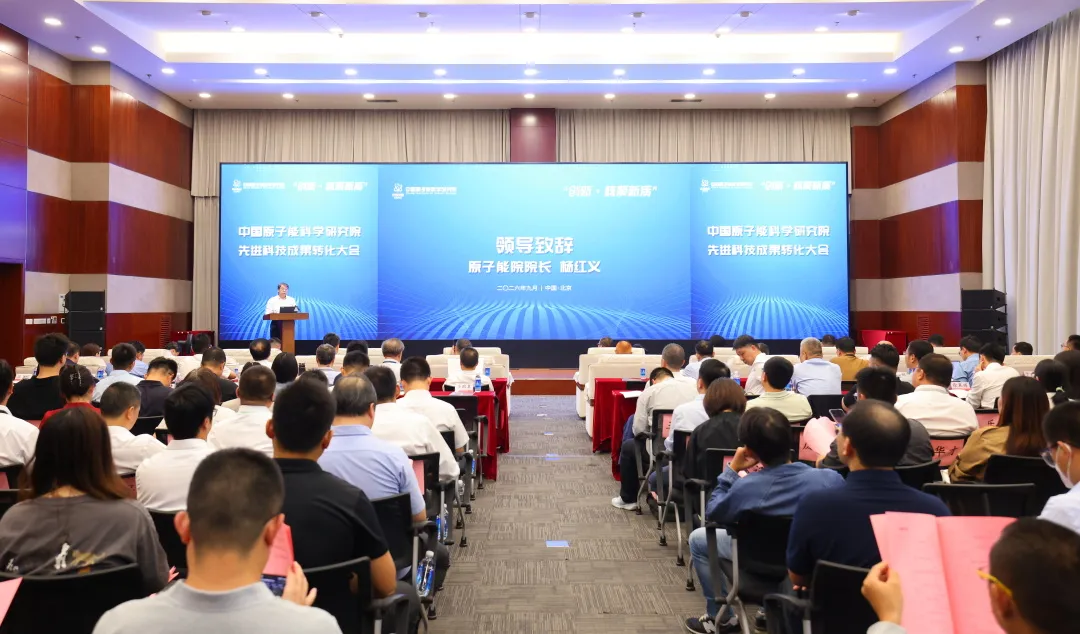
China Institute of Atomic Energy Holds Advanced Scientific and Technological Achievements Transformation Conference: Releases Small Reactor 9-Type Product Matrix, Signs Agreements on Curie-Level Terbium-161 Preparation and SMR Overall Scheme Design
On September 29, the China Institute of Atomic Energy (abbreviated as CIAE) held in Beijing an Advanced Scientific and Technological Achievements Transformation Conference themed "Innovation · Nuclear Fusion of New Quality." The conference showcased CIAE's practical breakthroughs in deepening scientific and technological system reform, advancing the pilot program for empowering scientific and technological achievements from job-related inventions, and integrated institute-enterprise operations, and officially released multiple major scientific research achievements covering advanced reactors, nuclear medical equipment, and isotope preparation, vigorously promoting the acceleration of nuclear technology from the laboratory to the production line. In the report on reform experience and benchmark incubation platforms, the conference systematically summarized three landmark reform achievements: SASAC Pilot Reform for Empowering Scientific and Technological Achievements from Job-Related Inventions: CIAE used...
2026-09-30

Saskatchewan, Canada Releases Long-Term Nuclear Energy Strategy: Plans to Build 2,600 MW of Nuclear Power by 2050
Scott Moe, Premier of Saskatchewan, Canada, officially announced the province's long-term nuclear energy development plan in Saskatoon on September 29, establishing a strategic goal of building at least 2,600 megawatts (MW) of nuclear power capacity by 2050. Moe emphasized that nuclear energy is not only a zero-carbon clean baseload power source, but also a "nation-building opportunity" that empowers economic growth for generations, will create high-end jobs across the province, attract multinational capital, and ensure long-term electricity stability for households and industry. According to the plan, four core pillars have been established: 1. Build a highly resilient power foundation supporting long-term economic growth: Rely on non-intermittent zero-carbon nuclear energy to address the electricity load gap brought about by society-wide electrification...
2026-09-30

Brookfield Renewable Discloses Strategy for Nuclear Energy Business Segment
At the Brookfield Affiliates Investor Day 2026 held on September 29, Brookfield Renewable Partners (BEP) highlighted the strategic progress and industrial layout of its nuclear energy business segment. Brookfield management noted that as AI data centers, manufacturing reshoring, and deep electrification across society drive a sharp increase in global electricity demand, power supply has become a key bottleneck constraining economic growth. Nuclear energy, with its high reliability, round-the-clock baseload attributes, and value for national energy security, is entering an unprecedented super expansion cycle not seen in decades. The...
2026-09-30