
Search Results
Keyword:Europe

ITER vacuum vessel assembly in France progresses steadily, with five European sectors at different critical stages
The vacuum vessel assembly work for the International Thermonuclear Experimental Reactor (ITER) project in southern France is progressing steadily. As the core component of the ITER tokamak device, the vacuum vessel will contain the plasma confined by superconducting magnets, serving as the critical space where fusion reactions occur. This stainless steel ring-shaped structure weighs approximately 5,200 tonnes in total, measures 19.4 meters in diameter, and consists of nine sectors, five of which are manufactured by Europe. The European Fusion for Energy organization (F4E), together with the AMW consortium comprising Ansaldo Nucleare, Westinghouse Electric Italy, and Walter Tosto Company, is responsible for the related manufacturing work.
2026-08-21
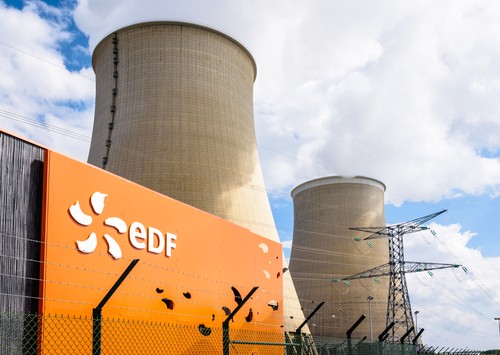
French heatwave to cut nuclear output by about 15% on Friday
Data from Electricite de France (EDF) shows that due to the fifth heatwave of the European summer, French nuclear power output is expected to fall by about 15% this Friday. At that time, nine reactors are expected to be affected, with total nuclear output reductions reaching 9.4 gigawatts during peak hours, of which six reactors will be completely shut down. This summer, many parts of Europe have experienced sustained high temperatures, with some regions seeing temperatures rise to abnormal levels, triggering issues such as water shortages and wildfires. French meteorological authorities predict that this heatwave will peak on Thursday, with temperatures across most of the country ranging between 35 and 40 degrees Celsius. From Friday, cold air from the west will first affect the Atlantic coast and the English Channel region...
2026-08-14

Rising River Water Temperatures in Europe Constrain Nuclear Power Operations, Poland's First Nuclear Power Plant Turns to Baltic Sea for Cooling Water
Persistent high temperatures, droughts, and low river water levels across Europe are turning nuclear power plant cooling issues from a purely engineering topic into a real risk affecting the stability of electricity supply. Experience in countries such as France and Switzerland shows that when river water temperatures are too high or flow rates are insufficient, nuclear power plants—even with generating capacity available—may be forced to reduce output or temporarily shut down due to environmental restrictions. In 2022, France's nuclear power generation fell by 22% year-on-year, and during recent summer heatwaves, rising water temperatures in rivers such as the Seine and the Rhône have repeatedly led to restrictions on related units. The core of this issue is not just whether there is enough water, but also whether the water is cold enough. Traditional river-dependent cooling systems...
2026-08-13

CT "5-Star" Image Quality Scoring May Help Reduce Radiation Dose
A multinational study involving the International Atomic Energy Agency and Massachusetts General Hospital in the United States shows that a standardized 5-star scoring system that considers both radiation dose and CT image quality can produce relatively consistent evaluations across different radiologists and help identify opportunities to reduce patient radiation exposure. This retrospective study included 2,737 adult CT examinations performed at 6 hospitals across 5 European countries, including 1,247 chest CTs and 1,490 abdominal CTs, involving 13 CT scanners. At each hospital, 3 radiologists independently evaluated the examinations using the 5-star framework. Unlike traditional image quality assessments that may favor lower noise...
2026-08-12

U.S. and European Nuclear Fuel Markets Accelerate Adjustment, with Canada and Kazakhstan Remaining Leading Uranium Supply Sources
Annual reports recently released by the U.S. Energy Information Administration and the European Supply Agency show that the global nuclear fuel supply landscape in 2025 continues to be shaped by geopolitical and energy security factors. Canada remains the most important source of uranium for utility nuclear power operators in the United States and the European Union, followed closely by Kazakhstan, underscoring the two countries' central role in the Western nuclear fuel supply chain. Meanwhile, both the United States and the European Union are focusing on concerns over supply source concentration, dependence on Russian-related supplies, and security assurance issues arising from future growth in nuclear power demand. In the U.S. market, owners and operators of civilian nuclear power plants procured 46.9 million pounds U3O8e of uranium deliveries from domestic and foreign suppliers in 2025...
2026-08-12

Europe's High Temperatures and Droughts Impact Nuclear Power Operations, Ukrainian Expert Says Climate Adaptation Tied to Energy Independence
Recent prolonged high temperatures, droughts, and falling river levels across Europe have put pressure on the operation of some nuclear power plants that rely on river water for cooling. Nuclear facilities in France, Hungary, Romania, and Slovenia have successively experienced power reductions or shutdowns, forcing some countries to ease supply pressure through electricity imports and adjusted consumption arrangements. Katie Huff, a professor of nuclear engineering at the University of Wisconsin-Madison, stated that the impact of climate change on nuclear power operations is mainly reflected in two aspects: first, droughts lower river levels, making it difficult for plants to obtain sufficient cooling water; second, when air and water temperatures are high, nuclear plants face stricter restrictions on discharging warm water into rivers to avoid further affecting the aquatic environment.
2026-08-11

Argentine CNEA Expert Appointed Vice Chair of European Working Group on Nuclear Medicine Isotope Supply Security
The Argentine National Atomic Energy Commission (CNEA) recently announced that Daniel Sestao, an engineer and the institution's radioisotope production manager, has been appointed Vice Chair of the Supply Security Working Group of the European Association of Nuclear Medicine. CNEA, which operates under the Nuclear Affairs Secretariat of Argentina's Ministry of Economy, views this appointment as recognition of its technical capabilities in nuclear medicine and its role in international collaboration. The Supply Security Working Group is composed of international experts and focuses on the continuity and sustainability of the medical radioisotope supply chain, covering strategic isotopes such as molybdenum-99, technetium-99m, and lutetium-177. These radioisotopes are widely used in the diagnosis and treatment of tumors and complex diseases, forming a critical component of the nuclear medicine system...
2026-08-11

Ukraine's Radon Association Receives EU-Assisted Equipment to Enhance Operational Reliability of IASRM Radiation Monitoring System
On August 4, 2026, the Ukrainian state non-profit company Radon Association received five modern support systems to enhance the uninterrupted operation capability of the Integrated Automated Radiation Monitoring System (IASRM). The project is financially supported by the European Union through the Science and Technology Center in Ukraine, pursuant to Agreement No. INSC/2023/442-610 signed on May 22, 2023. Under the contractual arrangements, the relevant equipment has been delivered to the regional branches of the Radon Association and the central production base branch, with installation completed at the designated facilities. The systems installed this time mainly include backup power supply equipment such as diesel generators, which can provide continuous power to IASRM equipment during main power interruptions or shutdowns, thereby ensuring the normal operation of the radiation monitoring system under abnormal power supply conditions.
2026-08-10

Czech nuclear safety officials say domestic nuclear power plants have sufficient cooling water for both existing and new units
Droughts across parts of Europe are affecting the operation of some nuclear power plants. Due to low water levels and flow rates in the Danube River, two reactors at Romania's Cernavodă Nuclear Power Plant have been shut down, and Hungary's Paks Nuclear Power Plant also faces the risk of a complete shutdown. Štěpán Kochánek, Chairman of the Czech State Office for Nuclear Safety (SÚJB), stated that plant operators should not be allowed to continue operating units at full power when cooling water is insufficient, and that related shutdown measures are conservative actions predefined in operating procedures. Kochánek explained that reactor shutdowns are not an unusually rare operation. Unit shutdown typically involves gradually reducing reactor power, inserting control rods, and bringing fission reactions to a minimal level or complete cessation. After shutdown, the reactor still requires cooling, but the demand for cooling water volume and capacity is significantly lower than during full-power operation. He noted that this process shares similarities with planned outages such as refueling overhauls and is a standardized procedure that operators should master.
2026-08-05

Europe Completes Manufacturing of JT-60SA Pellet Centrifuge Accelerator
The European Fusion Energy Organization (F4E) recently announced progress on key components of a new pellet injection system for the upgrade of the JT-60SA device. The centrifuge accelerator, manufactured by Sener, has been completed and delivered to the Max Planck Institute for Plasma Physics (IPP). It will subsequently be integrated with other components of the pellet injection system and undergo testing. The operation of fusion devices relies on the continuous supply of hydrogen isotope fuel. In devices such as JT-60SA and the International Thermonuclear Experimental Reactor (ITER), the pellet injection system is used to fuel the plasma and assist in controlling plasma instabilities. The system typically consists of three parts: preparation...
2026-07-29

Urenco Isotopes Collaborates on EMIS Test Facility to Strengthen Europe's Enriched Lanthanide Isotope Supply Chain
On July 28, 2026, Urenco Isotopes announced a collaboration with RI Research Instruments to advance the construction of a dedicated Electromagnetic Isotope Separation (EMIS) test facility, aiming to strengthen the future European supply chain for enriched lanthanide elements and meet the growing demand for high-purity stable isotopes in scientific research and potential medical isotope applications. Lanthanides are rare earth metals, and their isotopes may be used in the future for cancer diagnosis and treatment. Currently, reliable sources of high-purity lanthanide stable isotopes remain limited, with the supply chain concentrated among a few producers, and Europe's local supply capacity is relatively insufficient. Under the collaboration arrangement, RI Research Instruments...
2026-07-29