
Search Results
Keyword:II

Datang Nuclear Power Receives RMB 1.57 Billion Capital Increase
Datang International Power Generation Co., Ltd. (Datang Power Generation) issued an announcement on the evening of October 9, 2026, stating that it has formally signed a Capital Increase Agreement with its controlling shareholder China Datang Corporation Ltd. (Datang Group) and China Datang Corporation Nuclear Power Co., Ltd. (Datang Nuclear Power Company). All parties will jointly implement a capital increase in Datang Nuclear Power Company using their own funds in cash, with a total capital increase scale of RMB 1.57 billion. According to the provisions of the Capital Increase Agreement, this capital increase strictly proceeds in proportion to the original shareholders' shareholding ratios. Datang Group contributed RMB 942 million according to its 60% shareholding ratio, and Datang Power Generation contributed RMB 628 million according to its 40% shareholding ratio. After the completion of the capital increase, the equity structure of Datang Nuclear Power Company...
2026-10-11
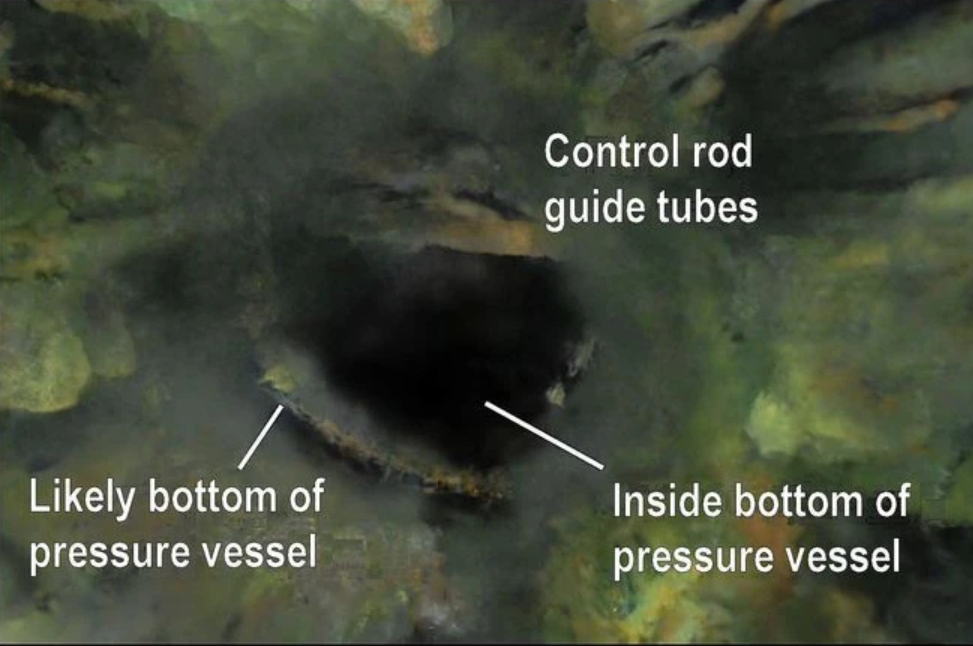
3-meter-wide hole found at bottom of Unit 3 reactor pressure vessel at Fukushima Daiichi Nuclear Power Station: molten nuclear fuel burned through the base plate, TEPCO advances evaluation of debris removal project
The latest investigation data released by Tokyo Electric Power Company (TEPCO) shows that an irregular circular hole with a maximum diameter of 3 meters exists at the bottom of the reactor pressure vessel (RPV) of Unit 3 at the Fukushima Daiichi Nuclear Power Station (Fukushima No. 1 NPP). This is the first time since the March 11, 2011 Great East Japan Earthquake triggered a tsunami and caused core meltdown that TEPCO has determined the specific shape and dimensions of the damaged bottom of the pressure vessel among the three reactors that experienced meltdown. The conclusion is based on image data obtained by a technical team in March this year using palm-sized micro-drones to conduct 21 flight surveys inside the containment vessel of Unit 3. Based on the multi-angle...
2026-10-11

The first concrete pouring for the nuclear island of Unit 2 of State Power Investment Corporation (SPIC) Guangxi Bailong Nuclear Power Project was successfully completed.
The first concrete pouring for the nuclear island of Unit 2 of SPIC Guangxi Bailong Nuclear Power Project was completed at 16:07 on September 30, after 69 hours and 40 minutes of continuous work. A total of 6,732.5 cubic meters of concrete was used for this pouring, marking another important milestone for the project after the FCD achievement for the nuclear island of Unit 1. Phase I of the Bailong Nuclear Power Project plans to build two CAP1000 nuclear power units. These two units adopt independently designed and domestically manufactured Generation III passive nuclear power technology, with each unit having a capacity of up to 1.25 million kilowatts. At present, Unit 1 has entered the construction and installation stage, and the steel containment vessel bottom head, CA20, CV1R, CA01...
2026-09-30

Qinshan Nuclear Power Plant Unit 2 of Qinshan Phase II Completes 218 Refueling Outage
At 18:30 on September 29, Unit 2 of Qinshan Phase II was successfully connected to the grid, marking the official completion of the 218 refueling outage. During this outage, more than 5,300 tasks were completed, mainly including the PSR weakness modification for prevention of boron misdilution, addition of automatic primary coolant makeup and residual heat removal eddy current detection functions, excitation system modification for the B-train emergency diesel generator, disassembly and inspection of the turbine-generator, annual inspection of the main transformer and station service transformer, replacement of No. 2 and No. 3 seals of the No. 2 main coolant pump, disassembly and inspection of the No. 1 charging pump, modification of the nuclear island switchboards, condenser cleaning and eddy current inspection, and optimization of the pipe supports where the safety injection system safety valves are located. These important tasks have laid a solid foundation for the safe and stable operation of the unit in the next fuel cycle. All outage personnel, under the...
2026-09-29

Hainan Free Trade Port's first "Hualong One", Huaneng Changjiang Nuclear Power Phase II Unit 3 is about to be officially put into operation
The first Hualong One nuclear power unit in the Hainan Free Trade Port, Huaneng Changjiang Nuclear Power Phase II Unit 3, is about to officially enter commercial operation. Huaneng Changjiang Nuclear Power Phase II is equipped with China's independently developed third-generation Hualong One nuclear power technology and adopts the country's first fully independently controllable group-level nuclear power production management system. It can deliver more than 9 billion kWh of clean electricity to the Hainan power grid each year. The Huaneng Changjiang Nuclear Power Phase II project plans to build Unit 3 and Unit 4, two units with a single-unit capacity of 1.2 million kilowatts. After the two units are fully completed, the annual power generation can reach 18 billion kWh, enough to meet the electricity demand of one-third of Hainan Province's population. Huaneng Changjiang Nuclear Power Phase II Unit 3 is about to be officially put...
2026-09-17

Module III of the steel liner of the nuclear island containment vessel for Unit 1 of the Jiangsu Xuwei Nuclear Heating and Power Plant was hoisted into place
On September 15, good news came from the construction milestone of Unit 1 of the Jiangsu Xuwei Nuclear Heating and Power Plant — the first nuclear power unit to start construction during China's 15th Five-Year Plan period — as Module III of the steel liner of the nuclear island containment vessel was successfully hoisted into place, marking another key progress in the project's main construction. Module III hoisted this time adopted a two-layer cylindrical wall panel assembly structure, with a module dead weight of 133 tonnes, an overall lifting weight of 258.52 tonnes, a module body height of 11 meters, and a hoisting elevation of 15.75 meters. As the module landed smoothly in place, the already installed Module I and Module II were connected with Module III as one integrated unit, bringing the cumulative overall height of the containment vessel steel liner cylinder to 31.45 meters. The containment vessel is the core safety barrier of the nuclear island, and the steel liner...
2026-09-16
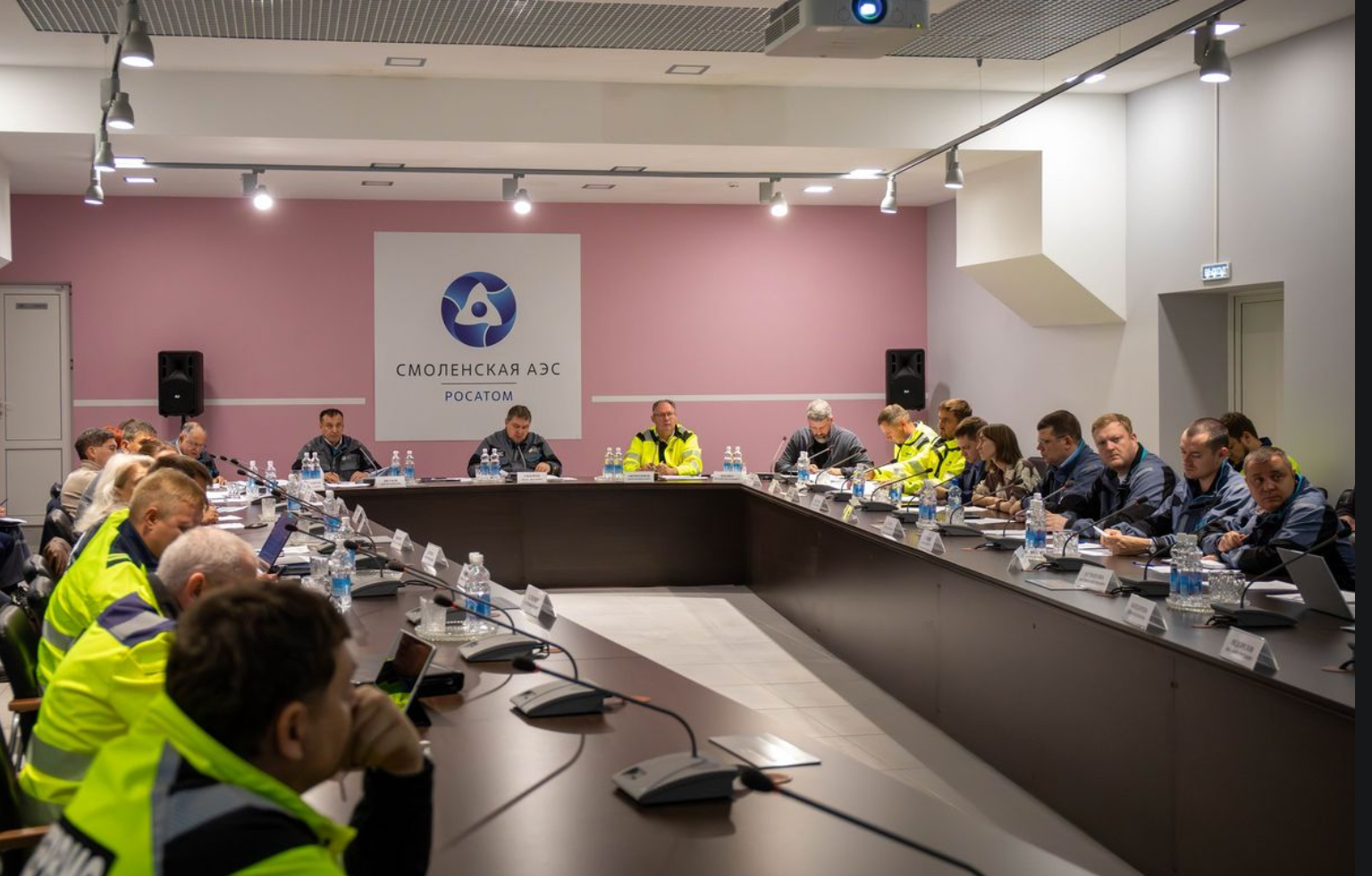
Smolensk NPP Phase II Units Pass State Environmental Review
Recently, the Russian State Environmental Expert Review body has issued a positive conclusion on the justification materials for the construction license of Units 1 and 2 of the Smolensk NPP Phase II project. This conclusion marks the formal confirmation of the project's environmental feasibility at the national level, and also validates the remarkable achievements made through long-term cooperation between the owner Rosatom State Atomic Energy Corporation and the general designer Rosatom Engineering Design JSC. The conclusion was officially announced at a working group meeting held at the Smolensk NPP, marking a new milestone in the project's advancement. Smolensk NPP Director Ivan Sidorov emphasized at the meeting...
2026-09-15
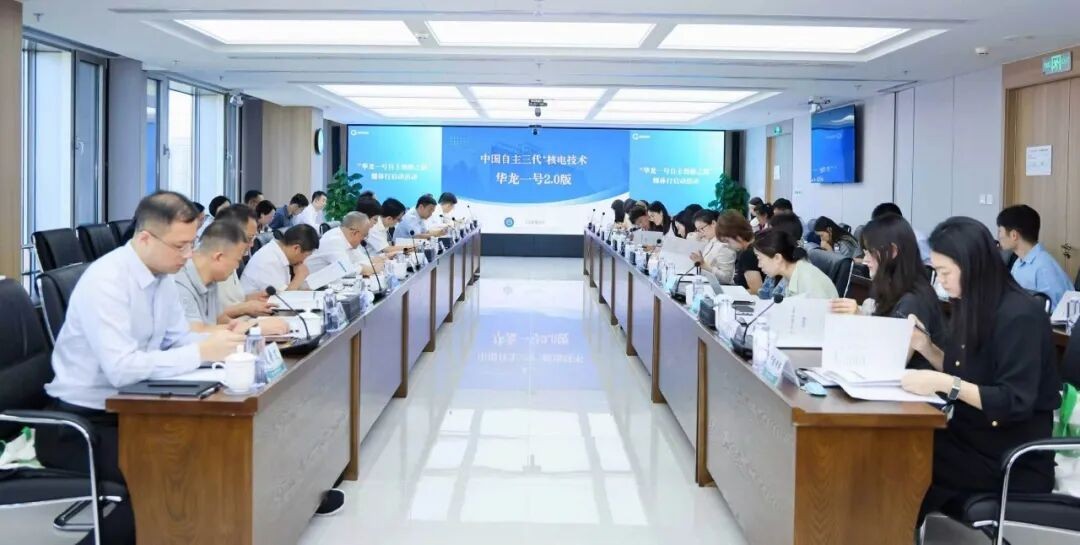
Hualong One Version 2.0 Independent Innovation Achievements Presented in Beijing
On September 11, the "Road of Independent Innovation for Hualong One" media tour was launched in Beijing, focusing on presenting the independent innovation achievements and technical advantages of Hualong One Version 2.0. According to reports, Hualong One Version 2.0 adopts Chinese standards and has the capability for 100% domestic production of key equipment, with its safety performance indicators ranking in the first tier among large pressurized water reactors globally. Hualong One is a million-kilowatt-class Generation III pressurized water reactor nuclear power technology developed on the basis of China's more than 40 years of experience in nuclear power research and development, design, manufacturing, construction, and operation, and possesses fully independent intellectual property rights. Hualong One Version 2.0, building on the summary of engineering construction and operational experience of Hualong One, has been launched through independent innovation and overall coordination...
2026-09-12

First concrete poured for turbine building foundation of Unit 3 VVER-1200 at Leningrad NPP Phase II
On September 9, 2026, concrete pouring began for the foundation of the turbine building of Unit 3 VVER-1200 at Leningrad NPP Phase II in Russia. Construction workers have completed the pouring of the central section of the future foundation, with concrete consumption approaching 5,000 cubic meters. This pour is the first stage of construction of the foundation structure for this building. According to the plan, the contractor will use nearly 5,000 tonnes of rebar and more than 20,000 cubic meters of high-strength concrete to build a monolithic foundation slab 2.5 meters high and more than 8,000 square meters in area. The related operations are currently being carried out simultaneously in 7 construction zones. Konstantin Khudyakov, head of the Leningrad NPP project at TITAN-2 Holding (TITAN-2), said that the foundation construction of the turbine building places high demands on concrete quality, pouring technology and curing conditions, especially in the first few days after pouring, when it is necessary to focus on controlling on-site temperature and humidity and preventing mechanical damage. After the concrete reaches design strength, the contractor will, together with the owner, use non-destructive testing methods to inspect the structure, including ultrasonic testing; at the same time, specimens made from the same batch of concrete will also be subjected to compressive tests on a hydraulic press to confirm that the foundation is capable of bearing the loads of walls, floors, piping and large operating equipment.
2026-09-10

Finland's Loviisa Nuclear Power Plant Signs 22-Year Power Purchase Agreement with Google
On September 9, 2026, Google announced that it will invest at least 13 billion euros in Finland over the next two years for artificial intelligence infrastructure construction. The investment includes building and expanding data centers in Finland, along with supporting energy projects. Among them, Google signed a 22-year power purchase agreement with Finnish energy company Fortum to purchase up to 50% of the electricity generated by the Loviisa Nuclear Power Plant. Google President and Chief Investment Officer Ruth Porat stated that this arrangement is Google's first nuclear energy deal outside the United States. Google said this investment is its largest single investment in Europe, and the related infrastructure will support services including Gemini, Search, Maps, and YouTube. Lovi...
2026-09-10
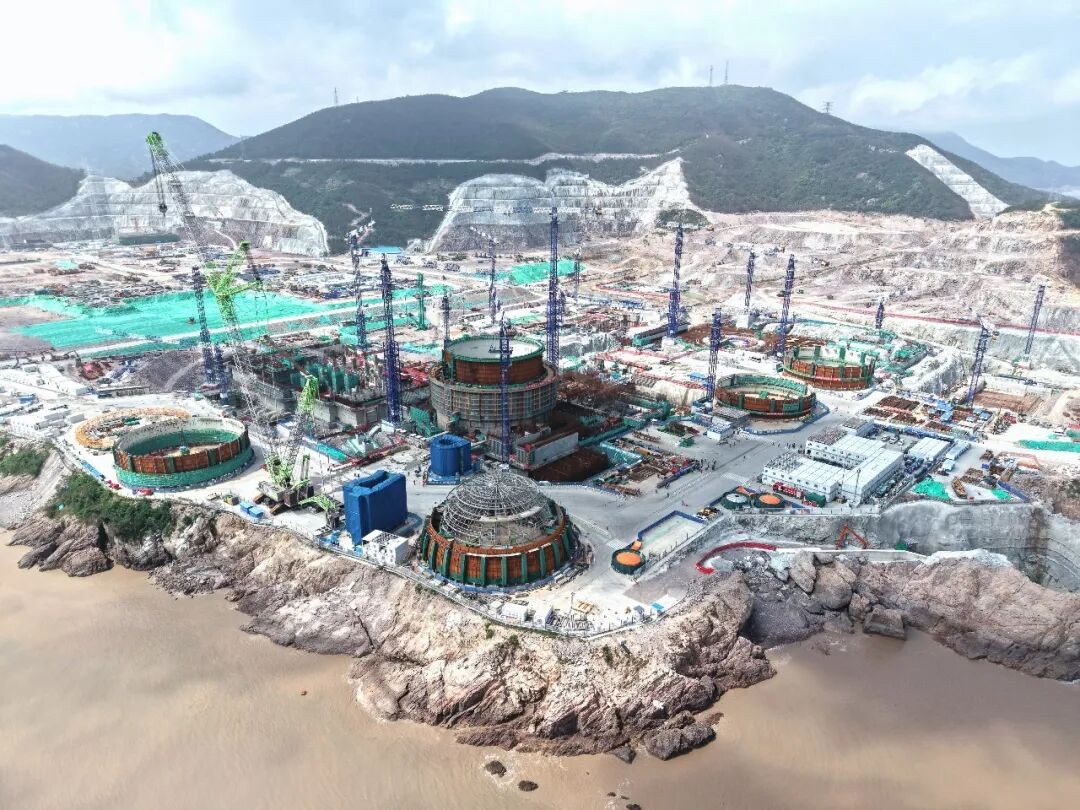
Construction Site Leveling and Excavation Kicks Off for Hualong One Version 2.0 Demonstration Project of Zhejiang Jinqimen Nuclear Power Phase II
On the morning of September 9, Zhejiang Jinqimen Nuclear Power held a mobilization meeting for high-quality construction of the Hualong One Version 2.0 demonstration project of Phase II, marking the full launch of site leveling and excavation work for Phase II. At the event, Yao Zhaohong, General Manager of Jinqimen Nuclear Power, presented the flag to the Party Member Commando Team for High-Quality Commencement of the Demonstration Project. Zhong Hua, Party Secretary and Chairman of Jinqimen Nuclear Power, delivered a mobilization speech and announced the start of site leveling and excavation work. At 11:11, the first blast for the main excavation of Phase II was successfully detonated, marking that the project construction has entered a stage of accelerated advancement. The mobilization meeting stated that Jinqimen Nuclear Power undertakes the task of constructing the Hualong One Version 2.0 demonstration project, and all participating units and builders must fulfill safety and quality responsibilities, adhere to safety first and quality first, steadily advance project construction, and build a high-standard "New Quality Hualong Demonstration Project."
2026-09-10

German BESSY II 3D Magnetic Field Experiments Reveal Mechanism of Weak Magnetic Field Control over Magnetic Textures
A team at the Helmholtz-Zentrum Berlin (HZB) in Germany has made progress in controlling magnetic textures in the magnetic material (Fe0.63Ni0.3Pd0.07)3P (abbreviated as FNPP) through 3D magnetic field experiments conducted at the BESSY II synchrotron facility. The research shows that a very small external in-plane magnetic field is sufficient to alter the magnetic stripe structure in this material, providing new experimental evidence for the development of functional magnetic materials for spintronics. FNPP is a magnetic material that exhibits complex magnetic structures at room temperature, making it a focus of spintronics research. Spintronics is considered promising for lower-energy data processing and novel data storage applications. However, to achieve practical applications, the key lies in...
2026-09-08

BESIII Experiment Achieves High-Precision Measurement of Charm Meson Semileptonic Decays and First Constraint on "Scalar Current"
Recently, the BESIII international collaboration utilized the world's largest near-threshold charm meson data sample to perform a combined measurement of four semileptonic decay channels: D⁰→K⁻e⁺νₑ, D⁰→K⁻μ⁺νμ, D⁺→K̄⁰e⁺νₑ, and D⁺→K̄⁰μ⁺νμ. The research team extracted the quark mixing matrix element |Vcs| with a precision better than 0.5%, determined the form factor zero-point value f₊(0) with a precision better than 0.2%, and verified lepton universality in the above processes at the 0.5% precision level. Beyond these precise determinations of Standard Model parameters, what is particularly noteworthy is that this experiment has, for the first time...
2026-09-08

BESSY II reveals early-stage copper oxidation: providing evidence for catalyst development and corrosion research on nuclear waste final disposal containers
Germany's BESSY II synchrotron facility has recently provided new experimental insights into the early-stage oxidation process of copper surfaces. The study shows that before the formation of pure copper oxides, copper and oxygen atoms first form complex surface superstructures, such as "29"CuₓO. The chemical state of such structures has long been debated, and the findings are of reference value for catalyst research as well as for corrosion protection studies of copper containers used for radioactive waste final disposal. Before the formation of pure copper oxide, complex superstructures composed of copper and oxygen atoms emerge—such as "29"CuxO. HZB In everyday environments, copper surfaces gradually lose their red metallic luster and form a greenish oxide layer. This layer structure can slow further corrosion over an extended period. Regarding the initial stages of this process, the core question researchers focus on is: to what extent are copper atoms actually oxidized once oxygen enters the copper surface. Since conventional spectroscopic methods struggle to clearly distinguish between pure copper and partially oxidized surfaces, such oxidation states have previously been difficult to determine directly.
2026-09-07

South Korean research team reveals that water storage capacity of cold subducting slabs has been underestimated using synchrotron radiation sources
A research team led by Professor Yongjae Lee of the Department of Earth System Sciences at Yonsei University in South Korea has recently found that in cold, rapidly descending tectonic subduction zones, crustal rocks may transport up to 1 trillion kilograms of water to the mantle each year—approximately twice the previous estimate. The findings have been published in Nature Communications. Subduction zones are regions where Earth's tectonic plates converge and one plate descends beneath another, often accompanied by volcanic and seismic activity. For a long time, the academic community has generally believed that serpentinite, a water-bearing rock, gradually dehydrates as it descends with the plate due to increasing pressure and temperature, and the released water further promotes melting of the overlying plate and is associated with the formation of volcanic arc chains.
2026-09-07