
Search Results
Keyword:India

First Concrete Pour Initiated for ECCS Sump of Units 1 & 2 at Gorakhpur Nuclear Power Plant, India
Nuclear Power Corporation of India Limited (NPCIL) announced on August 14 that the first concrete pour was initiated on the same day for the Emergency Core Cooling System (ECCS) sump of Nuclear Building-01 (NB-01) of Units 1 & 2 at the Gorakhpur Haryana Anu Vidyut Pariyojana (GHAVP) — the Gorakhpur Nuclear Power Plant, marking a phased milestone in the project's construction. Units 1 & 2 of the Gorakhpur Nuclear Power Plant are located in Gorakhpur Village, Fatehabad District, Haryana State, India, with two 700 MWe units planned, totaling 1,400 MWe in installed capacity. The pouring operation was carried out after addressing geotechnical and foundation-related challenges, pile foundation qualification, and obtaining necessary regulatory approvals.
2026-08-17

Adani Group in Talks with Odisha on Nuclear Power Projects, Plans Two 3,000 MW Clean Energy Facilities
India's Adani Group is accelerating its industrial footprint in Odisha, with nuclear power, clean energy, mining, aluminum, and port infrastructure emerging as key priorities in recent discussions. Senior executives of the group recently held talks with Odisha government officials to discuss advancing a range of energy and industrial projects in the state, including two proposed 3,000 MW power generation facilities and an integrated coal gasification and coal-to-chemicals project with an investment of approximately INR 800 billion. Karan Adani, CEO of Adani Ports and Special Economic Zone Ltd...
2026-08-17

India Releases Draft Rules Accompanying SHANTI Act, Requiring Nuclear Power Operators to Provide Nuclear Damage Insurance or Financial Guarantees
The Department of Atomic Energy (DAE) of India recently released the draft SHANTI Rules 2026 and the draft SHANTI Regulations 2026 for public consultation. The two documents set out provisions on nuclear project licensing, safety authorization, and nuclear damage liability, aiming to provide an institutional framework for India's expansion of nuclear power capacity and the introduction of more market players into nuclear energy development. Under the drafts, operators of nuclear power plants or reactors must purchase insurance, provide financial guarantees, or adopt both approaches for nuclear damage. Such financial security must remain in effect until all spent fuel has been removed from the corresponding storage pools. The drafts also propose the establishment of a nuclear liability fund, with funding sources linked to the civil liability limits borne by operators...
2026-08-17
Red Fort Address: Modi Reaffirms "Developed India" Vision for 2047, Sets 100 GW Nuclear Power Target
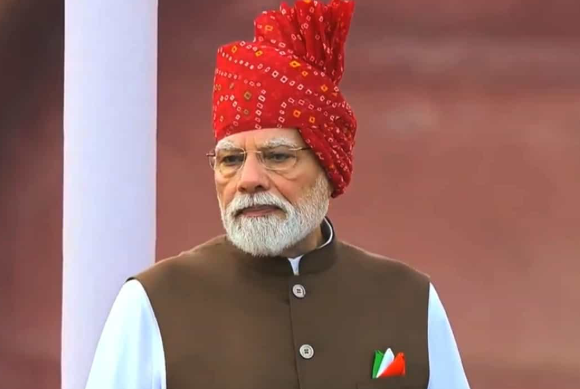
On August 15, India celebrated its 80th Independence Day, with Prime Minister Narendra Modi addressing the nation from the ramparts of the Red Fort in Delhi. The core message centered on the national vision of building a developed India by 2047. He called on citizens to move beyond small-target thinking and embrace greater developmental ambitions, emphasizing that unwavering resolve could chart a path forward for the nation amid complex circumstances. This statement continues India's recent political narrative of using the 100th anniversary of independence as a long-term development milestone. In his address, Modi highlighted India's economic and industrial transformations over the past 12 years. He noted that India, once regarded as one of the fragile five economies, has now become one of the fastest-growing major economies globally...
2026-08-15

India Proposes Strict Approval System for Private Nuclear Power Projects
On August 14, India proposed a strict regulatory approval system for private nuclear power projects, aiming to create conditions for foreign reactor technologies with proven operating records to enter the Indian market while maintaining access and operational controls. Under the draft rules, companies could obtain in-principle approval before securing formal licenses, allowing them to hire suppliers, conduct preliminary development work, and acquire project land. Once projects enter the licensing phase, they would undergo phased regulatory reviews covering design, siting, construction, commissioning, and operation. The draft also seeks to grant regulators stronger oversight powers, including the authority to halt work at critical project stages. For a long time,...
2026-08-15
Indian Government Approves INR 133.55 Billion Equity Funding for 6 Nuclear Power Projects Under Construction
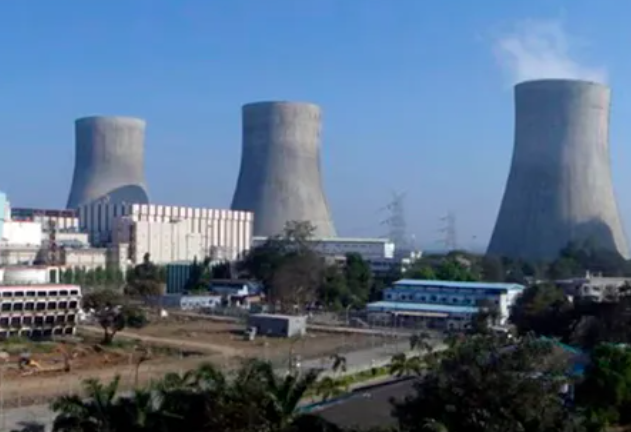
To advance nuclear power construction and meet growing electricity demand, the Indian central government has approved equity funding of INR 133.55 billion (approximately RMB 13.355 billion) for six nuclear power projects under construction, with all funds fully disbursed. This information was disclosed by Dr. Jitendra Singh, Minister of State for Atomic Energy, in a written reply to the Rajya Sabha. Singh noted that multiple technical, supply chain, and global situation factors have caused project delays: significant design modifications required under new safety standards following the Fukushima nuclear accident in Japan; delays in supply of critical equipment; and the impact of the COVID-19 pandemic on construction progress. In addition, disrupted equipment supplies from Russia, financial difficulties faced by contractors after the pandemic, complex geological conditions, and a shortage of skilled workers have also slowed project momentum. The Russia-Ukraine conflict and ongoing geopolitical tensions in West Asia have further affected supply chains.
2026-08-14

Bhabha Atomic Research Centre (BARC) in India develops 72 improved crop varieties through radiation mutation technology
The integration of nuclear technology with agricultural production is demonstrating increasingly tangible value in Indian farmlands. Through radiation-induced mutation and hybrid breeding techniques, the Bhabha Atomic Research Centre in India has successively developed 72 improved crop varieties, covering peanuts, rice, mung beans, mustard, and other crops. India's Minister of State Jitendra Singh disclosed this progress in a written reply to Parliament, showing that the peaceful application of nuclear science has extended from laboratories to the frontlines of agricultural production. In terms of variety composition, peanut new varieties are the most numerous, reaching 17; rice has 10, mung beans and mustard 9 each, black gram 8, pigeon pea 5, sorghum 3, and cowpea, wheat, and soybean 2 each. Additionally...
2026-08-13

India plans to build at least five domestically designed small modular reactors by 2033, and reports on nuclear power plant safety assessments
In a written reply to the Lok Sabha on August 12, Jitendra Singh, India's Minister of State for Atomic Energy, stated that a key objective of the Indian government under its nuclear energy mission is to develop and operationalize at least five domestically designed small modular reactors by 2033. According to the briefing, the Bhabha Atomic Research Centre (BARC) is advancing the design and development of indigenous small modular reactor (SMR) technology, with projects including the 220 MWe Bharat Small Modular Reactor (BSMR-200) and the 55 MWe SMR-55 for power generation. BARC is also developing a High-Temperature Gas-Cooled Reactor (HTGCR) with a capacity of up to 5 MW, which can be coupled with suitable thermochemical cycles for hydrogen production. Singh stated that India...
2026-08-13

India's Bihar signs memorandum of understanding for $2.3 billion small modular reactor project
The government of Bihar, India recently signed investment memorandums of understanding totaling approximately $6 billion (about €5.2 billion) with several industrial enterprises, covering sectors such as steel, textiles, food processing, pharmaceuticals, and nuclear energy. Among these, the nuclear energy project investment amounts to approximately $2.3 billion, making it the largest investment proposal among the signed agreements. According to a statement issued by the office of Bihar Chief Minister Samrat Choudhary, Global Renewable Advanced Clean Energy, a recently registered company headquartered in Hyderabad in central India, signed the nuclear energy memorandum of understanding. Further details...
2026-08-12

Scientists from a small town in Uttar Pradesh, India, gain international recognition: exploring AI-assisted nuclear reactor control
Samendra Roy, a scientist and resident of Payagpur in the Bahraich district of Uttar Pradesh, India, along with his team, has recently attracted attention from the international academic community. The research focuses on the potential applications of artificial intelligence in the operation and control of nuclear reactors. The findings have been published in *npj Artificial Intelligence*, a journal under the Nature Publishing Group, marking the team's work's arrival on a prestigious international academic platform. The study primarily explores the role of agent-based physics-informed artificial intelligence in nuclear reactor control. The research team believes that during nuclear reactor operation, control systems often face complex environments and highly challenging decision-making scenarios, and AI technology is expected to play a significant role in the future in areas such as assisting judgment, optimizing control processes, and enhancing operational management capabilities.
2026-08-11

India's Nuclear Power Expansion Drives Up Uranium Demand, Annual Demand Could Reach 5,400 Tonnes
India is accelerating its nuclear energy development program, with uranium resource demand rising correspondingly. According to estimates by the Indian Parliament's Committee on Public Undertakings in its follow-up report on NPCIL performance rectification, India will require approximately 5,400 tonnes of uranium annually in the future as nuclear power projects expand. This figure reflects the urgency of India's energy structure adjustment and indicates the rising status of nuclear power in its long-term electricity planning. Currently, domestic uranium production in India can only meet about 30% of demand, with the remainder relying on imports, primarily from countries including Kazakhstan, Russia, Uzbekistan, and Canada. The Parliamentary Committee therefore emphasized...
2026-08-10
India Announces INR 26.75 Trillion in Investments This Fiscal Year, with INR 6.5 Trillion Planned for Nuclear Power
According to a report released by the Economic Research Department of India's Bank of Baroda, total announced investments in India reached INR 26.75 trillion between April 1 and August 5 of the 2026-2027 fiscal year. Amid persistent uncertainties in the global economic landscape, Information Technology-enabled Services (ITeS) emerged as the dominant investment destination, accounting for 56% of total proposed investments. The report stated that the ITeS sector announced investments of INR 14.98 trillion, with nearly 99% concentrated in data centers and artificial intelligence, involving 13 companies. This indicates that digital infrastructure and AI-related industries remain a strategic focus for Indian enterprises and capital allocation. By sector, investment announcements remain highly...
2026-08-10

Indian Parliamentary Committee Emphasizes Urgency of Accelerating Uranium Mining Projects
On August 7, 2026, the Indian Parliamentary Committee on Public Undertakings noted in its report on nuclear power expansion progress that India's uranium mining project expansion needs to be accelerated. DAE has committed UCIL to doubling production by 2036 through enhancing existing capacity and new projects in Jharkhand, Rajasthan, and Chhattisgarh, but the committee considers this timeline too late—NPCIL's installed capacity will surge significantly over the next decade, and delays in mining clusters would prolong the strategic vulnerability period of imported fuel. Currently, PHWR units of approximately 25 GWe require about 5,400 tonnes of U3O8 annually, with UCIL able to meet only about 30% of that demand; accelerated domestic production and diversified supply are needed to reduce import dependence. The committee supports UCIL forming a joint venture with NTPC to acquire equity stakes in overseas uranium assets...
2026-08-08
India's cumulative nuclear power generation surpasses 1 trillion units (1000 BU), NPCIL sets historic milestone
Nuclear Power Corporation of India Limited (NPCIL) announced on August 4 that cumulative nuclear power generation since the start of commercial operations has exceeded 100 billion kilowatt-hours (1000 Billion Units, equivalent to 1 trillion kWh) for the first time. The company stated that this milestone marks a significant achievement on India's path toward clean and sustainable energy, corresponding to avoiding approximately 860 million tonnes of CO₂ emissions—equivalent to approximately taking 187 million gasoline and diesel passenger vehicles off the road for a full year, or nearly the total annual greenhouse gas emissions of a single industrialized nation such as Germany or Japan. NPCIL data shows that electricity generated through nuclear power has effectively avoided substantial greenhouse gas emissions. Nuclear energy is recognized as one of the low-carbon and reliable energy sources, playing a critical role in addressing climate change...
2026-08-05
NPCIL launches engineering design tender for 220 MWe Bharat Small Reactor
Nuclear Power Corporation of India Limited (NPCIL) has issued a tender notice inviting bids for plant engineering design and 3D modeling services for its 220 MWe-class Bharat Small Reactor (BSR) project. The reactor design is based on India's existing 220 MWe pressurized heavy water reactor (PHWR) technology, with a bid submission deadline of August 10. The scope of this tender covers general design and engineering services for civil, process, mechanical, piping, electrical, control and instrumentation systems, as well as heating, ventilation and air conditioning systems, pipe stress analysis, and 3D computer modeling. NPCIL aims to select a supplier capable of delivering an integrated engineering solution and providing support for subsequent detailed design verification, construction and commissioning documentation. The project requires suppliers to prioritize quality assurance and comply with relevant regulatory and technical standards.
2026-08-04