
Search Results
Keyword:Nuclear Fuel

U.S. NANO Nuclear and Enveniam to Advance Microreactor and Nuclear Fuel Cycle Cooperation
U.S. advanced nuclear energy company NANO Nuclear Energy Inc. announced on September 4 that it has signed a non-binding memorandum of understanding with Enveniam, LLC, a project integration and engineering technology services provider, to explore cooperation in areas such as nuclear fuel cycle infrastructure, microreactor commercialization, advanced manufacturing, and end-user energy solutions. Under the MOU, the parties will evaluate how to leverage Enveniam's experience in nuclear engineering, project integration, safety analysis, licensing support, project controls, operational readiness, and complex energy infrastructure development to support NANO Nuclear...
2026-09-05

U.S. Completes Mechanical Property Measurements of Irradiated HALEU TRISO Fuel Particles
Researchers at the U.S. Department of Energy's Oak Ridge National Laboratory (ORNL) have completed mechanical property measurements of irradiated high-assay low-enriched uranium (HALEU) TRISO fuel particles, providing new experimental data for the development and qualification of next-generation nuclear fuels. This is an optical cross-sectional image of an irradiated AGR-2 TRISO fuel particle in the Irradiated Fuels Examination Laboratory at Oak Ridge National Laboratory. Image credit: Oak Ridge National Laboratory, U.S. Department of Energy. TRISO fuel, or tri-structural isotropic fuel, features particles coated with multiple protective layers, typically including pyrolytic carbon layers and a silicon carbide layer. This structure provides strong fission product retention capability and is considered one of the key fuel options for advanced reactors, particularly high-temperature gas-cooled reactors. Understanding the property changes of these coatings after irradiation is a critical step in predicting fuel performance under reactor operating conditions.
2026-09-04

South Korea Exports Molten Salt Reactor R&D Technology to Denmark
The Korea Atomic Energy Research Institute (KAERI) announced on September 4 that it has signed a two-year contract worth USD 2.26 million (approximately KRW 3 billion) with Danish nuclear energy company Saltforce to provide molten salt reactor-related R&D services, covering areas such as nuclear fuel manufacturing, molten salt testing, and material corrosion assessment. Molten salt reactors are a class of next-generation reactors that typically use high-temperature molten salt as a fuel carrier or coolant medium. Based on the molten salt chemical system, this type of technology is mainly divided into fluoride-based and chloride-based systems. Under the contract arrangement, KAERI will provide support for the fluoride-based...
2026-09-04

New Fuel Delivery Completed at Japan's Sendai Nuclear Power Plant
Kyushu Electric Power Co. announced on September 2 that new fuel required for Units 1 and 2 of Japan's Sendai Nuclear Power Plant has been delivered. The transport operation began on August 30, 2026, and concluded on September 2. According to information released by Kyushu Electric Power, the new fuel delivered this time was manufactured by Nuclear Fuel Industries, Ltd. Specifically, Unit 1 of the Sendai Nuclear Power Plant received 24 new fuel assemblies transported in 12 shipping containers, while Unit 2 received 28 new fuel assemblies transported in 14 shipping containers. The new fuel transport was carried out using a combination of land and sea routes. Kyushu Electric Power stated...
2026-09-03

U.S. PACMAN AI Framework Achieves Millisecond-Level Control of Fusion Plasma
The PACMAN AI framework, developed by researchers at the U.S. Department of Energy's Princeton Plasma Physics Laboratory (PPPL) and Princeton University, has completed five experimental validations in real fusion experimental systems. The framework can complete data processing, state prediction, and control command output in approximately 20 milliseconds, addressing rapidly developing instabilities in fusion plasma. This is an artist's rendition of the PACMAN AI framework for fusion systems. (Illustration credit: Kyle Palmer / PPPL Communications Department) PACMAN stands for Prediction and Control via Machine Learning. Related design and preliminary experimental results have been published in...
2026-09-03

Verdera Energy to Sell 100% Interest in Treeline Uranium Project in New Mexico, USA
Verdera Energy Corp. recently announced that it has entered into a mineral property purchase and sale agreement with Americas Uranium Corp. to sell 100% of its interest in the Treeline uranium project located in New Mexico, USA, with the transaction remaining subject to related royalty arrangements. Under the agreement, Americas Uranium will acquire all interests in the Treeline mineral properties and related titles. The consideration includes US$100,000 in cash payable at closing, and Americas Uranium common shares totaling C$2 million payable in installments over 36 months following closing, with 90% of the share consideration to be paid in stages within that period. In addition, Verdera will retain a 1.5% net proceeds royalty on uranium from the project and a 1.5% net smelter returns royalty on other minerals produced from the project. The royalty can be reduced to 1.0% upon payment of C$400,000 to Verdera.
2026-09-03
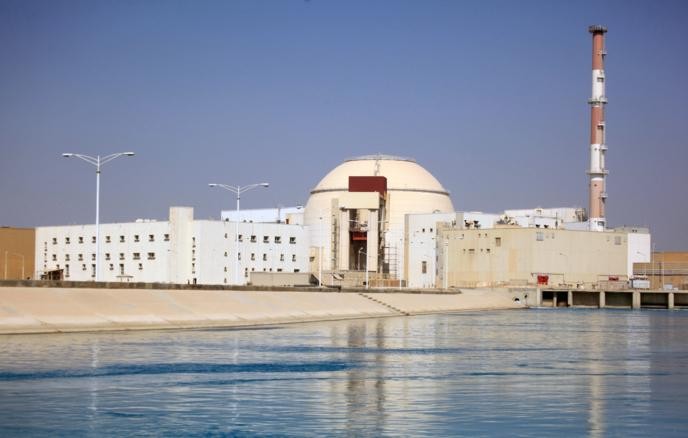
Russian personnel to participate in routine maintenance of Unit 1 at Iran's Bushehr Nuclear Power Plant
Rosatom Director General Alexey Likhachev stated during the Eastern Economic Forum that Russian personnel plan to participate in the routine preventive maintenance work at Unit 1 of Iran's Bushehr Nuclear Power Plant, which is scheduled to begin in mid-September. Likhachev said another group of workers has already arrived at the Unit 1 site of the Bushehr Nuclear Power Plant. Nuclear fuel for replacing some fuel assemblies has also been delivered to Iran. In addition to participating in the construction of Units 2 and 3 at the Bushehr Nuclear Power Plant, Russian personnel will also provide services for the operating unit. According to him, 45 Rosatom employees are currently working at the Bushehr Nuclear Power Plant, with another...
2026-09-03

Unit 4 of Japan's Genkai Nuclear Power Plant Receives 72 New Fuel Assemblies
Kyushu Electric Power Co. announced on September 1, 2026, that Unit 4 of the Genkai Nuclear Power Plant has completed the receipt of a batch of new fuel. The new fuel was processed and shipped by Mitsubishi Nuclear Fuel Co., Ltd., with transportation carried out from August 27 to September 1, 2026. According to Kyushu Electric Power, the new fuel delivered to Unit 4 of the Genkai Nuclear Power Plant consists of 72 fuel assemblies, transported in 36 shipping containers via both land and sea routes. Two control rod assemblies were also transported along with this batch of fuel. Fuel used in nuclear power plants...
2026-09-02
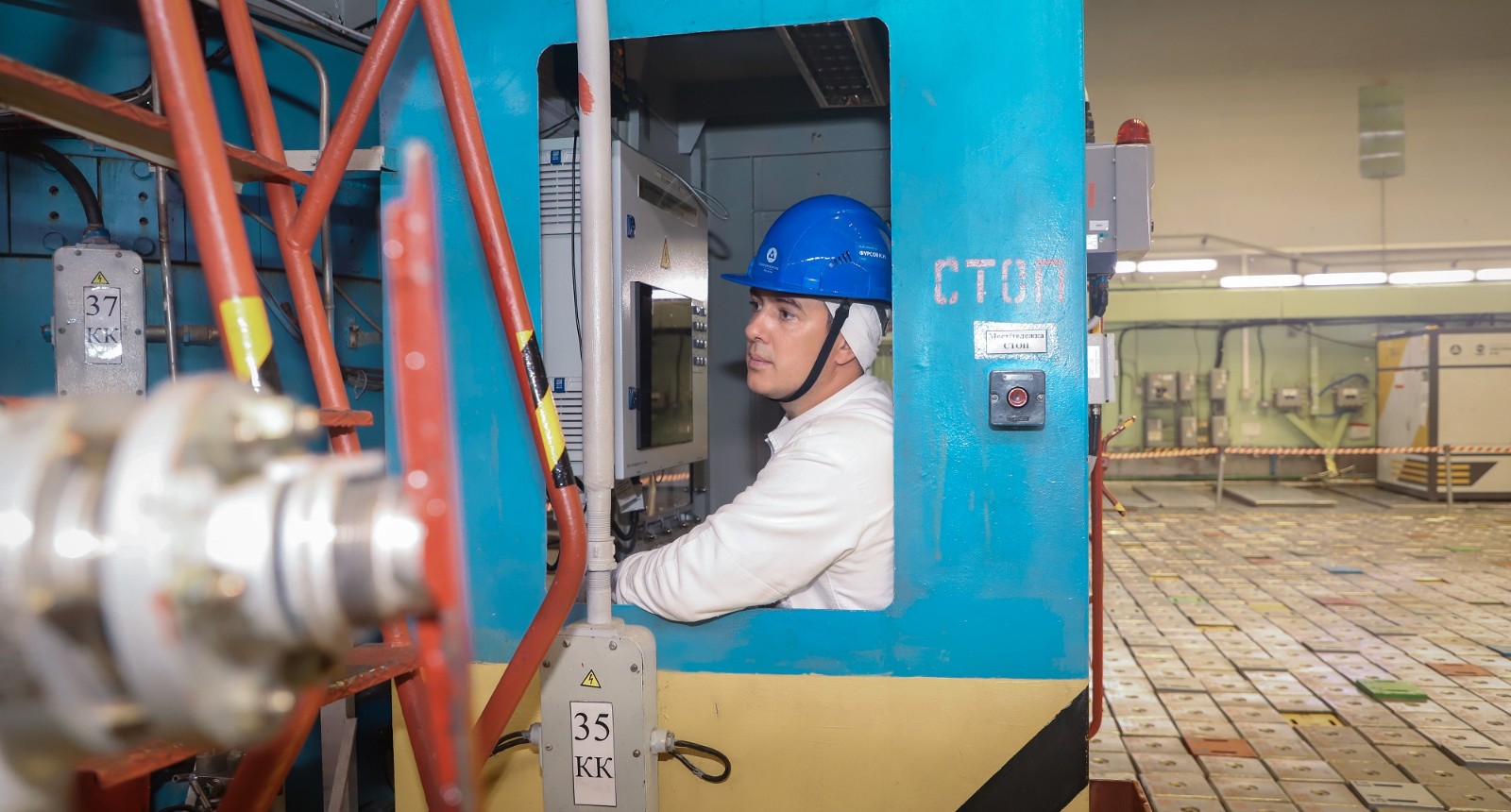
Russia's Smolensk NPP begins loading improved nuclear fuel
On September 1, 2026, local time, Unit 1 of Russia's Smolensk Nuclear Power Plant began gradually loading improved nuclear fuel. The fuel assemblies feature adjusted uranium-235 enrichment and erbium oxide content, as part of the RBMK-1000 reactor modernization program aimed at enhancing unit operational safety and efficiency. The Smolensk NPP is part of the electric power division of Rosatom and is operated by Rosenergoatom. The fuel assemblies loaded into the core this time use lower uranium-235 enrichment and lower erbium oxide content. According to relevant calculations, the new fuel can compensate for changes in core neutronics parameters following graphite stack repair...
2026-09-02

U.S. Plans to Build Second Uranium Conversion Plant
Raven-Flint Nuclear Corporation announced on August 31 that it has been selected for the Nuclear Energy Startup Platform project advanced by the U.S. Department of Energy (DOE) National Reactor Innovation Center (NRIC) at Idaho National Laboratory (INL), and plans to build a pilot uranium conversion facility named "Torch" at INL. The company stated that the Torch facility aims to become the second uranium conversion plant in the United States, with a designed annual processing capacity of 500 metric tons of uranium, capable of converting uranium into uranium hexafluoride (UF6). According to the company, this scale can meet the fuel demand of two large nuclear reactors. Upon project completion, it is intended to serve the U.S. Department of Energy and its affiliated agencies, and may provide domestically produced uranium hexafluoride for specific needs.
2026-09-02

Lightbridge Multi-Zone Fuel Element Granted Japanese Patent, Covering Fuel Assemblies and 3D Printing Manufacturing Methods
Advanced nuclear fuel technology company Lightbridge Corporation recently announced that its Japanese patent application for a multi-zone fuel element has been granted by the Japan Patent Office. The patent covers the fuel element design, fuel assemblies incorporating the design, and methods of producing the element via additive manufacturing, i.e., 3D printing. According to the disclosure, the patent involves a fuel rod composed of three layers of different materials. The thickness of the three layers can vary along the length of the fuel rod, thereby regulating fuel performance at different positions in the reactor to enhance reactor operating performance and safety margins. In addition to the fuel rod itself, the patent also covers fuel assemblies for mounting these fuel rods.
2026-09-02

South Korea's Nuclear Safety Regulatory Budget for 2027 Rises to KRW 303 Billion
The Nuclear Safety and Security Commission (NSSC) of South Korea announced on September 1 that it has allocated KRW 303 billion for the 2027 budget, an increase of KRW 10.4 billion from this year. The new budget focuses on areas such as small modular reactor regulation, spent nuclear fuel safety, nuclear facility decommissioning review, environmental radiation monitoring, and nuclear safety information disclosure. Regarding small modular reactors, as non-light water reactor-type small modular reactor development projects aim to obtain licenses by the early 2030s, South Korea will invest KRW 8 billion in R&D to establish a new safety evaluation system. In addition, in line with the preliminary review system set to take effect in November this year, the government has allocated KRW 2.7 billion to conduct preliminary reviews of non-light water reactor-type small modular reactors expected to file applications next year. This system allows applicants to request regulatory review of reactor designs before formally submitting license applications.
2026-09-02

Mobilization Meeting for High-Quality Fuel Loading of Haiyang Nuclear Power Unit 3 Convened
On September 1, Shandong Nuclear Power organized a themed joint Party building learning session and the mobilization meeting for high-quality fuel loading of Haiyang Nuclear Power Unit 3. Centering on the goal of high-quality fuel loading for Unit 3, the meeting further unified understanding, clarified responsibilities, and promoted the safe, orderly, and high-quality implementation of fuel loading preparations, laying the foundation for the subsequent commissioning of the Phase II project of Haiyang Nuclear Power. The meeting conducted a themed joint Party building learning session. The Haiyang Project Department of Shanghai Nuclear Engineering Research and Design Institute (SNERDI), the Commissioning Center of SNERDI, China Nuclear Industry Fifth Construction Co., Ltd., and Jiangsu Electric Power Construction No. 3 Engineering Company respectively reported on the fuel loading preparation status of Unit 3. Participants discussed topics including Party building leading project breakthroughs and ensuring high-quality fuel loading of Unit 3. The meeting also commended...
2026-09-02

U.S. Laboratory and Company Collaborate to Advance TRISO Thorium Fuel Development
Lawrence Livermore National Laboratory (LLNL) in the United States is collaborating with micro nuclear reactor startup AMPERA to advance next-generation reactor fuel development using novel metal particle manufacturing technology. The collaboration focuses on tristructural isotropic (TRISO) coated particle fuel, aiming to provide more durable fuel solutions for advanced reactors operating at higher temperatures and with longer service lifetimes. Small modular nuclear fission reactors are viewed as a distributed energy option deployable in remote areas, military installations, and industrial sites. Compared with traditional light-water reactors, some advanced reactors...
2026-09-01
U.S. Lightbridge Selected for DOE LaunchPad INL Program to Advance Commercialization of Advanced Nuclear Fuel
Lightbridge Corporation, a U.S. advanced nuclear fuel technology company, announced on August 31 that it has been selected for the Nuclear Energy LaunchPad program (LaunchPad INL) managed by the U.S. Department of Energy's (DOE) National Reactor Innovation Center (NRIC) at Idaho National Laboratory (INL). The company stated that the program will provide an accelerated pathway for it to design, construct, and operate a dedicated facility at INL to manufacture lead test assemblies (LTAs) of Lightbridge Fuel™, with subsequent testing supported at U.S. commercial nuclear power plants. Lead test assemblies are generally regarded as a critical qualification step for nuclear fuel after reactor testing and before commercial fuel sales...
2026-09-01