
Search Results
Keyword:STI

Domestically Produced Nuclear-Grade Resins Fully Verified and Ready for Use
On August 28, China General Nuclear Power Group (hereinafter referred to as CGN) announced that five nuclear-grade resin products developed under its leadership have all been put into engineering application, with a cumulative total of 12 batches used at nuclear power plants including Daya Bay, Ningde, Yangjiang, Taishan, and Hongyanhe. Among them, the first product has been operating stably for over three years in the steam generator blowdown system (APG system) of nuclear power plants, with key performance indicators comprehensively outperforming imported counterparts of the same category, and the domestic nuclear-grade resin production line. Nuclear-grade resins are known as the "kidneys" of nuclear power water treatment systems, serving as core materials that ensure stable water chemistry indicators of nuclear power units and prevent equipment corrosion. For a long time, these materials have been highly dependent on imports, posing supply security risks such as long delivery cycles, unstable batch quality, and rising prices year by year.
2026-08-29

Argentina Advances Testing for Atucha II Spent Fuel Dry Storage Project
Nucleoeléctrica Argentina S.A. is advancing key equipment testing for the spent fuel dry storage facility (ASECG II) at the Atucha II nuclear power plant. This project is a critical supporting infrastructure to ensure the long-term operation of the Atucha II plant. The ongoing tests are part of the verification phase prior to system commissioning, primarily aimed at inspecting and adjusting the operational procedures involved in future operations. Among the key equipment under testing is the gantry crane, which handles the transfer of storage containers within the plant site. The stable performance of this equipment is directly related to the safety and controllability of container movements during spent fuel storage operations. According to the project plan...
2026-08-28

U.S. Fusion Company Advances Deuterium-Helium-3 Fusion Testing
American Fusion Inc. on August 27 announced progress in ongoing testing of the Texatron Fusion Engine and released computational and experimental observations regarding the device's ability to achieve deuterium-helium-3 (D-³He) fusion conditions. The company stated that the test program is evaluating two Texatron configurations at approximately 500 kilowatts and 5 megawatts, with the core technical approach being proprietary pulsed magnetic compression. Texatron's R&D focus is on utilizing short-duration, high-intensity electromagnetic pulses to compress and heat plasma in extremely short timeframes, simultaneously creating the conditions required for fusion, including high temperature, high pressure, high density, and a certain confinement time. American Fusion Inc...
2026-08-28

Auburn University Installs 200 MeV Superconducting Proton Accelerator to Build First University-Led Space Electronics Radiation Testing Facility in the U.S.
Auburn University's Applied Research Institute has announced the installation of a new 200 MeV superconducting proton accelerator, advancing the construction of the nation's first university-led proton testing facility dedicated to space electronics qualification. The system, a RAD-FX-200 superconducting synchrocyclotron manufactured and installed by Mevion Medical Systems, serves as the core component of Auburn University's new radiation-hardening facility. According to reports, the facility will help address gaps in U.S. space qualification testing capacity, providing radiation testing services for microelectronics to government agencies, aerospace, and defense-related industries. Systems such as satellites, missile defense interceptors, spacecraft, and launch vehicles rely on microelectronics, which may be affected by proton radiation in orbital environments. A single radiation-induced failure can cause system loss, and such failures are typically difficult to repair once in orbit...
2026-08-28

Russia Plans to Complete Development of First Domestic Proton Beam Therapy Cyclotron by 2027
Russian scientists plan to complete the development of the country's first domestically produced proton beam therapy cyclotron by 2027, with commissioning to begin in the same year. This progress was announced by Sergey Gertzog, CEO of the Russian National Institute of Electronics and Atomic Energy (NIIEFA), at the recent Technoprom forum held in Novosibirsk. A proton beam therapy cyclotron is a type of charged particle accelerator that uses magnetic and electric fields to accelerate protons to high-energy states, reaching speeds of one-half to two-thirds the speed of light. The accelerated proton beam can target cancerous tumor areas with relative precision for oncological treatment. According to the schedule outlined in Gertzog's report...
2026-08-28

Russia Advances Radiopharmaceutical Development, Plans to Expand into Diagnostics and Treatment of Heart Disease and Other Conditions
Rosatom is developing radiopharmaceuticals for the diagnosis and treatment of neurodegenerative diseases, heart disease, and rheumatic conditions, further expanding the application of radionuclide technology in medicine. During the 13th International Technology Development Forum Technoprom-2026 held in Novosibirsk, Sergei Surov, Director of the Department of Radionuclide Products and Nuclear Medicine at Rosatom's Science Division, stated that the company is advancing the development of these drugs. Radiopharmaceuticals typically contain radioactive isotopes, i.e., radionuclides, and are currently used in medicine primarily for the diagnosis and treatment of various cancers. Surov noted that the new development directions mean...
2026-08-28

South Korean research team evaluates pipe rupture risk in nuclear power plants using probabilistic analysis
Researchers from Seoul National University of Science and Technology in South Korea have recently proposed a sensitivity analysis method based on probabilistic fracture mechanics to evaluate the rupture frequency of main coolant piping systems in nuclear power plants. This method can analyze the impact of uncertainties and modeling assumptions on prediction results, helping engineers distinguish extremely low-probability events from relatively more likely failure scenarios. In nuclear power plants, the main coolant piping system plays a critical role in maintaining structural integrity under normal reactor operating conditions. A pipe rupture could trigger a loss-of-coolant accident, and therefore this system has long been included in the key scope of nuclear power plant safety design and assessment.
2026-08-28

Zhangzhou Nuclear Power Unit 4 Completes Hoisting of Four Internal Structure Modules
From August 18 to 27, CNNC 24 completed the hoisting of four concrete modules for the internal structure of Zhangzhou Nuclear Power Unit 4 within 10 consecutive days, covering the evaporator compartments of Loops 3, 2, and 1 as well as the pressurizer compartment, creating conditions for subsequent loop installation and commissioning work. The evaporator and pressurizer are key equipment in the nuclear island loops. The corresponding compartment concrete modules serve both load-bearing fixation and protection functions, representing an important embodiment of the "Hualong One" defense-in-depth safety philosophy at the civil construction stage. The four modules hoisted this time are all irregularly shaped structures, all adopting the "off-site prefabrication + integral modular hoisting" process, with a total hoisting weight of approximately 2,400 tons. Compared with Unit 3, Unit 4 achieved 3...
2026-08-28
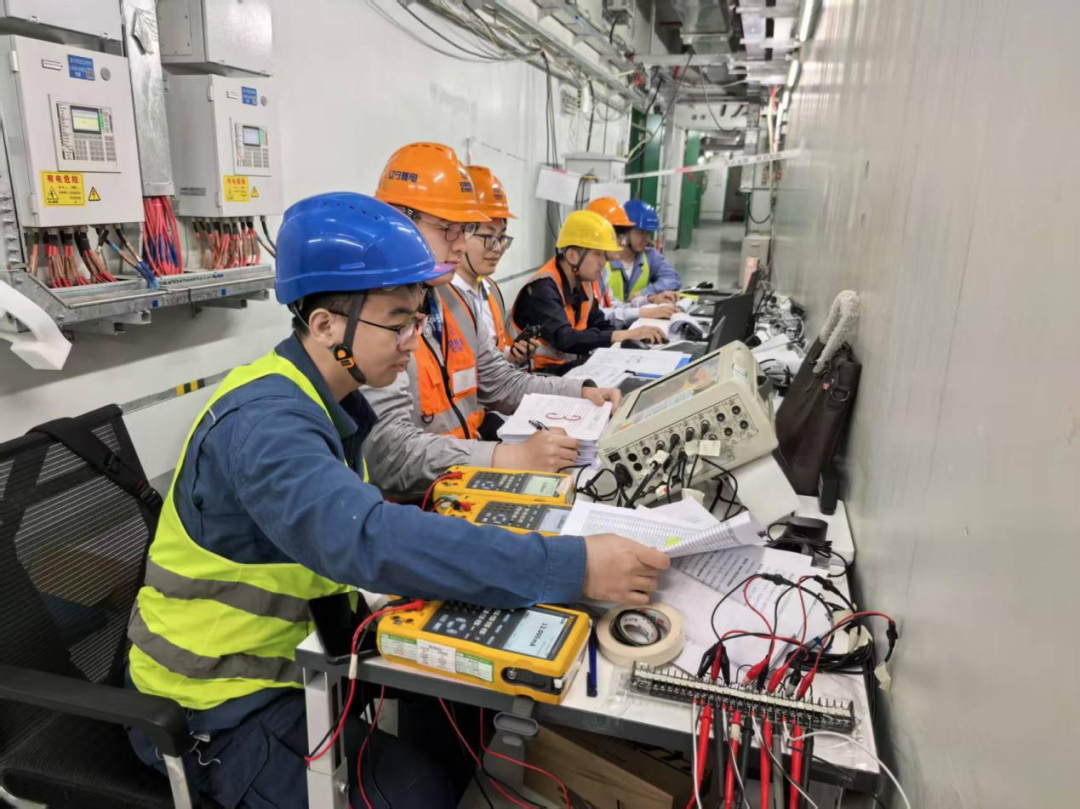
Safety-level DCS Response Time Testing for Unit 3 of Xudabao Nuclear Power Plant Successfully Completed
Recently, with the final test data confirmed to be accurate, the safety-level DCS (Digital Control System) response time testing for Unit 3 of Xudabao Nuclear Power Plant was successfully completed. All test results met the requirements, with no abnormal equipment actions throughout the entire process, providing reliable instrumentation and control assurance for the subsequent fuel loading and stable operation of the unit. The test lasted 14 days and covered 182 test cases, encompassing more than 1,500 functional tests for reactor trip and engineered safety features systems. As a critical step before fuel loading, the safety-level DCS response time test holds significant reference value for verifying the response performance of the unit's safety systems. To ensure the successful completion of the test, the instrumentation and control team adhered to the work philosophy of "comprehensive preparation, strong collaboration, experience feedback, and pragmatic execution," advancing all tasks in an orderly manner.
2026-08-27

Tohoku University and Rigaku Establish Joint Research Institute for X-ray Metrology
Tohoku University and Rigaku Corporation, a subsidiary of Rigaku Holdings Group, recently announced that they established the "Rigaku-Tohoku University X-ray Metrology Co-Creation Research Institute Beyond The Limits" on August 1, 2026, and commenced joint research. The institute will operate for a period of three years, until July 31, 2029, with the possibility of extension based on research outcomes. According to the announcement, the new institute will focus on upgrading X-ray metrology technologies, establishing new measurement methods, and nurturing the next generation of researchers. As semiconductor devices continue to shrink in size while becoming increasingly multi-layered and multi-material in composition, manufacturing processes are growing more complex, driving rising demand for high-precision, non-destructive evaluation of materials and structures. Existing measurement methods face limitations in evaluating fine structures and precisely analyzing depth-direction structures, making the development of new approaches such as soft X-ray techniques an important direction.
2026-08-27

Iran Says Nuclear Fusion to Become Priority in Nuclear Industry Development
At a national Government Week celebration ceremony held in Tehran, Mohammad Eslami stated that developing nuclear fusion is a priority direction for the future of Iran's nuclear industry. Iran needs to rely on its domestic capabilities, knowledge-based enterprises, and universities to drive progress in related fields. Eslami said that the innovation network of the Atomic Energy Organization of Iran (AEOI) is providing support for nuclear fusion activities, shifting related work from the technology demonstration stage further toward system development and capacity building. He also stated that the establishment of the Non-Destructive Testing (NDT) training center is an initiative to enhance industrial quality, promote technological advancement, and cultivate domestic professional expertise...
2026-08-27

Moffitt Cancer Center in the U.S. Launches $600 Million Radiopharmaceutical Program
Moffitt Cancer Center in Tampa, Florida, recently announced the launch of a new radiopharmaceutical program, planning to accelerate radiopharmaceutical research, development, and clinical translation through a total infrastructure investment of $600 million. The program will be advanced at the Speros campus of Moffitt Cancer Center in Pasco County, Florida. The campus spans 775 acres, and the related investment will support the development of radiopharmaceutical research and development capabilities, including the construction of new radiochemistry laboratories within the Moffitt Discovery and Innovation Center, which opens this fall. The innovation center has a building area of approximately 255,000 square feet. The program funding will also support the planned comprehensive theranostics center...
2026-08-27
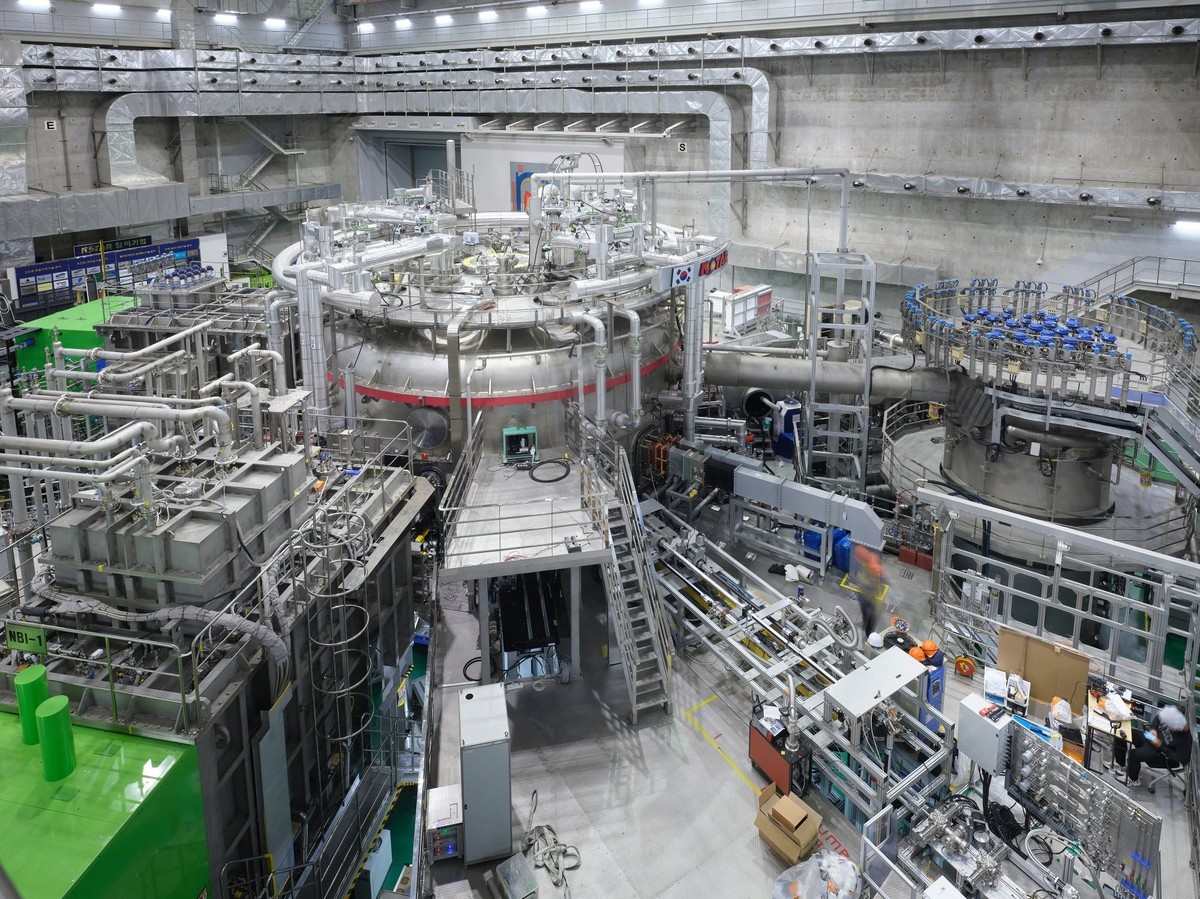
South Korea's KSTAR to Conduct Long-Pulse Fusion Research in Tungsten Environment with European Institutions
The Korea Institute of Fusion Energy (KFE) announced on August 27 that it has signed implementation agreements with multiple fusion research institutions in France, Italy, Germany, and Finland to conduct joint research on long-duration plasma operation in a tungsten environment using the Korea Superconducting Tokamak Advanced Research (KSTAR) device. Partner institutions include the French Alternative Energies and Atomic Energy Commission (CEA), the Italian National Agency for New Technologies, Energy and Sustainable Economic Development (ENEA), the Max Planck Institute for Plasma Physics (IPP) in Germany, and the VTT Technical Research Centre of Finland (VTT). The institutions will focus on key technologies required for long-pulse operation of future fusion reactors...
2026-08-27

South Korea's Woojin Entech Patents Diagnostic Device for APR1400 Control Rod Position Transmitter
South Korea's Woojin Entech announced on August 27 that it has completed the development of a precision diagnostic device for the Control Rod Position Transmitter (RSPT) applicable to APR1400 units and has completed the relevant patent registration. The Control Rod Position Transmitter is used to measure the position of control rods within the reactor and transmit related signals to the control system, making it a critical component for reactor control and monitoring. The patented diagnostic device is primarily designed to accurately assess the status of the control rod control system and to pre-check multiple types of fault conditions before unit operation. According to the company, existing RSPT precision diagnostic systems require the installation of multiple cables during testing, making preparation work relatively complex...
2026-08-27

Lanzhou Taiji Completes Key Commissioning of First Domestic Multi-Ion Therapy Device HiTS400
The first domestically produced multi-ion therapy device HiTS400, independently developed by Lanzhou Taiji and installed at Shandong Cancer Hospital, recently completed phased joint commissioning. After one week of operational testing, all beam parameters of the device met or exceeded contractual requirements, laying the foundation for subsequent clinical registration work. According to reports, HiTS400 is a medical ion accelerator independently developed by Lanzhou Taiji with full intellectual property rights. It can stably deliver four ion species: C^6+, H^+, He^2+, and O^8+, and is equipped with multi-angle fixed treatment nozzles and a lightweight superconducting heavy-ion rotating gantry, integrating modulated scanning technology to advance the development and application of multi-ion combined therapy devices. On August 14, 2026, the device obtained an amendment to its Radiation Safety License from the Ministry of Ecology and Environment, granting qualification for commissioning and operation. In the early morning of August 20, the equipment achieved stable acceleration and precise extraction of carbon ion beams. Measured data show that the particle number after synchrotron acceleration reached 3.26E9 ppp, the terminal particle number reached 3.02E9 ppp, the extraction efficiency was 92%, and beam stability was no less than 95%.
2026-08-26