
Search Results
Keyword:STI

Uzbekistan's Jizzakh Nuclear Power Project Investment Estimate Reaches $9.5 Billion
The nuclear power project in the Jizzakh region, developed by Uzbekistan in cooperation with Russia's State Atomic Energy Corporation (Rosatom), has a total capital expenditure estimate of $9.5 billion. The investment scope includes site preparation, reactor construction, regulatory compliance, and high-voltage grid connection. Under the project arrangement, the nuclear power plant will adopt Russian-designed advanced reactor technology to meet regional baseload power supply demands and adapt to Uzbekistan's geographical and climatic conditions. The project site in the Jizzakh region is intended to enhance power supply reliability for the central industrial corridor of Uzbekistan and promote a reduction in the country's energy structure's dependence on natural gas. Uzbek President Shavkat...
2026-09-07

Russian Researchers Propose New Method for Preparing Iron-59 Magnetite Nanoparticles, Potentially Advancing Nuclear Medicine Diagnostics and Therapy
Russian researchers have developed a new method for preparing iron-59-labeled magnetite nanoparticles, which is expected to provide a new material preparation pathway for medical applications such as magnetic resonance imaging, single-photon emission computed tomography, and radionuclide therapy. According to reports, researchers from the Vernadsky Institute of Geochemistry and Analytical Chemistry and the Karpov Institute of Physical Chemistry, both under the Russian Academy of Sciences, have proposed synthesizing iron-59 magnetite nanoparticles using the sol-gel method. The relevant findings have been published in the journal Applied Radiation and Isotopes. The sol-gel method is a chemical approach for preparing nanomaterials, with the core process involving the conversion of a liquid colloidal solution into a gel-like network...
2026-09-07

South Korea Develops 3D Non-Contact Inspection System for High-Temperature Superconducting Wire
The Korea Electrotechnology Research Institute (KERI) recently announced that a research team led by Ha Hong-su and Park In-sung at its Low-Temperature Device Research Center has developed a three-dimensional non-contact ultra-precision inspection system capable of continuously measuring the thickness and width of high-temperature superconducting (HTS) wire. The institute stated that this is the world's first such inspection system for HTS wire. KERI researchers Ha Hong-su and Park In-sung pose with a high-temperature superconducting wire beside the 3D non-contact ultra-precision inspection system. [Korea Electrotechnology Research Institute] HTS wire exhibits near-zero electrical resistance below a specific temperature, enabling high-current, low-loss transmission,...
2026-09-07
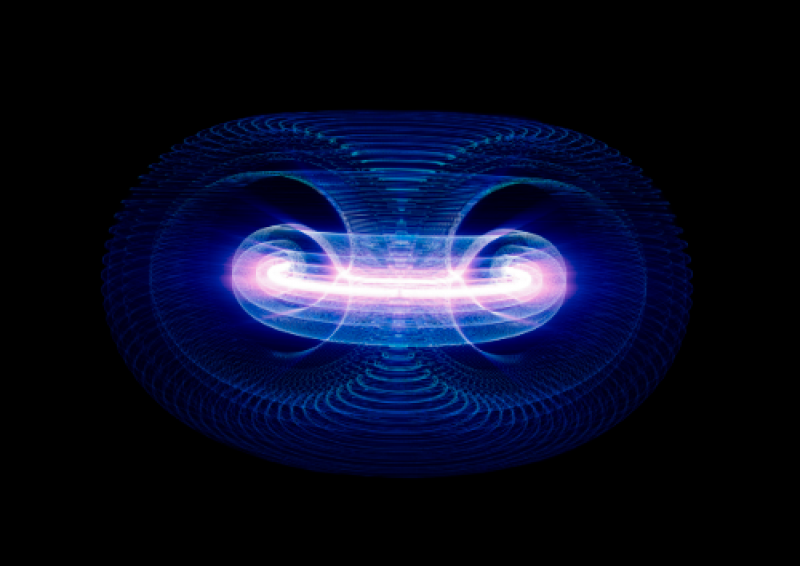
U.S. ZC Institute Unveils "Kardashev One" Fusion Prototype Reactor Plan to Independently Test Neutron Recovery Concept
ZC Institute, a fusion energy company headquartered in Atlanta, USA, announced on September 4 the launch of the Kardashev One program, aiming to develop a fusion prototype reactor to explore recovering energy lost to radiation and neutron escape during fusion reactions. As an early validation step of the program, ZC Institute has commissioned Professor Jason Cassibry and his team at the University of Alabama in Huntsville (UAH) to conduct independent testing of the related field distortion technology. According to ZC Institute, existing fusion approaches, including inertial confinement fusion and magnetic confinement fusion, lose energy in forms such as electromagnetic radiation and neutron escape. Magnetic fields can confine charged...
2026-09-05

Japan's Tomari Nuclear Power Plant Unit 3 Restart Review Still Requires Additional Fire Safety Documentation
On September 3, a review meeting was held for the restart plan of Unit 3 at Japan's Tomari Nuclear Power Plant. The Nuclear Regulation Authority (NRA) pointed out that the explanations submitted by Hokkaido Electric Power regarding fire safety measures still contain issues requiring further confirmation, and requested the company to provide more detailed assessment materials. The equipment design and construction plan required for the restart of Tomari Unit 3 has been under review since last year. One of the current review priorities is whether relevant workers have adequate and feasible evacuation measures in the event of a fire on site. At the meeting that day, representatives of Hokkaido Electric Power explained the revised fire safety...
2026-09-04

Domestically Developed "Palm-Sized CT" Debuts: 6 kg Micro X-ray CT Enables 3D Non-Destructive Testing
The XTOMO-CUBE series micro-CT, independently developed by Ruiying Detection Technology (Jinan) Co., Ltd., recently made its debut. With dimensions of 140×132×220 mm and a total weight of approximately 6 kg, the device can be held in one hand and is dubbed the "palm-sized CT." It can scan small-sized samples such as chicken bones, snail shells, and capsule tablets, revealing their internal three-dimensional structures. According to reports, CT stands for computed tomography technology. Compared with traditional CT equipment, the XTOMO-CUBE integrates key modules such as a miniaturized X-ray source, rotation stage, and detector into a compact body, paired with fully self-developed software capable of completing processes including projection data acquisition, CT image reconstruction, and 3D rendering. The...
2026-09-04

SNPAS Successfully Completes Batch Shipment of 45 Nuclear-Grade Paperless Recorders
On August 27, SNPAS successfully completed factory acceptance and shipment of 45 nuclear-grade paperless recorders. This batch delivery marks that the product has completed full-process technical iteration, with all production links across the entire chain moving toward standardization. Domestic nuclear-grade display and control equipment now possesses sustained and stable batch supply capability, with continuously growing market recognition. The nuclear-grade paperless recorder is a core product of the high-reliability display and control platform based on FPGA (Field Programmable Gate Array) architecture. The entire product operation process involves no CPU or operating system, fundamentally resolving the industry pain points of traditional display and control equipment, namely difficult operating system verification and vulnerability to virus attacks. It inherently features virus resistance, no system freezes, instant startup, and fast response...
2026-09-03

Institute of Nuclear Technology at Samarkand State University Introduces Radiation Monitoring Training Equipment
On August 24–25, 2026, experts from Doza Scientific Production Enterprise (NPP Doza) visited the Institute of Nuclear Technology at Samarkand State University named after Sharof Rashidov (SamSU) and completed the installation and commissioning of a demonstration model of the Fregat radiation monitoring system. The equipment has been integrated into the institute's teaching and research infrastructure and will be used for laboratory courses, student practical training, and related research work. Through this demonstration model, students and young professionals can gain exposure to modern technological solutions in the field of radiation monitoring, enhancing their understanding of the operation and application scenarios of relevant equipment. This installation...
2026-09-02

CERN Finds Statistical Hints of Higgs Boson Pair Production
Physics teams at CERN have recently found statistical hints of Higgs boson pair production in data analysis from the Large Hadron Collider. Researchers analyzed millions of collision results over eight years at the collider, with the findings presented at the ICHEP conference and published as two preprints. The figure shows schematic diagrams of events involving the production of two Higgs bosons as observed by ATLAS (left) and CMS (right) CERN The Higgs boson was discovered in 2012, and since then physicists have continuously measured its interactions with other elementary particles to test the Standard Model's explanation of the origin of mass. However, the self-interaction of the Higgs boson has not yet been directly observed.
2026-09-02

Iran Still Denies IAEA Inspectors Access to Some Nuclear Facilities
A recent report shows that Iran has still not allowed International Atomic Energy Agency (IAEA) inspectors to access some of its nuclear facilities, including sites in Isfahan, Natanz, and Fordow that were previously damaged in airstrikes. The report states that the IAEA had previously detected over 440 kilograms of highly enriched uranium and nearly 8,600 kilograms of low-enriched uranium at these locations. Due to the current lack of sufficient information on the status and whereabouts of the relevant nuclear materials, IAEA Director General Rafael Grossi has expressed concerns over nuclear non-proliferation risks and called on Tehran to allow inspectors to access the facilities for verification as soon as possible. The report also mentions that inspectors...
2026-09-02

Blykalla Establishes Advanced Nuclear Reactor Technology Center in Austin
Advanced nuclear technology company Blykalla announced it will establish a new technology center in Austin, Texas, to expand its engineering and reactor R&D operations in the United States. Located at 801 Barton Springs Road in Austin, the center will house engineering and reactor development teams to strengthen the company's local operations and advance collaboration with its U.S. partners, regulators, and stakeholders in the clean energy industry. Blykalla stated that the Austin technology center will serve as its U.S. hub for engineering and advanced nuclear reactor R&D. The company currently operates two complementary business centers in the U.S.—Austin and New York: Austin focuses on technology R&D and engineering...
2026-09-02

South Korea's 2027 Budget Proposal Includes First-Ever Funding for Domestic Nuclear Submarine Development
The South Korean government approved its 2027 budget proposal, with total government spending reaching 820.9 trillion won, approximately 95.6 trillion yen, marking a 12.8% increase from the previous year and setting a record high. The budget proposal has been submitted to the National Assembly for review. President Lee Jae-myung presided over a cabinet meeting at the presidential office on September 1, where the budget proposal was reviewed and approved. Under the plan, the South Korean government intends to increase investment in growth-oriented industries, with approximately 2.5 trillion yen allocated to infrastructure development related to semiconductor manufacturing and artificial intelligence, nearly doubling the scale of the previous year. On the revenue side, the South Korean government expects that as AI demand continues to grow and major semiconductor companies see improved performance, corporate income tax and personal income tax revenues will increase significantly.
2026-09-02

Major Breakthrough in Residual Stress Research on Key Aviation Materials in China
Nickel-based single-crystal superalloys are key materials for manufacturing turbine blades in aviation engines. Recently, the neutron scattering team from the Department of Nuclear Physics at the China Institute of Atomic Energy (CIAE) under CNNC, leveraging the Engineering Science Stress Spectrometer at the China Advanced Research Reactor (CARR), overcame technical challenges in residual stress measurement of single-crystal superalloys and established a precise three-dimensional residual stress testing method based on neutron diffraction. This provides an effective solution for residual stress assessment of critical aviation materials and lays a solid methodological foundation for the in-depth application of the CARR Engineering Science Stress Spectrometer in high-end manufacturing. During high-temperature heat treatment or service of nickel-based single-crystal superalloys...
2026-09-02

Zhejiang Jinqimen Nuclear Power Unit 1 Pressurizer Relief Tank Successfully Hoisted into Place
On August 30, the pressurizer relief tank, a major nuclear island equipment item of Unit 1 at Zhejiang Jinqimen Nuclear Power Plant, contracted by China Nuclear Industry Fifth Construction Co., Ltd. (CNF), was successfully hoisted into place. The entire hoisting process was smooth and orderly, with overall safety and quality under control. This hoisting has laid a solid foundation for the subsequent installation of main nuclear island equipment and the construction of the primary loop system. The pressurizer relief tank is an important auxiliary equipment of the reactor coolant system in a nuclear power plant. Its main function is to collect and condense the high-temperature and high-pressure steam discharged from the pressurizer safety valves, ensuring the safe and stable operation of the reactor system. The relief tank hoisted this time is pre-installed equipment in the nuclear island. The main body of the equipment is heavy in weight and large in size, with limited hoisting workspace. After being hoisted into place, it needs to be placed in the nuclear island building for a long period, and subsequent construction will be constrained by space, making it necessary to introduce the equipment precisely within the civil construction window period.
2026-09-02

U.S. University Establishes Fusion Energy Seed Fund to Support Four Interdisciplinary Research Projects
The Institute for Fusion Studies at The University of Texas at Austin recently launched a fusion energy seed fund to support four interdisciplinary research projects. These projects will bring together teams from plasma physics, engineering, and computational science to address challenges in control, materials, particle confinement, and edge plasma simulation faced by fusion devices such as tokamaks. The fund is supported by the Institute for Fusion Studies (IFS), the Oden Institute for Computational Engineering ...
2026-09-01