
Search Results
Keyword:South Korea Nuclear Power

KHNP Advances Nuclear Process Heat-Based Hydrogen Production Ecosystem
Korea Hydro & Nuclear Power (KHNP) held a preparatory meeting in Daejeon on August 26 to establish an advisory body for building the Korean solid oxide cell industrial ecosystem, and discussed R&D strategic alliances and industry-academia-research cooperation frameworks. The collaboration will bring together industry, academia, and research institutions, including the Korea Institute of Ceramic Engineering and Technology (KICET). KHNP plans to use the advisory body as a platform to connect R&D, demonstration, and commercialization, promoting the self-reliance of Korean solid oxide cell (K-SOC) related technologies. According to the meeting agenda, KHNP will serve as the lead enterprise, proposing technology development directions needed for demonstration applications and commercialization; the Korea Institute of Ceramic Engineering and Technology will play a supporting role in supplying core industrial technologies.
2026-08-27

Korea's Daewoo E&C Discusses Nuclear Power Project Cooperation with Vietnam's Ministry of Industry and Trade
Daewoo Engineering & Construction (Daewoo E&C) said on August 27 that its Chairman Jung Won-ju met with Le Manh Hung, Minister of Industry and Trade of Vietnam, who was visiting South Korea. The two sides exchanged views on Daewoo E&C's participation in Vietnam's energy infrastructure projects, with topics including nuclear power plant construction and liquefied natural gas (LNG) receiving terminals. The meeting was held on August 26. Jung Won-ju stated that Daewoo E&C has been operating in Vietnam for over 30 years, participating in various types of projects and accumulating local project experience and...
2026-08-27

South Korea Joins IAEA-Facilitated International Framework ATLAS for Maritime Nuclear Energy Cooperation
The international cooperation framework for maritime nuclear energy, ATLAS, led by the International Atomic Energy Agency (IAEA), has recently been launched. The framework aims to promote international discussions on safety, security, safeguards, and legal and regulatory standards concerning nuclear applications in the maritime sector, including nuclear-powered ships and floating nuclear power plants. A South Korean government delegation attended the launch event held in Washington, D.C., on August 26-27 (local time). South Korea's Ministry of Science and ICT (MSIT) stated that with the development of next-generation nuclear technologies such as small modular reactors, the international shipping industry is increasingly focusing on utilizing nuclear energy for ship propulsion and offshore power supply, with a view to exploring new technological pathways toward carbon neutrality.
2026-08-27

South Korea launches next-generation nuclear energy research talent training program
South Korea's talent training program for postdoctoral researchers in the nuclear energy field has officially been launched, which will be based on university laboratories to promote future nuclear technology research, industry-academia-research cooperation, and employment linkage. On August 25, during the 2026 Climate and Energy Job Fair, the Ministry of Climate, Energy and Environment, the Korea Institute of Energy Technology Evaluation and Planning (KETEP), and the Korea Radiation Promotion Association held the next-generation energy leader training program in the nuclear energy field...
2026-08-26

South Korean Lawmaker Proposes Designating SMRs as National Strategic Technology
Kim Jung-jae, a lawmaker from South Korea's People Power Party, recently proposed an amendment to the Special Tax Limitation Act, calling for small modular reactors (SMRs) to be included in the category of national strategic technologies, thereby supporting related R&D, talent development, and facility investment through tax credits. Kim believes that SMRs are a next-generation nuclear technology that balances carbon neutrality goals with stable energy supply. As global technological and industrial competition in the SMR market intensifies, South Korea needs to further improve its institutional foundation to promote the development of the related industry. According to the proposal's explanation, the commercialization and export competitiveness of SMRs depend not only on R&D outcomes but also on the facility level of the manufacturing supply chain, workforce capabilities, and international quality standards and certification...
2026-08-26

South Korea's Gijang County and KHNP Discuss Communication Issues with Residents near Kori Nuclear Power Plant
Gijang County, Busan, South Korea, said on August 25 that it held talks with Korea Hydro & Nuclear Power (KHNP) that day on pending issues related to the Kori Nuclear Power Plant, focusing on resident communication, allocation of co-prosperity support funds, dry cask storage facilities for spent fuel, and the small modular reactor project. According to Gijang County, KHNP President Kim Hoe-cheon visited the Gijang County government that day and met with County Governor Woo Sung-bin. Since taking office on March 18, Kim Hoe-cheon has been visiting nuclear power plant sites to understand local concerns, and this visit to Gijang County, the site of the Kori Nuclear Power Plant, is part of that ongoing communication effort...
2026-08-26

South Korea Develops AI Model for Prioritizing Post-Earthquake Inspections at Nuclear Facilities
A joint research team from the Korea Research Institute of Standards and Science (KRISS) and Ulsan National Institute of Science and Technology (UNIST) has developed a deep learning model that can assist nuclear facilities in rapidly identifying priority inspection areas after an earthquake. The model uses seismic wave signals collected from a single seismometer to predict in real time the vibration responses at multiple locations within a nuclear power plant and quantitatively ranks potential risks. The research was jointly conducted by the team of Jae-Beom Lee, senior researcher at KRISS, and Young-Ju Lee, professor at UNIST. The researchers stated that this technology can, without installing sensors at every critical location...
2026-08-26

Yeongdeok County Launches Naming Contest for New Nuclear Power Plant
Yeongdeok County in North Gyeongsang Province, South Korea, is holding a naming contest for a new nuclear power plant to be built in the region. The county announced on August 26 that the contest is open to Yeongdeok County residents and will run for two weeks from the 27th of this month to the 10th of next month. The county stated that proposed names should carry symbolic meaning, reflecting both the plant's role as a power generation facility and the county's future development vision, as well as residents' expectations for regional growth. Final judging and awards for all entries will be completed in October. In July, the candidate site for the new nuclear power plant in Yeongdeok County was confirmed, and the county subsequently signed a cooperation agreement with Korea Hydro & Nuclear Power (KHNP). The naming contest is seen as part of the project's preparatory work, which also includes job training for future energy strategy projects and screening of new projects.
2026-08-26
South Korean 3D-Printed Nuclear Power Plant Component Operates Continuously for 18 Months
Korea Hydro & Nuclear Power (KHNP) announced on August 26 that a nuclear power plant component manufactured using 3D printing technology has been in continuous operation for 18 months on a reactor unit. This marks the first time South Korea has completed long-term operational validation of a 3D-printed nuclear power plant component in actual service. The component is a multi-blade impeller used to cool the generator circuit breaker of a nuclear power plant. Traditional impellers typically consist of multiple blades mounted on a fixed plate, and the connection points between the fixed plate and blades are at risk of damage during long-term operation. KHNP completed the development of this impeller in 2024, switching to 3D printing to manufacture an integrated one-piece structure, thereby reducing weak connection points and improving component durability. Before being put into service, this 3D-printed impeller underwent...
2026-08-26

Dry Spent Fuel Storage Facility Planned at Hanbit Nuclear Power Plant in South Korea
Korea Hydro & Nuclear Power (KHNP) held a resident briefing session on August 25 at the Hongnong-eup Community Center in Yeonggwang-gun, South Jeolla Province, to introduce its plan to build an on-site interim spent fuel storage facility at the Hanbit Nuclear Power Plant. Approximately 200 residents from villages near the plant, along with officials from Yeonggwang-gun and Korea Electric Power Corporation (KEPCO), attended the meeting, which proceeded in an orderly manner. KHNP stated that the existing wet spent fuel storage pools at Hanbit Nuclear Power Plant have reached 86% capacity and are expected to approach saturation by 2030, necessitating the construction of a new on-site storage facility. According to the plan, the proposed facility will be located within the Hanbit Nuclear Power Plant site, covering approximately 7,328 square meters, and will employ dry storage methods for interim spent fuel storage...
2026-08-26

South Korea's Ulju County Seeks to Streamline Procedures for Support Projects Around Nuclear Power Plants
Ulju County, Ulsan Metropolitan City, South Korea, announced on August 26 that it will propose simplifying the procedures for implementing support projects in areas around power plants at the administrative meeting of local governments hosting nuclear power plants to be held next month, and will push for institutional adjustments to expand the scope of support for electricity bill subsidy projects. According to the Enforcement Decree of South Korea's Act on Support for Areas Around Power Plants, basic support projects for areas around power plants include profit-generating projects, public and social welfare projects, education projects, resident welfare support projects, investment attraction support projects, electricity bill subsidy projects, and other support projects. The first institutional improvement proposal put forward by Ulju County this time is to simplify the procedures for using basic support funds generated during the construction of small-capacity power plants.
2026-08-26

Korea's Shin-Kori Unit 1 Reaches Full Power After Scheduled Maintenance
Korea Hydro & Nuclear Power (KHNP) announced that Shin-Kori Unit 1 reached 100% rated power at approximately 3:07 a.m. on the 26th. The unit is a 1,400 MW-class pressurized water reactor. Shin-Kori Unit 1 began its sixth scheduled preventive maintenance on July 2 and resumed power generation on July 23. During the maintenance period, the unit underwent statutory inspections as required by Korea's Nuclear Safety Act. Shin-Kori nuclear power plant stated that this maintenance included nuclear fuel replacement, as well as maintenance and inspection of major equipment and facilities to enhance the safety and reliability of the power generation facility....
2026-08-26
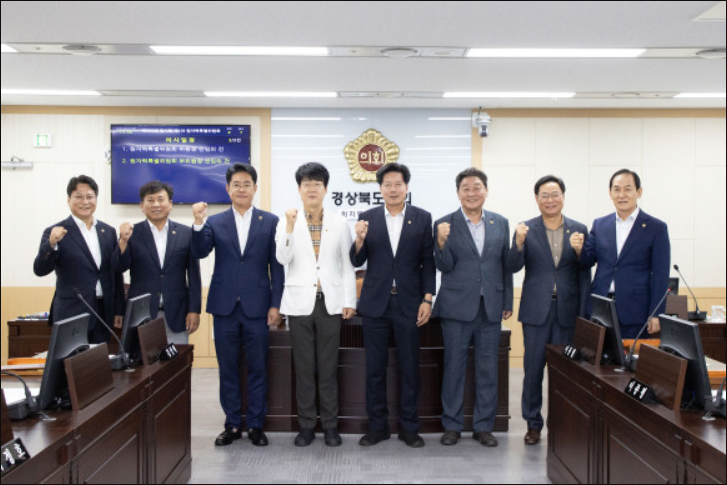
North Gyeongsang Provincial Council Establishes Special Committee on Nuclear Power
On August 25, the North Gyeongsang Provincial Council in South Korea established a Special Committee on Nuclear Power on the first day of its 365th special session, electing provincial council member Kim Jae-jun as committee chairman and Lee Dong-hyeop as vice chairman. According to reports, the committee will focus on addressing major nuclear power-related issues in the region, while also working to enhance the competitiveness of the nuclear power industry in North Gyeongsang Province and safeguard the safety and rights of provincial residents. North Gyeongsang Province is one of the regions in South Korea with a relatively high concentration of nuclear power facilities, having already developed a certain base of nuclear institutions and industrial infrastructure. With the recent confirmation of two new nuclear reactor projects in Yeongdeok County, the committee plans to strengthen on-site investigations and legislative activities to promote the nuclear power industry as a new growth driver for the region's underdeveloped areas.
2026-08-25

South Korea Launches Next-Generation Energy Leader Training Program in Nuclear Energy
The Next-Generation Energy Leader Training Program in the nuclear energy sector, supported by the Ministry of Climate, Energy and Environment and the Korea Energy Technology Evaluation and Planning Institute (KETEP) and implemented by the Korea Association for Radiation Promotion (KARA), has been officially launched. On August 25, the association held an inauguration ceremony at the 2026 Climate and Energy Job Fair held in Changwon, marking the program's entry into the implementation phase. The program targets young researchers who have recently obtained doctoral degrees, focusing on enhancing their research capabilities and industrial adaptability in the nuclear energy field, while promoting closer talent cultivation linkage mechanisms among universities, enterprises, and research institutions...
2026-08-25
South Korea Reviews Plans for New Nuclear Units and 20-Year License Extensions
The South Korean government is reviewing plans to build new nuclear power units and extend the operating license periods of existing nuclear plants to address mid- to long-term electricity demand growth driven by semiconductor industry clusters in Yongin and the Honam region. The Ministry of Climate, Energy and Environment submitted a written response to the National Assembly on the 24th, stating that during the revision of the 12th Basic Plan for Electricity Supply and Demand, it will review whether to include new nuclear power plants in the plan, taking into account factors such as electricity supply-demand necessity, construction schedules, regional acceptance, and suitability of nuclear plant sites. The ministry stated that after the draft of the relevant work is published, it will also undergo procedures including National Assembly deliberation, public hearings, strategic environmental impact assessment, and climate change impact assessment.
2026-08-25