
Search Results
Keyword:United States

Bayer Presents Phase III Data for Iodine-124 PET Tracer: High Sensitivity Shown in Cardiac Amyloidosis Diagnosis
At the 2026 European Society of Cardiology Congress, Bayer presented results from the Phase III REVEAL study of its investigational PET radiotracer iodine-124 evuzamitide (I-124 evuzamitide). Data showed that the tracer met the study's primary endpoints in diagnostic sensitivity and specificity when used for imaging in patients with suspected cardiac amyloidosis. The REVEAL study, sponsored by Brigham and Women's Hospital, is a multicenter, open-label, single-arm Phase III clinical trial conducted at 18 sites in the United States, enrolling 170 adult patients with suspected cardiac amyloidosis. Following a single intravenous injection of I-124 evuzamitide, subjects underwent cardiac and...
2026-09-01

U.S. Heavy-Ion Collision Research Suggests Protons and Neutrons May Not Be Just "Three Quarks"
The STAR Collaboration at the Relativistic Heavy Ion Collider (RHIC) at the U.S. Department of Energy's Brookhaven National Laboratory recently proposed, based on heavy-ion collision data studies, that baryons such as protons and neutrons may not be simply composed of three valence quarks, and that their baryon number may be more closely related to "baryon junctions" in the gluon field. The findings were published in the journal *Science*. In the traditional valence quark model, each quark is assigned a baryon number of 1/3, so baryons such as protons and neutrons, composed of three quarks, carry a baryon number of +1. However, this model is not a fundamental requirement of quantum chromodynamics (QCD). As early as the 1970s, alternative explanations had been proposed in the theoretical community; in 1996, Dmitri Kharzeev proposed a model suggesting that the baryon number is not necessarily carried by the quarks themselves, but may instead be concentrated at the Y-shaped junction formed by the gluon field—the "baryon junction."
2026-08-31
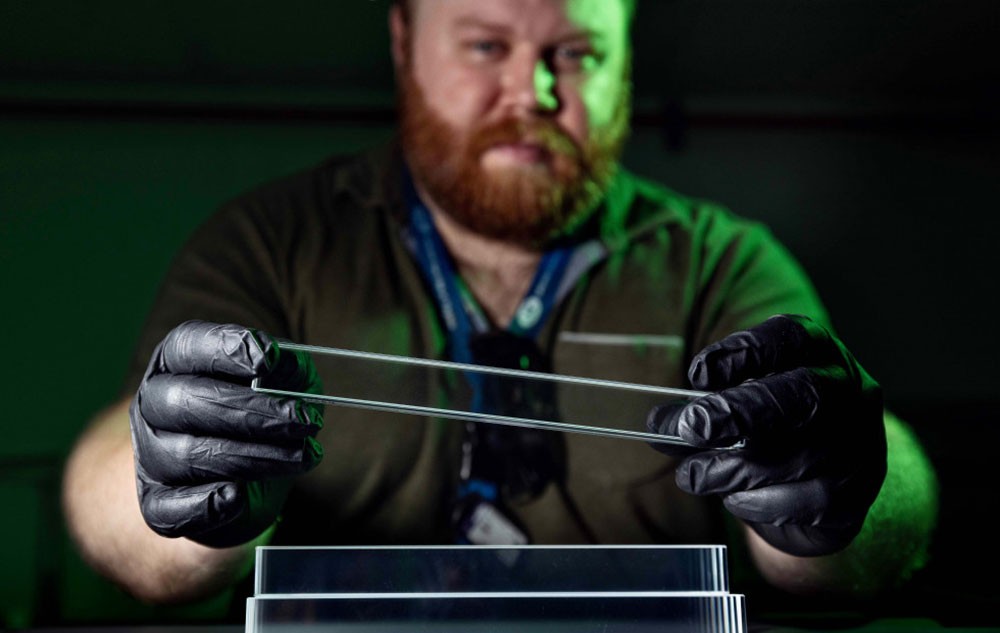
U.S. Electron-Ion Collider ePIC Detector Completes First Batch of Lead Tungstate Crystal Procurement and Acceptance
The U.S. Electron-Ion Collider (EIC) project recently achieved its first long-lead procurement milestone: 1,069 custom lead tungstate crystals for the new ePIC detector have been delivered, tested, and accepted. These crystals will be used in the Electron Endcap Electromagnetic Calorimeter (EEEMCAL) to help precisely measure the energy of scattered electrons during collisions. The EIC is being built by the U.S. Department of Energy's Brookhaven National Laboratory, in collaboration with the Thomas Jefferson National Accelerator Facility. The facility will circulate electron and ion beams in opposite directions, colliding them inside the ePIC detector. The ePIC detector records information about particles produced in the collisions, providing data for studying the fundamental constituents of visible matter...
2026-08-31
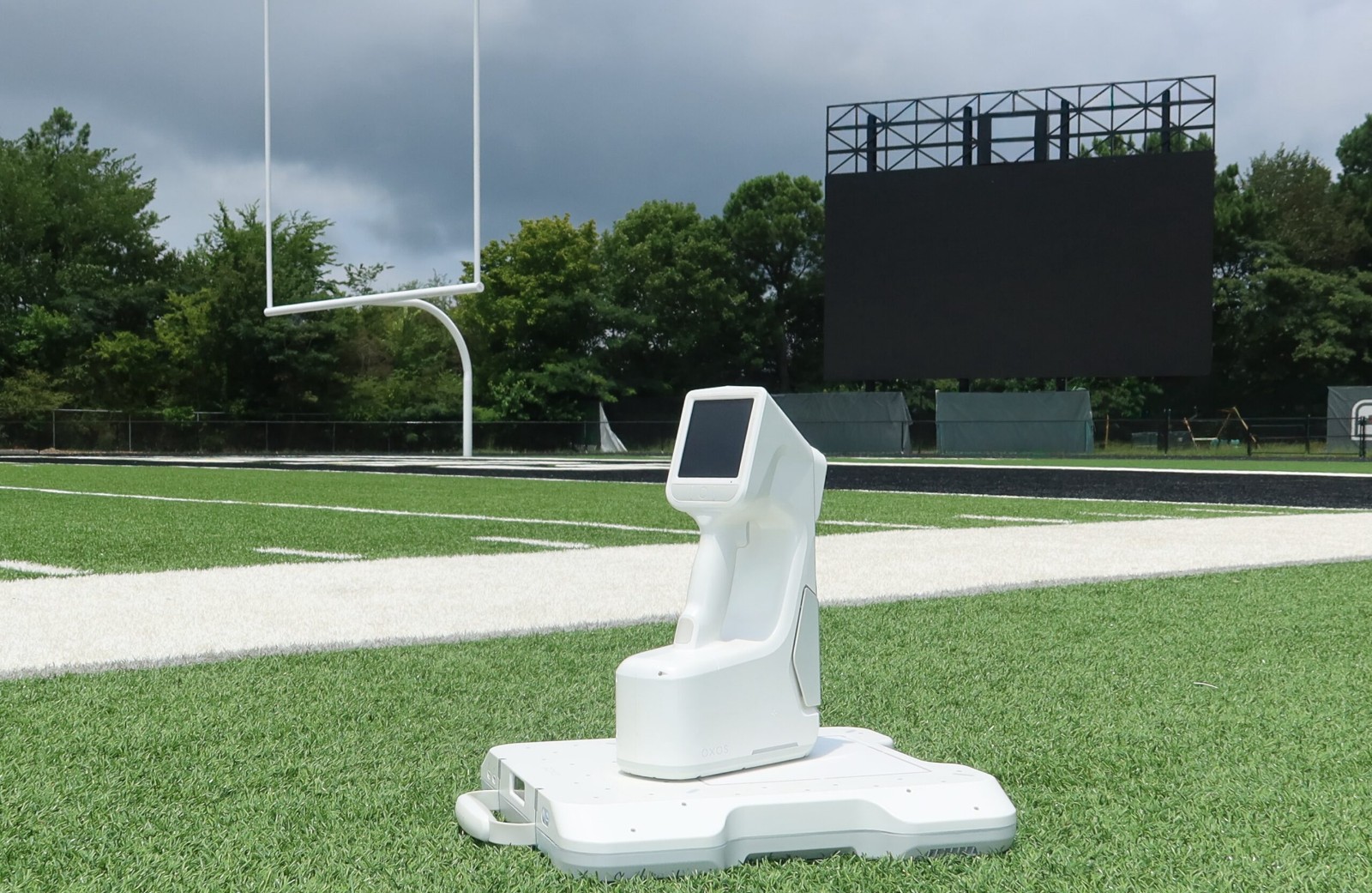
Portable X-ray Equipment in the U.S. Used for On-Site Assessment of American Football Injuries
As the 2026–2027 American football season approaches, team training camps, player evaluations, and medical support preparations are getting underway. Given the risk of acute sports injuries from the high-intensity physical contact in American football, portable X-ray equipment is being used to improve the efficiency of injury assessment on the sidelines and at training facilities. According to reports, American football players are prone to fractures, sprains, joint dislocations, and contusions. Relevant data indicates that the incidence of severe injuries such as fractures, dislocations, and contusions in this sport is higher than in other sports, with fractures accounting for approximately 10% of all football injuries. Such injuries typically require X-ray radiography to aid diagnosis, but traditional X-ray machines are bulky and fixed in place, usually requiring use in facilities with appropriate shielding. Injured players often need to be transported to the radiology department for examinations, which may delay diagnosis and treatment decisions.
2026-08-31

Korea Hosts ROK-U.S. Nuclear Industry Cooperation Seminar in the United States
The Korea Nuclear Energy Export Industry Association (KNA) announced on August 30 that it held the ROK-U.S. Nuclear Industry Cooperation Seminar in Dallas, Texas, on August 27. The seminar was held in conjunction with NECX 2026, a major nuclear energy event in North America, with the primary purpose of consolidating the foundation for ROK-U.S. nuclear industry cooperation and creating networking opportunities for Korean companies to enter the U.S. market and participate in related nuclear projects. Approximately 70 representatives from the nuclear industry sectors of both countries attended the meeting. Participants included a Korean delegation comprising Korea Electric Power Corporation (KEPCO) and Korea Hydro & Nuclear Power (KHNP), representatives of Korean small and medium-sized enterprises, and officials from relevant U.S. state government agencies...
2026-08-31

Leo Cancer Care and GE HealthCare Announce Collaboration to Advance Upright Radiotherapy Workflow Integration
Leo Cancer Care recently announced a commercial collaboration with GE HealthCare, focusing on GE HealthCare's advanced imaging solutions and intelligent radiotherapy software, with plans to apply related technologies to Leo Cancer Care's future upright radiotherapy systems to streamline patient and data workflows from simulation to treatment delivery. Under the collaboration framework, the two parties will explore integration pathways between GE HealthCare's intelligent radiotherapy software iRT and Leo Cancer Care's future upright radiotherapy solutions. iRT is an AI-assisted software developed for radiotherapy settings, primarily used to connect information, workflows, and applications across different systems, helping healthcare institutions simplify complex processes, enable patients to enter radiotherapy more promptly, and reduce clinician burden.
2026-08-30

Radiology Partners to Acquire Everlight, Expanding International Teleradiology Services
U.S. radiology services provider Radiology Partners has agreed to acquire Everlight Radiology, planning to expand its teleradiology diagnostic services into markets including the United Kingdom, Ireland, Australia, New Zealand, and South Africa. Founded in 2006, Everlight employs a "follow-the-sun" teleradiology service model, leveraging radiologists across different time zones to provide continuous imaging diagnostic coverage. The company currently has over 800 radiologists, operates in more than 40 countries, and completes over 2.5 million imaging examination reports annually for more than 340 client institutions. Radiology Partners is headquartered in Nashville, Tennessee, USA,...
2026-08-30
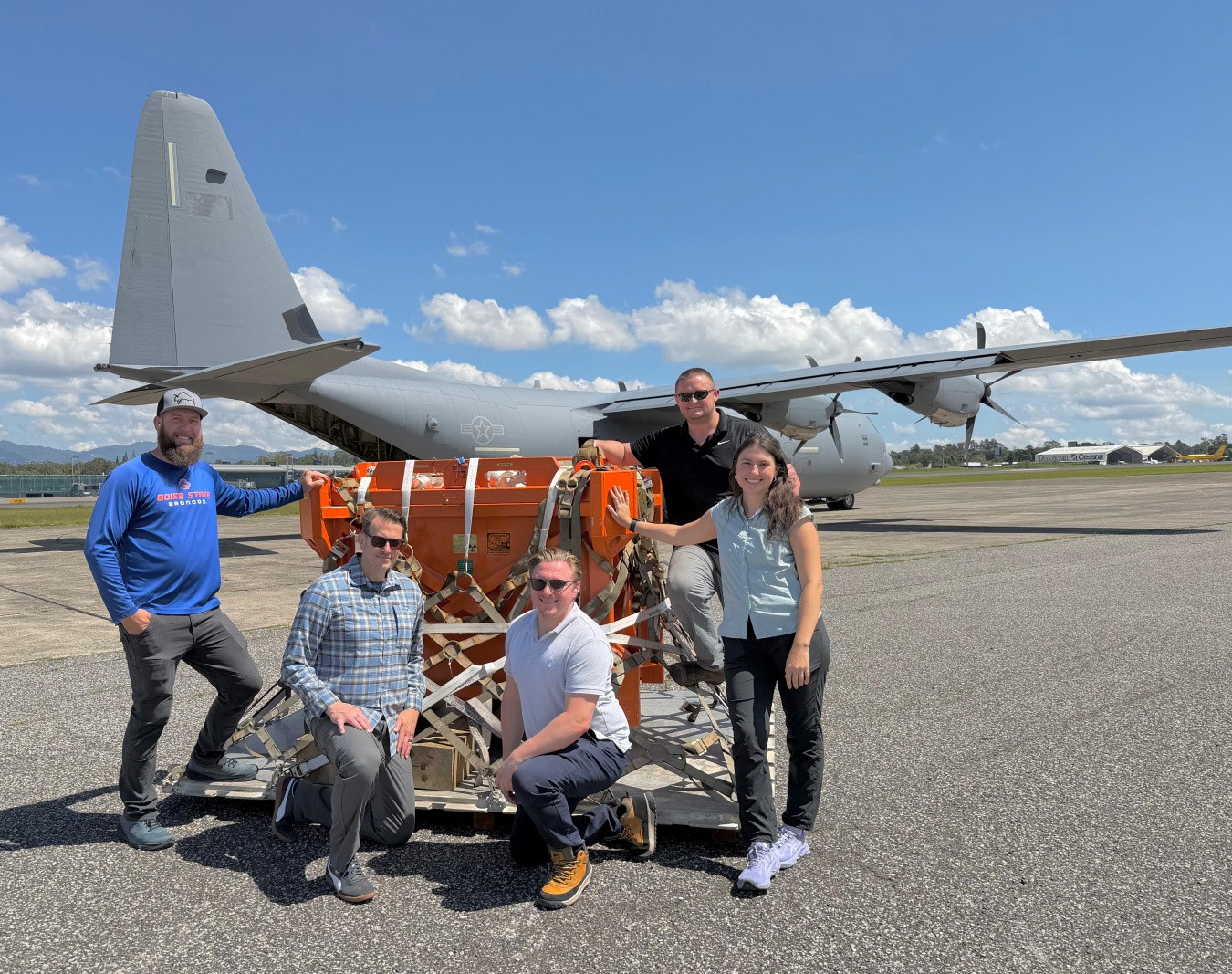
U.S. NNSA and DTRA Remove High-Risk Cobalt-60 Radioactive Source from Guatemala
The U.S. National Nuclear Security Administration (NNSA) announced on August 27 that, in cooperation with the U.S. Defense Threat Reduction Agency (DTRA), it has removed a high-risk cobalt-60 radioactive source from a facility in Guatemala and transported the associated components to a secure storage location in the United States. This operation aims to reduce security risks associated with radioactive materials and prevent high-activity radioactive substances from being illegally acquired or misused. According to reports, cobalt-60 can be used in medical equipment for cancer treatment, but high-activity radioactive sources, if improperly managed, may pose radiological safety hazards. In May of this year, an NNSA Los Alamos National Laboratory team, in cooperation with relevant Guatemalan agencies, worked on a decommissioned U.S.-manufactured cobalt-60 teletherapy...
2026-08-28

Auburn University Installs 200 MeV Superconducting Proton Accelerator to Build First University-Led Space Electronics Radiation Testing Facility in the U.S.
Auburn University's Applied Research Institute has announced the installation of a new 200 MeV superconducting proton accelerator, advancing the construction of the nation's first university-led proton testing facility dedicated to space electronics qualification. The system, a RAD-FX-200 superconducting synchrocyclotron manufactured and installed by Mevion Medical Systems, serves as the core component of Auburn University's new radiation-hardening facility. According to reports, the facility will help address gaps in U.S. space qualification testing capacity, providing radiation testing services for microelectronics to government agencies, aerospace, and defense-related industries. Systems such as satellites, missile defense interceptors, spacecraft, and launch vehicles rely on microelectronics, which may be affected by proton radiation in orbital environments. A single radiation-induced failure can cause system loss, and such failures are typically difficult to repair once in orbit...
2026-08-28

Bristol Myers Squibb to Invest $173 Million in New Radiopharmaceutical Plant in Indiana, USA
Bristol Myers Squibb's RayzeBio will build a new radiopharmaceutical production facility in Whitestown, Indiana, USA, with an investment of $173 million. The project will be located at the Anson Industrial Park in Boone County, with construction planned to begin this year, complementing RayzeBio's existing operational radiopharmaceutical plant in Indianapolis. According to information released by the state of Indiana, the new facility will cover approximately 225,000 square feet. Bristol Myers Squibb expects the two production sites to add 100 new positions by the end of 2029, with annual salaries for new positions expected to exceed $130,000. Bristol Myers Squibb acquired San Diego-based RayzeBio in 2023 for $4.1 billion...
2026-08-28

3D Systems Collaborates with Savannah River National Laboratory to Advance 3D Printing in Nuclear Energy Systems
3D Systems Corporation of the United States announced on August 27 that it has signed a Cooperative Research and Development Agreement (CRADA) with Savannah River National Laboratory (SRNL), under which the two parties will conduct joint research and development on additive manufacturing technology to advance its application in advanced energy production, nuclear energy systems, energy infrastructure resilience, and related mission scenarios. Under the agreement, the two parties will leverage SRNL's Advanced Manufacturing Collaborative (AMC) to advance work in advanced materials development, equipment upgrades, AI and machine learning-assisted process optimization, manufacturing systems, cybersecurity, and workforce development. Collaboration goals include developing next-generation additive manufacturing materials, real-time process optimization tools, and scalable production solutions...
2026-08-28

Argonne National Laboratory Measures Dust Resuspension Behavior in Radioactive Contamination Scenarios
Researchers at the U.S. Department of Energy's Argonne National Laboratory recently conducted field experiments to simulate the movement of dust particles on concrete surfaces under radioactive contamination scenarios, measuring the effects of pedestrian activity and vehicle traffic on dust dispersion. The study was published in the journal Health Physics and received support from the U.S. Department of Homeland Security Science and Technology Directorate and the Radiological/Nuclear Emergency Response and Recovery Research and Development Program. To control humidity and temperature and prevent dust generation, pedestrian tests were conducted inside a tent. In the image, researchers can be seen entering the tent on the left. Particle counters are placed on a white table, with their hoses extending into the tent to collect air samples. (Image courtesy of Ar...
2026-08-27

Moffitt Cancer Center in the U.S. Launches $600 Million Radiopharmaceutical Program
Moffitt Cancer Center in Tampa, Florida, recently announced the launch of a new radiopharmaceutical program, planning to accelerate radiopharmaceutical research, development, and clinical translation through a total infrastructure investment of $600 million. The program will be advanced at the Speros campus of Moffitt Cancer Center in Pasco County, Florida. The campus spans 775 acres, and the related investment will support the development of radiopharmaceutical research and development capabilities, including the construction of new radiochemistry laboratories within the Moffitt Discovery and Innovation Center, which opens this fall. The innovation center has a building area of approximately 255,000 square feet. The program funding will also support the planned comprehensive theranostics center...
2026-08-27

U.S. Interlune injects helium-4 into lunar soil simulant, simulating 15,000 years of solar wind exposure on the Moon in 4 hours
U.S. space infrastructure and resources company Interlune announced on August 26, 2026, that it has successfully injected helium-4 into and released it from simulated lunar soil material, with experimental results consistent with the behavior of real lunar samples collected by the Apollo program. The company stated that this capability can simulate nearly 15,000 years of solar wind exposure on the lunar surface in approximately 4 hours, providing a material basis closer to real conditions for testing lunar resource development equipment on Earth. The experiment focused primarily on ilmenite. According to studies of Apollo mission samples, ilmenite is the main helium-bearing mineral in lunar soil. Interlune formed a plasma by ionizing helium gas in a vacuum environment, then...
2026-08-27

Fifth Mega Saltstone Disposal Unit Approved for Operation at U.S. Savannah River Site
The U.S. Department of Energy Office of Environmental Management announced on August 25 that it has approved the operation of the fifth mega saltstone disposal unit at the Savannah River Site in Aiken, South Carolina. Designated as SDU 10, the facility will receive purified material for final disposal, marking a new milestone in the site's cleanup program. According to reports, SDU 10 completed construction in June 2024, nearly 10 months ahead of schedule. Its leak-tightness testing was completed in December 2025, and the test results verified that the unit can safely store up to 33 million gallons of purified, solidified salt solution generated at the Savannah River Site. Saltstone disposal units are the end-stage facilities in the salt waste treatment process.
2026-08-26