
Search Results
Keyword:United States

U.S. Research Team Discovers Strong Ultrafast Optical Response Induced by Ionizing Radiation, Potentially Advancing Medical Imaging and Sensing Technologies
September 3 news, Stanford University and the U.S. Department of Energy's SLAC National Accelerator Laboratory research team used ultrafast electron and laser pulses to observe a strong ultrafast optical response triggered by ionization processes in semiconductor materials. The related research has been published in Nature Photonics. The researchers believe this discovery could provide new insights for radiography and sensing technologies, and also offer experimental evidence for understanding the fundamental behavior of materials under high-energy particle interactions. Radiation detection is a key technology in particle accelerators, scientific instruments, medical imaging, and security screening equipment. Existing detectors typically face a trade-off between signal strength and response speed: processes with stronger signals tend to be slower, while those with faster response may produce weaker signals...
2026-09-08

ORNL Neutron Imaging Technology Reveals Healed Rib Fracture in Tyrannosaurus Rex Fossil
Neutron imaging technology at the U.S. Department of Energy's Oak Ridge National Laboratory (ORNL) has helped researchers from the University of Regina in Canada and other institutions observe rare healing signs inside the fossilized bones of a Tyrannosaurus rex, providing new insights into ancient life from approximately 66 million years ago. The subject of this study is a fractured rib from "Scotty," the largest Tyrannosaurus rex skeleton ever discovered. Researchers found that this rib preserved a wound-healing process rarely seen in the fossil record: after the fracture occurred, iron-rich blood entered the injured area and formed a network of blood vessels to promote healing; however, before the rib had fully healed, Scotty died and was preserved in a salt marsh environment, which slowed the decomposition of the remains...
2026-09-07

U.S. ZC Institute Unveils "Kardashev One" Fusion Prototype Reactor Plan to Independently Test Neutron Recovery Concept
ZC Institute, a fusion energy company headquartered in Atlanta, USA, announced on September 4 the launch of the Kardashev One program, aiming to develop a fusion prototype reactor to explore recovering energy lost to radiation and neutron escape during fusion reactions. As an early validation step of the program, ZC Institute has commissioned Professor Jason Cassibry and his team at the University of Alabama in Huntsville (UAH) to conduct independent testing of the related field distortion technology. According to ZC Institute, existing fusion approaches, including inertial confinement fusion and magnetic confinement fusion, lose energy in forms such as electromagnetic radiation and neutron escape. Magnetic fields can confine charged...
2026-09-05

BWXT Selected for Conceptual Design of First Module of U.S. NNSA Lithium Processing Facility
BWX Technologies, Inc. (BWXT) has announced that it has been awarded a contract by the U.S. Department of Energy's National Nuclear Security Administration (DOE/NNSA) to perform conceptual design work for the first module of a new lithium processing facility planned for the Y-12 National Security Complex. According to available information, lithium post-processing operations are currently still being conducted in some aging facilities. To continue supporting missions such as direct reuse of lithium materials, purification, component production, and recycling, NNSA plans to modernize related facilities to meet its national security mission requirements. Heatherly Dukes, President of BWXT Technical Services Group, stated that this project represents a significant investment in the modernization of U.S. nuclear security infrastructure, aimed at...
2026-09-04

Study Says Neutrino Laser Physically Impossible Due to Mechanism Constraints
On September 2, physicists at the Massachusetts Institute of Technology published two papers in Physical Review Letters analyzing a previously proposed neutrino laser concept. The research concludes that, due to atomic recoil effects and the fermionic nature of neutrinos, the scheme of using radioactive atomic clouds to produce laser-like neutrino beams is physically impractical. Neutrinos are elementary particles with extremely small mass and very weak interactions with ordinary matter. Earlier research had envisioned cooling radioactive atomic clouds to nanokelvin temperatures to form a Bose-Einstein condensate. According to this concept, atoms in a quantum coherent state might decay synchronously, producing neutrino beams with strong directionality through a quantum amplification effect similar to superradiance...
2026-09-03

West Physics Acquires U.S. Medical Physics Services Provider RTS, Expanding Nuclear Medicine and Radiation Safety Service Network
West Physics Consulting, LLC, a U.S. provider of medical and health physics consulting services, announced on September 2, 2026, that it has acquired Radiographic Testing Services, Inc. (RTS). Headquartered in Albany, New York, RTS primarily provides medical physics services covering nuclear medicine, diagnostic radiology, radiation oncology, and Certified Radiological Equipment Safety Officer (CRESO)-related services. West Physics stated that this acquisition will integrate the strengths of both companies in customer service, quality management, and technical capabilities. Upon completion of the transaction, the company will add a new office in Albany, New York, and further expand its presence in Albany, New York...
2026-09-03
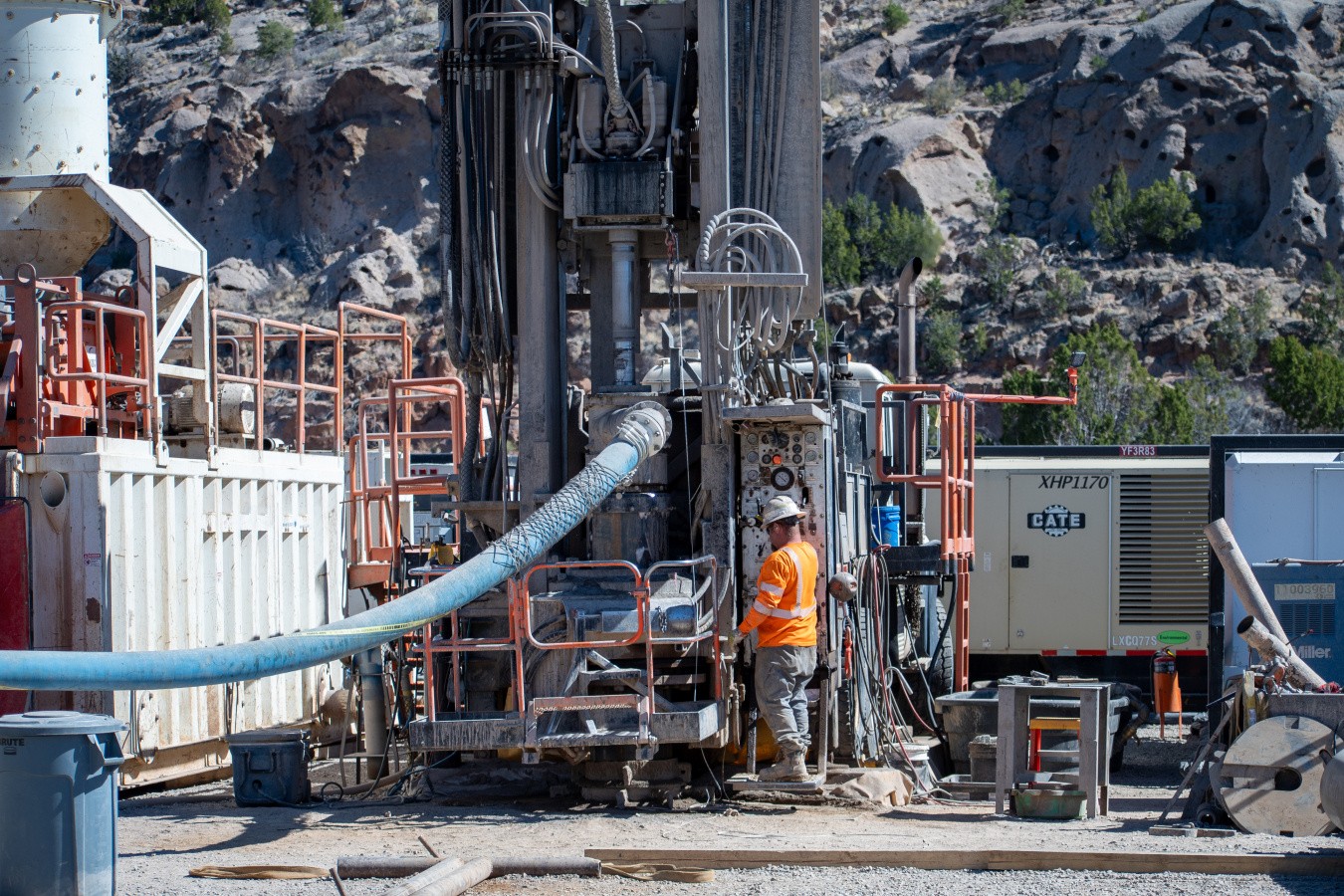
New Monitoring Well Characterizes Hexavalent Chromium Plume at Los Alamos National Laboratory
LOS ALAMOS, New Mexico — The U.S. Department of Energy Environmental Management Los Alamos Field Office continues to advance characterization efforts for the hexavalent chromium plume at Los Alamos National Laboratory to inform future remediation alternative selection. According to reports, its legacy cleanup contractor, Newport News Nuclear BWXT-Los Alamos LLC, has completed drilling of a new groundwater monitoring well. Designated R-80, the well reaches approximately 1,030 feet below ground surface and will be used to further characterize the northeastern extent of the hexavalent chromium plume and evaluate different remediation alternatives. Completion of this monitoring well also marks the achievement of a Fiscal Year 2026 consent order milestone for the hexavalent chromium remediation project...
2026-09-02

Demolition Begins on Contaminated Buildings in Isotope Area at Oak Ridge National Laboratory
The Oak Ridge Environmental Management Office in Tennessee recently initiated demolition of a group of highly contaminated buildings in the Isotope Area at Oak Ridge National Laboratory. Located in the laboratory's central campus, this area is considered one of the more challenging sites in the local cleanup effort. The Isotope Area comprises 10 facilities, constructed between the late 1940s and early 1960s, which once served the laboratory's isotope program. These facilities were used for decades in the production, processing, and research of chemical elements for medical, industrial, and scientific applications. As the laboratory evolved, the facilities were taken out of service in the early 1990s but remained standing. According to reports, the area retains contaminated...
2026-09-02

LUX-ZEPLIN Experiment Reports Anomalous Event in Dark Matter Search, More Data Needed for Verification
On September 1, the LUX-ZEPLIN (LZ) dark matter direct detection experiment released a new analysis result: researchers recorded a single-particle interaction event in the data whose characteristics could be interpreted as a Weakly Interacting Massive Particle (WIMP) signal, but the current evidence is insufficient to confirm a dark matter discovery. The LUX-ZEPLIN main detector is shown in a surface laboratory before being installed underground. (Matthew Kapust/Sanford Underground Research Facility) The LZ experiment involves approximately 250 scientists and engineers from 39 institutions, with the detector located nearly one mile underground at the Sanford Underground Research Facility in South Dakota, USA, and managed by the U.S. Department of Energy's Lawrence Berkeley National...
2026-09-02

U.S. to Conduct Underwater Neutrino Detection Tests in Lake Superior and Vermilion Lake
From October 2026 to approximately April 2027, a team of researchers from U.S. universities and government agencies will conduct underwater neutrino tests in Lake Superior and Vermilion Lake. The project, named the Experimental Neutrino Detector (END), aims to validate a baseline detection system in natural water bodies to identify the NuMI neutrino beam produced by Fermi National Accelerator Laboratory and distinguish it from cosmic-ray backgrounds and other noise in shallow-water environments. END will place underwater neutrino detectors on the lakebed of Lake Superior where the Fermilab neutrino beamline passes through—near Two Harbors, Minnesota. The beamline will continue toward...
2026-09-02

U.S. Proposes Clearer Groundwater Protection Standards for In-Situ Uranium Recovery Sites
The U.S. Nuclear Regulatory Commission (NRC) on September 1 proposed a rule aimed at establishing clearer groundwater protection standards for communities surrounding in-situ uranium recovery sites, while streamlining the process for extending decommissioning deadlines for radioactive materials facilities and nuclear reactors, reducing redundant administrative steps without compromising safety. The rule addresses two aspects under NRC oversight. First, it proposes risk-informed regulatory standards for protecting drinking water near in-situ uranium recovery facilities, designed to guard against both radiological and non-radiological contamination. In-situ uranium recovery is a method of uranium extraction that involves injecting solution into uranium-bearing ore bodies to dissolve underground uranium resources and pump them to the surface for recovery. Second, it proposes to simplify the process for facility owners to apply for extensions of decommissioning deadlines. The NRC stated that current time requirements are relatively rigid and may lead to premature license termination; the proposed changes aim to reduce applicant costs, improve regulatory efficiency, and provide clearer expectations for communities and facility operators.
2026-09-02

AI-Enhanced MRI System Deployed at Utah Medical Center for Cardiac and Cancer Imaging
Intermountain Medical Center in Murray, Utah, has begun using a new magnetic resonance (MR) system for imaging cardiac and cancer patients. The facility stated that the GE HealthCare SIGNA Sprint Elite MR system was placed into service earlier this year, making it the first of its kind in Utah and the second in the United States. According to the hospital, the system integrates artificial intelligence software designed to reduce image noise and enhance scan clarity. The facility believes that clearer images will help clinicians assess cardiac tissue and cancer-related conditions, while also potentially reducing the time patients spend undergoing MR exams. Cardiac imaging is one of the system's key application areas.
2026-09-02

Ionetix begins routine supply of astatine-211 in North America, expanding sources of isotopes for targeted alpha therapy
Ionetix, a U.S. medical isotope producer, recently announced that it has begun routine supply of astatine-211 (At-211) in North America. The company stated that this development expands the supply sources of At-211 and is expected to support its further application in preclinical research and clinical development. Ionetix noted that it believes it is the first non-academic commercial supplier of At-211 in the United States. Ionetix produces At-211 at its facility in Lansing, Michigan, leveraging its proprietary cyclotron technology. The company currently operates a 30 MeV cyclotron equipped with optimized target technology, aiming to support the production of clinical-grade At-211. The company stated that its production ca...
2026-09-02

FDA Grants Breakthrough Therapy Designation to JBS-003 for Guiding De-escalated Radiotherapy in HPV-Positive Oropharyngeal Cancer
On September 1, Juniper Biosciences announced that the U.S. Food and Drug Administration (FDA) has granted Breakthrough Therapy Designation to its hypoxia tracer JBS-003. The product, 18F-Fluoromisonidazole (FMISO), is intended to identify tumor hypoxia and guide de-escalated radiotherapy in patients with HPV-positive oropharyngeal cancer (OPC). JBS-003 is licensed from Memorial Sloan Kettering Cancer Center (MSK). According to information released by the company, the tracer is based on F-MISO PET molecular imaging technology and can visualize specific hypoxic features within tumors. Tumor hypoxia is considered to be associated with radioresistance; by imaging hypoxic regions, clinicians can stratify patients by risk and...
2026-09-02

Bayer Presents Phase III Data for Iodine-124 PET Tracer: High Sensitivity Shown in Cardiac Amyloidosis Diagnosis
At the 2026 European Society of Cardiology Congress, Bayer presented results from the Phase III REVEAL study of its investigational PET radiotracer iodine-124 evuzamitide (I-124 evuzamitide). Data showed that the tracer met the study's primary endpoints in diagnostic sensitivity and specificity when used for imaging in patients with suspected cardiac amyloidosis. The REVEAL study, sponsored by Brigham and Women's Hospital, is a multicenter, open-label, single-arm Phase III clinical trial conducted at 18 sites in the United States, enrolling 170 adult patients with suspected cardiac amyloidosis. Following a single intravenous injection of I-124 evuzamitide, subjects underwent cardiac and...
2026-09-01