
Search Results
Keyword:launch

U.S. Lightbridge Selected for DOE LaunchPad INL Program to Advance Commercialization of Advanced Nuclear Fuel
Lightbridge Corporation, a U.S. advanced nuclear fuel technology company, announced on August 31 that it has been selected for the Nuclear Energy LaunchPad program (LaunchPad INL) managed by the U.S. Department of Energy's (DOE) National Reactor Innovation Center (NRIC) at Idaho National Laboratory (INL). The company stated that the program will provide an accelerated pathway for it to design, construct, and operate a dedicated facility at INL to manufacture lead test assemblies (LTAs) of Lightbridge Fuel™, with subsequent testing supported at U.S. commercial nuclear power plants. Lead test assemblies are generally regarded as a critical qualification step for nuclear fuel after reactor testing and before commercial fuel sales...
2026-09-01

US Antares Selected for DOE Nuclear Energy Launch Pad Program
Antares has been selected for the U.S. Department of Energy (DOE) Nuclear Energy Launch Pad program. Led by the DOE Office of Nuclear Energy and the National Reactor Innovation Center (NRIC), the program aims to advance nuclear technologies from concept to commercial deployment. This selection further expands Antares' business footprint in Texas. Previously, the company was selected to deliver a microreactor to Joint Base San Antonio under the U.S. Air Force's Advanced Nuclear Power Facilities program. Antares CEO and co-founder Jordan Bramble stated that the reactor pilot program has accelerated the company's growth and...
2026-08-31
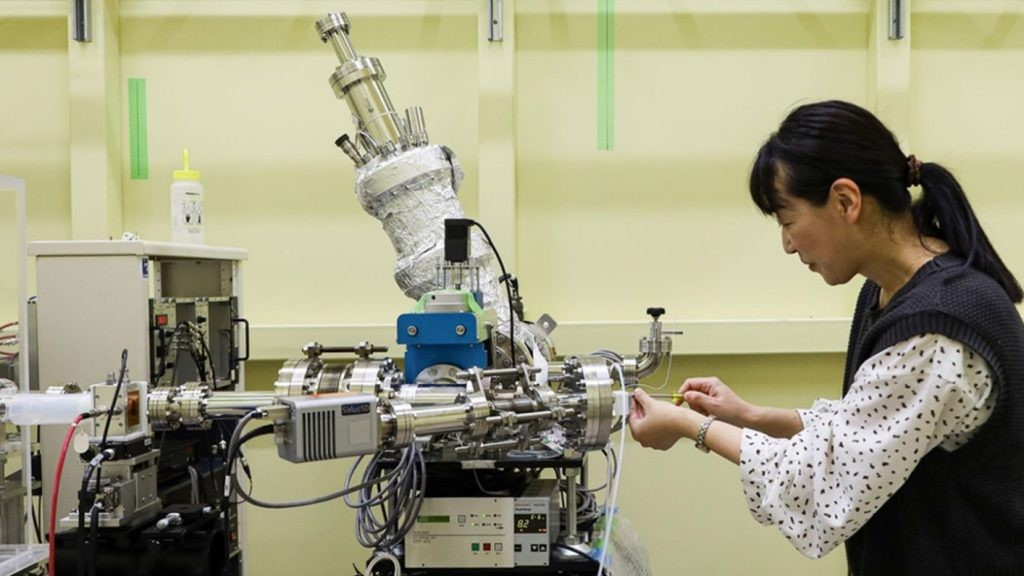
Japan's PF Launches Quantum Multi-Beam Experiments, Achieving Simultaneous Hard and Soft X-ray Measurements
The Photon Factory, a synchrotron radiation facility at the Institute of Materials Structure Science, High Energy Accelerator Research Organization (KEK) in Japan, has recently launched collaborative experiments on the development and research multi-purpose beamlines BL-11A and BL-11B, achieving simultaneous irradiation of the same sample with hard and soft X-rays at the same position. The research results will be published in the international academic journal *Review of Scientific Instruments*. The Photon Factory uses electrons moving at near-light speed to generate high-brightness X-rays, known as synchrotron radiation, for studying material structures and properties. Among these, hard X-rays are better suited for observing the internal structure of materials, while soft X-rays are ideal for analyzing material surfaces and electronic states. Previously, at synchrotron radiation facilities, the two types of X-rays typically had to...
2026-08-31

South Korea Launches Standard Design Approval Review for i-SMR
The Nuclear Safety and Security Commission (NSSC) of South Korea is set to initiate a safety review of the standard design approval application for the innovative Small Modular Reactor (i-SMR). This project is part of the small modular reactor research and development program led by the South Korean government. The NSSC stated on August 28 that, at its 13th meeting of 2026 held on August 27, the Korea Institute of Nuclear Safety (KINS) reported on the review plan for the i-SMR standard design approval application. KINS had previously conducted a suitability review of the standard design approval application documents submitted in February of this year and determined that the documents met the conditions for entering the safety review phase, thereby establishing a subsequent review plan. The standard design approval system is designed to...
2026-08-28

Japan's Helical Fusion and Tohoku University Launch Social Communication Research on Fusion Energy
Helical Fusion recently announced that it has launched a joint research project with the Takahashi-Kariwara Laboratory of the Graduate School of Engineering at Tohoku University in August 2026, focusing on ideal communication methods for the social implementation of fusion energy. The project is planned to last approximately one year, with a focus on exploring the communication methods, dialogue mechanisms, and decision-making pathways required for fusion energy to move toward social application. According to the project plan, both parties will examine cases of existing advanced technologies in areas such as social acceptance and risk perception to study communication strategies needed for the stable application of fusion energy in future society. The research also plans to introduce...
2026-08-27

Hyogo Medical University Hospital to Launch Japan's First Elekta Evo Linear Accelerator System Treatments
Elekta K.K. announced on August 27 that its high-precision radiation therapy device, the Elekta Evo linear accelerator system, will be installed for the first time in Japan at Hyogo Medical University Hospital, with the first treatment scheduled to commence on September 24, 2026. This marks the entry of this next-generation radiation therapy system into clinical application in Japan. As the number of cancer patients increases, the demand for personalized and precise treatment in the field of radiation therapy continues to rise. The Elekta Evo is positioned as a next-generation radiation therapy system capable of covering both routine and more complex cancer treatment scenarios. The system is equipped with Iris, an AI-driven high-definition imaging technology, which enables clearer visualization of the positional relationships between organs in the patient's body...
2026-08-27

Huzhou, Zhejiang Launches Phase I "Drug-Device Combination" Clinical Trial for the Province's First BNCT System
Recently, the Boron Neutron Tumor Treatment Center at Huzhou Hospital Affiliated to Zhejiang University School of Medicine has drawn attention with the introduction of the province's first Boron Neutron Capture Therapy (BNCT) system. Previously, the system had already initiated a Phase I BNCT drug-device combination clinical trial. According to the system developer, Huapeng Neutron Technology (Hangzhou) Co., Ltd., BNCT is a radiotherapy technique combining drugs and devices, with its core lying in the coordinated use of boron-containing drugs and neutron irradiation. After entering the human body, the boron-containing drug can be absorbed by tumor cells; subsequent neutron beam irradiation triggers a localized reaction to achieve targeted radiotherapy against tumor cells. Unlike conventional radiotherapy, which typically employs fractionated irradiation over a longer treatment course, BNCT emphasizes selective targeting of tumor cells, aiming to reduce damage to surrounding healthy tissues and lower radiotherapy-related side effects such as hair loss and immunosuppression.
2026-08-27

IAEA Launches ATLAS Initiative to Advance Nuclear Energy Maritime Applications
The International Atomic Energy Agency (IAEA) launched the Atomic Technology for Maritime Applications Licensing Scheme (ATLAS) on August 26 in Washington, D.C., United States, aiming to support the safe, reliable, and peaceful use of nuclear energy in civilian vessels and floating nuclear power plants. The two-day ATLAS ministerial launch event, hosted by the United States, attracted approximately 600 delegates from over 50 countries, including international organizations, nuclear and maritime industry enterprises, port authorities, and relevant regulatory and policy departments. The IAEA stated that as nuclear-powered ships and floating nuclear power plants gain increasing attention, closer coordination mechanisms between the nuclear and maritime communities are needed. Maritime shipping carries approximately 80% of global trade volume, and maritime trade demand continues to grow at around 2% annually...
2026-08-27

Russia's SKIF Synchrotron First Scientific User Competition Expected to Launch in Second Half of 2027
The competition to select the first research teams for the Siberian Circular Photon Source (SKIF) synchrotron in Russia is planned for the second half of 2027. Valery Bukhtiyarov, Director of the Boreskov Institute of Catalysis of the Siberian Branch of the Russian Academy of Sciences, stated at the Technoprom-2026 forum held in Novosibirsk that the first open competition will be launched in the second half of 2027. The institute is responsible for commissioning the construction of this large-scale scientific facility. Bukhtiyarov noted that SKIF is scheduled to receive synchrotron radiation and conduct its first experiments in the autumn. Construction of the facility was completed in June 2026, with an opening ceremony held in August 2026. Once operational, SKIF will use synchrotron radiation to help...
2026-08-27

Moffitt Cancer Center in the U.S. Launches $600 Million Radiopharmaceutical Program
Moffitt Cancer Center in Tampa, Florida, recently announced the launch of a new radiopharmaceutical program, planning to accelerate radiopharmaceutical research, development, and clinical translation through a total infrastructure investment of $600 million. The program will be advanced at the Speros campus of Moffitt Cancer Center in Pasco County, Florida. The campus spans 775 acres, and the related investment will support the development of radiopharmaceutical research and development capabilities, including the construction of new radiochemistry laboratories within the Moffitt Discovery and Innovation Center, which opens this fall. The innovation center has a building area of approximately 255,000 square feet. The program funding will also support the planned comprehensive theranostics center...
2026-08-27
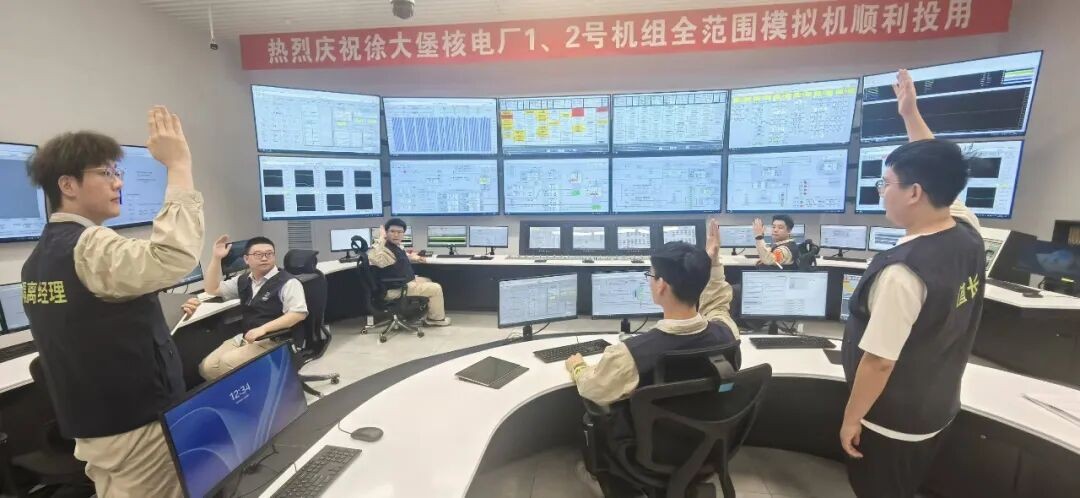
Training Launch for First Batch of Operators for Units 1 and 2 of Xudabao Nuclear Power Plant on Full-Scope Simulator
Recently, the first batch of operator training on the full-scope simulator for Units 1 and 2 of Xudabao Nuclear Power Plant was officially launched. The training program lasts 6 months, with 48 candidate Reactor Operators (ROs) and 24 candidate Senior Reactor Operators (SROs) participating. Centering on the five fundamental operator skills, the training conducts systematic hands-on exercises on the simulator platform, building a reserve of operations personnel for subsequent project construction and safe unit operation. The simulator for Units 1 and 2 can highly replicate the real working environment of the main control room and covers various operating conditions, making it an important platform for operations personnel to enhance their practical capabilities. The training is structured around five fundamental skills—close monitoring, precise control, conservative decision-making, teamwork, and knowledge mastery—integrating job conduct standards and team...
2026-08-27

Finland Launches Its First IAEA International Assessment of Radiation Emergency Preparedness
Finland has recently launched its first international assessment of radiation emergency preparedness. At the invitation of Finland's Ministry of Economic Affairs and Employment, an international expert team assembled by the International Atomic Energy Agency began assessing Finland's preparedness for radiation emergency response on August 25, with the work continuing through September 1. The assessment is coordinated by the Radiation and Nuclear Safety Authority of Finland. This authority also serves as the IAEA contact point and participates in this review as one of the assessed entities. The coordination group designated by Finland's Ministry of Economic Affairs and Employment is chaired by Karim Peltonen from the Radiation and Nuclear Safety Authority of Finland. The assessment employs the IAEA's Emergency Preparedness Review mechanism,...
2026-08-26

Tescan Launches MIRA XR Ultra-High-Resolution Scanning Electron Microscope for Materials Characterization and Failure Analysis Applications
Tescan recently launched the MIRA XR ultra-high-resolution scanning electron microscope system, targeting materials characterization needs in fields such as battery technology, metallurgy, and advanced materials science. Positioned between the Tescan MIRA and Tescan CLARA, the system aims to deliver higher resolution, enhanced surface sensitivity, and a more streamlined workflow, serving applications including R&D laboratories, industrial quality control, and failure analysis. According to reports, the MIRA XR employs BrightBeam™ technology and a single high-efficiency axial detector to improve surface signal acquisition under field-free imaging conditions, making it suitable for beam-sensitive materials and magnetic samples while reducing the need for sample preparation steps such as surface coating. The system also features an aperture-free column design that minimizes manual aperture selection and adjustment steps, allowing operators to focus more on sample observation and data analysis.
2026-08-26

Fujifilm Launches New X-ray Bone Densitometer for Early Osteoporosis Screening
Fujifilm Corporation announced on August 26 that it has begun selling a new X-ray bone densitometry device designed to measure bone density in areas such as the lumbar spine and femur, supporting early detection of osteoporosis and fracture risk assessment. According to the company, the X-ray bone densitometer measures bone density using X-rays and is an important diagnostic tool for osteoporosis. The newly launched model is Fujifilm's first new device of this kind since 2018 and will be sold through its subsidiary Fujifilm Medical, with a price of approximately 20 million yen, varying depending on system configuration. The new device incorporates artificial intelligence technology, enhancing automated analysis functions. In the analysis of scanned images...
2026-08-26

South Korea launches next-generation nuclear energy research talent training program
South Korea's talent training program for postdoctoral researchers in the nuclear energy field has officially been launched, which will be based on university laboratories to promote future nuclear technology research, industry-academia-research cooperation, and employment linkage. On August 25, during the 2026 Climate and Energy Job Fair, the Ministry of Climate, Energy and Environment, the Korea Institute of Energy Technology Evaluation and Planning (KETEP), and the Korea Radiation Promotion Association held the next-generation energy leader training program in the nuclear energy field...
2026-08-26