

Dong Baotong, Director of the National Nuclear Safety Administration: China's nuclear safety level remains among the top internationally, and during the "15th Five-Year Plan" period, the number of operating nuclear power units in China will rank first in the world
The State Council Information Office held a series of press conferences on August 13 themed "Starting the '15th Five-Year Plan' with a Strong Beginning," introducing the progress of comprehensively advancing the construction of a Beautiful China. Dong Baotong, Vice Minister of Ecology and Environment and Director of the National Nuclear Safety Administration, stated at the conference that ecological environment safety encompasses several key aspects, including ecological security, nuclear safety, and environmental risk prevention and control. The Ministry of Ecology and Environment serves as the lead coordinating body for both the national ecological security work coordination mechanism and the nuclear safety work coordination mechanism. Over the years, together with relevant departments, we have actively responded to various risks and challenges, effectively safeguarding the bottom line of ecological environment safety. Among these, in the area of nuclear safety, we have consolidated the primary responsibility of nuclear facility operators...
2026-08-13

UAE Releases 2025 Annual Nuclear Regulatory Report, Highlighting Nuclear Safety and Peaceful Use Achievements
The UAE Federal Authority for Nuclear Regulation (FANR) has released its "2025 Annual Report," showcasing regulatory progress over the past year in nuclear safety, radiation protection, and nuclear non-proliferation. The report indicates that the UAE continues to advance its nuclear governance framework in line with the "We the UAE 2031" vision, enhancing regulatory efficiency while emphasizing that nuclear technology and nuclear materials must serve peaceful purposes. The report specifically highlights FANR's launch of a unified import and export system. This digital platform is designed to streamline the regulatory processes for the import and export of nuclear and radioactive materials, while strengthening regulatory transparency and traceability. The development of this system demonstrates that the UAE is focused not only on the safety of nuclear facilities themselves...
2026-08-13

Russia's National Anti-Terrorism Committee Demands Enhanced Security for Energy and Nuclear Facilities
On August 12, Russia's National Anti-Terrorism Committee (NAK) held a meeting chaired by Alexander Bortnikov, Director of the Federal Security Service, to discuss security issues at transportation, fuel-energy complex, and nuclear energy industrial facilities. The Committee emphasized the need to strengthen comprehensive security safeguards and respond more effectively to sabotage and terrorist threats. The meeting proposed that protecting energy and nuclear industrial facilities should not remain at the institutional level alone, but rather should develop more targeted priority tasks based on evolving actual risks. Damage to fuel-energy systems and nuclear industrial facilities could affect the stability of energy supply and trigger broader security risks, which is why their level of protection is regarded as...
2026-08-13

Ukraine and IAEA to Strengthen Nuclear Safety Coordination
Ukrainian Energy Minister Denys Shmyhal and IAEA Director General Rafael Grossi held an online meeting, focusing on further strengthening nuclear and radiation safety cooperation amid the war. Ukraine hopes to achieve independent assessments of risks and operational status of critical energy infrastructure and develop more protective measures through closer international coordination. The talks come against the backdrop of sustained security pressures on Ukraine's energy facilities. The Ukrainian side emphasized that a stably operating power system is not only vital to public electricity supply but also directly affects the safety assurance of nuclear power plants and related facilities. The IAEA has previously conducted expert work at multiple energy facilities in Ukraine...
2026-08-12
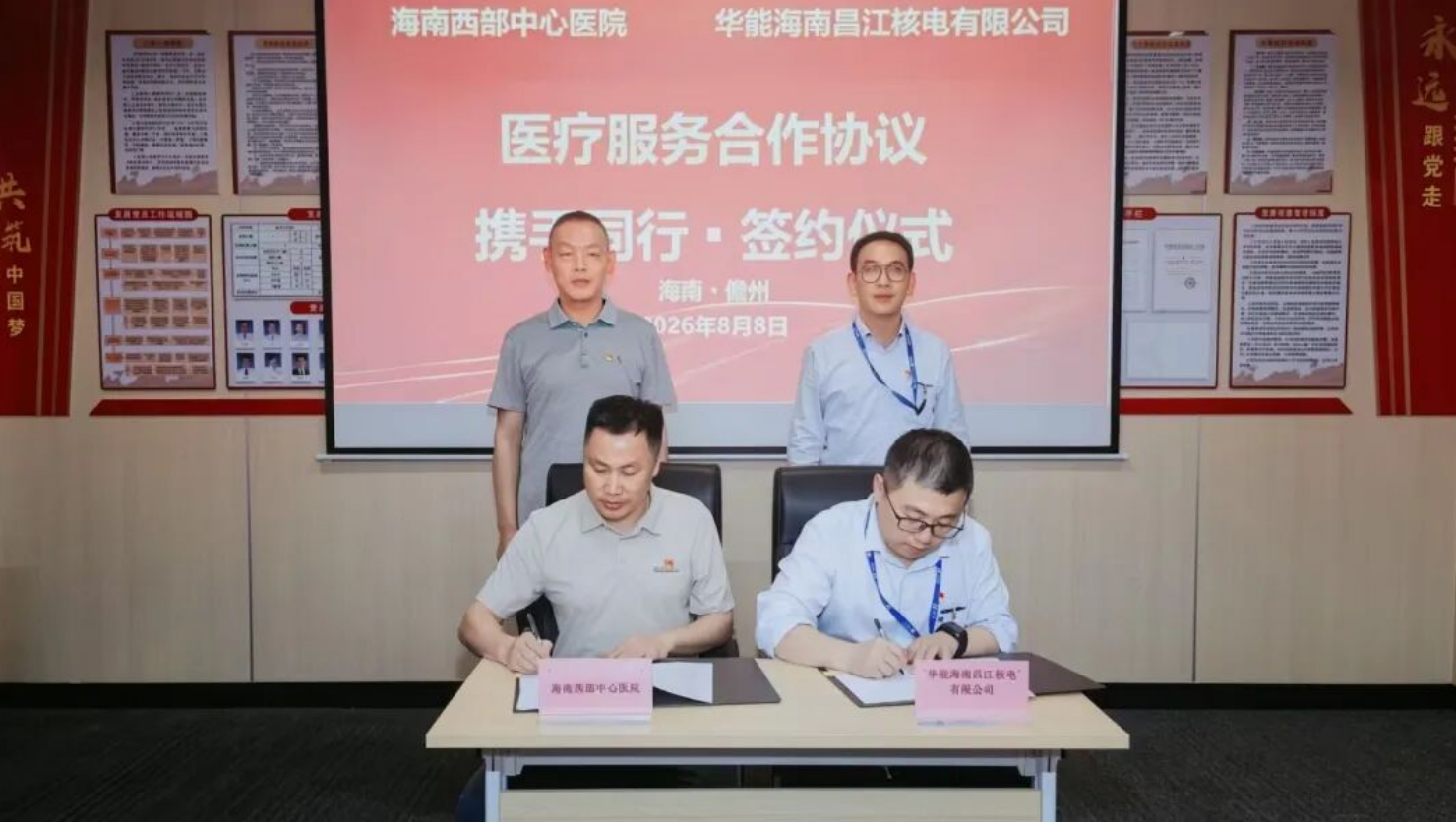
Huaneng Changjiang Nuclear Power Company Signs Medical Cooperation Agreement with Hainan Western Central Hospital
Recently, Huaneng Hainan Changjiang Nuclear Power Co., Ltd. signed a medical cooperation agreement with Hainan Western Central Hospital, comprehensively strengthening the health and safety defense line for enterprise employees and safeguarding nuclear power production safety. The two parties agreed to leverage the hospital's high-quality medical resources to open a green channel for employees' emergency medical treatment, carry out routine occupational health examinations and health science education, establish a rapid transport and treatment linkage mechanism for sudden injuries or illnesses at the plant site, and efficiently handle various on-site emergency medical situations. After the signing ceremony, relevant personnel from Huaneng Changjiang Nuclear Power Company visited the Emergency Department and Outpatient Building at the Baimajing Binhai Campus, gaining detailed insights into emergency treatment procedures, rescue equipment configuration, and emergency rescue operation models, and engaging in discussions with medical staff on topics such as on-site industrial injury handling and emergency medical response to sudden health events.
2026-08-11

South Korean Environmental Groups to Hold Nuclear Safety Seminar, Focusing on SMR Regulatory Independence and Institutional Gaps
The Korean Federation for Environmental Movement recently announced that it will hold a session of the Continuous Nuclear Safety Seminar Series, under the safety regulation domain, at 10:00 a.m. on August 21, 2026, in Conference Room 8 of the National Assembly Members' Office Building, under the theme "Moving Beyond Promotion-Centered Nuclear Policy Toward an Independent Safety Regulatory System." The event is hosted by National Assembly member Lee Ju-hee and co-organized by the Citizens' Institute for Environmental Studies and the Korean Federation for Environmental Movement, aiming to discuss structural issues in South Korea's nuclear safety regulatory system. According to available information, the South Korean government is accelerating the research and development, industrial support, and commercialization of small modular reactors (SMRs), with the i-SMR standard design approval application already accepted and the Special Act on SMR Development Promotion scheduled to take effect in September.
2026-08-11

Belarusian NPP safe operation period may be extended to 100 years, with first spent fuel to be shipped to Russia for reprocessing in 2034
Stanislav Levitsky, head of the Rosatom representative office in Belarus, stated on the "Economic Environment" program of Belarusian TV Channel One that Belarusian nuclear energy development is backed by comprehensive safety assurances. He emphasized that while nuclear facilities can indeed have serious consequences if mismanaged, under the existing risk control system and modern technological support at the Belarusian NPP, nuclear power can become a low-cost, stable, and safe energy source. Levitsky believes that amid intense competition in the energy sector, some irresponsible players may use information tactics to create anxiety and attempt to provoke panic among the public...
2026-08-10

IAEA Publishes Technical Document on Emergency Planning Zones for Small Modular Reactors
The International Atomic Energy Agency (IAEA) recently released the technical document "Technical Basis for Emergency Planning Zones for Small Modular Reactors," designated as TECDOC-2134, published in Vienna in 2026. The document comprises 132 pages, includes 11 illustrations, is written in English, and is now available for download. This marks the first time the Agency has systematically documented, in publication form, the outcomes of a coordinated research project related to protective action planning zones in the deployment of small modular reactors. The document focuses on the technical basis for emergency preparedness and response for small modular reactors, with particular attention to determining the size of protective action planning zones. A protective action planning zone is an area surrounding a nuclear facility where protective measures are pre-planned in response to potential accidents...
2026-08-09

Hanbit Nuclear Power Plant launches 24-hour drone monitoring and strengthens no-fly zone publicity
The Hanbit Nuclear Power Headquarters of Korea Hydro & Nuclear Power (KHNP) recently conducted a special no-fly zone publicity campaign regarding illegal drone flights around the nuclear power plant. The campaign was held on July 27-28 at Gamame and Gusipo beaches near the Hanbit Nuclear Power Plant, focusing on educating summer tourists and drone users about flight control regulations around the plant. The publicity was jointly promoted by the Hanbit Nuclear Power Headquarters together with Yeonggwang Police Station, Gochang Police Station, Mokpo Maritime Police Station, Buan Coast Guard Station, volunteer fire brigades, and beach operators. Personnel at the site explained to visitors the drone flight restrictions around the nuclear power plant, consequences of violations, and precautions...
2026-08-08

Rising Seawater Temperatures Prompt New Nuclear Safety Rules: TEPCO Sets Temporary Shutdown Criteria for Kashiwazaki-Kariwa Plant
Tokyo Electric Power Company Holdings announced on August 7 that it has established a set of self-determined criteria for evaluating whether to temporarily halt nuclear reactor operations at the Kashiwazaki-Kariwa Nuclear Power Plant in Niigata Prefecture, in response to rising seawater temperatures in the surrounding area. These criteria are not mandatory requirements directly imposed by external regulatory authorities, but rather proactive measures voluntarily implemented by TEPCO based on safe operational needs. According to the conditions announced by TEPCO, the company will consider temporarily shutting down the relevant nuclear facilities when the 7-day average seawater temperature in the waters surrounding the plant exceeds 31 degrees Celsius, when water temperatures above 34 degrees Celsius are observed, or when water temperatures above 33 degrees Celsius persist for 12 hours. These numerical thresholds indicate that seawater temperature has been incorporated as a key variable in nuclear power plant operational risk management.
2026-08-08

Zaporizhzhia Nuclear Power Plant to Raise Spent Fuel Pool Water Levels to Mitigate Power Outage Risks
The International Atomic Energy Agency (IAEA) stated that the operator of the Zaporizhzhia Nuclear Power Plant has decided to raise the water levels in the spent fuel pools on site to enhance safety buffer capacity in the event of a prolonged loss of external power. The primary purpose of raising the water levels is to extend the time before water in the spent fuel pools begins to boil and evaporate under extreme conditions where external power to the plant is interrupted for an extended period, diesel reserves are depleted, and emergency diesel generators can no longer supply power to the cooling systems. Spent fuel pools are used to store used nuclear fuel underwater, typically for at least five years, allowing its radioactivity and residual heat to gradually decay, making continuous cooling a critical element of nuclear safety. All six units at the Zaporizhzhia Nuclear Power Plant...
2026-08-08

South China Regional Office of the Ministry of Ecology and Environment Conducts Unannounced Special Inspection on Typhoon and Flood Prevention at Daya Bay Nuclear Power Base
To effectively strengthen the safety production defense line during the flood season, reinforce the primary responsibility of operating entities for typhoon and flood prevention, and prevent and mitigate nuclear safety risks posed by extreme weather such as typhoons and heavy rainfall, the South China Regional Office of Nuclear and Radiation Safety Supervision under the Ministry of Ecology and Environment (hereinafter referred to as the South China Regional Office) recently conducted an unannounced special inspection on typhoon and flood prevention at the Daya Bay Nuclear Power Base. After Typhoon Hongxia, some buildings at the Daya Bay Nuclear Power Base experienced issues such as roof leakage and water seepage. This inspection focused on the aforementioned weak links, conducting on-site verification of key critical points including the diesel generator buildings, the open intake channel for the cold source, and the combined pump house one by one. The inspection team went deep into the production frontline, meticulously examining equipment operating conditions,...
2026-08-06

Korea's Nuclear Safety and Security Commission Conducts Safety Inspection at Hanul Nuclear Power Plant
Amid the ongoing heatwave, Korea's Nuclear Safety and Security Commission is closely monitoring safety inspections at domestic nuclear power plants. On August 6, Commission Chairman Choi Won-ho visited the Hanul Nuclear Power Plant in Uljin, North Gyeongsang Province, for an on-site inspection. The primary purpose of this inspection was to verify whether the plant's safety systems can operate properly under continuously rising seawater temperatures. As rising seawater temperature is a factor that directly affects the cooling system, the Hanul plant conducted detailed checks on heat exchanger performance and thermometer conditions. Chairman Choi also held prior discussions via video conference with relevant nuclear agencies on response measures to high temperatures. During the subsequent on-site inspection, he reviewed...
2026-08-06

Rosatom selects SNIIP as chief design organization for radiation control systems, overseeing standardization of radiological instrumentation and import substitution assurance at nuclear facilities
Rosatom has selected the Research Institute of Scientific Instruments (SNIIP) as the chief design organization for radiation control systems. The institute, which is part of Rosatom's automation control and electrical equipment division, has been granted this status for a range of similar products in radiation control equipment and systems, including automated radiation control systems and radiation environment monitoring. SNIIP's status as chief design organization means it will be responsible for ensuring Russia's technological autonomy in this field and for developing radiation control instruments and systems. SNIIP General Director Alexey Nikitin stated that this recognition is a testament to the years of work, experience, and professional expertise of the institute's employees...
2026-08-06

Vietnam Issues 470 International Nuclear Energy Standards Covering the Full Chain of Nuclear Power Plants, Research Reactors, SMRs, and Radiation Protection
Vietnam is preparing for nuclear energy development, with the Ministry of Science and Technology recently issuing a list of 470 international and foreign standards directly applicable to the atomic energy sector. These standards cover multiple aspects including safety, design, operation, equipment, personnel, radiation protection, nuclear security, and accident response, aiming to ensure the safe and reliable operation of nuclear facilities throughout their entire lifecycle. The list encompasses requirements across a wide range of fields, from nuclear power plants and research reactors to fuel technology, monitoring systems, radioactive waste management, and nuclear security. For nuclear power plants, the standards cover analysis, safety assessment, design, commissioning, equipment classification, accident management, aging management, maintenance...
2026-08-06

Hongyanhe Nuclear Power's Cold Source Management Experience Featured on WANO Official Website
Recently, the World Association of Nuclear Operators (WANO) published a feature report on its official website titled "Operational Excellence in Action: Hongyanhe transforms its Cold Source Resilience," introducing Hongyanhe Company's practical progress in ensuring cold source water intake to nuclear power peers worldwide. Cold source safety is a critical component of the nuclear defense-in-depth system. Coastal nuclear power plants generally pay close attention to the impact of seasonal marine organism accumulation on plant water intake safety, a natural environmental challenge commonly faced by coastal nuclear power plants globally. As the first nuclear power plant in Northeast China...
2026-08-05
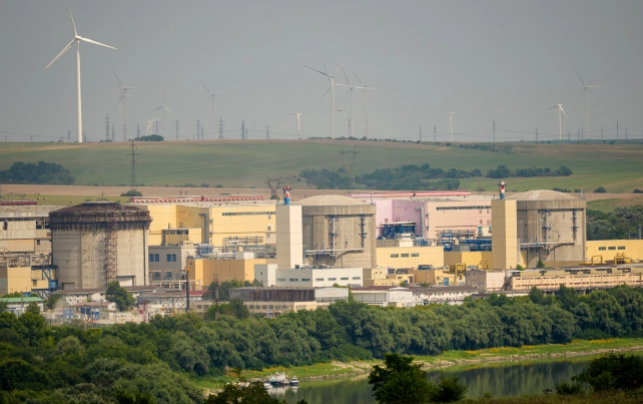
Unit 2 of Romania's Cernavoda Nuclear Power Plant can only operate for about 5 more days due to the continuously declining water level of the Danube River
Unit 2 of Romania's Cernavoda Nuclear Power Plant is expected to operate for only about five days due to the declining water level of the Danube River. Romeo Urjan, the plant's director, stated that if the Danube's water level continues to drop at a rate of 2 to 3 centimeters per day, Unit 2 will soon cease operation. Unit 1 has already been shut down due to insufficient water flow. Urjan emphasized that despite this, Unit 2 continues to operate within normal parameters, and nuclear safety is not under any threat. To alleviate the situation, relevant authorities are preparing to deploy four barges to divert more water to the plant, hoping to raise the water level by 7 to 8 centimeters, thereby extending the plant's operating time. Related...
2026-08-04
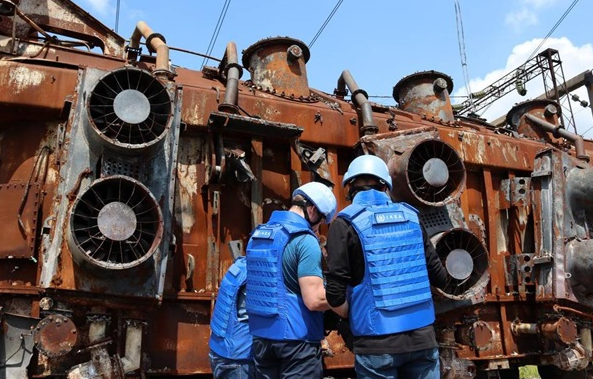
IAEA Inspects Ukrainian Energy Company Substations
On August 3, the International Atomic Energy Agency (IAEA) completed its latest inspection of key substations belonging to a Ukrainian energy company. The inspection aimed to assess energy infrastructure, particularly critical facilities affecting the safe operation of Ukraine's nuclear power plants. The Ukrainian side granted the IAEA delegation access to critical high-voltage substation systems for comprehensive monitoring. This comprehensive monitoring of substations was made possible by the expansion of the IAEA's mandate in September 2024. Under the new mandate, international inspectors can monitor not only the safety status of nuclear power plants but also the critical transmission system facilities that ensure their stable operation. Notably...
2026-08-04

Balakovo NPP Conducts Special Traffic Safety Inspection Jointly with State Traffic Police
Balakovo NPP and the traffic administration recently conducted a joint preventive inspection aimed at improving road safety in the station area and preventing traffic accidents. The operation was carried out by experts from the NPP's transport workshop together with traffic police officers from the Balakovo City Police Department, as part of the annual safety inspection campaign. During the inspection, inspectors carefully checked compliance with traffic rules by vehicle drivers and pedestrians within the NPP premises. The results showed that no violations were detected, which fully reflects the high level of discipline and responsible attitude toward safety requirements demonstrated by Balakovo NPP employees and those of its contractors. The traffic police department stated that the main objective of such inspections is...
2026-08-04

Smolensk NPP Successfully Conducts Emergency Drill Multi-Agency Coordination Tests Response Capabilities
On August 3, the Smolensk Nuclear Power Plant successfully conducted an accident response drill, with the participation of the Nuclear Power Plant Emergency Assistance Team (OPAS) of Rosenergoatom and emergency service departments. The drill brought together nuclear power plant staff, the crisis center team of Rosatom, local fire departments, medical institutions, and government representatives from the city of Smolensk and the Yelnya district. During the drill, all parties focused on practicing key tasks such as the alert and preparation of emergency response forces under non-routine conditions, organizing protective measures for personnel and local residents, and monitoring unit status and safety levels. The drill also included simulated fire...
2026-08-04

U.S. Nuclear Regulatory Commission (NRC) Proposed Rule to Update Radioactive Material Transport Regulations for New Reactor Technologies
The U.S. Nuclear Regulatory Commission (NRC) has issued a proposed rule aimed at updating regulations for the transport of radioactive material to accommodate the development of new reactor technologies. The existing regulatory framework has not fully kept pace with advances in nuclear technology, particularly as microreactors and other advanced reactor types present new challenges to current rules. Approximately three million packages containing radioactive material are transported across the United States each year, and this vast logistics operation has been managed by federal agencies for decades. The NRC's proposed rule addresses a specific issue: how to safely transport new types of nuclear reactors and their associated radioactive materials. Microreactors are compact, factory-manufactured...
2026-08-03
Reading Ranking
- 1 Fangchenggang Nuclear Power Phase I Marks 10th Anniversary of Commercial Operation: Two Units Have Cumulatively Supplied Over 160 Billion kWh, with WANO Indicators Achieving Full Marks for Seven Consecutive Years
- 2 Cumulative safe power generation of China's Sanmen Nuclear Power Phase I exceeds 150 billion kWh
- 3 IAEA Releases White Paper on the Facilitation of the Safe and Secure Transport of Radioactive Material
- 4 South China Regional Office Conducts Special Nuclear Safety Inspection on Fangchenggang Nuclear Power Plant in Response to Extreme Weather
- 5 South Korea Conducts First Joint Radiation Emergency Exercise Involving Two Nuclear Power Plants Simultaneously
- 6 Morocco Conducts 18 Expert Missions with IAEA in 2025, Civil Nuclear Cooperation Expands to African Level
- 7 Romanian Army Deploys on the Danube to Protect Nuclear Power Plant Operations
- 8 Romania's Cernavoda Nuclear Power Plant to Remain Offline Until at Least September 18 Due to Low Danube River Levels
- 9 Ukraine and IAEA to Strengthen Nuclear Safety Coordination
- 10 Huaneng Changjiang Nuclear Power Company Signs Medical Cooperation Agreement with Hainan Western Central Hospital
- 11 Ukraine and Sweden Extend Nuclear and Radiation Safety Cooperation Agreement
- 12 UAE Releases 2025 Annual Nuclear Regulatory Report, Highlighting Nuclear Safety and Peaceful Use Achievements
- 13 Smolensk NPP Successfully Conducts Emergency Drill Multi-Agency Coordination Tests Response Capabilities
- 14 South China Regional Office completes pre-critical nuclear safety inspection for Yangjiang Nuclear Power Plant overhaul
- 15 Belarusian NPP safe operation period may be extended to 100 years, with first spent fuel to be shipped to Russia for reprocessing in 2034