

Doosan Enerbility Secures Manufacturing Contract for Key Equipment for TerraPower's Small Modular Reactor
Doosan Enerbility announced on August 14 that it has signed a manufacturing contract with TerraPower to produce key equipment for the latter's Natrium advanced reactor project. TerraPower, founded by Bill Gates, is one of the advanced nuclear energy technology companies in the United States. Under the contract, Doosan Enerbility will be responsible for manufacturing key components required for the Natrium reactor, including the reactor protection vessel, reactor support structures, and reactor internal structures. The two parties have previously collaborated. In December 2024, Doosan Enerbility and TerraPower signed a manufacturability review contract for key equipment for the first unit of the initial small modular reactor, and...
2026-08-14

Bill Gates Visits South Korea to Deepen SMR Cooperation with Korean Companies
Bill Gates, co-founder of Microsoft, founder of TerraPower, and chairman of the Gates Foundation, visited South Korea on August 13. This marks his first visit to the country since August last year, with the primary agenda of expanding cooperation in the field of small modular reactors (SMRs). At approximately 9:20 p.m. local time on the 13th, Gates arrived at Gimpo Business Aviation Center at Seoul Gimpo Airport via private jet. During his visit, he plans to meet with figures from the South Korean government, the National Assembly, and the business community. It is reported that Gates is scheduled to meet with South Korean Prime Minister Han Seong-sook on the 14th, with the meeting having been proposed by Gates' side...
2026-08-14

South Korea's Wolsong Nuclear Power Plant Units 2, 3, and 4 Pressure Tube Procurement Pushed for Preliminary Feasibility Study Exemption, Sparking Controversy
The lifetime extension issue for South Korea's Wolsong Nuclear Power Plant Units 2, 3, and 4 has not yet been finalized, yet the procurement of pressure tubes—the core equipment—is being pushed to be excluded from the preliminary feasibility study, triggering a direct confrontation between industry circles and environmental groups. The Korea Hydro & Nuclear Power labor union recently submitted a proposal to Democratic Party lawmaker Song Young-gil, requesting that the government grant a preliminary feasibility study exemption for the relevant procurement and initiate ordering at the earliest opportunity. Song subsequently forwarded the opinion to the Office for Government Policy Coordination. It is understood that the government is internally considering submitting the matter as an exemption case for deliberation at the September State Council meeting. Supporters argue that Wolsong Units 2, 3, and 4 are pressurized heavy water reactors, and pressure tubes are critical equipment determining unit operation, from order placement...
2026-08-13

Climate change impact assessment to be conducted for new nuclear power plant in Yeongdeok, South Korea
South Korea's Ministry of Climate, Energy and Environment announced on August 12 that the proposed Yeongdeok nuclear power plant will undergo a climate change impact assessment in parallel with the strategic environmental impact assessment procedure. The assessment will be conducted in accordance with the Framework Act on Carbon Neutrality and the Environmental Impact Assessment Act, focusing on reviewing the project's alignment with higher-level plans such as the Nationally Determined Contributions (NDC), and evaluating greenhouse gas emissions and mitigation measures during the construction and operation phases. The assessment will cover the entire lifecycle of the nuclear power plant, from construction to operation. While the nuclear power generation process itself emits almost no greenhouse gases, emissions will still arise from large-scale civil engineering works, operation of construction equipment, and the production and transportation of building materials...
2026-08-13

South Korea Sets 2035 Commercialization Target for Small Modular Reactors
The Ministry of Science and ICT (MSIT) of South Korea announced on August 12 its "Seven Future Growth Engines SEED" promotion plan, designating small modular reactors, nuclear fusion, and next-generation renewable energy as key focus areas for the future clean energy sector. Among these, nuclear power-related content primarily centers on the commercialization of small modular reactors, research and development of non-light water reactor-type reactors, nuclear fuel supply security, and fusion demonstration power generation. According to the plan, South Korea will advance the development of light water reactor-type small modular reactors, targeting commercialization in Gijang County, Busan by 2035. The innovative small modular reactor (i-SMR) will undergo detailed design through public-private cooperation starting next year...
2026-08-13

HD Hyundai Chairman to Meet Bill Gates to Advance SMR Cooperation
HD Hyundai Chairman Chung Ki-sun will meet Bill Gates, who is visiting South Korea, on August 14, with the two sides planning discussions on cooperation in small modular reactors (SMRs). Gates, co-founder of Microsoft, also serves as chairman of TerraPower, a U.S. small modular reactor company. This will be the latest round of communication between Chung and Gates on related cooperation, following their meeting earlier this year at the Davos Forum in Switzerland. HD Hyundai and TerraPower have been steadily strengthening cooperation in SMR and advanced reactor manufacturing in recent years. In November 2022, HD Korea Shipbuilding & Marine Engineering invested $30 million in TerraPower. In December 2024, HD Hyundai secured an order to manufacture the reactor vessel for TerraPower's 345 MW sodium-cooled fast reactor (SFR) to be built in Wyoming, U.S.
2026-08-13

South Korea's Two Ministries Sign MOU to Promote Regulatory Cooperation for Nuclear Power Exports
South Korea's Ministry of Trade, Industry and Energy (MOTIE) and the Nuclear Safety and Security Commission (NSSC) signed a memorandum of understanding on the successful overseas expansion of Korean-style nuclear power plants at the Korea Trade Insurance Corporation in Jongno-gu, Seoul on August 13, planning to strengthen regulatory coordination in the nuclear power export process and provide more systematic nuclear safety regulatory cooperation support to countries hosting potential projects. Under the agreement, the two sides will jointly support export target countries in establishing nuclear safety regulatory frameworks, improving licensing procedures and technical standards, and enhancing the professional capabilities of regulatory bodies, based on the regulatory cooperation needs raised by these countries. The South Korean government is promoting nuclear power plant exports with a focus on potential markets in Southeast Asia such as Vietnam, and the relevant countries are in the process of planning and...
2026-08-13

Korea Fusion Energy Institute Launches Design and Manufacturing of ITER Tritium Storage and Supply Vessels
The Korea Fusion Energy Institute (KFE) announced on August 12 at its headquarters in Daejeon that it has signed a contract with a consortium comprising Iljin Power and Aizen Core to undertake the design and manufacturing of the tritium storage and supply vessels for the International Thermonuclear Experimental Reactor (ITER). ITER is currently the world's largest fusion experimental device, being jointly constructed by seven parties—Korea, the United States, the European Union, Japan, China, Russia, and India—in Cadarache, southern France. Under the procurement agreement signed between KFE and the ITER Organization in March 2025, Korea...
2026-08-12
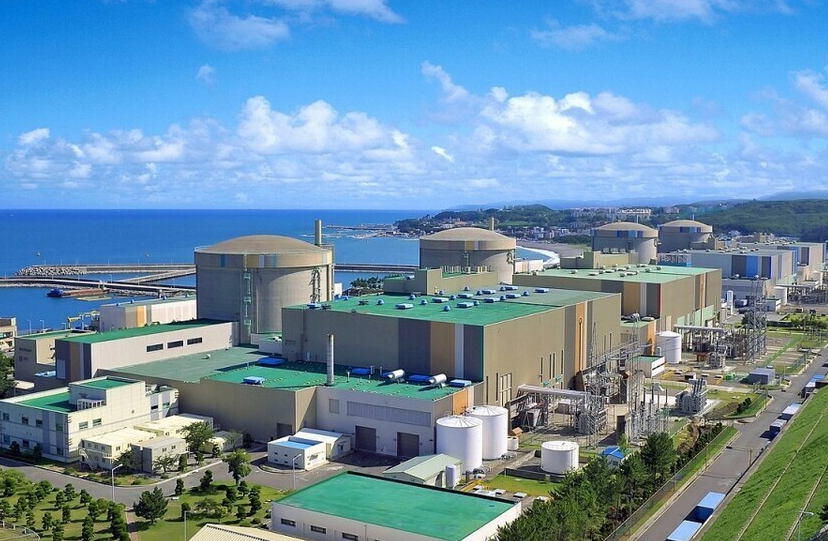
Cooling seawater temperature at South Korean nuclear power plants approaches design limit
South Korean Climate, Energy and Environment Minister Kim Sung-hwan said on August 11 that due to recent rises in seawater temperature, the temperature of seawater used for cooling at South Korean nuclear power plants has approached the design limit. The government is working with Korea Hydro & Nuclear Power (KHNP) to study countermeasures such as adjusting the location of water intake points. Kim Sung-hwan made the remarks on the same day while answering a question from lawmaker Park Ji-hye at a plenary session of the National Assembly's Climate, Energy, Environment and Labor Committee, stating that the temperature of seawater used for cooling at nuclear power plants has recently approached the limit, and that KHNP and the government are closely monitoring the situation. He said nuclear power plants cannot be easily shut down over this issue...
2026-08-12
South Korea Designates Small Modular Reactors and Nuclear Fusion as Key Future Growth Technologies
South Korean President Lee Jae-myung will chair a briefing session on the "Seven Seeds for Future Growth Engines" at the presidential office Cheong Wa Dae on the afternoon of August 12, focusing on the development pathways for advanced technologies including Small Modular Reactors (SMRs) and nuclear fusion, as well as related industrial ecosystems and supply chain security measures. According to Cheong Wa Dae, the meeting aims to jointly study advanced technology deployment with the science and industry communities, support artificial intelligence (AI) transformation, and strengthen South Korea's future industrial foundation capabilities. The seven areas designated as priorities include Small Modular Reactors, nuclear fusion, renewable energy, quantum technology, aerospace, advanced biotechnology, and advanced materials and component supply chains....
2026-08-12

North Gyeongsang Province, South Korea, increases temporary radiation disaster shelters to 96
North Gyeongsang Province announced on August 11 that it has increased the number of temporary radiation disaster shelters from 56 to 96 to enhance resident evacuation and accommodation capabilities in nuclear accident scenarios. The expansion primarily targets the areas surrounding Uljin County, where the Hanul Nuclear Power Plant is located, focusing on addressing the shortage of nearby accommodation capacity and strengthening the reception capability for evacuees in areas related to the Hanul radiation emergency planning zone, including Uljin, Yeongyang, and Bonghwa. Previously, due to limited shelter capacity in Uljin County, approximately 33,000 people were expected to require evacuation in the event of a nuclear accident, while local shelters could only accommodate about 13,000 people. To meet accommodation needs, Uljin County also had to utilize 5 shelters in Gyeongju and 2 in Pohang, with long-distance transfers being unfavorable for rapid evacuation.
2026-08-12

Automatic Reactor Trip at Unit 3 of Shin-Kori Nuclear Power Plant During Commissioning
Unit 3 of the Shin-Kori nuclear power plant in Ulju, Ulsan, South Korea, is undergoing commissioning ahead of its planned commercial operation this year. The Nuclear Safety and Security Commission (NSSC) stated that it had received a report from Korea Hydro & Nuclear Power (KHNP) that the unit's reactor automatically tripped at approximately 20:56 on the 11th. Unit 3 of the Shin-Kori plant received its operating license from the NSSC in December last year and is currently in the power ascension testing phase. KHNP reported that during the commissioning test, when reactor power reached 80%, the unit experienced a loss of power transmission, and the reactor subsequently tripped automatically. The unit has been confirmed to remain in a safe shutdown condition...
2026-08-12

KEPCO KPS Q2 Results Miss Expectations; Nuclear Maintenance Demand Expected to Drive Recovery in H2
KEPCO KPS's Q2 results significantly missed market expectations, mainly due to factors such as extended long-term planned preventive maintenance cycles for nuclear power plants and a reduction in external and overseas variable works. Data shows that the company's preliminary Q2 sales stood at KRW 437.9 billion, down 3.5% year-on-year; operating profit was KRW 43.6 billion, down 33.6% year-on-year, approximately 30.1% below market consensus; net profit attributable to controlling shareholders was KRW 38.3 billion, down 24.8% year-on-year. The operating margin fell to 10.0%, down 4.5 percentage points from the same period last year, indicating pressure on both the revenue side and, to some extent, the cost side. The nuclear maintenance business was one of the key factors dragging down Q2 performance. In Q2...
2026-08-11

South Korea's Honam Region Visits Busan Gijang for SMR Experience, Seeking New Solutions for Stable Semiconductor Power Supply
South Korea's South Jeolla Province and Gwangju region are paying attention to Small Modular Reactors (SMR) as a potential alternative for semiconductor industry power supply. On August 7, members of the "South Jeolla-Gwangju SMR-AI Energy Forum" visited the Gijang-gun Jangan-eup Gilcheon-ri Village Hall in Busan to hold discussions with the local nuclear safety consultative body, village representatives, the Gori headquarters of Korea Hydro & Nuclear Power, and relevant Gijang-gun departments, focusing on understanding Gijang's autonomous pursuit process and resident communication experience in the siting of the innovative Small Modular Reactor (i-SMR). The direct background of this visit is the potential stable power supply challenge that the semiconductor industry in the Honam region may face in the future. Semiconductor manufacturing relies heavily on continuous, reliable large-scale...
2026-08-11

South Korean Environmental Groups to Hold Nuclear Safety Seminar, Focusing on SMR Regulatory Independence and Institutional Gaps
The Korean Federation for Environmental Movement recently announced that it will hold a session of the Continuous Nuclear Safety Seminar Series, under the safety regulation domain, at 10:00 a.m. on August 21, 2026, in Conference Room 8 of the National Assembly Members' Office Building, under the theme "Moving Beyond Promotion-Centered Nuclear Policy Toward an Independent Safety Regulatory System." The event is hosted by National Assembly member Lee Ju-hee and co-organized by the Citizens' Institute for Environmental Studies and the Korean Federation for Environmental Movement, aiming to discuss structural issues in South Korea's nuclear safety regulatory system. According to available information, the South Korean government is accelerating the research and development, industrial support, and commercialization of small modular reactors (SMRs), with the i-SMR standard design approval application already accepted and the Special Act on SMR Development Promotion scheduled to take effect in September.
2026-08-11

Korea's Naju Artificial Sun Research Facility Expected to Receive Preliminary Feasibility Study Results in September
The project to build the Naju Artificial Sun research facility in Korea is expected to receive the results of the national preliminary feasibility study in September. With a total investment of approximately 1.2 trillion KRW, the project plans to construct large-scale nuclear fusion research and demonstration infrastructure in Wangok-myeon, Naju City, South Jeolla Province, and is regarded by local governments as a key pillar in the future industrial layout of the South Jeolla–Gwangju Integrated Special Zone. The Ministry of Science and ICT (MSIT) designated the "Nuclear Fusion Core Technology Development and Strategic Infrastructure Construction Project" as a national R&D project and included it in the preliminary feasibility study on January 30. According to the previous schedule, the evaluation period was approximately seven months. The results were originally expected to be announced in August, but...
2026-08-11

South Korea's semiconductor cluster adds about 21 GW of new power demand; government to study whether to build new nuclear units
South Korea's Minister of Climate, Energy and Environment, Kim Sung-hwan, said on the 10th that the new electricity demand from the Yongin—Hoseon semiconductor industry cluster is approximately 21 GW, equivalent to the power supply capacity of about 15 nuclear units based on an estimate of 1.4 GW per unit. The Ministry of Climate, Energy and Environment plans to seek expert and public opinions before announcing the 12th Basic Plan for Electricity Supply and Demand in October, and will decide accordingly whether to push for the construction of new nuclear units. Kim Sung-hwan stated that the electricity demand of the semiconductor industry has increased significantly compared to the past. The South Korean government has decided to raise renewable energy capacity from 78 GW to 100 GW by 2030, but whether the increase in renewable energy alone can meet the new demand still requires further assessment.
2026-08-11

South Korea and Sweden Discuss Cooperation on High-Level Waste Disposal and SMR Regulation
The Nuclear Safety and Security Commission (NSSC) of South Korea announced on August 10 that it held a bilateral meeting with the Swedish Radiation Safety Authority (SSM) in Seoul, during which the two sides exchanged views on topics including high-level radioactive waste management, nuclear safety regulation, and the development of small modular reactors (SMRs). Sweden has accumulated strong technical expertise in the field of radioactive waste management and has developed a relatively mature technical system for high-level radioactive waste disposal. Currently, Sweden has 6 operating nuclear power units and 7 permanently shut down units, 6 of which are in the decommissioning phase. Following Finland, Sweden is constructing the world's second deep geological disposal facility for high-level radioactive waste. The NSSC of South Korea...
2026-08-10

Woori Technology Signs VMI Agreement with Korea Hydro & Nuclear Power for Nuclear Power Plant Components
Woori Technology announced on the 10th that it has signed a Vendor Managed Inventory (VMI) agreement with Korea Hydro & Nuclear Power (KHNP). Under the agreement, Woori Technology plans to supply certain components for nuclear power plant control and instrumentation as early as next month. Vendor Managed Inventory is an inventory management model in which a supplier pre-stocks critical components based on customer demand forecasts and delivers them quickly upon customer request. The customer pays the corresponding procurement costs only after the components are put into use. This agreement primarily covers long-term inventory management and supply arrangements for components related to nuclear power plant control and instrumentation systems supplied by Woori Technology...
2026-08-10

South Korea Advances K-Moonshot Initiative, Nuclear Fusion and SMR Spacecraft Listed as Key Missions
The South Korean government is accelerating the K-Moonshot initiative, seeking to tackle critical technologies that are difficult to break through via traditional research pathways through a national-level R&D organizational approach. Among these, nuclear fusion and small modular reactor (SMR) spacecraft have been included in 12 key missions, alongside new drug development, quantum technology, and artificial intelligence, all under the government's coordinated promotion. On August 10, Vice Minister Goo Hyuk-chae of the Ministry of Science and ICT (MSIT) met with the heads of the 12 mission projects and representatives of related institutions at the K-Moonshot Project Support Office in Sejong City to discuss next-stage implementation arrangements. The meeting focused on detailing...
2026-08-10

South Korea Designates SMR as National Strategic Technology, Tax Incentives to Drive New Investment in Nuclear Supply Chain
The South Korean government's inclusion of Small Modular Reactors (SMR) in its national strategic technology support scope signals that its energy and industrial policies are extending from traditional large-scale nuclear power plants to next-generation nuclear technologies. SMRs feature modular manufacturing, relatively shorter construction periods, and higher site flexibility, making them a key direction for South Korea in balancing energy security, low-carbon transition, and advanced manufacturing upgrades. This policy has gained support from South Korea's nuclear industry, with the key being that national strategic technology status typically entails tax credits and other incentives for corporate R&D, equipment investment, and related capital expenditures. For companies involved in nuclear equipment, castings and forgings, control systems, engineering design, and fuel-related businesses...
2026-08-10
Reading Ranking
- 1 Hanul Unit 6 in South Korea commences its 15th planned preventive overhaul
- 2 Korea Holds Briefing Session on Bidding for Auxiliary Equipment for Czech Dukovany Nuclear Power Project
- 3 South Korea's Nuclear Safety and Security Commission Holds High-Level Talks with Vietnam: Deepening Nuclear Safety Regulatory Cooperation to Support Restart of Ninh Thuan Nuclear Power Project
- 4 South Korea's SMR Special Act Takes Effect, Aiming to Commercialize Light Water SMRs by 2035
- 5 Egypt's El Dabaa Nuclear Power Plant Construction Progress Reviewed Jointly by Korea and Egypt
- 6 South Korea Deeply Integrates 50 Years of Nuclear Power Design Experience with Artificial Intelligence
- 7 North Gyeongsang Province, South Korea, increases temporary radiation disaster shelters to 96
- 8 HD Hyundai Heavy Industries to Invest KRW 238.6 Billion in Dedicated Plant for Manufacturing Major SMR Equipment
- 9 Unit 3 at Saeul Nuclear Power Plant in South Korea Shut Down Again During Trial Operation
- 10 Gyeongsangbuk-do lawmakers demand stronger nuclear power plant accident notification and oversight
- 11 South Korea Conducts First Joint Radiation Emergency Exercise Involving Two Nuclear Power Plants Simultaneously
- 12 South Korea's Nuclear Safety Regulatory Budget for 2027 Rises to KRW 303 Billion
- 13 South Korean Presidential Office: Expanding Renewable Energy Does Not Mean Abandoning Nuclear Power; New Nuclear and SMR Projects Already Decided
- 14 Naju City, Korea Proposes Construction of National Fusion Energy Center
- 15 South Korea and Kazakhstan Sign Nuclear Energy Agreement, Deepening Cooperation on Critical Minerals and Strategic Industries