
Search Results
Keyword:5

South Korea Sets 2035 Commercialization Target for Small Modular Reactors
The Ministry of Science and ICT (MSIT) of South Korea announced on August 12 its "Seven Future Growth Engines SEED" promotion plan, designating small modular reactors, nuclear fusion, and next-generation renewable energy as key focus areas for the future clean energy sector. Among these, nuclear power-related content primarily centers on the commercialization of small modular reactors, research and development of non-light water reactor-type reactors, nuclear fuel supply security, and fusion demonstration power generation. According to the plan, South Korea will advance the development of light water reactor-type small modular reactors, targeting commercialization in Gijang County, Busan by 2035. The innovative small modular reactor (i-SMR) will undergo detailed design through public-private cooperation starting next year...
2026-08-13

New National Standard GB/T 18525.1-2026 — The Red Beans and Mung Beans You Eat May Have Been
Starting December 1, 2026, a new national standard concerning food safety on your dining table will officially take effect — Recently, the State Administration for Market Regulation and the Standardization Administration of China issued the 2026 No. 23 National Standard Announcement, among which the "Irradiation Technology for Agricultural Products — Part 1: Legumes and Their Products" (GB/T 18525.1-2026) is particularly noteworthy. This standard, led by the Institute of Food Science and Technology, Chinese Academy of Agricultural Sciences, will officially take effect on December 1, 2026, replacing the old standard (GB/T 18525.1-2001) that has been in use for over 20 years. When hearing the word "irradiation," many people's first reaction is: "Is it safe?" "Will food become radioactive after being irradiated..."
2026-08-13

Completion of World's First Domestic CAP1000 50Hz Canned Motor Reactor Coolant Pump for Guangdong Lianjiang Nuclear Power Phase I
Recently, the world's first domestically manufactured CAP1000 50Hz canned motor reactor coolant pump for the Guangdong Lianjiang Nuclear Power Phase I project was successfully completed and ready for shipment. The completion of this equipment marks significant new progress in the independent development and localization of China's Generation III nuclear power core equipment. Harbin Electric Group provided the canned motor for this reactor coolant pump. The Guangdong Lianjiang Nuclear Power Phase I project plans to construct two domestically developed CAP1000 Generation III passive pressurized water reactor units, each with a single-unit capacity of 1.25 million kilowatts. The project is based on the independent CAP1000 Generation III passive nuclear power technology, adopts a seawater secondary circulation cooling scheme, promotes the coordinated development of nuclear power development and coastal ecological protection, and serves the green and low-carbon development needs of the Guangdong-Hong Kong-Macao Greater Bay Area. This...
2026-08-13

UK Low-Level Waste Repository Advances Capping Project, Rail-Transported Aggregate Exceeds 285,000 Tonnes
Nuclear Waste Services (NWS) is advancing capping-related works at the Low-Level Waste Repository on the west coast of Cumbria, UK, to strengthen long-term protection of existing disposal trenches and vaults. Since the repository began operations in 1959, it has supported the safe disposal of approximately 1 million cubic metres of low-level radioactive waste, making it a key facility in the UK's radioactive waste management system. NWS, part of the Nuclear Decommissioning Authority (NDA), is primarily responsible for consolidating the UK's radioactive waste management capabilities, providing management solutions for legacy wastes from civil and defence sectors as well as wastes arising from future new-build nuclear projects...
2026-08-12
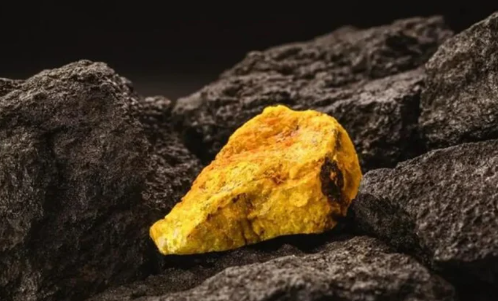
Brazil's uranium imports from Russia hit highest since 1997 in July, reaching $84.5 million in a single month, a 168-fold surge month-on-month
Brazil's uranium imports from Russia in July this year reached $84.5 million, equivalent to approximately 430 million reais, the highest level since 1997. Compared with the import value of only $504,000 in June, the single-month increase was as high as 168-fold, indicating that this transaction was not a general monthly fluctuation but a concentrated procurement of exceptionally large scale. Looking at historical data, Brazil's uranium imports have typically remained at the level of hundreds of thousands of dollars per month, and even previous periodic peaks were far below the scale seen in July. Materials show that there was an import peak exceeding $1 million in August 2025, but it still pales in comparison with this $84.5 million figure. This means that the July data not only changes...
2026-08-12

CT "5-Star" Image Quality Scoring May Help Reduce Radiation Dose
A multinational study involving the International Atomic Energy Agency and Massachusetts General Hospital in the United States shows that a standardized 5-star scoring system that considers both radiation dose and CT image quality can produce relatively consistent evaluations across different radiologists and help identify opportunities to reduce patient radiation exposure. This retrospective study included 2,737 adult CT examinations performed at 6 hospitals across 5 European countries, including 1,247 chest CTs and 1,490 abdominal CTs, involving 13 CT scanners. At each hospital, 3 radiologists independently evaluated the examinations using the 5-star framework. Unlike traditional image quality assessments that may favor lower noise...
2026-08-12
GAO: DOE Nuclear Cleanup "End-State Contract Model" Exceeds Budget by $500 Million in Six Years and Misses Goals
A report released by the U.S. Government Accountability Office (GAO) on July 29 shows that the Office of Environmental Management (EM) at the U.S. Department of Energy has accumulated over $500 million in cost growth on nuclear waste cleanup contracts since 2020, yet the agency cannot fully explain the reasons for these increases. EM is responsible for cleaning up 15 sites in the United States contaminated by nuclear weapons production and energy research. To address long-standing contract management problems, EM adopted the End-State Contract Model (ESCM) starting in fiscal year 2020, breaking cleanup work into smaller task orders under larger master contracts, with the goal of improving cost predictability, accelerating cleanup progress, and enhancing performance outcomes...
2026-08-12

Finland's Loviisa Nuclear Power Plant Launches Turbine Island Upgrade to Support Operation Until 2050
Finnish utility Fortum has launched a large-scale modernization project for the turbine island at the Loviisa Nuclear Power Plant. The project aims to increase the plant's electrical output and ensure the continued, safe, and reliable operation of both units through the end of 2050 under the new operating licenses. The Loviisa plant consists of two VVER-440 pressurized water reactor units and is Finland's first nuclear power plant, currently supplying more than 10% of the country's electricity. Unit 1 entered commercial operation in 1977, followed by Unit 2 in 1981, and the Finnish government approved the extended operating licenses in February 2023. The core of this upgrade is the modernization of the low-pressure turbines, which is the largest single undertaking in the Loviisa turbine island upgrade...
2026-08-12
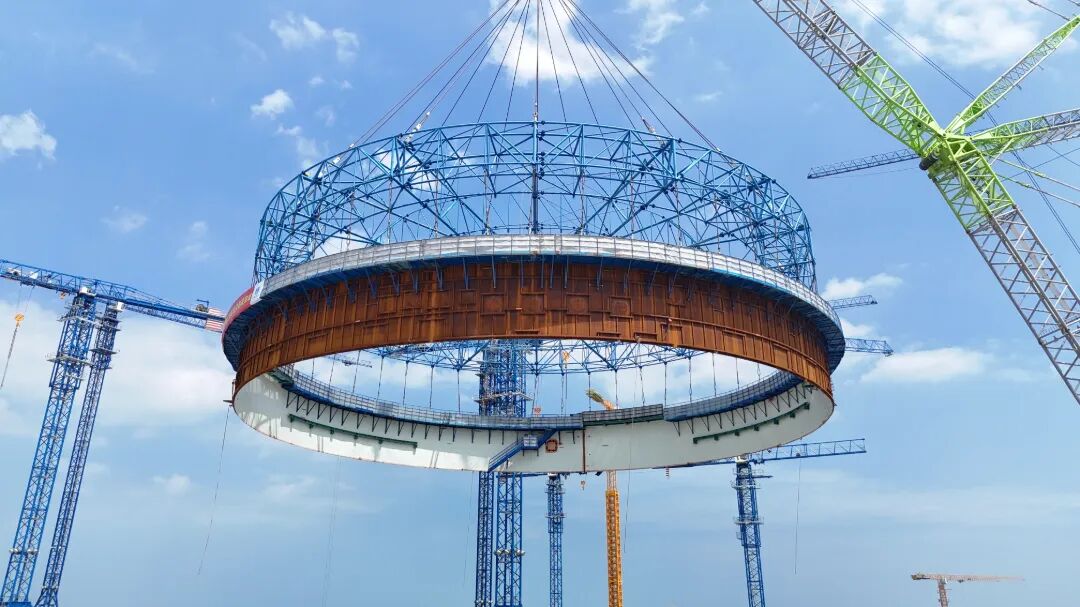
First Integrated Hoisting of Nuclear Island Steel Liner Module 5 with Attached Electrical and Instrumentation Cable Tray System within CGN
At 15:30 on August 10, 2026, with the successful positioning of Steel Liner Module 5 in the reactor building of Unit 3, the attached electrical and instrumentation (E&I) cable tray system was simultaneously placed, marking the successful completion of the first "Five-ization" installation project for Module 5 attached E&I cable trays within China General Nuclear Power Group (CGN). Traditional nuclear power Module 5 construction adopts a serial mode of "structure first, installation second, commissioning last." The E&I construction for Module 5 of Unit 3 at Taipingling Phase II innovatively adopted an integrated scheme of "prefabrication-installation-integral hoisting." E&I construction was advanced to the module assembly stage, changing the traditional on-site dispersed work method. Through prefabrication of steel materials in workshops, delivery to the site for welding and installation, a large amount of high-altitude, cross-operational...
2026-08-12

Mexico's Nuclear Power Planning Enters Critical Window, Pre-2035 Decisions Become Watershed for Energy Transition
Against the backdrop of major global economies reassessing the value of nuclear energy, Mexico's nuclear power policy is at a critical juncture of hesitation. The country currently operates only the Laguna Verde Nuclear Power Plant in Veracruz state, with two reactors totaling 1,552 megawatts of installed capacity, contributing approximately 3% of the nation's electricity. Despite its modest share, the plant's unit utilization rate approaches 88%, making it one of the most stable power generation sources in Mexico's electricity system and significant for ensuring baseload power supply. The operating licenses for Laguna Verde have been extended to 2050 and 2055 respectively, providing Mexico with a buffer period of roughly two decades. However, the issue lies in the fact that life extension does not equate to replacement planning...
2026-08-11

Romania Plans to Allocate 51 Million Lei for Danube Dredging to Ensure Operation of Cernavodă Nuclear Power Plant
The Romanian government will allocate 51 million lei for Danube River dredging works, an arrangement specifically highlighted as crucial to the Cernavodă Nuclear Power Plant. The Danube is not only an important shipping route for Romania but is also closely linked to the operation of energy infrastructure—river water depth, flow conditions, and water intake safety all affect the stable operation of coastal industrial and power facilities. The Cernavodă Nuclear Power Plant is a key asset in Romania's power system, and its operation requires stable water source conditions as cooling assurance. If the Danube experiences low water levels, sediment accumulation, or navigational obstructions, it could increase operational management pressure on the nuclear power plant and also affect the transport of fuel, equipment, and...
2026-08-11

Morehead State University Receives $50,000 Grant to Support Nuclear Medicine Technology Bachelor's Program
Morehead State University in the United States recently received a $50,000 grant to strengthen its Bachelor of Science in Nuclear Medicine Technology program, supporting the university's efforts to train medical imaging professionals for Kentucky's healthcare system. The funding was provided by the Kentucky Board of Medical Imaging and Radiation Therapy and administered by the Kentucky Council on Postsecondary Education. The project funds were awarded through a competitive bidding process, with a focus on supporting nuclear medicine technology education programs in Kentucky, aiming to increase the number of qualified professionals entering the state's healthcare industry. The newly established nuclear medicine technology undergraduate program under Morehead State University's Department of Imaging Sciences will prepare students in the field of medical imaging...
2026-08-11

Installation of STT153A Tower Crane Completed at Jiangsu Xuwei Nuclear Heating and Power Plant by CEEC
On August 6, the installation and commissioning of the first special equipment STT153A tower crane was successfully completed for Section A of the natural draft cooling tower construction and installation project for Units 1, 2, and 3 of Phase I of the Jiangsu Xuwei Nuclear Heating and Power Plant, undertaken by CEEC Mechanization Company. The tower crane installed this time was manufactured by Fushun Yongmao Construction Machinery Co., Ltd., and is positioned at the rebar processing yard of the 1PB cooling tower, with a maximum rated lifting capacity of 10t. The jib length for this installation is 65m, and the standard section height is 37.5m. Based on the on-site machinery configuration, the installation of this tower crane was completed with the coordination of one 130t mobile crane and one 25t mobile crane. The technical team of the CEEC Mechanization Xuwei Project Branch, prior to the formal commencement of the tower crane installation...
2026-08-11

Rostov NPP's Self-Developed Device Cuts Instrument Calibration Cycle from 60 Days to 5 Days
The metrology team at Russia's Rostov Nuclear Power Plant has recently developed and put into operation a device for calibrating high-precision measuring instruments, reducing the relevant instrument calibration cycle from approximately 60 working days to 5 working days—a twelvefold reduction in time. The project was completed by the plant's metrology personnel within the framework of the Rosatom Production System. Previously, some high-precision instruments at the plant requiring regular maintenance and calibration had to be sent to specialized laboratories, with the entire process involving document preparation, equipment transportation, cargo escort, and coordination with external personnel, typically taking about two months. With the new device in operation, calibration work can now be...
2026-08-11

Ikata Nuclear Power Station Reports 5 Notifiable Events in July, None Causing Radiological Environmental Impact
Shikoku Electric Power Co. reported on August 10 that the five events reported to Ehime Prefecture, Ikata Town, and relevant local governments from the Ikata Nuclear Power Station in July 2026 did not fall under legally required reporting events and caused no radiological impact on the environment. The five events were as follows: On July 3, an employee of a partner company at the Ikata Nuclear Power Station experienced physical discomfort at an office location in a non-controlled area and was transported by ambulance at 17:18 that day. The employee was conscious at the time and experienced no radiation exposure or radioactive contamination. On July 16, during the decommissioning process of Unit 2 at the Ikata Nuclear Power Station, seawater leakage was discovered at the flange of the seawater outlet pipe of emergency diesel generator 2B in the reactor auxiliary building. After maintenance personnel determined that a detailed inspection of the flange was required, the leak point was isolated, and the leakage was confirmed to have stopped at 15:38 that day. The maximum estimated volume of leaked seawater was approximately 7 cubic meters, all of which was recovered in the floor drain sump within the building and did not flow outside. Subsequent inspection revealed a through-hole approximately 7 mm in diameter at the flange, and the station replaced the flange and confirmed water flow integrity, restoring normal conditions at 14:05 on July 17. This event did not affect the unit or cause radiological environmental impact, and further investigation into the cause will be conducted.
2026-08-10