
Search Results
Keyword:China

Construction of BOP Sub-item Installation Works for Units 1 and 2 of Zhejiang Jinqimen Nuclear Power Plant Officially Commences
On September 29, the BOP sub-item installation works (Lot 1 and Lot 2) for Units 1 and 2 of Zhejiang Jinqimen Nuclear Power Plant, contracted by Beijing Zhongyan Dadi Technology Co., Ltd. (hereinafter referred to as Zhongyan Dadi), officially commenced, marking the full launch of the project construction. Jinqimen Nuclear Power Plant is located in Xiangshan County, Ningbo City, Zhejiang Province. It is a benchmark clean energy project under national key planning. Once fully completed, its annual power generation capacity will reach 55 billion kWh, which is of great strategic significance to the optimization of the energy structure and green low-carbon transformation in the Yangtze River Delta region. The BOP (nuclear power plant supporting facilities) sub-item is an important foundation for ensuring the safe and stable operation of nuclear power units, and its construction precision and quality control standards are far...
2026-09-30

Unit 7 reactor at China's Tianwan Nuclear Power Plant reaches Minimum Controlled Power Level
According to reports, the reactor of Unit 7 at the Tianwan Nuclear Power Plant, built through China-Russia cooperation and using a Russian design, has reached the Minimum Controlled Power Level (MCP). This marks the first time the reactor has entered a self-sustaining controlled chain nuclear reaction state in the core. All technical operations were carried out in accordance with design requirements and the startup plan, under the joint supervision of experts from Russian and Chinese operating, design, and regulatory organizations. Alexey Likhachev, Director General of Rosatom, stated that the Tianwan Nuclear Power Plant is a model project of Russia-China cooperation. Units 1 and 2, built according to the Russian scheme...
2026-09-29
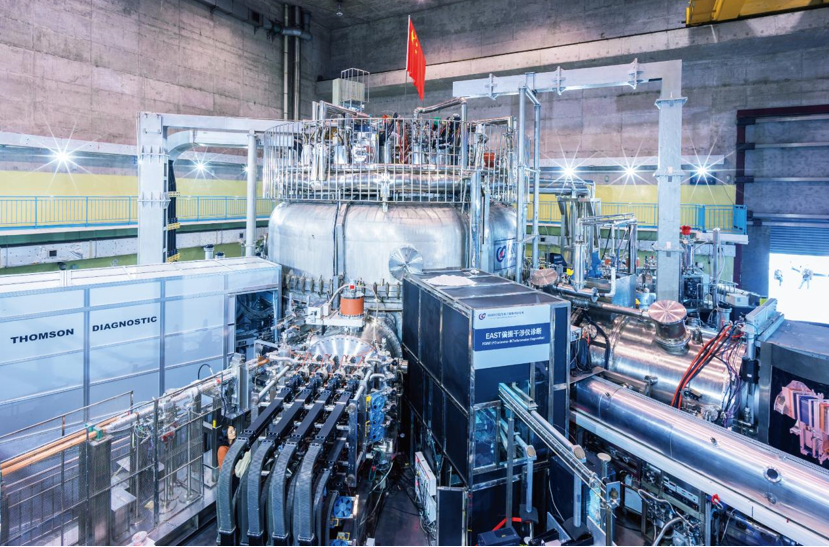
The Fully Superconducting Tokamak EAST Marks 20 Years of Operation: From a 3-Second First Cry to Thousand-Second Steady State, China's "Artificial Sun" Opens a Leap Toward Fusion Engineering
On September 28, 2006, the Experimental Advanced Superconducting Tokamak (EAST), independently designed and developed by the Institute of Plasma Physics (ASIPP) under the Hefei Institutes of Physical Science of the Chinese Academy of Sciences, successfully achieved its first plasma discharge on Hefei Science Island, with a current of 200 kA and a duration of nearly 3 seconds. This historic moment marked the official completion and operation of the world's first fully superconducting non-circular cross-section nuclear fusion experimental device, propelling China into the club of fully superconducting tokamak technology ahead of others. Over the past two decades, this artificial sun has completed more than 160,000 physical discharge experiments...
2026-09-28
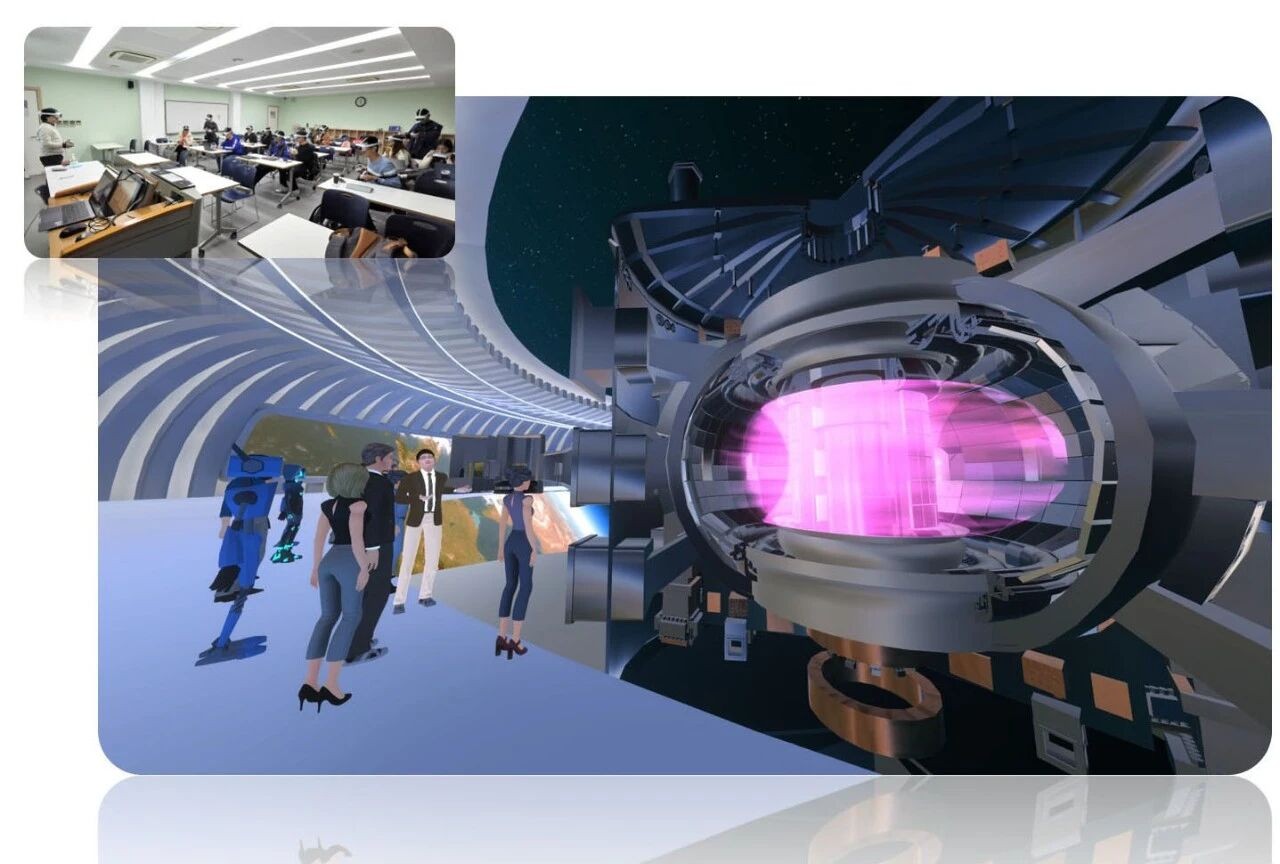
Fudan University Approved for China's First "Fusion Science and Engineering" Interdisciplinary First-Level Doctoral Degree Program
Recently, Fudan University's "Fusion Science and Engineering" interdisciplinary first-level doctoral degree program was officially approved, making the university the first higher education institution in China to establish such an interdisciplinary first-level doctoral degree program. The degree program is led by the Institute of Modern Physics (Department of Nuclear Science and Technology), and will officially begin doctoral student admissions in 2026. Currently, global fusion R&D is transitioning from the stage of scientific exploration to the critical period of engineering verification and commercialization. China's "15th Five-Year Plan" recommendations list fusion energy as a new economic growth point for future industries. Accelerating the cultivation of high-level fusion talent has become an urgent task for safeguarding national energy security and seizing the high ground of future science and technology industries. Fudan University...
2026-09-28

National Standard "Test Methods for Plasma Parameters (GB/T 48094—2026)" Led by the University of Science and Technology of China Officially Released, Solidifying the Standardization Foundation for Controlled Nuclear Fusion and High-Tech Industries
Recently, led by the University of Science and Technology of China (USTC), in collaboration with research institutions including the Aerospace Information Research Institute of the Chinese Academy of Sciences, the Hefei Institutes of Physical Science of the Chinese Academy of Sciences, the Southwestern Institute of Physics (SWIP), and the Beijing Institute of Environmental Characteristics, universities including Yunnan University, Nanchang University, China Jiliang University, and Chizhou University, as well as key industry-chain enterprises including Anhui USTC Yuke Technology Co., Ltd., Anhui Zhongke Fusion Terahertz Technology Co., Ltd., and Fermion Technology (Shanghai) Co., Ltd., jointly drafted, and the national standard "Test Methods for Plasma Parameters" (Standard No.: GB/T 48094—2026), under the centralized management of the National Technical Committee 487 on Optoelectronic Measurement of Standardization Administration of China (SAC/TC487), was officially approved for release and will be formally implemented from March 2027. This standard establishes unified specifications for test methods of key plasma physical parameters, fills the gap in national-level technical standard basis, and marks a milestone breakthrough for China in the standardization of advanced plasma diagnostic technology.
2026-09-28

South China Regional Office Conducts Special Nuclear Safety Inspection on Fangchenggang Nuclear Power Plant in Response to Extreme Weather
Since 2026, the coastal area where Fangchenggang City, Guangxi Zhuang Autonomous Region, is located has experienced frequent extreme weather events. During the passage of Typhoon Maysak in July, the maximum gust measured on site at the Fangchenggang Nuclear Power Plant reached Force 9, with cumulative rainfall during the event reaching as high as 424.2 mm; in August, affected by the peripheral circulation of Typhoon Zitan, the area once again suffered sustained heavy wind and rain, with localized cumulative rainfall exceeding 300 mm. In response to the severe climatic situation of superimposed strong typhoons and short-duration heavy rainfall, the South China Regional Office of Nuclear and Radiation Safety Inspection of the Ministry of Ecology and Environment (hereinafter referred to as the South China Regional Office) recently took the initiative to...
2026-09-27

South China Regional Office completes pre-critical nuclear safety inspection for Yangjiang Nuclear Power Plant overhaul
From September 14 to 17, the South China Regional Office of Nuclear and Radiation Safety Supervision of the Ministry of Ecology and Environment (hereinafter referred to as the South China Regional Office) organized an inspection team to conduct a pre-critical nuclear safety inspection of Unit 5 of Yangjiang Nuclear Power Plant for its sixth refueling overhaul (Y506 overhaul). This inspection was jointly carried out by the Nuclear Facility Business Division and the newly established Operation Special Division, adopting an organizational model of two-division coordination and complementary expertise to systematically verify the safety status of the unit after refueling and before criticality, thereby safeguarding the critical juncture for the safe startup of the unit. The criticality of the unit after overhaul is a link in the nuclear safety management chain where risks are highly concentrated. With core refueling and loading completed, and maintenance, modification, and periodic testing items concluding in a concentrated manner, equipment status, personnel operations, and operational decisions converge at this point. The South China Regional Office closely focused on the core proposition of "whether the unit truly possesses the conditions for safe operation," concentrating on key contents such as operating limits and conditions, availability of safety-important items, confirmation of post-maintenance equipment status and periodic test results, closed-loop rectification of outstanding issues from the previous overhaul, and handling of abnormal conditions, insisting on item-by-item verification and one-by-one clearance to ensure that no doubts are carried forward and no loose ends are left.
2026-09-27

China Institute of Atomic Energy Holds 2026 Science and Technology Innovation Conference, Releases Three Independently Developed Scientific and Technological Achievements: Industrial Software, Radiation-Resistant Robot, and Monitoring Watch
On September 23, China Institute of Atomic Energy (CIAE) of China National Nuclear Corporation (CNNC) officially convened the 2026 Science and Technology Innovation Conference, systematically planning and coordinating key tasks for nuclear basic research and original innovation. The conference brought together Sun Changpu, Ye Guoan, Liu Weiping, and Li Jun, academicians of the Chinese Academy of Sciences; Hu Shilin, Wang Hualin, and Su Guanghui, academicians of the Chinese Academy of Engineering; as well as representatives from research and industrial units including CNNC and Aerospace Software. Three independently developed innovative scientific and technological achievements were released on site: the Yundian Product Data Management System N-PDM, the Anluan-R Radiation-Resistant Inspection Robot, and the Antai-W1 Smart Radiation Monitoring Watch...
2026-09-24
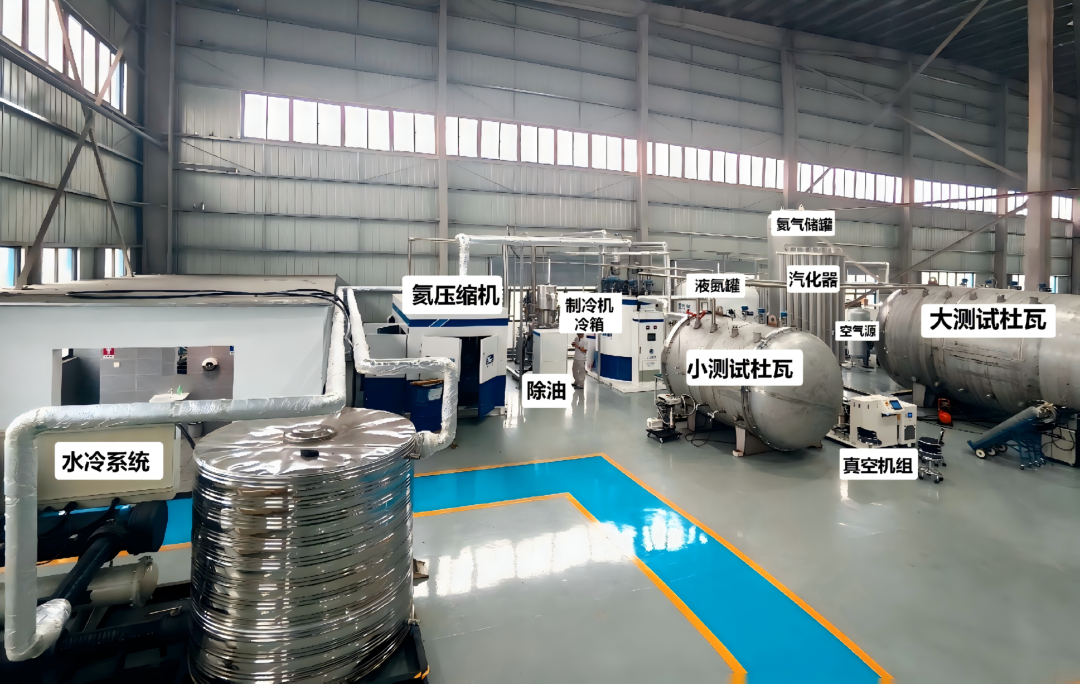
Weilan Stellar Completes China's First Stellarator Magnet Cryogenic Comprehensive Test Platform in Three Months, First Round of Magnet Testing Launched
Weilan Stellar recently completed the construction of China's first stellarator magnet cryogenic comprehensive test platform, and the first round of magnet testing has been launched. Qiu Lilong, a review expert for the cryogenic system, stated that from independent design and system integration to domestically sourced supporting equipment, Weilan Stellar took only three and a half months to integrate vacuum, cryogenics, power supply, measurement, and protection into a comprehensive test platform. The test platform fully demonstrates the team's outstanding capabilities in scientific research, engineering, and project management. As the foundation for stable operation of a stellarator, the cryogenic system's vacuum level, sealing performance, and cooling capacity are all crucial. Unlike conventional paced R&D models, Weilan Stellar has always adhered to a pragmatic,...
2026-09-23

New Generation "Harmony System" and Other Technological Achievements Debut at the 23rd China-ASEAN Expo
At the five-day 23rd China-ASEAN Expo and China-ASEAN Business and Investment Summit, CGN showcased its innovative achievements in nuclear power, new energy, and digitalization under the theme "Smart Nuclear Powers Free Trade, Green Electricity Connects ASEAN." At the exhibition, CGN Digital Technology highlighted its independently developed Harmony System series products and their applications in the new energy sector, and used virtual reality technology to give visitors the opportunity to tour nuclear power plants. The Harmony System is hailed as the "nerve center" and "brain" of nuclear power plants. It is China's independently developed nuclear safety-class digital instrumentation and control system, and has now been widely applied to 34 nuclear power units nationwide, covering second- to fourth-generation nuclear power reactor types and technologies. Through the comprehensive iterative upgrading of the Harmony System, CGN Digital Technology has equipped it with a smarter, safer, and more economical "super intelligent brain," aiming to provide digital and intelligent empowerment for the full-cycle production and operation of nuclear power plants.
2026-09-22

The first international severe accident melt pool standard problem led by China Nuclear Power Engineering Co., Ltd. has been officially approved
Recently, the annual meeting of the Working Group on Accident Analysis and Management (WGAMA) of the OECD Nuclear Energy Agency (OECD/NEA) reviewed and approved the International Standard Problem (ISP) in the field of severe accident research, which was led and submitted by China Nuclear Power Engineering Co., Ltd. This approval marks the 54th International Standard Problem since the OECD established the ISP program half a century ago, the first International Standard Problem in the field of in-vessel melt pool research for reactor severe accidents, and the second International Standard Problem led by China. The project entered the international promotion stage in 2024. The project team collaborated with multiple top research...
2026-09-21

South China Supervision Station Escorts the Safe and Smooth Transition of Changjiang Nuclear Power Plant Unit 3 to Commercial Operation
Recently, the Changjiang Nuclear Power Plant Unit 3, the first Hualong One nuclear power project constructed by Huaneng Group in the Hainan Free Trade Port, successfully completed a 168-hour full-power trial operation. The achievement of this important milestone marks that the unit has officially met the conditions for commercial operation, and also means that as an important supplement to the clean energy structure of the Hainan Free Trade Port, the project is steadily advancing toward the goal of full commissioning, injecting new vitality into local economic and social development. Looking back at the commissioning process of Unit 3, on April 30 of this year, the unit officially completed its first fuel loading and immediately entered the most critical nuclear commissioning phase. During the commissioning period that lasted for months, every...
2026-09-21

China Formally Commits to Complying with the IAEA's "Management of Disused Radioactive Sources Guidelines"
Following its political commitments to the "Code of Conduct on the Safety and Security of Radioactive Sources" and the "Guidance on the Import and Export of Radioactive Sources," China has made a commitment to the International Atomic Energy Agency (IAEA) to comply with the "Management of Disused Radioactive Sources Guidelines" (hereinafter referred to as the "Disused Sources Guidelines"), marking a further improvement of China's international benchmarking system for the full chain and entire process of radioactive source management. The relevant information was officially published on the IAEA website on September 9. The "Disused Sources Guidelines" is one of the two important supporting guidance documents of the IAEA's "Code of Conduct on the Safety and Security of Radioactive Sources," approved and issued by the Board of Governors in 2017. As an internationally applicable non-binding normative framework, the Guidelines provide a unified reference standard for the standardized management of disused radioactive sources by member states, covering key areas such as policy planning, legislative development, regulatory responsibilities, storage and transport, full-process control, and international cooperation, and identifying multiple management pathways including return to supplier, recycling and reuse, long-term storage, and safe disposal, adapting to the nuclear technology utilization development levels and regulatory systems of different countries.
2026-09-20

China Calls for Advancing SMR Innovation and Strengthening Global Nuclear Energy Cooperation
During the 70th General Conference of the International Atomic Energy Agency, China on the 14th hosted a side event themed "Pooling Efforts for SMR Innovation, Building a Nuclear-Beautiful Home Together," focusing on strengthening international cooperation on small modular reactors (SMRs) worldwide, promoting technological innovation, standards coordination, capacity building and related deployment and application, and providing support for global climate governance and sustainable development. At the side event themed "Pooling Efforts for SMR Innovation, Building a Nuclear-Beautiful Home Together," Shan Zhongde, Director of the China Atomic Energy Authority, said that China regards nuclear energy as an important option for building a new energy system and achieving the carbon peak and carbon neutrality goals, and, relying on a complete nuclear industry innovation chain, industrial chain and talent chain, has become one of the pioneers and pathbreakers in SMR development and deployment...
2026-09-18
North China Regional Office Formulates Risk Grading List and Implements Differentiated and Targeted Supervision
The North China Regional Office of Nuclear and Radiation Safety Supervision of the Ministry of Ecology and Environment is committed to enhancing the level of nuclear safety control and has innovatively built a risk-informed supervision system. Through the implementation of a risk grading list, it promotes differentiated and targeted supervision, thereby advancing safety control and effectively improving supervision efficiency. By comprehensively identifying risk points in the design and manufacturing activities of Class 1E electrical equipment, the North China Regional Office has established the "Class 1E Electrical Equipment Supervision Risk Grading List." This list classifies risk hazards into four levels and establishes a closed-loop supervision mechanism featuring pre-event warning, in-process tracking, and post-event review. This enables supervision intensity to be dynamically adjusted according to risk levels, ensuring...
2026-09-18