
Search Results
Keyword:Eni

Construction of inner containment begins at Unit 4 of Leningrad Nuclear Power Plant II
Construction of the inner containment of the reactor building at Unit 4 of the Leningrad Nuclear Power Plant II in Russia has commenced. The unit features a VVER-1200 reactor, and the inner containment is a key component of the unit's passive safety system, as well as part of the plant's confinement safety system. Construction workers have installed the first tier of vertical sealed steel liner to its design position. The steel structure weighs approximately 97 tonnes, and the lifting and positioning operations were carried out using a heavy crawler crane, with the entire installation process lasting about 7 hours. The contractor, TITAN-2 Holding Company, stated that the preparatory work took several months, including component fabrication, protective coating application, on-site assembly and welding, and structural quality inspection...
2026-08-06

Oak Ridge National Laboratory Licenses Cryogenic Fuel Pellet Technology to Type One Energy
The U.S. Department of Energy's Oak Ridge National Laboratory (ORNL) has licensed a suite of cryogenic fuel pellet injection technologies to Type One Energy to advance fuel supply capabilities needed for high-performance fusion plasma operations. The two parties signed the licensing agreement on August 5 in Knoxville, Tennessee, USA. The license covers four ORNL inventions, primarily related to the design and operation of cryogenic fuel pellet injection systems. The technology forms solid hydrogen isotope fuel pellets at cryogenic temperatures near absolute zero and injects them into fusion plasma at high speeds. Compared with methods such as gas injection, pellet injection is more effective at delivering fuel deeper into the plasma...
2026-08-06

Krško Nuclear Power Plant to Reduce Power Output Due to Sava River Water Temperature Pressure
The Krško Nuclear Power Plant (Krško NPP) announced that, due to persistent abnormal hydrological and meteorological conditions in the Sava River, it will begin gradually reducing reactor power from the evening of August 6 to prevent river water temperatures from exceeding environmental standards. In the first phase, the unit's power output will be reduced to 80% of its maximum generating capacity. The plant stated that this power reduction is a planned, controlled, and temporary measure aimed at ensuring the Sava River water temperature remains within permissible limits. Relevant environmental standards stipulate that the daily average water temperature must not exceed 28 degrees Celsius, and the temperature increase of the river water caused by the plant's operation must not exceed 3 degrees Celsius. The management of the Krško Nuclear Power Plant also stated...
2026-08-06
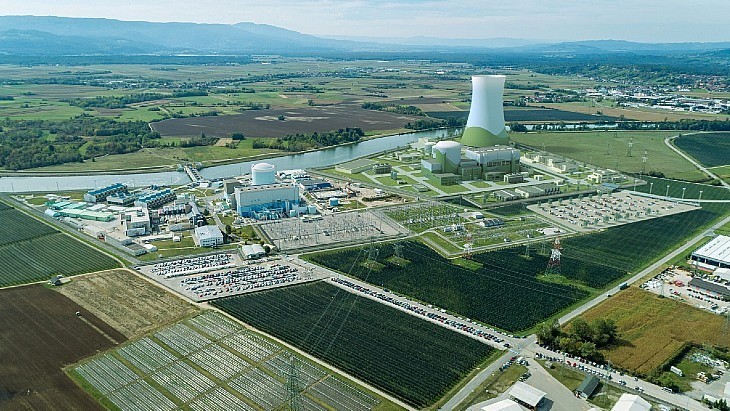
Krško Nuclear Power Plant Operates at Full Capacity; Low Sava River Water Level May Affect Unit Output
Slovenia's Krško Nuclear Power Plant continues to operate at full capacity, but due to low water levels and elevated water temperatures in the nearby Sava River, a reduction in reactor power cannot be ruled out in the future. The plant stated that it is utilizing its cooling tower system and operating in compliance with environmental restrictions related to the Sava River. Due to insufficient recent precipitation, the Sava River's water level remains low, and river water temperatures are also staying in a higher range. Plant management also noted that increased cooling demands have already had a certain impact on the unit's power generation efficiency. Krško Nuclear Power Plant has notified relevant authorities in Slovenia and Croatia that if environmental restrictions are further tightened, it may be necessary to...
2026-08-05

Lifting Task of Large Storage Tanks in Cryogenic System Tank Area of HL-3 Upgrade Project Successfully Completed
On August 4, the lifting task of large storage tanks in the cryogenic system tank area of the HL-3 upgrade project, undertaken by the Southwestern Institute of Physics (SWIP), was successfully completed. After two days and one night of continuous efforts, a total of 14 large storage tanks were precisely positioned, including 6 medium-pressure high-purity helium storage tanks of 100 cubic meters each, 2 cryogenic liquid nitrogen storage tanks of 100 cubic meters each, and 6 auxiliary helium storage tanks, with a total lifting tonnage exceeding 200 tons. The achievement of this key milestone marks significant phased progress in the installation of cryogenic system equipment. Once the cryogenic system is completed, it will provide stable and reliable cooling capacity for the neutral beam injection system and the toroidal cryopumps of the HL-3 device, effectively enhancing the neutral beam injection efficiency and...
2026-08-05

Russian Researchers Develop High-Wear-Resistant Steel Sample for Nuclear Waste Processing
Novosibirsk State Technical University (NSTU) recently announced that Russian researchers have developed a steel sample with reinforcing elements. Experimental results show that the durability of this material is approximately 4 times that of 5KhNM tool steel currently used in nuclear power plant waste processing equipment. The research focuses on improving precipitation hardening steel structures. Precipitation hardening steel is a special class of alloy material that, after quenching and holding at specific temperatures, precipitates fine, hard particles within the steel, thereby enhancing strength and wear resistance. The researchers aim to replace existing 5KhNM tool steel with new high-strength alloys...
2026-08-04

Study Shows Sustained Deuterium Fusion in Palladium and Titanium Metal Foils at Ultra-Low Energies
U.S. researchers have observed a low-energy deuterium fusion phenomenon in thin palladium and titanium metal foils: when the incident deuteron energy drops to levels where fusion reactions are generally expected to weaken significantly or even nearly cease, the reactions continue to occur. Experiments show that as incident energy decreases, the fusion rate does not continue to decline exponentially but instead enters a plateau region below approximately 2 keV. At the lowest detectable energy, the measured low-energy fusion rate exceeds predictions from isolated-nucleus models by more than 10^18 times. Image courtesy of Marina Light/University of California, Davis. The related research was conducted by teams at the University of California, Davis and Lawrence Berkeley National Laboratory...
2026-08-04

Moscow Cable Company Shield to Supply 4 km of Busbar Trunking for Units 3 and 4 of Leningrad NPP Phase II
Moscow Cable Company (Shield) will supply four kilometers of transmission lines for the Leningrad Nuclear Power Plant. The company will manufacture 10 kV and 24 kV generator voltage transmission lines for Units 3 and 4 of Leningrad NPP Phase II. These transmission lines meet the highest reliability and safety requirements of the nuclear industry and are equipped with current transformers and voltage transformers produced by Cable Shield Company. The transmission lines will be manufactured at the enterprise in the city of Kovrov, where new production capacity for cable trays was built last year. Currently, the plant's annual production capacity reaches 12,000 meters of cable trays. According to statistics, over 400,000 meters of transmission lines produced by the company have been put into operation...
2026-08-04

Uranium Levels Exceed Standards in Water Supply on Seogyeom Island, Ganghwa County, Incheon; Government Denies Impact from North Korea's Pyongsan Uranium Mine Wastewater
Uranium levels exceeding standards have been detected in the water supply facilities at the groundwater source on Seogyeom Island, Ganghwa County, Incheon, and the government has stated that this is not attributable to wastewater from North Korea's Pyongsan uranium plant. According to the Ministry of Climate and Energy Environment, a recent detection at the Seogyeom Island water supply facility recorded a uranium concentration of 45 micrograms per liter, exceeding the drinking water quality standard of 30 micrograms per liter. The government stated that, following concerns raised over wastewater discharge from the Pyongsan uranium plant, the Nuclear Safety and Security Commission has conducted monthly regular inspections since July 2025, and quarterly inspections starting in 2026. The most recent inspection (June 2026) showed uranium concentrations ranging from 0.133 to 3.025 micrograms per liter at seven points, including the downstream Han River and areas near Ganghwa Island...
2026-08-04

Philippine DOE launches nuclear power plant site screening with IAEA support
The Philippine Department of Energy (DOE) recently stated that it has begun preparing nuclear power plant site screening work in accordance with internationally recognized safety standards. Collaborating with experts from the International Atomic Energy Agency (IAEA), the DOE is wrapping up an intensive workshop on site and external event design this week to strengthen the country's nuclear power plant site screening process. Energy Secretary Sharon Garin stated that selecting the right site is one of the most critical decisions in developing a nuclear power program, and that close collaboration with the IAEA ensures every step is guided by the highest international standards of science, rigorous technical assessment, and resilient public safety protection. The workshop brought together technical experts from the DOE and partner agencies alongside specialists from the IAEA's External Events Safety Section to share recognized methodologies for assessing potential sites against earthquakes, floods, volcanic activity, extreme weather, and other natural and human-induced risks.
2026-08-03
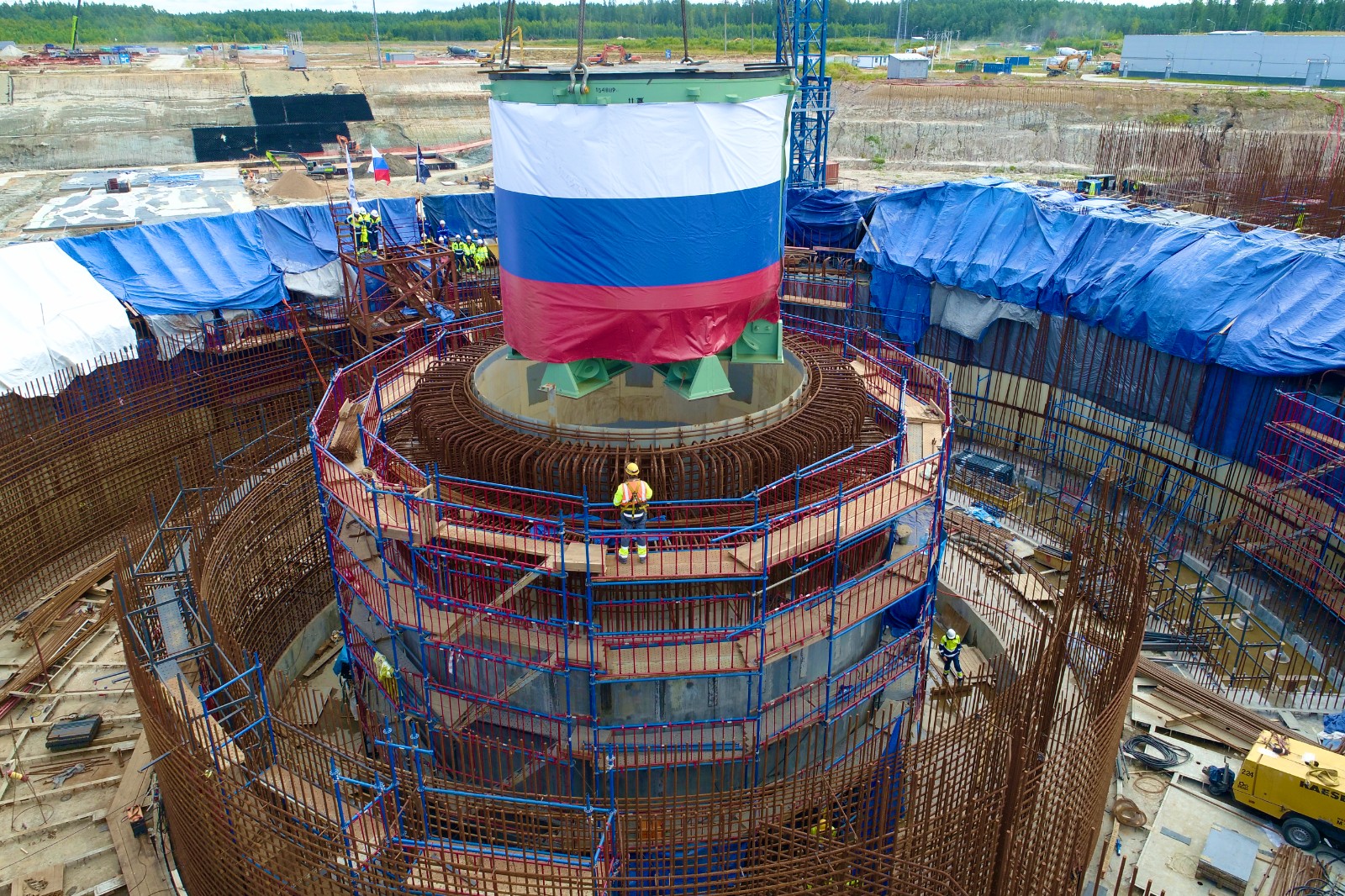
Unit 4 of Leningrad NPP Phase II completes installation of first major equipment
Unit 4 of Russia's Leningrad NPP Phase II recently completed the installation of the core melt catcher vessel. This is the first major equipment of the unit to enter the installation stage, and also the first passive safety system equipment to be installed. The steel structure weighs 157 tonnes, and the installation was carried out using a heavy crawler crane, taking about one work shift of approximately 8 hours, nearly 3 months ahead of the original schedule. Valery Zhemchugov, Acting Director of Leningrad NPP, stated that the installation of the core melt catcher vessel is a key milestone in the construction of Unit 4, a VVER-1200 pressurized water reactor unit, and that the relevant work was completed in accordance with quality requirements, providing more time for subsequent reactor building civil and installation works.
2026-07-31
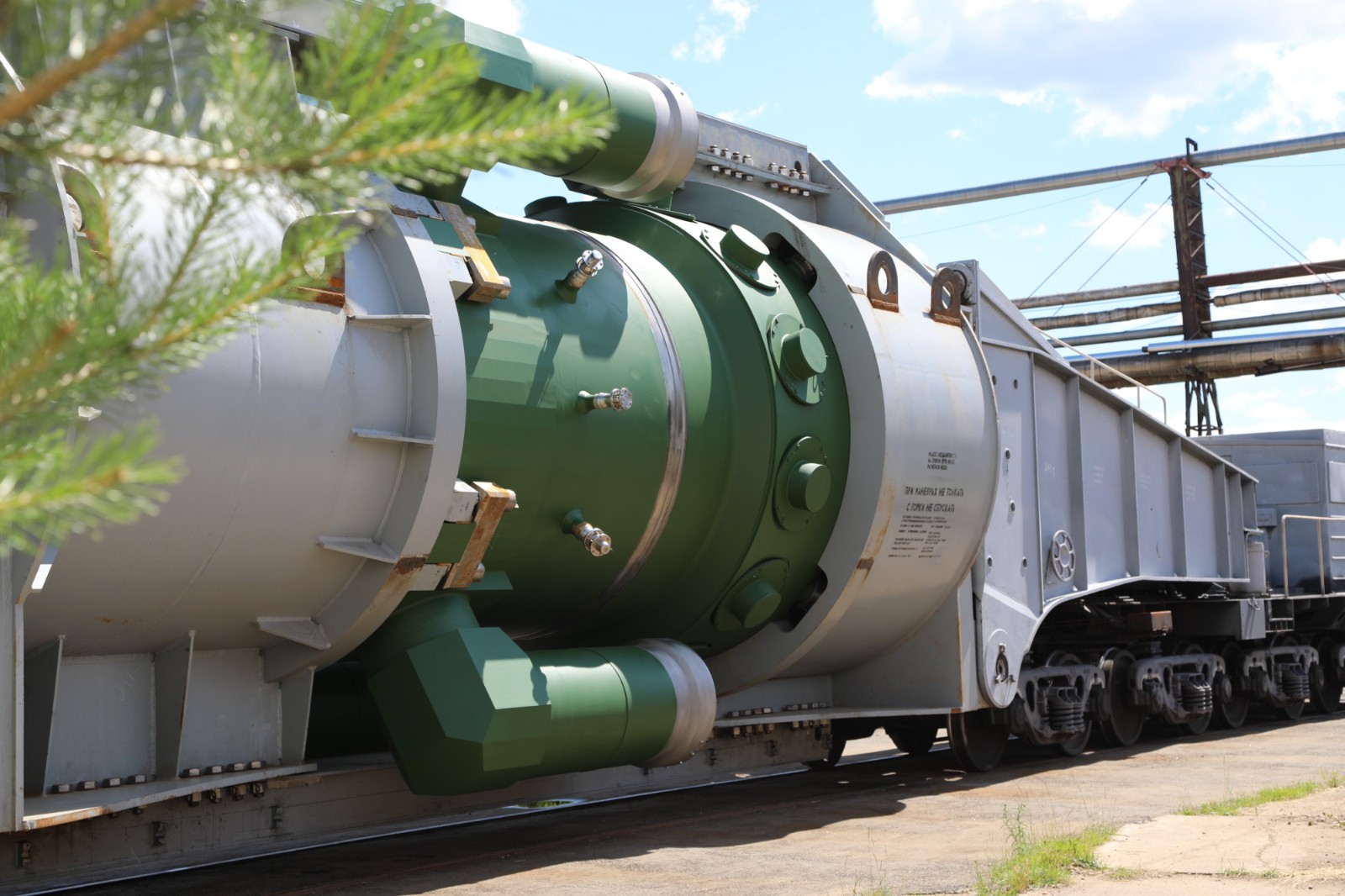
Russia Completes Manufacturing of Second RITM-200 Reactor Unit for Leningrad Nuclear-Powered Icebreaker
On July 29, Rosatom's ZiO-Podolsk Mechanical Plant in the Moscow Region completed the manufacturing of the second RITM-200 reactor unit for the Leningrad nuclear-powered icebreaker. With this, the manufacturing of all major equipment for the reactor compartment of this under-construction 22220-type universal nuclear-powered icebreaker has been fully completed. The Leningrad nuclear-powered icebreaker began construction in January 2024. The naming of the vessel is linked to the 80th anniversary of the lifting of the Siege of Leningrad, with veterans and survivors of the siege proposing that this new-generation nuclear-powered icebreaker be named Leningrad. Following Rosatom's tradition of naming reactor units, the two completed reactor units of the Leningrad have been named "Iskra" and "Grom," commemorating the operations that broke and ultimately lifted the Siege of Leningrad between 1943 and 1944.
2026-07-30

Denison Phoenix In-Situ Recovery Uranium Mine Enters Full Construction Phase
Denison Mines Corp. of Canada announced on July 28 that the Phoenix in-situ recovery uranium mine, part of the Wheeler River uranium project in northern Saskatchewan, Canada, has completed site preparation and transitioned from the preliminary engineering phase to full construction. Current project priorities include initiating the installation of the freeze wall around the Phase I mine. According to the company's disclosure, since site preparation and preliminary engineering began in March 2026, the project has substantially completed site clearing, advanced several time-critical civil works, and constructed construction management facilities. A temporary construction camp has also been installed and put into operation, increasing the on-site accommodation capacity of the Wheeler River project to nearly 400 people, providing conditions for the subsequent increase in construction personnel...
2026-07-29

Zhang Guangjun, Vice Minister of Science and Technology, Attends the Opening Ceremony of the ITER International School and Visits the Southwestern Institute of Physics
On July 20, 2026, the opening ceremony of the 15th International Thermonuclear Experimental Reactor (ITER) International School was held in Leshan City, Sichuan Province. Spanning five days, this edition of the ITER International School focused on the the
2026-07-27