
Search Results
Keyword:Hanul Nuclear Power Plant
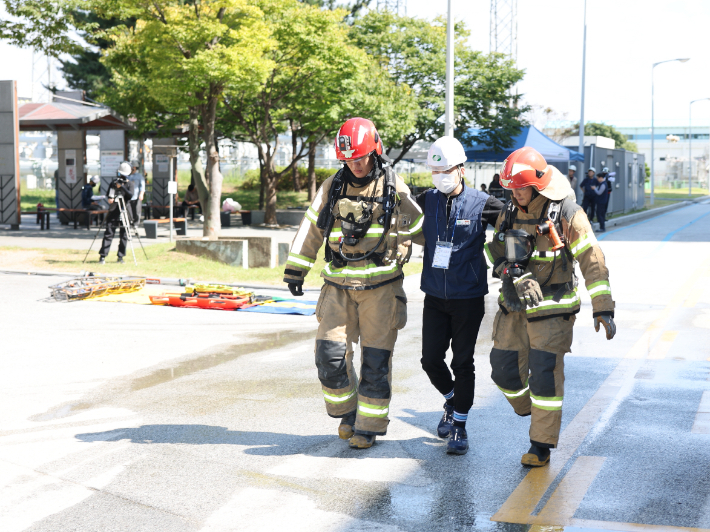
KHNP Hanul Nuclear Power Plant Conducts High-Intensity Comprehensive Drill to Address Safety Threats Including Earthquakes, Wildfires, and Drones
On the 14th, Korea Hydro & Nuclear Power (KHNP) Hanul Nuclear Power Plant conducted a high-intensity comprehensive emergency drill aimed at responding to compound disasters such as earthquakes, wildfires, and radioactive material leaks, as well as new safety challenges including information system failures and drone threats. The Hanul Nuclear Power Plant announced that it jointly held the "2026 Disaster Response Safety Korea Drill" with multiple relevant departments at Hanul Unit 1. The Safety Korea Drill is a nationwide comprehensive emergency exercise designed to establish a disaster management system and cross-departmental coordination mechanism involving South Korea's central ministries, local governments, and public institutions, ensuring efficient joint response capabilities during major emergencies. This drill was...
2026-09-14
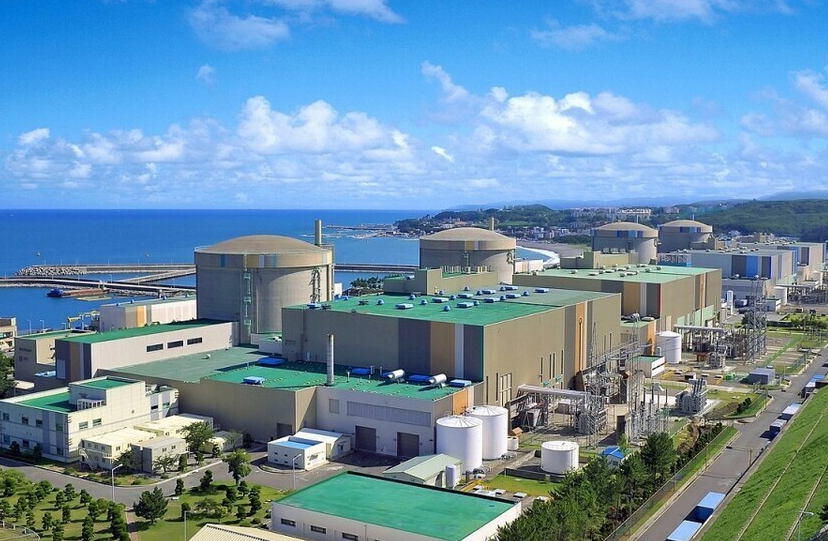
South Korea Conducts First Joint Radiation Emergency Exercise Involving Two Nuclear Power Plants Simultaneously
The Nuclear Safety and Security Commission (NSSC) of South Korea announced on September 10 that South Korea held the 2026 National Joint Radiation Disaster Prevention Exercise, simulating a radioactive material release accident at the Wolsong Nuclear Power Plant in Gyeongju, North Gyeongsang Province, and the simultaneous entry into a radiation emergency state at the Hanul Nuclear Power Plant in Uljin County, North Gyeongsang Province. Approximately 2,000 people participated in the exercise, including relevant South Korean central government departments, local governments, specialized agencies, relevant operating organizations, local organizations, and nearby residents. This exercise set up a compound disaster scenario of simultaneous radiation emergencies at multiple nuclear power plants for the first time. The exercise assumed that...
2026-09-12

Gyeongsangbuk-do lawmakers demand stronger nuclear power plant accident notification and oversight
On September 3, Gyeongsangbuk-do lawmaker Kim Jae-jun spoke at the 365th provisional session of the Gyeongsangbuk-do Council, criticizing the delayed notification and inadequate response to the recent boric acid solution leak at Unit 6 of the Hanul Nuclear Power Plant, and calling for stronger resident safety protection mechanisms in areas with concentrated nuclear power plants. Kim stated that on August 3, a boric acid solution containing radioactive materials leaked from Unit 6 of the Hanul Nuclear Power Plant during spent fuel transfer, but local residents were not informed of the incident until approximately three weeks after it occurred. He argued that Korea Hydro & Nuclear Power (KHNP) failed to disclose information about the incident promptly and transparently, undermining residents' trust in nuclear safety management...
2026-09-04

Radiation Emergency Drill Conducted at Unit 6 of South Korea's Hanul Nuclear Power Plant
Korea Hydro & Nuclear Power (KHNP) recently conducted a comprehensive radiation disaster prevention drill at Unit 6 of its Hanul Nuclear Power Plant to test the emergency response system and on-site handling capabilities under radiation emergency conditions. According to the Hanul Nuclear Power Plant, the drill was held on September 3, organized in accordance with the evaluation guidelines established by the Korea Institute of Nuclear Safety (KINS) and based on the National Radiation Emergency Plan. The drill scenario was not disclosed in advance, and the evaluation methods were also adjusted, with a focus on verifying the unit's response capabilities under actual emergency scenarios. During the drill, all emergency personnel of Unit 6 at Hanul Nuclear Power Plant participated in the response. The scenario simulated a casualty incident occurring within the controlled area, with medical rescue operations organized, and a 3.2 MW mobile generator was used to inspect the operational capability of emergency facilities.
2026-09-04

Boric Acid Leakage During Spent Fuel Transfer Preparation at South Korea's Hanul Nuclear Power Plant
Hanul Nuclear Power Plant in Uljin County, North Gyeongsang Province, South Korea, recently disclosed that at 10:16 a.m. on the 3rd, a boric acid solution leakage incident occurred in the auxiliary building of Unit 2 at Shin Hanul Nuclear Power Plant. The incident happened while workers were preparing to transfer spent fuel from a transport container in the spent fuel loading pool to the spent fuel storage pool, and the preliminary cause has been attributed to improper on-site operations. Boric acid solution is used in spent fuel storage-related operations. As the solution is associated with the spent fuel storage environment, it carries radioactive management attributes. Hanul Nuclear Power Plant stated that leakage containment measures were immediately taken after the leak occurred, and the leaked material was collected in the decontamination area and recovered to the controlled area...
2026-08-28

South Korean 3D-Printed Nuclear Power Plant Component Operates Continuously for 18 Months
Korea Hydro & Nuclear Power (KHNP) announced on August 26 that a nuclear power plant component manufactured using 3D printing technology has been in continuous operation for 18 months on a reactor unit. This marks the first time South Korea has completed long-term operational validation of a 3D-printed nuclear power plant component in actual service. The component is a multi-blade impeller used to cool the generator circuit breaker of a nuclear power plant. Traditional impellers typically consist of multiple blades mounted on a fixed plate, and the connection points between the fixed plate and blades are at risk of damage during long-term operation. KHNP completed the development of this impeller in 2024, switching to 3D printing to manufacture an integrated one-piece structure, thereby reducing weak connection points and improving component durability. Before being put into service, this 3D-printed impeller underwent...
2026-08-26
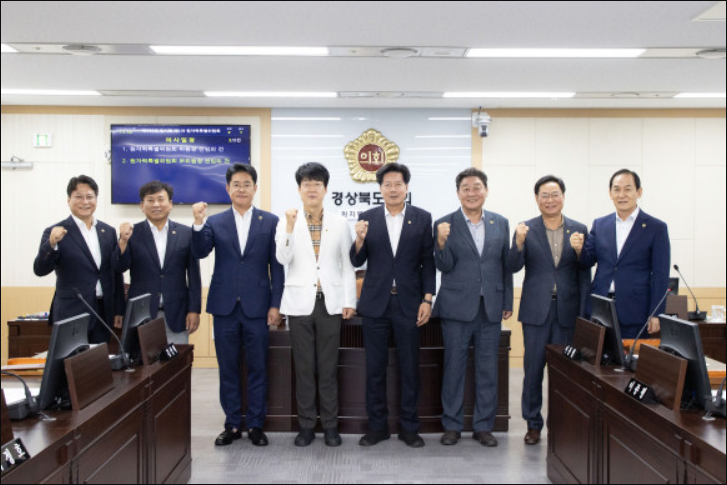
North Gyeongsang Provincial Council Establishes Special Committee on Nuclear Power
On August 25, the North Gyeongsang Provincial Council in South Korea established a Special Committee on Nuclear Power on the first day of its 365th special session, electing provincial council member Kim Jae-jun as committee chairman and Lee Dong-hyeop as vice chairman. According to reports, the committee will focus on addressing major nuclear power-related issues in the region, while also working to enhance the competitiveness of the nuclear power industry in North Gyeongsang Province and safeguard the safety and rights of provincial residents. North Gyeongsang Province is one of the regions in South Korea with a relatively high concentration of nuclear power facilities, having already developed a certain base of nuclear institutions and industrial infrastructure. With the recent confirmation of two new nuclear reactor projects in Yeongdeok County, the committee plans to strengthen on-site investigations and legislative activities to promote the nuclear power industry as a new growth driver for the region's underdeveloped areas.
2026-08-25

Automatic Shutdown of Unit 4 at South Korea's Hanul Nuclear Power Plant, Regulator Launches Investigation
The Nuclear Safety and Security Commission (NSSC) of South Korea reported on August 19 that Korea Hydro & Nuclear Power Co., Ltd. (KHNP) had reported the same day that Unit 4 of the Hanul Nuclear Power Plant, located in Uljin County, North Gyeongsang Province, automatically shut down at approximately 8:50 a.m. The NSSC stated that Unit 4 of the Hanul Nuclear Power Plant is currently in a stable condition. No abnormal alarms were triggered by on-site radiation monitors, and no leakage of radioactive materials to the outside environment has been detected. According to the notification, the NSSC's regional office for the Hanul Nuclear Power Plant is conducting inspections of on-site safety conditions. The regulatory body also plans to dispatch an investigation team comprising experts from the Korea Institute of Nuclear Safety (KINS) to the site to further confirm the cause of the automatic shutdown and related safety conditions.
2026-08-19

South Korea's Gyeongbuk East Coast Nuclear Power Belt Proposed as National AI Training Center
On August 17, the Gyeongbuk Research Institute proposed developing the nuclear power-concentrated region on the east coast of North Gyeongsang Province into a national artificial intelligence (AI) training center to accommodate high-energy computing demands such as large-scale model training and retraining. The research suggests that if the South Korean government expands AI data centers to 18.4 gigawatts in the long term, power supply and grid connection capacity in the capital area and metropolitan regions could approach their limits. To alleviate power and network load pressures, real-time inference and user-facing services could be deployed in the capital area and major cities, while large-scale training and retraining facilities could be located in developing regions with access to power sources. The east coast of North Gyeongsang Province is home to Hanul...
2026-08-18
North Gyeongsang Province, South Korea, increases temporary radiation disaster shelters to 96
North Gyeongsang Province announced on August 11 that it has increased the number of temporary radiation disaster shelters from 56 to 96 to enhance resident evacuation and accommodation capabilities in nuclear accident scenarios. The expansion primarily targets the areas surrounding Uljin County, where the Hanul Nuclear Power Plant is located, focusing on addressing the shortage of nearby accommodation capacity and strengthening the reception capability for evacuees in areas related to the Hanul radiation emergency planning zone, including Uljin, Yeongyang, and Bonghwa. Previously, due to limited shelter capacity in Uljin County, approximately 33,000 people were expected to require evacuation in the event of a nuclear accident, while local shelters could only accommodate about 13,000 people. To meet accommodation needs, Uljin County also had to utilize 5 shelters in Gyeongju and 2 in Pohang, with long-distance transfers being unfavorable for rapid evacuation.
2026-08-12

KEPCO KPS Q2 Results Miss Expectations; Nuclear Maintenance Demand Expected to Drive Recovery in H2
KEPCO KPS's Q2 results significantly missed market expectations, mainly due to factors such as extended long-term planned preventive maintenance cycles for nuclear power plants and a reduction in external and overseas variable works. Data shows that the company's preliminary Q2 sales stood at KRW 437.9 billion, down 3.5% year-on-year; operating profit was KRW 43.6 billion, down 33.6% year-on-year, approximately 30.1% below market consensus; net profit attributable to controlling shareholders was KRW 38.3 billion, down 24.8% year-on-year. The operating margin fell to 10.0%, down 4.5 percentage points from the same period last year, indicating pressure on both the revenue side and, to some extent, the cost side. The nuclear maintenance business was one of the key factors dragging down Q2 performance. In Q2...
2026-08-11

Sea Temperature Approaching Shutdown Threshold, Nuclear Power Belt on South Korea's East Coast Faces Load Reduction Pressure
Climate change is pushing nuclear power plants on South Korea's east coast toward new operational boundaries. South Korean nuclear plants generally rely on seawater as cooling water; after the heat generated by the reactor drives the turbine, seawater is needed to condense the steam back into water. Once the intake water temperature approaches or exceeds the design seawater temperature set by the equipment, heat exchange efficiency declines, affecting the heat dissipation capacity of key safety systems, and the plant must reduce load or even shut down in accordance with safety regulations. The area currently at greatest risk is around Uljin in North Gyeongsang Province. Data from the National Institute of Fisheries Science shows that nearshore surface seawater temperatures along parts of the east coast have approached 30°C, with multiple observation points near Uljin recording approximately 29.6°C to 30.2°C on the afternoon of August 7.
2026-08-10

Korea's Nuclear Safety and Security Commission Conducts Safety Inspection at Hanul Nuclear Power Plant
Amid the ongoing heatwave, Korea's Nuclear Safety and Security Commission is closely monitoring safety inspections at domestic nuclear power plants. On August 6, Commission Chairman Choi Won-ho visited the Hanul Nuclear Power Plant in Uljin, North Gyeongsang Province, for an on-site inspection. The primary purpose of this inspection was to verify whether the plant's safety systems can operate properly under continuously rising seawater temperatures. As rising seawater temperature is a factor that directly affects the cooling system, the Hanul plant conducted detailed checks on heat exchanger performance and thermometer conditions. Chairman Choi also held prior discussions via video conference with relevant nuclear agencies on response measures to high temperatures. During the subsequent on-site inspection, he reviewed...
2026-08-06