
Search Results
Keyword:STS

Russia Completes Qualification Tests of ITER First Wall Tungsten Lining, Advancing Development of Key Components for International Thermonuclear Fusion
The Efremov Institute of Electrophysical Apparatus (NIIEFA), a subsidiary of Rosatom State Atomic Energy Corporation, recently successfully completed the qualification testing phase of tungsten materials for the first wall lining of the International Thermonuclear Experimental Reactor (ITER). This testing aimed to verify the feasibility of the selected technical solution. The expert team completed vacuum rapid brazing of the tungsten lining, robotic ultrasonic inspection, and rigorous thermal cycling tests, laying a solid foundation for subsequent mass production of key components. As the physical boundary between the scorching plasma and the main reactor equipment in a tokamak device, the first wall lining must protect the equipment from high-energy particle bombardment while...
2026-10-10

IAEA Hosts Global Dosimetry Symposium in Vienna: Focusing on Frontiers of Precision Radiation Medicine and Metrological Quality Control
From 5 to 9 October 2026, the International Symposium on Standards, Applications and Quality Assurance (IDOS 2026), hosted by the International Atomic Energy Agency (IAEA), was held at IAEA Headquarters in Vienna, Austria. More than 500 medical physicists, radiation metrology experts and researchers from 120 countries around the world gathered to discuss precision measurement of radiation doses in radiotherapy, medical imaging and nuclear medicine. With the rapid evolution of radiotherapy technologies, radionuclide therapy and interventional radiology, ionizing radiation in the diagnosis and treatment of malignant tumors and major diseases...
2026-10-08

Princeton Plasma Physics Laboratory Hosts International Workshop: Deepening Cross-Disciplinary Applications of Plasma in Semiconductor Manufacturing and Controlled Nuclear Fusion
On the occasion of its 75th anniversary, the Princeton Plasma Physics Laboratory (PPPL), under the U.S. Department of Energy (DOE), hosted the second Adopting Sustainable Partnerships for Innovative Research Ecosystem (ASPIRE) international workshop in the fall of 2026. The workshop was organized by the laboratory's Applied Materials and Sustainability Sciences Directorate and brought together scholars from the University of Osaka in Japan and the Ulsan National Institute of Science and Technology (UNIST) in South Korea, as well as researchers from PPPL, to focus on...
2026-10-08

US Department of Energy Study Shows: Deep Borehole Disposal Option Can Significantly Reduce Nuclear Fuel Cycle Back-End Waste Disposal Costs
Results from a three-year US Department of Energy (DOE)-funded project show that Deep Boreholes technology can provide a safe and low-cost permanent disposal pathway for radioactive waste remaining after Nuclear Fuel Recycling. Deep Isolation Nuclear conducted a systematic assessment of multiple recycling waste disposal scenarios, and the results showed that the estimated costs for all tested scenarios were below the project's control target of "0.1 cents per kilowatt-hour of electricity generation." Long-term safety modeling also confirmed that under normal expected conditions, all options meet...
2026-09-24

Korea Radioactive Waste Agency Hosts Nuclear Nuclide Analysis Industry and Technology Nexus Symposium (RANEX 2026)
The agency and the Korea Radioactive Analysis Association jointly hosted the Nuclide Analysis Industry and Technology Nexus Symposium (RANEX 2026) from September 15 to 16 at the Lahan Select Hotel in Gyeongju, attracting more than 200 experts, scholars, and industry representatives from home and abroad. The core purpose of this symposium was to share the importance of nuclide analysis—a key area in the national radioactive waste management undertaking—and to jointly explore strategies for technological innovation and the cultivation of an industrial ecosystem through in-depth cooperation between the public sector and private enterprises. During the symposium, experts discussed the development strategy for the radioactive waste nuclide analysis industrial ecosystem, the latest analytical technologies and instrumentation...
2026-09-17

Scientists Reveal the Chemical Secrets of the Nanoscale Iridescent Effect in 9th-Century Islamic Ceramics
A scientific team led by the Universitat Politècnica de Catalunya (UPC) in Barcelona and the European Synchrotron Radiation Facility (ESRF) has successfully revealed the nanoparticle chemical reactions that created the distinctive shimmering iridescent effect in 9th-century Islamic ceramic painting. The related research findings have been published in the academic journal Science Advances. Centuries before the rise of modern nanotechnology, 9th-century Abbasid potters were already able to produce ceramics with vivid colors such as gold, red, brown, or yellow and a metallic luster. This technique for creating the iridescent effect originated in the Near East during the Abbasid period and subsequently spread throughout the entire Islamic world.
2026-09-16
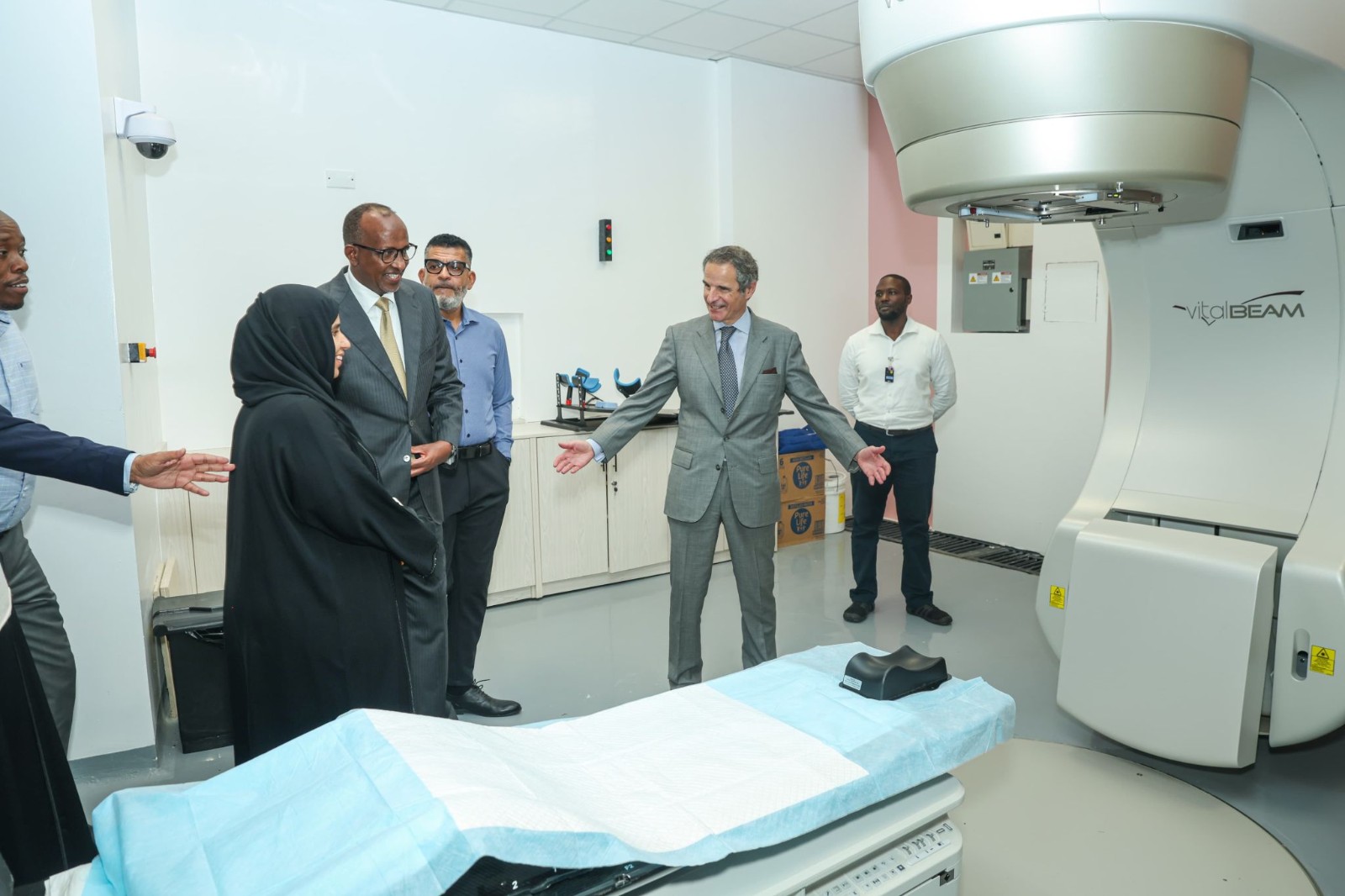
IAEA's Rays of Hope Initiative Boosts Global Cancer Care
The IAEA's Rays of Hope initiative aims to expand access to cancer care, drive innovation, and build partnerships to narrow the global gap in cancer treatment. Every year, cancer claims more than 10 million lives, and that number is expected to nearly double by 2050. While many cancers are treatable, especially when detected early, timely diagnosis and life-saving treatment are unevenly distributed around the world. Low- and middle-income countries often lack modern medical imaging and radiotherapy equipment, trained oncologists, research capacity, and basic services. More than half of cancer cases occur in these countries, and nearly two-thirds...
2026-09-16

Siemens Healthineers Invests $44 Million to Expand PET/CT Production Capacity
Siemens Healthineers announced that the company will make an investment of nearly $44 million at its PET detector center in Rockford, Tennessee, to increase production capacity for PET/CT equipment. This investment marks the completion of the company's construction project at the center, which is aimed at meeting growing demand for PET/CT technology and supporting new product lines launched in the U.S. and international markets. In the Rockford expansion project, approximately 40,000 square meters of building area were added, increasing the total campus footprint to 97,000 square meters, while 7,500 square meters of existing buildings were also renovated. The campus is Siemens Healthineers' only...
2026-09-15

Canada's Nuclear Laboratories Adjusts Clean Energy Program to Support Deployment of New Nuclear Projects in Canada
On September 10, 2026, Canadian Nuclear Laboratories (CNL) announced an adjustment to its clean energy research program arrangements in order to direct more resources toward new nuclear projects currently under way and planned in Canada. CNL stated that, as of July 2026, it had terminated the Clean Energy Program Invitation and the Canadian Nuclear Research Initiative (CNRI). These two programs had previously been intended to leverage facilities and technical capabilities managed by CNL to support research, development, and demonstration of clean energy-related projects. CNL said the adjustment was made to optimize program priorities and concentrate efforts on supporting Canada's current and anticipated...
2026-09-11

IAEA Hosts Nuclear Energy Financing Capacity-Building Workshop
The International Atomic Energy Agency (IAEA) recently held a capacity-building workshop on nuclear energy for international financial institutions at its headquarters in Vienna, Austria, attended by approximately 50 senior experts from the Asian Development Bank (ADB), the World Bank Group (WBG), the European Bank for Reconstruction and Development (EBRD), the OPEC Fund for International Development, the Asian Infrastructure Investment Bank (AIIB), and the African Development Bank (AfDB). Approximately 50 senior experts from the Asian Development Bank, the World Bank Group, the European Bank for Reconstruction and Development, the OPEC Fund, the Asian Infrastructure Investment Bank, and the African Development Bank attended the IAEA's nuclear energy capacity-building workshop for international financial institutions. (Photo: J. Fri...
2026-09-09

KHNP Hosts Nuclear Safety Culture and Leadership Workshop
Korea Hydro & Nuclear Power (KHNP) announced on September 8 that it held the "2026 Nuclear Safety Culture and Leadership Enhancement Workshop" at its headquarters from September 7 to 8, with discussions focused on building a safety culture oriented toward nuclear power plant sites and strengthening management-level safety leadership. Approximately 40 people attended the workshop, including Cho Seok-jin, Vice President of Safety Technology at KHNP, as well as relevant officials from the headquarters and each nuclear power plant. Participants shared best practices and improvement items in safety culture development at each plant and discussed how to more effectively implement safety requirements in frontline operations and management processes. The workshop also covered major accident prevention...
2026-09-08
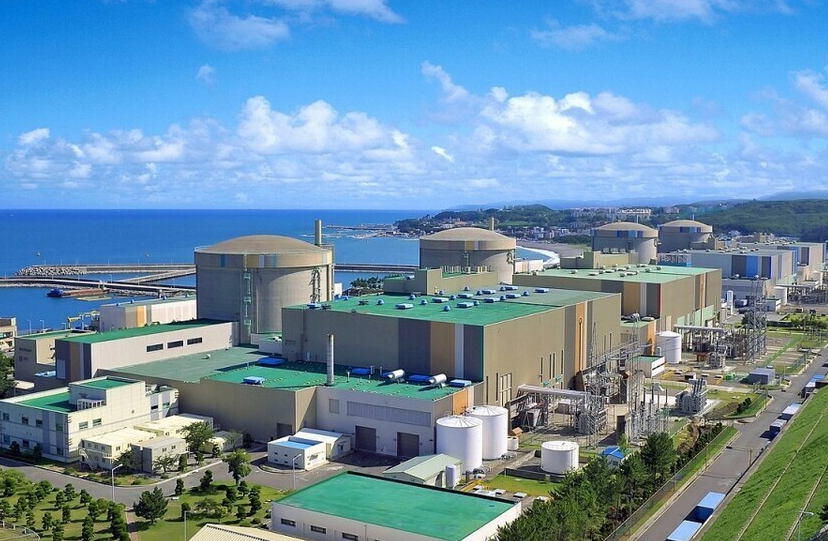
Gyeongju City in South Korea Submits Key Requests to Government for Extension of Wolseong Nuclear Power Plant
Gyeongju City, North Gyeongsang Province, South Korea, stated on September 7 that it has submitted five key pending matters to the Ministry of Climate, Energy and Environment, covering nuclear power plants, support facilities for low- and intermediate-level radioactive waste disposal, and water supply guarantees for the Hyeongsan River basin. On the same day, Gyeongju Mayor Joo Nak-young and National Assembly member Kim Seok-ki met with Minister Kim Sung-hwan of the Ministry of Climate, Energy and Environment to explain the importance of the relevant projects to regional development and public welfare, and requested review and support at the central government level. Regarding support facilities for radioactive waste disposal...
2026-09-08

U.S. to Conduct Underwater Neutrino Detection Tests in Lake Superior and Vermilion Lake
From October 2026 to approximately April 2027, a team of researchers from U.S. universities and government agencies will conduct underwater neutrino tests in Lake Superior and Vermilion Lake. The project, named the Experimental Neutrino Detector (END), aims to validate a baseline detection system in natural water bodies to identify the NuMI neutrino beam produced by Fermi National Accelerator Laboratory and distinguish it from cosmic-ray backgrounds and other noise in shallow-water environments. END will place underwater neutrino detectors on the lakebed of Lake Superior where the Fermilab neutrino beamline passes through—near Two Harbors, Minnesota. The beamline will continue toward...
2026-09-02

Sejong City Requests National Support for Proton Cancer Therapy Center Budget
On September 2, 2026, the Democratic Party of Korea and Sejong City held their first budget policy consultation meeting at the Sejong City Government to discuss key agenda items and budget support for the city. At the meeting, Sejong City Mayor Cho Sang-ho requested the Democratic Party's attention to several issues, including securing national funding for the construction of a cancer proton therapy center, improving the general grant system for Sejong City, and promoting the passage of the Special Act on the Administrative Capital within the year. After the closed-door consultation, a relevant spokesperson stated in a briefing that the meeting proposed allocating 300 million KRW each in the next year's national budget for a feasibility study on the construction of the cancer proton therapy center and for the formulation of the basic plan for the National Central Bioresource Center.
2026-09-02

Russian scientists use 3D-printed tungsten grid to improve X-ray imaging quality, potentially reducing patient radiation exposure
The press service of the Russian Ministry of Education and Science recently stated that a Russian research team has used 3D printing technology to manufacture a tungsten-based anti-scatter grid for X-ray machines, with partition thickness only one-third that of similar products. The researchers believe this achievement could help reduce patient radiation exposure during X-ray examinations while maintaining medical image quality. During X-ray imaging, some rays scatter after passing through human tissue, creating background noise that weakens image contrast. Clinical equipment typically suppresses such interference through anti-scatter grids. Traditional anti-scatter grids are mostly made of lead, but lead has low mechanical strength and imposes high requirements on processing techniques, resulting in...
2026-09-01