
Search Results
Keyword:South Korea

Non-compliant Welding Procedures at Two Units of South Korea's Hanbit Nuclear Power Plant
The Hanbit Nuclear Power Plant headquarters of Korea Hydro & Nuclear Power Co., Ltd. (KHNP) recently confirmed that Units 1 and 2 of the plant had used welding procedure specifications (WPS) that had not undergone impact testing during maintenance of the component cooling water heat exchangers. A retrospective inspection found that among 14 repair activities conducted since the relevant heat exchangers were replaced in 2007, 6 cases involved similar non-compliance. The issue was identified during the 28th planned preventive maintenance outage of Hanbit Unit 1. Inspections revealed that some welding procedure specifications used for repairs to the water chambers of the component cooling water heat exchangers did not meet requirements, involving repair work on worn areas inside the heat exchanger water chambers in the cooling systems of Units 1 and 2. Hanbit Nuclear...
2026-09-04

Gyeongsangbuk-do lawmakers demand stronger nuclear power plant accident notification and oversight
On September 3, Gyeongsangbuk-do lawmaker Kim Jae-jun spoke at the 365th provisional session of the Gyeongsangbuk-do Council, criticizing the delayed notification and inadequate response to the recent boric acid solution leak at Unit 6 of the Hanul Nuclear Power Plant, and calling for stronger resident safety protection mechanisms in areas with concentrated nuclear power plants. Kim stated that on August 3, a boric acid solution containing radioactive materials leaked from Unit 6 of the Hanul Nuclear Power Plant during spent fuel transfer, but local residents were not informed of the incident until approximately three weeks after it occurred. He argued that Korea Hydro & Nuclear Power (KHNP) failed to disclose information about the incident promptly and transparently, undermining residents' trust in nuclear safety management...
2026-09-04

Radiation Emergency Drill Conducted at Unit 6 of South Korea's Hanul Nuclear Power Plant
Korea Hydro & Nuclear Power (KHNP) recently conducted a comprehensive radiation disaster prevention drill at Unit 6 of its Hanul Nuclear Power Plant to test the emergency response system and on-site handling capabilities under radiation emergency conditions. According to the Hanul Nuclear Power Plant, the drill was held on September 3, organized in accordance with the evaluation guidelines established by the Korea Institute of Nuclear Safety (KINS) and based on the National Radiation Emergency Plan. The drill scenario was not disclosed in advance, and the evaluation methods were also adjusted, with a focus on verifying the unit's response capabilities under actual emergency scenarios. During the drill, all emergency personnel of Unit 6 at Hanul Nuclear Power Plant participated in the response. The scenario simulated a casualty incident occurring within the controlled area, with medical rescue operations organized, and a 3.2 MW mobile generator was used to inspect the operational capability of emergency facilities.
2026-09-04

Cause Identified for Automatic Shutdown of Unit 3 at Shin-Kori Nuclear Power Plant in South Korea
The Nuclear Safety and Security Commission (NSSC) of South Korea reported on the 4th that it has completed its investigation into the automatic shutdown of Unit 3 at the Shin-Kori nuclear power plant during commissioning tests on the 11th of last month, and has approved the resumption of commissioning tests for the unit. The investigation confirmed that the direct cause of the incident was an operator error in inputting parameters during the process of restoring reactor power after the tests. According to the investigation findings, at the time of the incident, while setting the parameters for the turbine control valve position limiter, the operator mistakenly entered a value intended to limit the upper opening limit of the valve as a value in the valve closing direction. This limiter is used to prevent a rapid increase in the amount of steam entering the turbine for power generation within a short period. After the parameter error, the unit experienced an interruption in power output at approximately 80% power level, followed by an automatic shutdown.
2026-09-04

Sejong City Requests National Support for Proton Cancer Therapy Center Budget
On September 2, 2026, the Democratic Party of Korea and Sejong City held their first budget policy consultation meeting at the Sejong City Government to discuss key agenda items and budget support for the city. At the meeting, Sejong City Mayor Cho Sang-ho requested the Democratic Party's attention to several issues, including securing national funding for the construction of a cancer proton therapy center, improving the general grant system for Sejong City, and promoting the passage of the Special Act on the Administrative Capital within the year. After the closed-door consultation, a relevant spokesperson stated in a briefing that the meeting proposed allocating 300 million KRW each in the next year's national budget for a feasibility study on the construction of the cancer proton therapy center and for the formulation of the basic plan for the National Central Bioresource Center.
2026-09-02
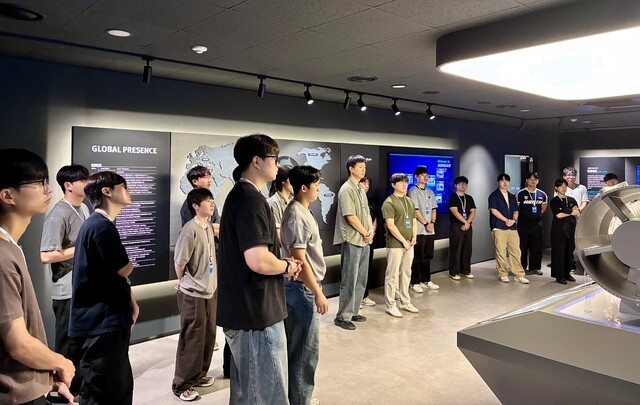
Changwon National University and Doosan Enerbility Conduct On-Site Training on Nuclear Power Main Equipment Design
The AI-based Next-Generation Nuclear Power Equipment and Components Manufacturing Innovation Research Center (AI-NMIC) at Changwon National University, together with the Regional Innovation Alliance Center for Medium-Sized Enterprises, recently completed on-site training on nuclear power main equipment design. The training was held for students participating in related projects at Doosan Enerbility's site. According to Changwon National University on August 31, the training lasted five days, totaling 30 hours, and was designed to help students acquire professional knowledge related to the design and manufacturing of key nuclear power equipment, as well as to understand the design, manufacturing processes, and practical application scenarios of nuclear power equipment through on-site corporate instruction. The tra...
2026-09-02

South Korea Plans to Increase R&D Investment in Nuclear Fusion and Small Modular Reactors
South Korea's Ministry of Science and ICT (MSIT) stated on September 1 that in the 2027 government budget proposal approved at a Cabinet meeting, the ministry's budget amounts to 29.6476 trillion Korean won, an increase of 24.5% compared to this year's supplementary budget. Of this, the R&D budget is planned to increase from 11.9 trillion won this year to 14.1 trillion won, accounting for 36% of the South Korean government's total R&D budget. In the science and technology sector, MSIT plans to invest 12.377 trillion won in R&D related to next-generation artificial intelligence and advanced technologies. In explaining the budget proposal, the ministry's First Vice Minister stated that in response to the growing electricity demand driven by AI development, South Korea will accelerate the development of future clean energy sources such as small modular reactors (SMRs) and nuclear fusion...
2026-09-02

Prostate cancer becomes most common cancer among men in South Korea, Lu-177 PSMA therapy reaches cumulative 200 procedures
Prostate cancer incidence in South Korea has continued to rise, making it the most common cancer among men in the country. Meanwhile, a novel nuclear medicine treatment for metastatic prostate cancer—Lutetium-177 (Lu-177) prostate-specific membrane antigen (PSMA) radioligand therapy—is accumulating more clinical cases. Seoul St. Mary's Hospital Uro-Oncology Center stated on September 1 that since performing South Korea's first Lu-177 PSMA treatment on November 2, 2020, the center had administered a cumulative total of 200 such treatments to 84 patients with metastatic prostate cancer as of the 21st of last month. Metastatic castration-resistant prostate cancer refers to a state in which prostate cancer continues to progress despite androgen suppression therapy. As the disease advances, patients have fewer treatment options and a worse prognosis, making it essential to select appropriate treatment modalities and sequencing based on prior treatment history and physical condition.
2026-09-02

Busan, South Korea Secures 2027 Budget Support; Export-Oriented Research Reactor and Other Projects Included in Government Proposal
Busan Metropolitan City recently announced that multiple national projects aligned with its core development goals have been included in the South Korean government's 2027 budget proposal, including the Gadeok Island New Airport, a new export-oriented research reactor, a heavy ion accelerator, as well as industrial projects such as port artificial intelligence, naval vessel maintenance, repair and overhaul, and power semiconductors. Under the budget arrangement, the Gadeok Island New Airport construction project has secured 431.1 billion KRW in support. To enhance maritime and logistics competitiveness, the budget proposal also includes 7.35 billion KRW for a demonstration project on autonomous port cargo handling equipment, 36.4 billion KRW to support shipbuilding and shipping cooperation, 5 billion KRW to strengthen the global competitiveness of small and medium-sized shipbuilders in naval vessel maintenance, repair and overhaul, and an additional 24.9 billion KRW allocated for the development of a fishery products industrial cluster.
2026-09-02

South Korea's Uljin Pushes Forward with Nuclear Hydrogen Industrial Complex Development
Uljin County in North Gyeongsang Province, South Korea, is seeking support from the National Assembly and the government to promote the construction of the Uljin Nuclear Hydrogen National Industrial Complex, with the goal of establishing the region as a clean hydrogen production hub through supporting policies such as stable power supply and hydrogen pipeline networks. On August 31, Uljin County Governor Hwang Ui-jo attended a nuclear hydrogen policy seminar held at the National Assembly Members' Office Building to present the progress of the Uljin Nuclear Hydrogen National Industrial Complex and the policy tasks required for developing the nuclear hydrogen industry. The seminar was hosted by the National Assembly Hydrogen Economy Forum, with participants from the National Assembly, government, local governments, industry, academia, and...
2026-09-02

South Korea's 2027 Budget Proposal Includes First-Ever Funding for Domestic Nuclear Submarine Development
The South Korean government approved its 2027 budget proposal, with total government spending reaching 820.9 trillion won, approximately 95.6 trillion yen, marking a 12.8% increase from the previous year and setting a record high. The budget proposal has been submitted to the National Assembly for review. President Lee Jae-myung presided over a cabinet meeting at the presidential office on September 1, where the budget proposal was reviewed and approved. Under the plan, the South Korean government intends to increase investment in growth-oriented industries, with approximately 2.5 trillion yen allocated to infrastructure development related to semiconductor manufacturing and artificial intelligence, nearly doubling the scale of the previous year. On the revenue side, the South Korean government expects that as AI demand continues to grow and major semiconductor companies see improved performance, corporate income tax and personal income tax revenues will increase significantly.
2026-09-02

South Korea's Nuclear Safety Regulatory Budget for 2027 Rises to KRW 303 Billion
The Nuclear Safety and Security Commission (NSSC) of South Korea announced on September 1 that it has allocated KRW 303 billion for the 2027 budget, an increase of KRW 10.4 billion from this year. The new budget focuses on areas such as small modular reactor regulation, spent nuclear fuel safety, nuclear facility decommissioning review, environmental radiation monitoring, and nuclear safety information disclosure. Regarding small modular reactors, as non-light water reactor-type small modular reactor development projects aim to obtain licenses by the early 2030s, South Korea will invest KRW 8 billion in R&D to establish a new safety evaluation system. In addition, in line with the preliminary review system set to take effect in November this year, the government has allocated KRW 2.7 billion to conduct preliminary reviews of non-light water reactor-type small modular reactors expected to file applications next year. This system allows applicants to request regulatory review of reactor designs before formally submitting license applications.
2026-09-02

Fourteen academic societies in South Korea call for protection of KRR-1 research reactor auxiliary buildings
On September 1, fourteen academic societies and associations, including the Korean Nuclear Society, issued a statement welcoming the temporary registration of the reactor hall and auxiliary buildings of Research Reactor Unit 1 (KRR-1, TRIGA Mark-II) in Gongneung-dong, Nowon-gu, Seoul, as nationally registered cultural heritage, and urged Korea Electric Power Corporation (KEPCO), the owner of the site and buildings, to promptly submit a formal registration application. Panoramic view of KRR-1, South Korea's first research reactor. Korea National Heritage Administration The Korea National Heritage Administration had placed the KRR-1 reactor hall and auxiliary buildings on the temporary list of nationally registered cultural heritage on July 1 through the emergency measures system, suspending related demolition work. However, if a formal registration application is not submitted by the end of December this year, the temporary listing will lapse and demolition work may resume.
2026-09-01

South Korea to Launch National Radiation Monitoring Center in 2027
The South Korean government reviewed and approved the "2027 Budget Plan" at a cabinet meeting on September 1. According to the budget arrangement, South Korea will launch the National Radiation Monitoring Center in 2027 to centrally collect and manage national environmental and marine radioactive information; simultaneously, it will expand the Nuclear Safety Information Sharing Center to strengthen direct communication with residents near nuclear power plants. The Nuclear Safety and Security Commission (NSSC) has allocated 1.4 billion KRW for the construction and operation of the National Radiation Monitoring Center. The project aims to strengthen the environmental radioactivity monitoring and analysis system to address regulatory demands arising from the expansion of domestic nuclear power utilization in South Korea and the increased operation and construction of nuclear facilities in neighboring countries. The National Radiation Monitoring Center is planned...
2026-09-01

Dankook University Hospital Introduces Next-Generation Digital PET-CT System to Enhance Precision Diagnosis of Cancer and Other Diseases
Dankook University Hospital announced on September 1 that it has introduced GE HealthCare's next-generation digital PET-CT system, the OMNI Legend 32, to enhance precision diagnostic capabilities for a wide range of diseases, including cancer, brain disorders, and cardiac conditions. PET-CT is an important nuclear medicine diagnostic imaging modality. During the examination, a radiopharmaceutical is injected into the patient, and the system observes metabolic activity through positron emission tomography (PET) while simultaneously confirming anatomical structures via computed tomography (CT), thereby providing imaging evidence for clinical diagnosis. According to the hospital, the newly introduced OMNI Legend 32 employs AI-based image reconstruction technology to visualize small lesions with greater clarity, assisting physicians in making more accurate assessments...
2026-09-01