
Search Results
Keyword:Nuclear Fuel

Cameco says it can ramp up core uranium asset production when demand recovers
Canadian uranium producer Cameco has said it is well positioned to respond to rising market demand, and will prioritize increasing output from its core assets if demand becomes clearer. Grant Isaac, Cameco's President and Chief Operating Officer, said on a company podcast discussing long-term strategy that Cameco remains committed to supply discipline, focusing on meeting customers' actual needs rather than setting overly ambitious growth expectations in the absence of confirmed demand. Isaac said the company is prepared to increase production from Tier 1 assets such as the McArthur River uranium mine and the Key Lake mill when market demand rises, lifting output from the current approximately 10 million to 11.5 million pounds of U3O8 to 25 million pounds.
2026-08-13

TRISO-X and Oak Ridge National Laboratory Extend Advanced Nuclear Fuel R&D Collaboration
TRISO-X announced on August 11 that it has extended its Collaborative Research and Development Agreement with the U.S. Department of Energy's Oak Ridge National Laboratory (ORNL). The newly signed agreement has a term of 30 months and will continue to advance commercial-scale development of TRISO fuel, manufacturing process optimization, and technology transfer, building on the collaboration established since 2016. TRISO-X is a wholly-owned subsidiary of X-energy, primarily engaged in advanced nuclear fuel manufacturing. Under the agreement, TRISO-X will continue to operate its existing pilot-scale facilities at Oak Ridge National Laboratory, with a focus on transitioning TRISO fuel from laboratory R&D to commercial-scale manufacturing. The collaboration includes optimizing fuel...
2026-08-12
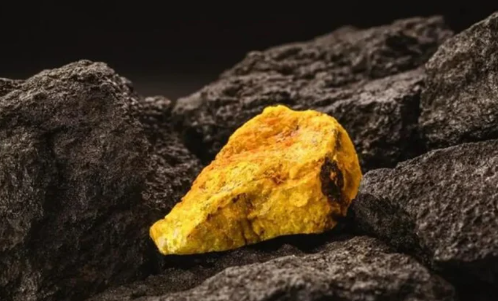
Brazil's uranium imports from Russia hit highest since 1997 in July, reaching $84.5 million in a single month, a 168-fold surge month-on-month
Brazil's uranium imports from Russia in July this year reached $84.5 million, equivalent to approximately 430 million reais, the highest level since 1997. Compared with the import value of only $504,000 in June, the single-month increase was as high as 168-fold, indicating that this transaction was not a general monthly fluctuation but a concentrated procurement of exceptionally large scale. Looking at historical data, Brazil's uranium imports have typically remained at the level of hundreds of thousands of dollars per month, and even previous periodic peaks were far below the scale seen in July. Materials show that there was an import peak exceeding $1 million in August 2025, but it still pales in comparison with this $84.5 million figure. This means that the July data not only changes...
2026-08-12

U.S. and European Nuclear Fuel Markets Accelerate Adjustment, with Canada and Kazakhstan Remaining Leading Uranium Supply Sources
Annual reports recently released by the U.S. Energy Information Administration and the European Supply Agency show that the global nuclear fuel supply landscape in 2025 continues to be shaped by geopolitical and energy security factors. Canada remains the most important source of uranium for utility nuclear power operators in the United States and the European Union, followed closely by Kazakhstan, underscoring the two countries' central role in the Western nuclear fuel supply chain. Meanwhile, both the United States and the European Union are focusing on concerns over supply source concentration, dependence on Russian-related supplies, and security assurance issues arising from future growth in nuclear power demand. In the U.S. market, owners and operators of civilian nuclear power plants procured 46.9 million pounds U3O8e of uranium deliveries from domestic and foreign suppliers in 2025...
2026-08-12

First batch of experimental stations at Russia's Siberian Circular Photon Source expected to be operational by end of 2026
On August 11, Russian President Vladimir Putin stated at a meeting of the Council for Science and Education that the first research stations of the Siberian Circular Photon Source (SKIF) synchrotron are expected to be commissioned by the end of 2026. At the meeting, Putin noted that the Siberian Circular Photon Source is currently one of the world's most powerful particle accelerators, with some parameters being unique, capable of helping researchers conduct in-depth studies of the structure of matter at the atomic and molecular levels. He also stated that Russia needs to accelerate the development of future technologies, concentrate efforts on priority tasks, and make more efficient use of national strategic scientific resources, including research institutions, advanced digital computing resources, and unique biological resources. The Siberian Circular Photon...
2026-08-12

TAF-ID database 22nd edition released, expanding advanced nuclear fuel thermodynamic evaluation data
The International Thermodynamic Database for Advanced Fuels (TAF-ID) project has been running for over a decade. The project employs the CALPHAD (Calculation of Phase Diagrams) method to develop a thermodynamic database that supports computational analysis of advanced nuclear fuel materials, enabling prediction of phase diagrams and thermodynamic properties of relevant systems. According to project documentation, Version 22 of the TAF-ID database has been released. This update adds and revises assessment data for material systems including Na-U, Na-O, Na-UO₂, U-Ru, U-Si, Al-Si-U, Fe-Pu-U, and O-N-U, and updates gas-phase data based on the latest publicly available information. The database assessment scope has been expanded to 44 elements, 272 binary systems, 151 ternary systems, and 3...
2026-08-11

India's Nuclear Power Expansion Drives Up Uranium Demand, Annual Demand Could Reach 5,400 Tonnes
India is accelerating its nuclear energy development program, with uranium resource demand rising correspondingly. According to estimates by the Indian Parliament's Committee on Public Undertakings in its follow-up report on NPCIL performance rectification, India will require approximately 5,400 tonnes of uranium annually in the future as nuclear power projects expand. This figure reflects the urgency of India's energy structure adjustment and indicates the rising status of nuclear power in its long-term electricity planning. Currently, domestic uranium production in India can only meet about 30% of demand, with the remainder relying on imports, primarily from countries including Kazakhstan, Russia, Uzbekistan, and Canada. The Parliamentary Committee therefore emphasized...
2026-08-10

Türkiye Plans 17,000-Ton Uranium Drilling Program, Accelerating Nuclear Energy Autonomy Strategy
Türkiye is advancing a new round of exploration around a uranium deposit reportedly totaling 17,000 tons, planning drilling at 47 different points to further confirm ore body distribution, grade levels, and economic viability for extraction. This move is positioned within the context of Türkiye's energy supply security and nuclear energy development strategy, aiming to provide more domestic resource support for future nuclear fuel assurance. From an energy strategy perspective, uranium resource exploration is not merely a standalone mining project but part of Türkiye's efforts to reduce external energy dependence. Türkiye has long relied on imported energy, with external supplies of natural gas, oil, and other resources impacting its energy costs and macroeconomic performance. Globally...
2026-08-10

Belarusian NPP safe operation period may be extended to 100 years, with first spent fuel to be shipped to Russia for reprocessing in 2034
Stanislav Levitsky, head of the Rosatom representative office in Belarus, stated on the "Economic Environment" program of Belarusian TV Channel One that Belarusian nuclear energy development is backed by comprehensive safety assurances. He emphasized that while nuclear facilities can indeed have serious consequences if mismanaged, under the existing risk control system and modern technological support at the Belarusian NPP, nuclear power can become a low-cost, stable, and safe energy source. Levitsky believes that amid intense competition in the energy sector, some irresponsible players may use information tactics to create anxiety and attempt to provoke panic among the public...
2026-08-10

Romania in Talks to Purchase 300 Tons of Uranium from Niger, Nuclear Fuel Supply Diversification Faces Legal Uncertainties
Romania's state-owned nuclear power company Nuclearelectrica has initiated negotiations to purchase 300 tons of uranium from Niger, against the backdrop of Romania's push to diversify its external nuclear fuel sources. The talks began on April 13, 2026, with Niger's Minister of Mines Ousmane Abarchi responding positively, after which the Romanian delegation continued engagement with the Nigerien side. The transaction is valued at approximately $40 million, but Nuclearelectrica has emphasized that no final agreement has been reached yet. The potential appeal of this uranium supply lies in Romania's expanding nuclear power development plans, while domestic large-scale uranium mining has ceased. As the operator of the Cernavodă nuclear power plant...
2026-08-10

U.S. Department of Energy Selects SHINE Technologies for Genesis Initiative, AI to Optimize Reprocessing of 95,000 Tons of Spent Nuclear Fuel
The U.S. Department of Energy has selected SHINE Technologies to participate in the Genesis mission, advancing the application of artificial intelligence in the nuclear industry. The core objective of the project is to develop an AI-assisted design system for engineers to plan more efficient spent fuel reprocessing facilities. The United States currently has approximately 95,000 tons of accumulated spent nuclear fuel, which has historically posed long-term storage and disposal challenges. The new approach seeks to recover still-valuable components from this material, reducing waste volume and improving resource utilization. The key to this project lies in transforming traditional engineering design methods. In the past, metrics such as throughput, final product quality, and waste volume in nuclear fuel reprocessing processes were typically evaluated separately...
2026-08-09

Eagle Nuclear Energy Advances 47-Hole Pre-Feasibility Drilling at Aurora Uranium Project
Against the backdrop of rebuilding a domestic U.S. uranium supply chain, newly listed Eagle Nuclear Energy Corp. has entered the industry spotlight with what it claims to be the largest conventional measured+indicated uranium resource in the country. Its flagship Aurora uranium project, located on the Oregon-Nevada border, contains 32.75 million pounds of indicated resources and 4.98 million pounds of inferred resources under S-K 1300 standards. The company has submitted permit applications for a pre-feasibility drilling program comprising 47 holes totaling approximately 27,000 feet, with work slated to begin upon federal and state approvals and pre-feasibility study completion targeted for the second half of 2027. On the technical front, the company recently added Yukuskokon Professional Services and expanded its collaboration with BBA USA and SLR I...
2026-08-08

Fluor's Q2 New Orders Surge to $6.1 Billion, Nuclear Fuel Enrichment Projects Boost Backlog to $26.9 Billion
U.S. engineering and construction giant Fluor demonstrated a clear acceleration in order intake in the second quarter of 2026, with new project awards reaching $6.1 billion, significantly higher than the $1.8 billion recorded in the same period last year. Among these, nuclear fuel enrichment projects emerged as a key highlight, driving the company's ending backlog to $26.9 billion. The rapid expansion in order volume indicates that customer demand for its engineering, procurement, and construction capabilities is recovering, and also reflects the tangible results of converting earlier front-end design and project development work. In terms of contract structure, 89% of Fluor's new orders this quarter were reimbursable contracts, while reimbursable contracts also accounted for 85% of total backlog, up from 80% in the same period last year....
2026-08-09

Zaporizhzhia Nuclear Power Plant to Raise Spent Fuel Pool Water Levels to Mitigate Power Outage Risks
The International Atomic Energy Agency (IAEA) stated that the operator of the Zaporizhzhia Nuclear Power Plant has decided to raise the water levels in the spent fuel pools on site to enhance safety buffer capacity in the event of a prolonged loss of external power. The primary purpose of raising the water levels is to extend the time before water in the spent fuel pools begins to boil and evaporate under extreme conditions where external power to the plant is interrupted for an extended period, diesel reserves are depleted, and emergency diesel generators can no longer supply power to the cooling systems. Spent fuel pools are used to store used nuclear fuel underwater, typically for at least five years, allowing its radioactivity and residual heat to gradually decay, making continuous cooling a critical element of nuclear safety. All six units at the Zaporizhzhia Nuclear Power Plant...
2026-08-08

French innovative nuclear company Newcleo submits regulatory engagement plan to NRC for U.S. MOX fuel plant
On August 7, 2026, France-based innovative nuclear company Newcleo submitted a Regulatory Engagement Plan (REP) to the U.S. Nuclear Regulatory Commission (NRC), paving the way for its proposed mixed oxide (MOX) fuel fabrication facility in the United States. The REP defines the framework for the company's pre-application phase with the NRC, key regulatory and technical topics, technical document submittals, and an indicative schedule. Previously, Newcleo sent a letter to the NRC on February 23 expressing its intent, and initiated pre-application interactions in March, engaging with the NRC on the design and safety approach for the LFR-AS-200 lead-cooled fast reactor and the associated MOX plant; last month, it had already submitted the REP for the LFR-AS-200 (200 MWe commercial version). Newcleo stated that this submission is a step toward advanced...
2026-08-09