
Search Results
Keyword:decommissioning

Hinkley Point B Nuclear Power Station Formally Handed Over to Nuclear Restoration Services: Becomes England's First Advanced Gas-Cooled Reactor Transferred by EDF for Decommissioning
On 1 October 2026, the UK Office for Nuclear Regulation (ONR) formally approved the transfer of the nuclear site licence, and Hinkley Point B Nuclear Power Station was officially handed over from Électricité de France (EDF) to Nuclear Restoration Services (NRS), a subsidiary of the UK government. This marks Hinkley Point B as the first Advanced Gas-Cooled Reactor (AGR) nuclear power station in England to formally enter the national specialist decommissioning sequence, and the second AGR unit in the UK to complete such a transfer, following Hunterston B Nuclear Power Station in Scotland earlier this year. Hinkley Point B Nuclear Power Station is located in Somerset and was built between 196...
2026-10-08

International Seminar of Veteran Nuclear Decommissioning Experts Held in Bishkek, Kyrgyzstan: Focusing on Central Asian Nuclear Energy Prospects and Cooperation on Kyrgyzstan's SMR Project
On September 24, 2026, with the joint support of Rosatom and the Council of Energy Veterans of the Kyrgyz Republic (Совет ветеранов энергетики Киргизской Республики), the International Seminar on the Prospects for the Development of Nuclear Energy and Nuclear Technologies in the Kyrgyz Republic, organized by the International Union of Veteran Experts in Nuclear Energy and Industry (МСВАЭП), was held in Bishkek, the capital of Kyrgyzstan. Senior experts in the nuclear and electric power industries from Kyrgyzstan, Russia, Kazakhstan, Tajikistan, Uzbekistan and other Central Asian countries...
2026-09-27

South Korea Promotes K-Decommissioning Nuclear Power Plant Decommissioning Technology Overseas
At the 2026 Nuclear Facility Decommissioning Business Forum held on the 18th at the Westin Chosun Seoul, Seo Beom-kyung (서범경), Director of the Clean Nuclear Facility Technology Development Department at the Korea Atomic Energy Research Institute (KAERI), stated that given the limited scale of the domestic nuclear facility decommissioning market, it is necessary to turn attention to overseas markets. Seo Beom-kyung said that the scale of South Korea's domestic decommissioning market is limited, so attention must be directed overseas. This requires the establishment of international standards, as well as decommissioning methods that reduce environmental burden and plans for subsequent site utilization. At the same time, emphasis must be placed on verifying K-Decommissioning technology in practical applications to ensure its performance and safety. Although technologies achieved at the R&D stage may...
2026-09-22

The SM-1 Nuclear Power Plant at Fort Belvoir, United States, Has Completed All On-Site Decommissioning and Dismantlement Work
The Baltimore District of the U.S. Army Corps of Engineers recently announced that the SM-1 nuclear power plant at Fort Belvoir, Virginia, has completed all on-site decommissioning and dismantlement work. On September 9, 2026, at the closing ceremony of the SM-1 nuclear power plant decommissioning and dismantlement project held at Fort Belvoir, Virginia, leaders from the U.S. Army, the U.S. Army Corps of Engineers, the Fort Belvoir Garrison, and the project contractor posed for a photo with the original 1957 building sign of the SM-1 nuclear power plant. The ceremony marked the successful completion of all on-site work related to the decommissioning and dismantlement of the nuclear power plant. The U.S. Army's SM-1 (Stationary Medium Power Reactor Prototype No. 1) is a 2-megawatt experimental small...
2026-09-17
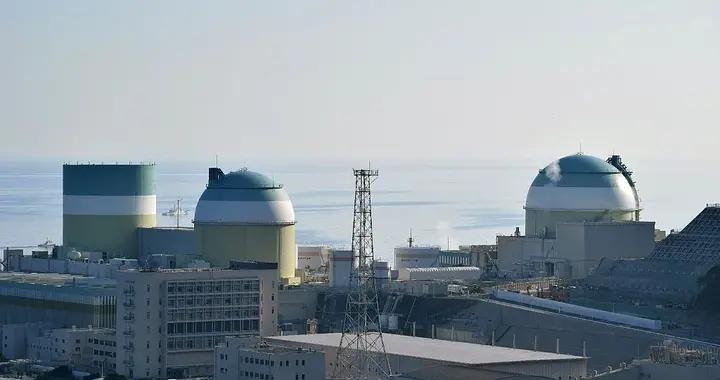
Unit 1 of Japan's Ikata Nuclear Power Plant Enters the Second Phase of Decommissioning
The Ikata Town Assembly formally passed a resolution on September 17, determining that the plan to advance the decommissioning work of Unit 1 to the next phase starting from the next fiscal year is "appropriate." It is understood that Shikoku Electric Power Company has divided the decommissioning work of Unit 1 at the Ikata Nuclear Power Plant into four phased processes to be carried out in an orderly manner. In July of this year, the company obtained official approval from Japan's Nuclear Regulation Authority to commence the second-phase decommissioning plan, which includes the dismantling of equipment surrounding the reactor. According to relevant regulatory and local agreement requirements, the transition of decommissioning work to the second phase must obtain the understanding and consent of the local autonomous body. To this end, the Ikata Town Assembly specifically established a Special Committee on Nuclear Power Generation Countermeasures...
2026-09-17

UK Nuclear Industry Association and Ukrainian Nuclear Forum Sign Nuclear Energy Cooperation Memorandum
On September 10, 2026, the UK Nuclear Industry Association (NIA) and the Ukrainian Nuclear Forum signed a memorandum of understanding to expand cooperation in areas including decommissioning of complex nuclear facilities, deployment of small modular reactors, and securing "trusted partner" status under the EU's Industrial Accelerator Act (IAA). Nuclear energy is an important source of Ukraine's wartime electricity supply, accounting for approximately 55% of the country's electricity supply. This cooperation builds on existing UK-Ukraine nuclear fuel cooperation. Urenco, one-third owned by the UK government, has supplied Ukraine with...
2026-09-12

Decommissioning of Unit 1 at Japan's Ikata Nuclear Power Plant Proposed to Move to Phase 2
On the 11th, Ichiro Ogi, Mayor of Yawatahama City in Ehime Prefecture, Japan, reported to the prefectural government that he has agreed to the decommissioning work of Unit 1 at the Ikata Nuclear Power Plant of Shikoku Electric Power Company entering Phase 2. Ichiro Ogi requested that Shikoku Electric Power thoroughly implement relevant measures during the subsequent decommissioning process to prevent the spread of radioactive materials, control the radiation exposure dose of workers, and protect the surrounding environment of the nuclear power plant. Unit 1 at the Ikata Nuclear Power Plant ceased operation in 2016, and since 2017, decommissioning work has been carried out in four phases, with a planned duration of more than 40 years. Currently, the decommissioning work of this unit is still in Phase 1. According to the safety agreement arrangements, Shikoku Electric Power has submitted a prior consultation application to the Ehime Prefectural Government...
2026-09-11

Swiss Nuclear Decommissioning and Waste Disposal Funds Both Show Surpluses
As of the end of 2025, the combined assets of Switzerland's nuclear facility decommissioning fund and nuclear power plant waste disposal fund approached CHF 10 billion, equivalent to approximately EUR 10.6 billion and USD 12.3 billion, up from CHF 9.65 billion at the end of 2024 and exceeding the established funding targets. According to Swissnuclear, the decommissioning fund stood at approximately CHF 3.03 billion, up from CHF 2.98 billion in 2024, while the waste disposal fund reached approximately CHF 6.96 billion, up from CHF 6.66 billion in 2024. Based on target calculations, the decommissioning fund target is CHF 2.76 billion and the waste disposal fund target is CHF 5.9 billion, with the two funds exceeding their targets by approximately 9.8% and 1...
2026-09-08

South Korea's KNR System Develops Heavy-Duty Bipedal Robot for Nuclear Facility Decommissioning Applications
South Korean robotics company KNR System recently announced the completion of the lower-body development and basic locomotion verification for its large-scale industrial "super-humanoid" robot. The robot's leg structure can support loads of up to 3 tons and move at a speed of 3 to 4 kilometers per hour. The company plans to release the full model by the end of 2026 and has already initiated whole-body system integration work. KNR System is developing a super-humanoid robot design. Image source: KNR System According to reports, the newly developed robot legs stand approximately 2.9 meters tall, with a maximum load capacity of 3 tons and a dual-arm payload of 600 kilograms. Each side is equipped with 12 joints, utilizing 10,000 Nm-class high-output hydraulic rotary actuators...
2026-09-07

Rosenergoatom Advances Bilibino NPP Decommissioning Preparation in Chukotka
In late August 2026, a delegation led by Alexander Shutikov, Director General of Rosenergoatom, conducted a working visit to the Chukotka Autonomous Okrug, traveling to the two nuclear-related towns of Bilibino and Pevek for a series of meetings on the further management of Bilibino NPP, the operation of the Pevek Floating Nuclear Thermal Power Plant, and regional energy security. In Bilibino, Shutikov met with Evgeny Safonov, Head of the Bilibino Municipal District Administration. The parties discussed current and long-term regional projects supported by Rosatom, including progress on the construction of the new "Orbit" ski base.
2026-09-06
Second Phase of Decommissioning for Unit 1 of Japan's Ikata Nuclear Power Plant Approved by Prefectural Committee
The Environmental Safety Management Committee for the Ikata Nuclear Power Plant in Ehime Prefecture, Japan, held a meeting in Matsuyama City on September 2 to discuss plans by Shikoku Electric Power to proceed with the second phase of decommissioning for Unit 1 of the Ikata Nuclear Power Plant. The unit, located in Ikata-cho, Ehime Prefecture, is currently in the process of being decommissioned. The decommissioning of Unit 1 at the Ikata Nuclear Power Plant has been divided into four main phases. Shikoku Electric Power had previously conducted prior consultations with Ehime Prefecture and Ikata-cho regarding the transition to the next phase, obtained local consent, and submitted relevant applications to Japan's Nuclear Regulation Authority (NRA). In July of this year, the NRA approved the application...
2026-09-03

Chornobyl NPP Advances Phase 2 of Decommissioning
The decommissioning of the Chornobyl Nuclear Power Plant (ChNPP) is currently in the second of four phases, with the primary task being the final shutdown and decommissioning preparation of Reactors 1, 2, and 3. To date, ChNPP staff are advancing on-site preparation work within the protected area of the first-stage units. Among these, site preparation for Unit 2 is 94% complete, while Unit 1 stands at 44%. Related work includes dismantling systems and components within the protected area, removing thermal insulation and combustible materials, stripping electrical, signal, and control cables, and sealing wall penetrations, mounting holes, and process openings at the boundary between the protected and controlled areas, as well as installing fire-resistant panels and fire barriers on wall openings and ventilation ducts within the protected area.
2026-09-02

U.S. Proposes Clearer Groundwater Protection Standards for In-Situ Uranium Recovery Sites
The U.S. Nuclear Regulatory Commission (NRC) on September 1 proposed a rule aimed at establishing clearer groundwater protection standards for communities surrounding in-situ uranium recovery sites, while streamlining the process for extending decommissioning deadlines for radioactive materials facilities and nuclear reactors, reducing redundant administrative steps without compromising safety. The rule addresses two aspects under NRC oversight. First, it proposes risk-informed regulatory standards for protecting drinking water near in-situ uranium recovery facilities, designed to guard against both radiological and non-radiological contamination. In-situ uranium recovery is a method of uranium extraction that involves injecting solution into uranium-bearing ore bodies to dissolve underground uranium resources and pump them to the surface for recovery. Second, it proposes to simplify the process for facility owners to apply for extensions of decommissioning deadlines. The NRC stated that current time requirements are relatively rigid and may lead to premature license termination; the proposed changes aim to reduce applicant costs, improve regulatory efficiency, and provide clearer expectations for communities and facility operators.
2026-09-02

Japan Plans to Introduce Physical AI into Fukushima Daiichi Nuclear Power Station Decommissioning
The Japanese government and Tokyo Electric Power Company (TEPCO) are preparing to introduce Physical AI technology into the decommissioning operations at the Fukushima Daiichi Nuclear Power Station to enhance the autonomous operational capabilities of robots in high-radiation environments. This technology enables artificial intelligence to autonomously control robots based on on-site conditions, performing tasks such as inspection, data collection, and cleanup. To advance this effort, an advisory organization involving the government, businesses, universities, and research institutions is planned to be established within the year, with discussions centered on technology development, equipment application, and on-site verification. The organization is expected to be led by relevant government ministries and TEPCO, and will include AI startups, robot manufacturers, and university researchers.
2026-09-01

Fukushima Daiichi Nuclear Power Station begins 23rd discharge of treated nuclear-contaminated water
At 11:29 on August 31, Fukushima Daiichi Nuclear Power Station began its fifth discharge of treated nuclear-contaminated water in fiscal year 2026 and the 23rd overall. The operation is scheduled to last 19 days, concluding on September 18, with an estimated discharge of approximately 7,800 tonnes of nuclear-contaminated water diluted with seawater, equivalent to the capacity of about 8 storage tanks. The total tritium content is estimated at approximately 1.2 trillion becquerels. The reactors of Units 1 to 3 at Fukushima Daiichi still contain nuclear fuel that melted and solidified during the accident, known as fuel debris. Groundwater and rainwater that come into contact with this fuel debris form contaminated water. Since the discharge of treated nuclear-contaminated water began in August 2023, Fukushima Daiichi has cumulatively released approximately 173,000 tonnes, equivalent to about 173 storage tanks' capacity.
2026-09-01