
Search Results
Keyword:fusion

Russia Completes Qualification Tests of ITER First Wall Tungsten Lining, Advancing Development of Key Components for International Thermonuclear Fusion
The Efremov Institute of Electrophysical Apparatus (NIIEFA), a subsidiary of Rosatom State Atomic Energy Corporation, recently successfully completed the qualification testing phase of tungsten materials for the first wall lining of the International Thermonuclear Experimental Reactor (ITER). This testing aimed to verify the feasibility of the selected technical solution. The expert team completed vacuum rapid brazing of the tungsten lining, robotic ultrasonic inspection, and rigorous thermal cycling tests, laying a solid foundation for subsequent mass production of key components. As the physical boundary between the scorching plasma and the main reactor equipment in a tokamak device, the first wall lining must protect the equipment from high-energy particle bombardment while...
2026-10-10

Opinions of the Central Committee of the Communist Party of China and the State Council on Developing New Quality Productive Forces
Opinions of the Central Committee of the Communist Party of China and the State Council on Developing New Quality Productive Forces. Developing new quality productive forces is an intrinsic requirement and an important focus for promoting high-quality development. To accelerate the development of new quality productive forces, the following opinions are hereby put forward. I. General Requirements. We must adhere to Xi Jinping Thought on Socialism with Chinese Characteristics for a New Era as our guide, thoroughly implement the spirit of the 20th National Congress of the Party and all its plenary sessions, earnestly implement the arrangements of the Fourth Plenary Session, fully, accurately and comprehensively implement the new development philosophy, uphold innovation as the lead, reform as the key, adaptation to local conditions, and establishing the new before abolishing the old, uphold high technology, high efficiency and high quality, and properly handle the relationships between the government and the market, between qualitative state and business forms, between reform and development, and between self-reliance and opening up,...
2026-10-10

ITER Tokamak Plasma Instability Simulation Tool JOREK Released as Open Source
JOREK, a key simulation software used for simulating large-scale plasma instabilities in nuclear fusion devices, was officially released as open source on October 8, 2026, and its code has been hosted under the official GitHub account of the International Thermonuclear Experimental Reactor (ITER) Organization. This move aims to promote global nuclear fusion research toward a more open and innovative ecosystem, greatly lowering the threshold for researchers in various countries to obtain, use, and further develop this core algorithm code. Nina Schwarz, a researcher at the French Alternative Energies and Atomic Energy Commission (CEA), pointed out that this open license allows researchers worldwide to contribute code to JOREK and publicly improve the algorithm. A clear open-source license...
2026-10-10

Final Design Review Completed for ITER Neutron Flux Monitor System #7
Recently, the Final Design Review (FDR-2) for the ITER Neutron Flux Monitor System #7 (NFM#7), led by the Southwestern Institute of Physics (SWIP), was successfully held, and the system design scheme was fully affirmed by the review expert panel. The successful passage of this review marks an important milestone achievement in China's development of key ITER diagnostic systems, laying a solid foundation for subsequent system manufacturing and overall delivery. At the review meeting, the project team comprehensively reported the overall and component-level design schemes of the NFM#7 system, and responded item by item to the inquiries raised by ITER international review experts. The expert panel unanimously agreed that the final design of the NFM#7 system...
2026-10-09

Startorus Fusion Completes 20 K Cryogenic Rapid Discharge Test of Central Solenoid Model Magnet (CSMC) for Spherical Tokamak Device
Startorus Fusion (HTS) recently announced that its independently developed central solenoid (CS) model magnet for a spherical tokamak device (tokamak) successfully completed a 6350 A cryogenic current-carrying and rapid discharge test under harsh cryogenic conditions. Test results showed that the magnet achieved a maximum magnetic field of 10 T and a magnetic field change rate of up to 63 T/s, setting a new record for the magnetic field change rate of known fusion superconducting magnets. This test was conducted at 20 K (-253 °C). The magnet not only successfully reached a maximum magnetic field strength of 10 T, with a central magnetic field of 7.6 T, but also smoothly completed the rapid discharge test required for tokamak ohmic discharge. As a...
2026-10-09

Trillion-Dollar "Suns" Race: Who Is Shortening the Distance from Lab to Grid for Nuclear Fusion?
In July 2026, the Fusion Industry Association (FIA, the global industry association for the nuclear fusion sector) released the "2026 Global Fusion Industry Report." Fifty-six fusion companies raised a combined $4.48 billion over the past 12 months, setting the highest record since the survey began in 2021, a year-on-year increase of 69%. Cumulative global fusion funding has reached $14.242 billion, approximately RMB 96.388 billion, seven times that of 2021. Just half a month later, on July 30, leading U.S. fusion company Commonwealth Fusion Systems (CFS) announced the completion of $1 billion in new equity funding, bringing its cumulative funding...
2026-10-08

Germany Launches Fusion Milestone Program: Plans to Invest €2.5 Billion to Support Fusion Companies Toward Commercialization
On October 7, 2026, the German Federal Agency for Breakthrough Innovation (SPRIND), on behalf of the German Federal Ministry of Research, Technology and Space (BMFTR), officially launched the Fusion Milestone Program. The program is an important component of Germany's High-Tech Agenda (HTAD), aiming to promote fusion startups and young companies from technology R&D toward demonstration power plant construction through funding support linked to technological progress and commercialization outcomes, further shortening the distance from laboratory research to commercial application of nuclear fusion. According to the program arrangements, the German government will provide funding support through the Special Fund for Infrastructure and Climate Neutrality (SVIK), with plans to invest...
2026-10-09

Laser Fusion Startup Xcimer Receives Up to $30.5 Million in Milestone-Based Funding from U.S. Department of Energy
U.S. excimer laser inertial confinement fusion company Xcimer Energy recently announced that it has reached an agreement with the U.S. Department of Energy (DOE) to receive up to $30.5 million in funding support through the DOE's Milestone-based Fusion Development Program. The funds will be disbursed in installments based on the progress achieved toward predetermined R&D milestones. Previously, in June 2026, the U.S. Department of Energy formally approved the preliminary conceptual design and technology development roadmap milestones for Xcimer's fusion power plant architecture, Athena. The Athena architecture is specifically designed for continuous operation, industrial-scale capacity, and a self-sustaining fuel cycle...
2026-10-08

The neutral beam injection system prototype independently developed by Shuyan Juchuang has been officially completed and completed its first plasma discharge.
Recently, the neutral beam injection (NBI) system prototype independently developed by Shuyan Juchuang, a domestic upstream commercialization company in controlled nuclear fusion, was officially completed, and on September 30, 2026, it successfully completed the first neutral beam plasma discharge verification. This marks the landing of China's first neutral beam engineering verification prototype fully independently developed along the entire chain by an upstream fusion commercialization company, achieving a technical closed loop from system design to productization verification. It is expected that the relevant capabilities of the system will reach an engineering state ready for direct commercial procurement in December this year. With the smooth completion and successful discharge of this prototype, the company's 2026 annual strategic goals set at the beginning of the year have all...
2026-10-08

Joint Institute for High Temperatures of the Russian Academy of Sciences Discovers a New Phase Transition in Cesium Plasma: Abrupt Conductivity Jump and a Rare Double Critical Point
A research team from the Joint Institute for High Temperatures of the Russian Academy of Sciences (JIHT RAS / ОИВТ РАН) has achieved an important physics advance in the study of extreme high-temperature and high-pressure states: researchers have discovered a previously undescribed phase transition in cesium (Cesium) under dense plasma conditions, accompanied by a dramatic jump-like change in electrical conductivity. The study focuses on the microscopic physical behavior of matter at temperatures from 500 to 20,000 Kelvin (K) and pressures ranging from about 1 hectopascal (hPa) to several terapascals (TPa). Under such severe extreme conditions, interatomic distances are greatly compressed, matter undergoes multiple deep ionizations, and the traditional criteria for distinguishing solid, liquid, and gas states can no longer...
2026-10-08

Princeton Plasma Physics Laboratory Opens a New Path to Controlled Fusion Ignition: Implementing a "Heat First, Fuel Later" Strategy to Substantially Lower the Energy Threshold
A research team at the Princeton Plasma Physics Laboratory (PPPL), under the U.S. Department of Energy (DOE), has recently proposed an innovative fusion ignition control framework, charting an optimized path toward a self-sustaining burning plasma that requires the lowest external input energy. The study, jointly led by physicists Luis Delgado-Aparicio, Masayuki Ono, and Jonathan Menard, has been formally published in the top-tier physics academic journal Physical Review Letters (Phys...
2026-10-08

Princeton Plasma Physics Laboratory Hosts International Workshop: Deepening Cross-Disciplinary Applications of Plasma in Semiconductor Manufacturing and Controlled Nuclear Fusion
On the occasion of its 75th anniversary, the Princeton Plasma Physics Laboratory (PPPL), under the U.S. Department of Energy (DOE), hosted the second Adopting Sustainable Partnerships for Innovative Research Ecosystem (ASPIRE) international workshop in the fall of 2026. The workshop was organized by the laboratory's Applied Materials and Sustainability Sciences Directorate and brought together scholars from the University of Osaka in Japan and the Ulsan National Institute of Science and Technology (UNIST) in South Korea, as well as researchers from PPPL, to focus on...
2026-10-08

South China Regulatory Station Strengthens Fusion Device Regulation to Empower New Technology Development
Recently, the South China Nuclear and Radiation Safety Regulatory Station of the Ministry of Ecology and Environment (hereinafter referred to as the South China Regulatory Station) conducted a radiation safety regulatory inspection of the J-TEXT tokamak fusion experimental device at Huazhong University of Science and Technology. As the only large and medium-sized tokamak experimental device among Chinese universities, J-TEXT bears the important mission of fusion talent cultivation and frontier physics experiments. The South China Regulatory Station focused on key aspects including equipment operation, radiation protection, and authorization management, meticulously investigated safety hazards, verified the implementation of safety management systems, and urged Huazhong University of Science and Technology to promptly plug safety loopholes and standardize device operation procedures, effectively fortifying the defense line for the safe and stable operation of the fusion experimental device, thereby providing a solid safety guarantee for the orderly conduct of scientific research experiments...
2026-10-08

US PPPL Reconstructs 70-Year-Old Lawson Criterion, Proposes New Fusion Ignition Pathway of "Heat First, Fuel Later"
The Princeton Plasma Physics Laboratory (PPPL), under the U.S. Department of Energy (DOE), released its latest findings on October 5. Laboratory physicists have reconstructed the classic Lawson criterion that has been in use for over 70 years and published the results in Physical Review Letters. The research team integrated four real-world physics effects that were previously treated separately into a unified model, mapping out an entirely new fusion ignition topography. The study shows that adopting a pathway of first heating the plasma and then increasing fuel density can achieve the ignition conditions for self-sustaining burn with far less energy consumption than traditional pathways. For over 70 years, the nuclear fusion field has relied on...
2026-10-07
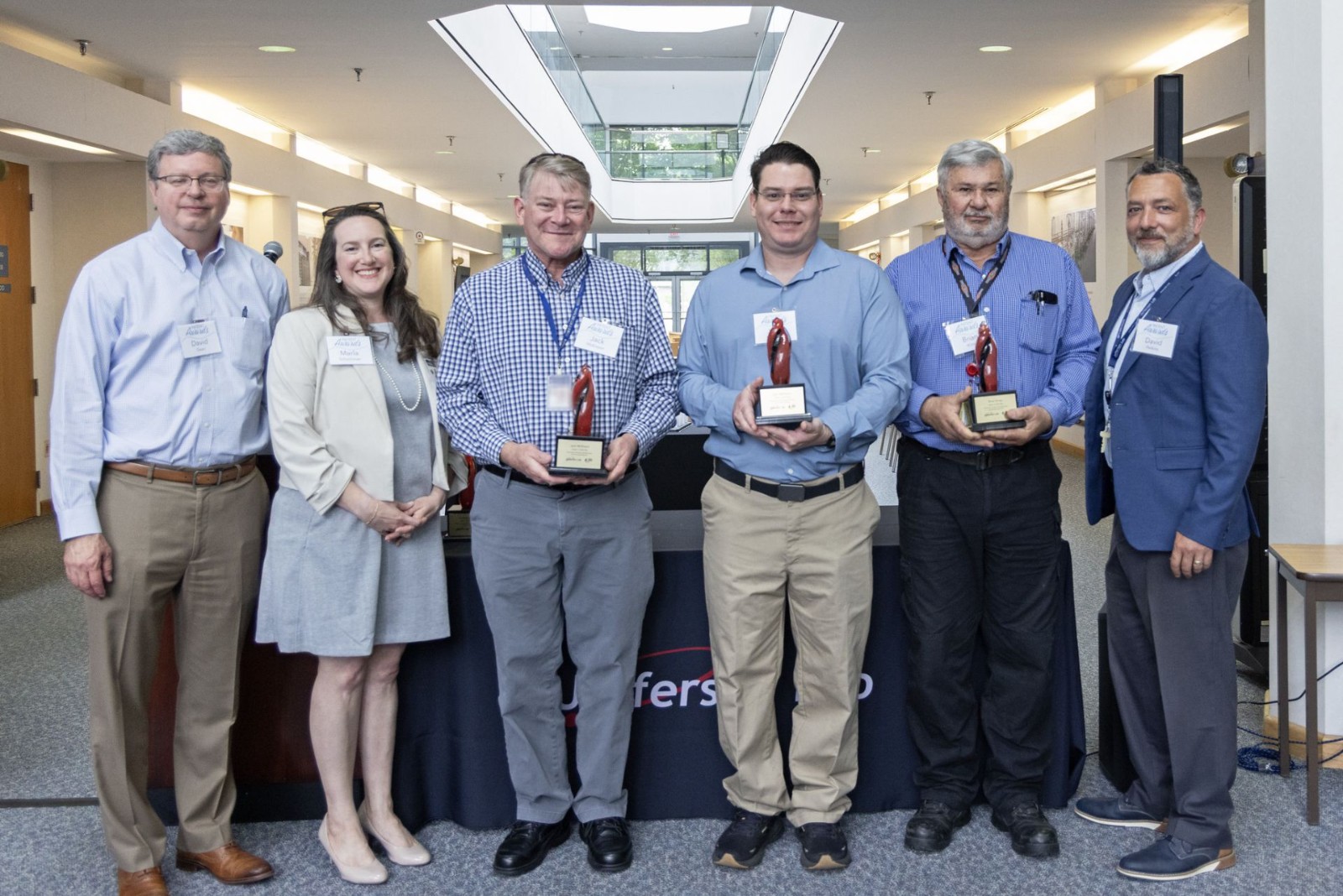
Jefferson Lab Signs CRADA to Advance Commercialization of Subsurface Tritium Continuous Monitor: Overcoming the Challenge of Online Monitoring of Low-Energy Beta Particles in Groundwater at Nuclear Power and Fusion Facilities
The U.S. Department of Energy (DOE) Thomas Jefferson National Accelerator Facility (Jefferson Lab) announced that it has formally signed a Cooperative Research and Development Agreement (CRADA) with startup company Canary Instruments to jointly advance the commercialization of its independently developed Subsurface Continuous Radioisotope Environmental Monitor (SCREM). This technology is specifically designed for nuclear power plants, nuclear fuel facilities, and future...
2026-10-07